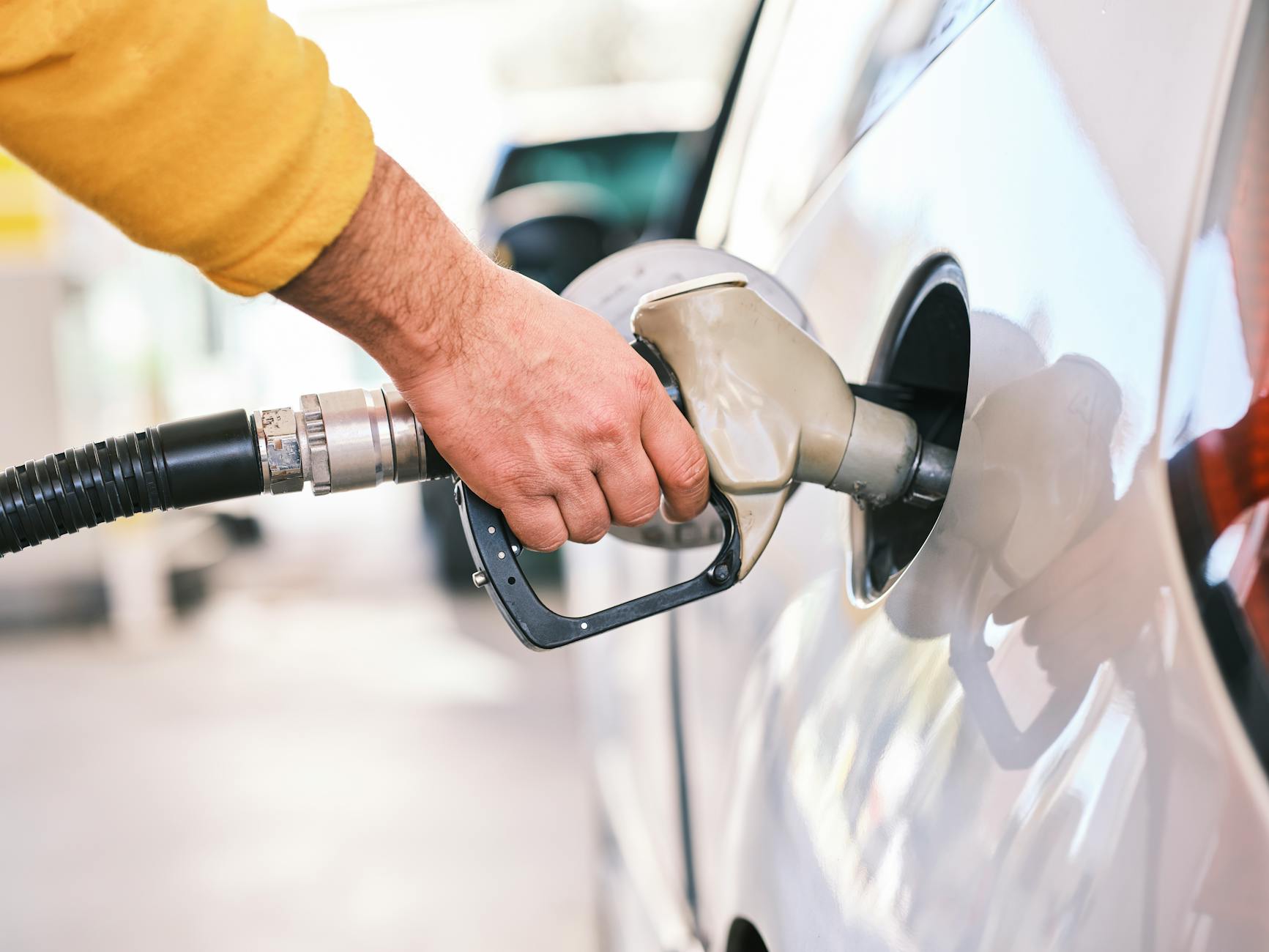
No. There is no credible evidence that gas prices will reach $10 per gallon under the Trump administration. Despite repeated claims from fringe voices and social media speculation, official government agencies, energy industry analysts, and even Trump’s own cabinet members project prices far below that threshold. As of April 23, 2026, the average gas price stood at $3.36 per gallon—well below the early April peak of $4.17 per gallon that alarmed consumers.
The highest forecasts from the U.S. Energy Information Administration top out around $4.30 per gallon, a far cry from the doomsday scenarios circulating online. The gap between prediction and reality reveals a pattern in energy policy discourse: speculation often outpaces data. While legitimate concerns about geopolitical disruptions and energy policy are worth examining, the specific claim that prices will hit $10 requires evidence that simply doesn’t exist in any mainstream energy forecast. Understanding what experts actually project, why prices spiked in March 2026, and what the real economic outlook looks like is essential for consumers navigating this volatile market.
Table of Contents
- Where Does the $10 Per Gallon Claim Come From?
- What Energy Experts Actually Forecast for 2026
- The March 2026 Price Spike and What It Revealed
- Trump Administration Messaging and Mixed Signals
- Why Price Predictions Keep Missing Reality
- What Consumers Should Actually Prepare For
- What Lies Ahead—2026 and Beyond
- Conclusion
Where Does the $10 Per Gallon Claim Come From?
The $10 per gallon narrative originated primarily on social media platforms and partisan news outlets, where it circulated as a worst-case scenario warning without factual grounding. Some versions tied the claim to alleged trump policies on energy or tariffs, while others attributed it to vague warnings about “printing money” and inflation. However, when traced back to official sources—energy companies, government agencies, or economists with track records—the $10 claim disappears entirely. No major energy forecasting organization, from the EIA to GasBuddy to OPEC, has projected prices anywhere near that level.
The persistence of this claim illustrates how easily extreme scenarios can dominate public conversation, especially on emotionally charged topics like gas prices. A $1 increase in gas prices directly impacts household budgets, making every driver invested in predictions. This emotional investment creates fertile ground for worst-case narratives, regardless of whether credible analysts support them. When Energy Secretary Chris Wright stated in late April 2026 that gas prices had “likely peaked” and wouldn’t drop below $3 until 2027, Trump dismissed him as “totally wrong”—yet even Trump’s disagreement centered on timing, not on $10 per gallon scenarios.
What Energy Experts Actually Forecast for 2026
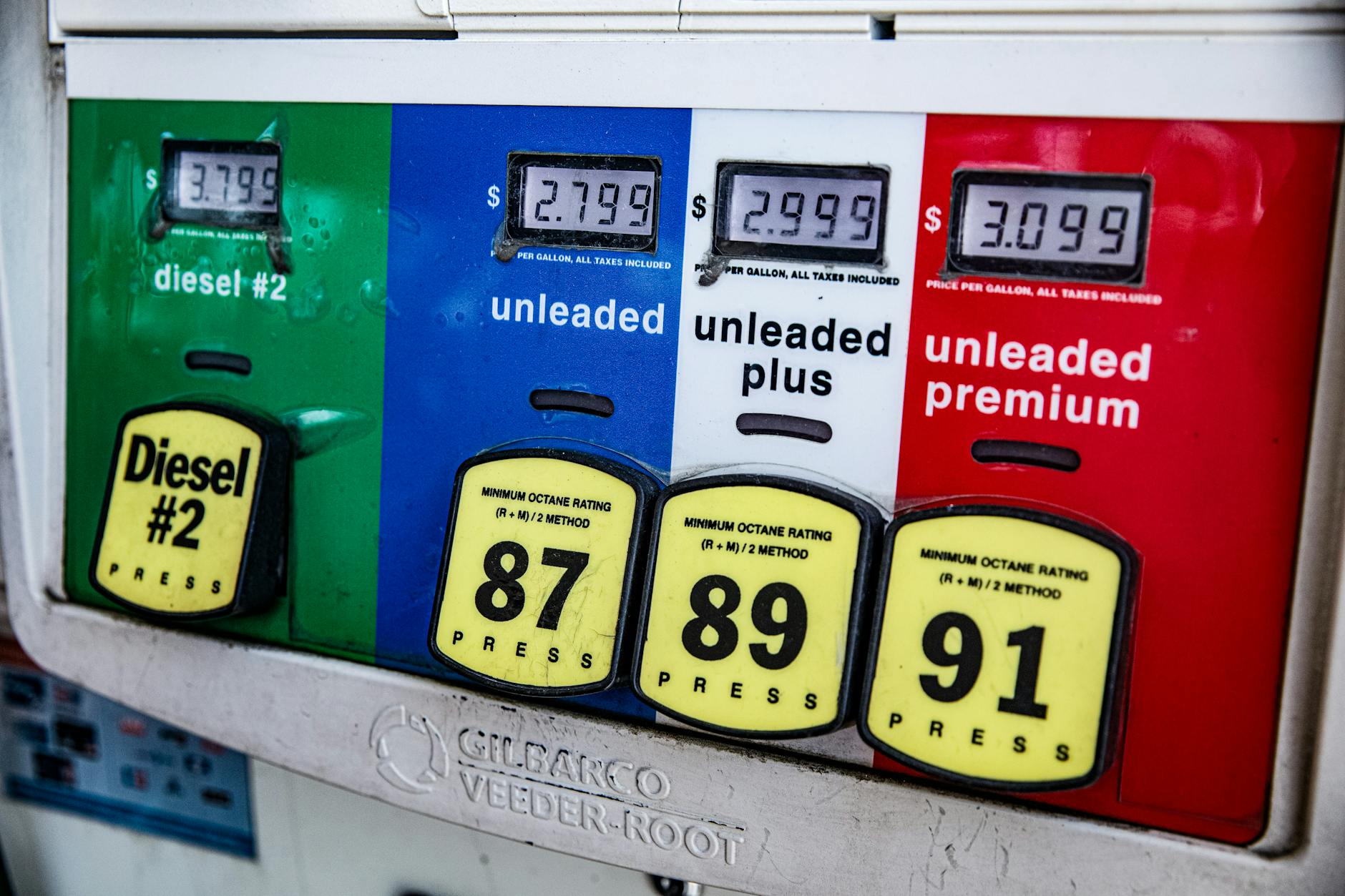
The U.S. Energy Information Administration, the official source for energy data and forecasts, projects an average gas price of $3.70 per gallon for 2026—roughly 6% lower than 2025 levels. This forecast assumes a moderation from the dramatic March 2026 spike caused by geopolitical tensions in the Middle East. The EIA also estimates that monthly averages could peak around $4.30 per gallon if conflict-related supply disruptions persist, but even this upper-bound scenario is less than half the $10 claim. GasBuddy, a private fuel price tracking company, projects an even rosier outlook: a 2026 yearly average of $2.97 per gallon—the lowest annual average since 2020.
These forecasts carry important caveats. Energy markets depend on geopolitical stability, OPEC production decisions, refinery capacity, and global demand patterns—all variables that can shift unexpectedly. The March 2026 surge, which represented the largest monthly price increase since 1967 at 21%, demonstrated how quickly assumptions can be upended. Iran-U.S. tensions disrupted oil supplies and sent prices up roughly $1 per gallon in weeks. Conversely, if those tensions ease or global supply stabilizes, prices could fall further than currently projected. The lesson: forecasts represent reasonable expectations based on current conditions, not guarantees, and they’re nowhere near $10 per gallon even in their worst-case assumptions.
The March 2026 Price Spike and What It Revealed
In March 2026, gas prices experienced their sharpest monthly jump in nearly 60 years, climbing 21% as escalating tensions between Iran and the United States disrupted global oil supplies. This spike pushed the average to around $3.50-$4.00 per gallon across much of the country, with some regional prices reaching $4.50. The April 9 peak of $4.17 represented the highest monthly average in years, prompting widespread concern about whether the trend would continue. Consumers who remembered the 2008 gasoline crisis, when prices briefly touched $5 per gallon, worried that history might repeat itself. However, the March-to-April experience proved instructive: even in a period of genuine geopolitical crisis, prices rose from roughly $2.50 to $4.17 per gallon—a significant but manageable increase.
For prices to reach $10, they would need to jump another 140% from their April peak. Energy analysts note that such a jump would require either unprecedented supply disruptions (a total shutdown of Middle Eastern production) or a dramatic economic shock that would likely trigger recession and reduce fuel demand anyway. The March spike, while real and painful for consumers, actually demonstrated how much buffer exists between current levels and the $10 scenario—a buffer that grows larger as markets stabilize.

Trump Administration Messaging and Mixed Signals
The Trump administration has sent contradictory signals about gas prices, undercutting claims about policy certainty. Energy Secretary Chris Wright, appointed in January 2026, predicted in April that prices had “likely peaked” for the year and wouldn’t dip below $3 per gallon until 2027. Trump immediately contradicted his own cabinet member, calling Wright “totally wrong” via social media, suggesting the timeline was overly pessimistic. Yet neither Trump nor Wright mentioned $10 per gallon as a realistic scenario. The dispute centered on whether prices would stabilize at $3-$4 or fall further—a relatively narrow disagreement about timing, not direction.
This infighting highlights a broader challenge: energy policy involves decades-long infrastructure investments, global market dynamics, and supply chains that resist manipulation by any single administration. Trump has promised to increase domestic oil production and reduce green energy mandates, policies that could theoretically help moderate prices over years. However, these policy changes work gradually—drilling new wells takes years, and global crude prices respond primarily to worldwide supply and demand, not U.S. policy alone. The dissonance between Trump’s optimistic rhetoric and the more measured forecasts from his own agencies suggests that neither the $10 doomsday scenario nor promises of dramatic price relief should be taken at face value. Gas prices will likely remain in a $2.50-$4.50 range for the foreseeable future, responsive to geopolitics and markets rather than executive decrees.
📨 Get Free Accountability Coverage Alerts
Free · No spam · Unsubscribe anytime
Why Price Predictions Keep Missing Reality
Energy price forecasts have a mixed track record because the inputs are volatile and unpredictable. The EIA’s 2024 forecasts, made months earlier, didn’t anticipate the intensity or timing of the March 2026 geopolitical crisis. Economists are adept at modeling normal market behavior but less skilled at predicting when wars, sanctions, or major supply disruptions will hit. Add political pressure—where officials want to deliver good news to voters—and forecasts often veer optimistic. Conversely, doomsayers extrapolate short-term spikes indefinitely, assuming worst-case scenarios will persist forever.
The $10 per gallon claim exemplifies this pattern. It assumes that current disruptions will compound indefinitely, that new supply disruptions will hit continuously, and that no market adjustment will occur—an apocalyptic scenario divorced from historical precedent. Even during the 2008 global recession and financial crisis, when oil briefly hit $147 per barrel in July 2008, pump prices peaked around $4-$5 per gallon, not $10. The claim also ignores demand destruction: if prices genuinely approached $10 per gallon, consumers would drive less, use transit more, and buy efficient vehicles, ultimately reducing demand and pushing prices down. Economic models show that such a scenario is self-correcting before reaching extreme levels. The real lesson is that reasonable forecasts ($3-$4.50 for 2026) are useful for budgeting; extreme claims ($10) are not.

What Consumers Should Actually Prepare For
Rather than preparing for implausible $10 per gallon prices, consumers should plan for the range that credible forecasts suggest: $3-$4.50 per gallon in 2026, with potential volatility if geopolitical tensions flare. For a household driving 12,000 miles annually in a vehicle averaging 25 miles per gallon, this translates to roughly $1,440-$2,160 in annual fuel costs. The difference between $3.50 average and $4.30 average is about $384 annually for that household—real money, but not a budget-breaking amount if anticipated. Consumers concerned about gas price risk should consider longer-term strategies: purchasing fuel-efficient vehicles, consolidating driving trips, exploring hybrid or electric options if feasible, or carpooling for commutes. The administration’s energy policies may offer modest price relief over time, but they won’t insulate the U.S.
from global crude prices. Voters should evaluate Trump’s energy policies (permitting, production, green energy restrictions) on their merits and actual impacts, not on exaggerated claims about gas prices. Gas prices will fluctuate based on global markets, and any given administration’s ability to directly control them is limited. Planning around realistic forecasts—$3-$4.50 for 2026—is prudent. Planning around $10 per gallon is preparing for a scenario with no credible path to reality.
What Lies Ahead—2026 and Beyond
The immediate outlook for the rest of 2026 appears relatively stable, assuming geopolitical tensions don’t escalate further. The EIA’s projection of a $3.70 average and GasBuddy’s $2.97 average represent a likely stabilization after the March spike. If Iran-U.S. tensions ease materially, prices could drift toward the $2.50-$3.50 range. Conversely, if conflict escalates or OPEC production cuts tighten supply more than expected, prices could spike back toward $4.50. The key variable is geopolitics, not domestic policy.
Trump’s policies on drilling permits and energy production will take months to years to materially affect supply and will shift long-term trends, not short-term pump prices. Looking further ahead, the energy market is slowly transitioning toward electric vehicles and renewable energy, but that transition is decades away from completion. Oil will remain critical to transportation through the 2030s, making prices dependent on global crude markets for years to come. Claims that any president can engineer sustained low prices ignore this reality. The $10 per gallon scenario belongs in the realm of science fiction or worst-case disaster planning, not in serious discussions about 2026 fuel costs. Consumers, policymakers, and voters are better served by grounding conversations in realistic forecasts and understanding the actual levers that influence energy prices—levers that are global, slow-moving, and only partially responsive to domestic political change.
Conclusion
The claim that gas prices will reach $10 per gallon under Trump lacks any credible basis in data, expert forecasts, or official projections. Current prices ($3.36 as of late April 2026) remain well below the early-month peaks, and all mainstream forecasts for 2026 project an average range of $2.97 to $3.70 per gallon, with extreme scenarios topping out near $4.30. Even the March 2026 geopolitical spike—the largest monthly increase since 1967—didn’t produce a path to $10 per gallon; instead, it demonstrated how much room exists between realistic scenarios and doomsday narratives.
Consumers and voters are best served by evaluating energy policy based on realistic expectations and actual data. Gas prices will fluctuate with global markets, geopolitical events, and supply dynamics that no single president controls entirely. The useful question isn’t “Will prices hit $10?” but rather “How do I budget for $3-$4.50 prices in 2026 and evaluate which energy policies actually deliver long-term benefits?” Dismissing alarmist claims doesn’t mean ignoring legitimate concerns about energy affordability—it means separating fact from speculation and making decisions based on evidence rather than fear.
You Might Also Like
- Trump Claims He Will Lower insulin costs to a fixed price. Here’s how price caps work
- Trump Claims He Will Expand apprenticeships massively. Here’s how funding flows
- Trump Claims He Will Cut the price of eggs by policy. Here’s what drives egg supply shocks