
American businesses operating across the Middle East are pulling staff out of the region or making urgent contingency plans following the dramatic escalation of hostilities between the United States, Israel, and Iran. The trigger was Operation Epic Fury, the coordinated U.S.-Israeli strikes launched on February 28, 2026, that killed Iran’s Supreme Leader Ayatollah Ali Khamenei and provoked retaliatory strikes against U.S. interests and Israeli targets. While specific corporate evacuation announcements from oil companies and tech firms have not dominated headlines, the practical reality on the ground tells the story: thousands of flights canceled, airspace closed across multiple countries, and the U.S.
Embassy in Jerusalem issuing a shelter-in-place order stating it is “not in a position to evacuate or directly assist Americans in departing Israel.” The disruption extends well beyond diplomats and military personnel. Major shipping carriers like Maersk and Hapag-Lloyd have rerouted vessels away from the Red Sea and Suez Canal. Airlines including Qatar Airways and Emirates temporarily suspended operations. Roughly 58,000 Italian citizens alone were reported stranded in the Middle East, suggesting the number of affected American workers, contractors, and business travelers is substantial. This article covers the timeline of evacuations, the aviation and shipping chaos making departures nearly impossible, the supply chain consequences rippling outward, and what American businesses and their employees should understand about the current situation.
Table of Contents
- Why Are American Businesses in the Middle East Evacuating Staff Now?
- How Flight Cancellations and Airspace Closures Are Trapping American Workers
- Shipping Giants Reroute, and Supply Chains Buckle
- What Should American Companies with Middle East Operations Do Right Now?
- The Risk of Prolonged Conflict and Escalation
- Lessons from Previous Middle East Evacuations
- What Comes Next for American Business in the Middle East
- Conclusion
- Frequently Asked Questions
Why Are American Businesses in the Middle East Evacuating Staff Now?
The immediate catalyst is operation epic Fury and its aftermath. On February 28, 2026, the U.S. and Israel launched coordinated military strikes against Iran, targeting leadership and military infrastructure in Tehran. Iran responded with retaliatory strikes aimed at U.S. interests in neighboring countries and targets inside Israel. Three American troops were killed in the retaliatory attacks, with President Trump acknowledging that more casualties are “likely,” according to NPR reporting on March 1. The evacuation impulse did not begin on February 28, however. Warning signs had been building for weeks. As early as January 14, 2026, some personnel were advised to leave the U.S. military base at Al-Udeid in Qatar amid Trump’s escalating threats toward Iran, as reported by Al Jazeera.
By February 27, the state Department authorized the departure of non-emergency government personnel and family members from the U.S. Embassy in Israel, citing “safety risks.” Evacuation orders also went out for diplomatic missions in Beirut, Bahrain, and Kuwait. The U.K. and China followed suit with their own embassy evacuations and travel advisories. For American companies with operations in the Gulf states, Israel, or Lebanon, these government actions served as the clearest possible signal that the situation was deteriorating fast. The distinction between government-ordered evacuations and private-sector decisions matters here. The State Department can order its own personnel out, but it cannot compel private companies to evacuate. What it can do, and did, is issue security alerts that effectively tell American civilians they are on their own. The March 1 shelter-in-place order from the U.S. Embassy in Jerusalem made this explicit: the embassy said it was not in a position to help Americans leave Israel. For any business with staff in the region, that statement alone is grounds for activating emergency evacuation protocols.

How Flight Cancellations and Airspace Closures Are Trapping American Workers
Even companies that moved quickly to evacuate staff ran into a brutal logistical reality: there were not enough functioning air routes to get people out. According to data from aviation firm Cirium, more than 1,800 flights were canceled on Saturday, February 28, and another 1,400-plus flights were canceled on Sunday, March 1, as several Middle Eastern countries shut down their airspace. An additional 19,000 flights were delayed across the region, as reported by Euronews. The closures hit major transit hubs that American business travelers depend on. Qatar Airways temporarily suspended all flights. Emirates halted service at Dubai International Airport, one of the busiest airports on the planet and a critical connection point for flights between the U.S., South Asia, and East Africa. For American employees stationed in places like Doha, Dubai, Riyadh, or Bahrain, these suspensions did not just delay travel.
They eliminated it. PBS confirmed that the U.S. and Israeli strikes disrupted flights “across the Middle East and beyond.” However, it is important to note that airspace closures in the region have historically been temporary. During previous escalations, including the January 2020 U.S. strike that killed Iranian General Qasem Soleimani, airspace reopened within days. The difference this time is the scale of the military operation and the ongoing retaliatory strikes, which create uncertainty about when normal flight operations will resume. Companies that waited until February 28 to act found themselves with employees who could not physically leave, regardless of how much money was thrown at the problem.
Shipping Giants Reroute, and Supply Chains Buckle
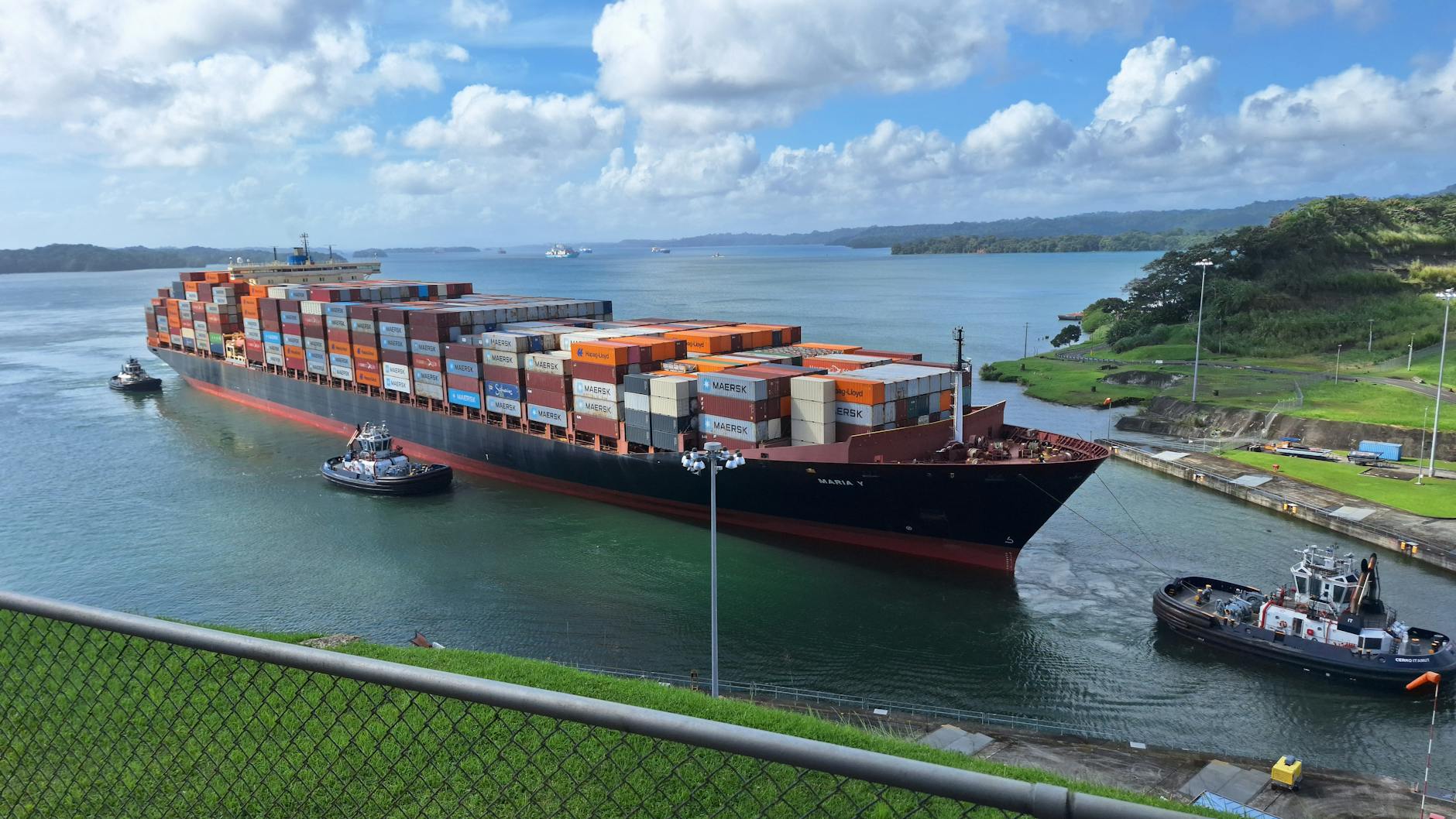
The impact on American businesses extends far beyond personnel safety. Maersk, the world’s largest container shipping carrier, rerouted its vessels from the Red Sea and Suez Canal to the Cape of Good Hope around the southern tip of Africa, adding up to 14 extra days per voyage. The company cited “unforeseen constraints arising from the wider operating environment in the Red Sea region,” according to reporting by Al-Monitor and FreightWaves. Hapag-Lloyd, another major carrier, mirrored Maersk’s decision. The timing makes this particularly frustrating for global commerce. Maersk had just announced on January 15, 2026, that it was returning its MECL service to the trans-Suez route, signaling confidence that Red Sea security conditions had improved enough to resume normal operations.
That confidence evaporated in a matter of weeks. For American businesses that import goods through the Suez Canal or export products to Middle Eastern markets, the rerouting means higher shipping costs, longer delivery windows, and inventory disruptions that could take months to unwind. The Atlantic Council published expert analysis stating that the strikes “have upended a global order in place since the end of World War II.” That may sound like hyperbole, but for supply chain managers at American companies, the practical implications are concrete. Contracts with delivery timelines pegged to Suez transit are now in breach territory. Insurance premiums for cargo transiting anywhere near the Persian Gulf are spiking. And companies with just-in-time inventory models, particularly in manufacturing and retail, are staring at gaps on shelves and production lines.
What Should American Companies with Middle East Operations Do Right Now?
The first priority is accounting for all personnel. Companies with employees, contractors, or business travelers in the affected region need a verified headcount immediately. The U.S. Embassy’s shelter-in-place order for Jerusalem makes clear that government assistance cannot be assumed. Businesses should be working through private security firms, corporate travel management companies, and direct communication channels to locate and support their people. The second priority involves a difficult tradeoff: evacuate now at enormous cost and logistical difficulty, or shelter in place and wait for conditions to stabilize.
For employees in relatively stable Gulf states like the UAE or Oman, sheltering in place with robust communication protocols may be the safer bet, especially given that commercial flight options are severely limited. For employees in Israel, Lebanon, or areas closer to active conflict, evacuation through any available means, including overland routes to neighboring countries with functioning airports, should be explored. The Council on Foreign Relations assessed the impact of the strikes as significant and ongoing, suggesting this is not a situation that will resolve in 48 hours. Companies should also be reviewing their force majeure clauses, business continuity insurance, and contractual obligations. The scale of this disruption, involving military strikes, airspace closures, and shipping reroutes simultaneously, triggers provisions that many businesses have never had to invoke. Waiting to assess these legal and financial instruments until after the immediate crisis passes is a mistake that could cost companies millions.
The Risk of Prolonged Conflict and Escalation
The most dangerous assumption American businesses can make right now is that this will blow over quickly. Iran launched retaliatory strikes after Operation Epic Fury, and three American troops have already been killed. Trump stated that more casualties are “likely.” UN Secretary-General Guterres said the strikes “squandered a chance for diplomacy,” according to UN News. None of these signals point toward rapid de-escalation. For businesses weighing whether to maintain operations in the region, the calculation has fundamentally changed.
Before February 28, the risk model for the Middle East factored in periodic flare-ups, Houthi attacks on shipping, and occasional diplomatic crises. The killing of Iran’s Supreme Leader represents a qualitative break from that pattern. The Atlantic Council’s assessment that global order has been “upended” should be taken seriously in corporate boardrooms, not as political commentary, but as a practical warning that the security environment in the Gulf, the Levant, and the broader region may not return to its pre-February 2026 baseline for a long time. There is also the question of secondary effects. If Iran’s retaliatory capability extends to cyberattacks on American companies with Middle Eastern operations, or to proxy group actions against commercial infrastructure, the risk is not confined to physical safety. Companies should be elevating their cybersecurity posture and monitoring for threats against their digital infrastructure, not just their physical offices and personnel.

Lessons from Previous Middle East Evacuations
The 2006 Lebanon War offers a useful, if imperfect, comparison. During that conflict, the U.S. evacuated approximately 15,000 American citizens from Lebanon, many of them dual nationals with family ties to the region. The evacuation was chaotic, relying heavily on chartered ships and military assets, and took weeks to complete.
Companies with operations in Beirut at the time reported significant losses from abandoned offices, disrupted contracts, and the cost of relocating staff. The current situation is broader in geographic scope. Evacuation orders covering Israel, Lebanon, Bahrain, and Kuwait, combined with flight cancellations affecting Qatar and the UAE, mean that there is no convenient “safe harbor” nearby. In 2006, companies could move staff from Beirut to Amman or Cyprus relatively quickly. Today, with airspace closures spanning much of the region and 19,000 flights delayed, the escape routes themselves are compromised.
What Comes Next for American Business in the Middle East
The near-term outlook depends entirely on whether the conflict escalates further or stabilizes into a tense standoff. If retaliatory strikes continue, American businesses will face sustained pressure to withdraw entirely from the region, a move that would have enormous economic consequences given the Gulf states’ role in global energy markets, logistics, and finance. Dubai alone hosts regional headquarters for hundreds of American companies.
The longer-term question is whether Operation Epic Fury permanently alters the risk calculus for doing business in the Middle East. Even if a ceasefire or diplomatic resolution emerges in the coming weeks, the precedent of a U.S.-Israeli strike killing a sitting head of state equivalent will reshape insurance markets, corporate security planning, and investment decisions for years. American businesses should be planning not just for the current crisis, but for a fundamentally different operating environment going forward.
Conclusion
The evacuation of American government personnel from embassies in Israel, Beirut, Bahrain, and Kuwait, combined with the shelter-in-place order from the U.S. Embassy in Jerusalem, has sent an unmistakable signal to the private sector. With over 3,200 flights canceled, major airlines grounded, and shipping giants rerouting around the Cape of Good Hope, the infrastructure that American businesses depend on to operate in the Middle East has been severely disrupted. Three American troops are dead, retaliatory strikes continue, and the U.S.
government has explicitly stated it cannot assist American civilians in departing Israel. American companies must act on the information available now rather than waiting for clarity that may not come for weeks or months. That means accounting for personnel, activating emergency protocols, reviewing insurance and contractual obligations, and making hard decisions about whether to maintain, reduce, or suspend Middle Eastern operations. The situation following Operation Epic Fury is not a temporary disruption. It is a structural shift in the risk environment, and businesses that treat it as anything less are putting their people and their bottom lines in jeopardy.
Frequently Asked Questions
Has the U.S. government ordered American civilians to leave the Middle East?
Not exactly. The State Department authorized departure for non-emergency government personnel and issued evacuation orders for diplomatic missions in Israel, Beirut, Bahrain, and Kuwait. For private citizens, the embassy in Jerusalem issued a shelter-in-place order on March 1 and stated it is “not in a position to evacuate or directly assist Americans in departing Israel.” This effectively means civilians are responsible for their own evacuation.
Can Americans still fly out of the Middle East?
Commercial flights are severely disrupted. Over 1,800 flights were canceled on February 28 and another 1,400-plus on March 1. Qatar Airways temporarily suspended all flights, and Emirates halted operations at Dubai International Airport. Some routes may reopen as conditions evolve, but availability is extremely limited.
Which countries in the Middle East are affected by evacuation orders?
U.S. diplomatic evacuation orders cover Israel, Lebanon (Beirut), Bahrain, and Kuwait. Military evacuations have affected Al-Udeid Air Base in Qatar. The U.K. and China have also evacuated embassy staff from the region. Airspace closures and flight disruptions extend across much of the broader Middle East.
How are shipping and supply chains affected?
Maersk, the world’s largest container carrier, rerouted vessels from the Red Sea and Suez Canal to the Cape of Good Hope, adding up to 14 extra days per voyage. Hapag-Lloyd followed suit. This affects any business that ships goods through the Suez Canal, which handles roughly 12 percent of global trade.
What should American businesses with employees in the region do?
Immediately verify the location and safety of all personnel. Coordinate with private security and travel management firms rather than relying on government evacuation. Review force majeure clauses and business continuity insurance. For employees in stable Gulf states, sheltering in place may be safer than attempting to travel through disrupted airspace.
How long could this disruption last?
There is no reliable timeline. Iran has launched retaliatory strikes, three American troops have been killed, and diplomatic channels appear limited. Previous Middle East escalations have resolved in days to weeks, but the scale of Operation Epic Fury and the killing of Iran’s Supreme Leader suggest this situation could persist significantly longer.