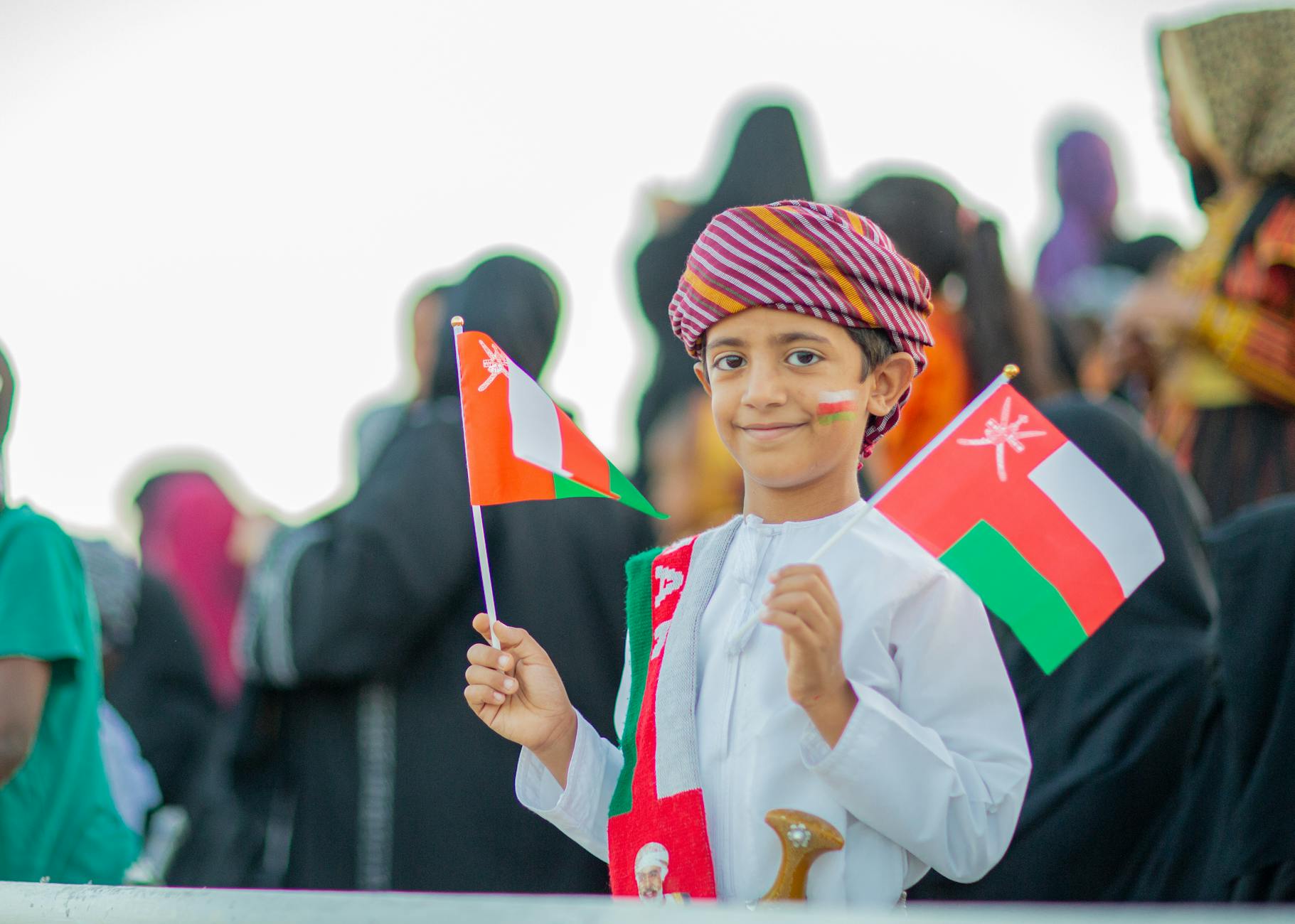
Oman’s Foreign Minister Sayyid Badr bin Hamad al-Busaidi publicly declared his dismay on February 28, 2026, after joint U.S.-Israeli military strikes on Iran — dubbed “Operation Epic Fury” — shattered what he described as a nearly finalized nuclear deal. In a post on X, al-Busaidi wrote, “I am dismayed. Active and serious negotiations have yet again been undermined,” and directly warned Washington: “This is not your war.” The statement landed with particular force because just hours earlier, on February 27, al-Busaidi had appeared on CBS’s “Face the Nation” announcing that Iran had agreed to zero stockpiling of enriched uranium and full IAEA verification — a deal he said was “within our reach.” The timing alone tells a damning story. A senior diplomat from a neutral Gulf state, one that had been brokering talks between Washington and Tehran for months, went on American television to announce a breakthrough.
Hours later, bombs fell. Al-Busaidi’s reaction was not couched in diplomatic euphemism. He said plainly: “Neither the interests of the United States nor the cause of global peace are well served by this. And I pray for the innocents who will suffer.” This article examines the substance of the deal that was reportedly on the table, the sequence of events that unraveled it, the regional fallout, and what al-Busaidi’s extraordinary public rebuke reveals about how U.S. allies in the Gulf view American decision-making.
Table of Contents
- Why Did Oman’s Foreign Minister Say “This Is Not Your War” After U.S.-Israeli Strikes on Iran?
- What Nuclear Deal Was on the Table Before the Strikes?
- Oman’s Unique Role as a Gulf Mediator
- The Diplomatic Cost of Striking During Active Negotiations
- Regional Fallout and the Danger to U.S. Allies in the Gulf
- What Al-Busaidi’s Language Reveals About Shifting Gulf Diplomacy
- What Happens to Diplomacy Now?
- Conclusion
- Frequently Asked Questions
Why Did Oman’s Foreign Minister Say “This Is Not Your War” After U.S.-Israeli Strikes on Iran?
Al-Busaidi’s choice of words — “this is not your war” — carried a specific implication that Washington had allowed itself to be pulled into a military confrontation driven by Israeli strategic priorities, not American ones. oman has long positioned itself as a neutral mediator in the region, maintaining diplomatic channels with iran even when other Gulf states severed ties. For Oman’s top diplomat to publicly urge the United States “not to get sucked in further” was an unusually blunt warning from a country that typically avoids confrontational language with any major power. The subtext was difficult to miss. Al-Busaidi had just spent months facilitating negotiations. He believed — and stated publicly on American television — that Iran had made meaningful concessions.
His dismay was not abstract. It was the reaction of someone who had personally invested diplomatic capital in a process he believed was working, only to watch it get destroyed by military action that he implied served someone else’s agenda. The phrase “this is not your war” drew a line between American national interests and the decision to strike, suggesting the two were not aligned. Compare this to the reactions from other regional players. According to Axios and NPR reporting on international responses, multiple world leaders expressed concern, but few were as pointed as al-Busaidi. Most issued carefully worded statements calling for restraint. Oman’s foreign minister went further — he assigned responsibility and questioned the strategic logic.

What Nuclear Deal Was on the Table Before the Strikes?
During his February 27 appearance on “Face the Nation” with Margaret Brennan, al-Busaidi laid out the reported terms in remarkable detail. Iran had agreed to “zero accumulation, zero stockpiling, and full verification” of enriched uranium by the IAEA. Existing stockpiles would be “blended to the lowest level possible” and “converted into fuel, and that fuel will be irreversible.” Iran was also reportedly willing to grant IAEA inspectors “full access” to its nuclear sites. Al-Busaidi characterized this as a “big achievement” and said Iran had committed that it would “never, ever have nuclear material that will create a bomb.” These terms, if accurately represented, would have constituted a significant advancement beyond the 2015 JCPOA framework. The irreversible conversion of enriched material into fuel rods — material that cannot be easily re-enriched to weapons grade — would have addressed one of the core concerns that critics of the original Iran deal raised.
However, it is important to note that these terms were described by the mediator, not confirmed independently by either Washington or Tehran. Whether the deal would have survived formal review, domestic political opposition in both countries, and verification logistics remains an open question that can no longer be answered. The critical limitation here is that diplomatic frameworks, no matter how promising on paper, require political will on all sides to cross the finish line. Al-Busaidi’s account suggests the diplomatic will existed. The military strikes suggest that at least one party — or its closest ally — had already decided diplomacy was not the preferred path.
Oman’s Unique Role as a Gulf Mediator
Oman has carved out a distinctive niche in Middle Eastern diplomacy by maintaining working relationships with virtually every faction in the region. It facilitated the secret back-channel talks that led to the original 2015 Iran nuclear deal under the Obama administration. Sultan Haitham bin Tariq, who assumed power in 2020, continued this tradition of quiet diplomacy. Oman is a member of the Gulf Cooperation Council but has consistently declined to join military coalitions against Iran or take sides in the Saudi-Iranian rivalry. This neutrality is what made Oman a credible go-between for U.S.-Iran talks in early 2026. Both sides trusted Muscat enough to use it as a channel.
Al-Busaidi’s public statements on CBS were themselves unusual — Omani diplomacy typically operates behind closed doors. The fact that he went on American television to announce the deal’s terms suggests he believed the agreement was close enough to warrant public pressure to finalize it. That he was willing to break with Oman’s traditionally discreet approach underscores how significant he considered the moment — and how devastating the subsequent strikes were to the process. For a concrete example of how Oman’s mediation has worked historically, the 2013-2015 secret talks between U.S. and Iranian officials that preceded the JCPOA were held in Muscat. Those discussions, shielded from public view for months, eventually produced the framework that the Obama administration brought to the P5+1 negotiating table. The 2026 channel appears to have followed a similar pattern — until it didn’t.

The Diplomatic Cost of Striking During Active Negotiations
The decision to launch military strikes while a mediator was publicly announcing progress creates a specific kind of diplomatic damage that extends well beyond the Iran file. Future mediators — whether Oman, Qatar, Switzerland, or any other neutral party — now have reason to question whether investing months of diplomatic effort in U.S.-involved negotiations is worth the risk. If a deal can be torpedoed by military action at the very moment it appears to be succeeding, the incentive structure for mediation breaks down. There is a tradeoff that hawks in Washington and Jerusalem would frame differently. From their perspective, a deal announced by a mediator is not the same as a deal signed by the parties.
They would argue that Iran’s track record on nuclear commitments — including violations of the JCPOA documented by the IAEA — justified skepticism about any framework, however promising it sounded. The counterargument, which al-Busaidi’s statement embodies, is that you cannot evaluate a deal’s enforceability if you bomb the other party before the ink dries. The comparison worth considering is the 2003 invasion of Iraq, which similarly occurred while weapons inspectors were on the ground requesting more time. In that case, the U.S. proceeded with military action despite active inspection processes, and the subsequent failure to find weapons of mass destruction became one of the most consequential intelligence and policy failures in American history. Al-Busaidi’s statement implicitly invoked this pattern — the pattern of choosing military force over diplomacy that is still in progress.
Regional Fallout and the Danger to U.S. Allies in the Gulf
One of the most immediate consequences of Operation Epic Fury was the exposure of U.S. allies in the region to Iranian retaliation. According to Al Jazeera, multiple Arab states hosting American military assets were targeted in Iranian retaliatory strikes following the U.S.-Israeli operation. This is precisely the scenario that al-Busaidi appeared to be warning about when he said the war was not America’s — because the blowback would be absorbed disproportionately by Gulf states that had no say in the decision to strike. Countries like Bahrain, which hosts the U.S. Navy’s Fifth Fleet, Qatar, home to Al Udeid Air Base, and the UAE, which hosts forces at Al Dhafra, found themselves in the crossfire of a conflict they did not initiate and in many cases had actively tried to prevent through diplomatic channels. The warning al-Busaidi issued — “I pray for the innocents who will suffer” — was not hypothetical.
It was a recognition that Oman’s neighbors, and potentially Oman itself, would bear physical consequences for a decision made in Washington and Jerusalem. This dynamic represents a fundamental limitation of the U.S. military posture in the Gulf. American bases provide deterrence, but they also make host nations targets. When the U.S. uses force in ways that Gulf states consider unnecessary or counterproductive, those states absorb risk without having meaningful input into the decision. Al-Busaidi’s public statement was, among other things, a signal that Gulf patience with this arrangement has limits.
📨 Get Free Accountability Coverage Alerts
Free · No spam · Unsubscribe anytime
What Al-Busaidi’s Language Reveals About Shifting Gulf Diplomacy
The most striking aspect of al-Busaidi’s statement was not what he said but that he said it publicly and attributed blame so clearly. Traditional Gulf diplomacy operates through private channels, carefully worded communiqués, and studied ambiguity. When a Gulf foreign minister posts on social media that he is “dismayed” and tells the United States directly that it is fighting someone else’s war, that represents a departure significant enough to merit attention on its own terms.
This shift mirrors a broader trend. Saudi Arabia’s rapprochement with Iran, brokered by China in 2023, signaled that Gulf states were no longer content to align exclusively with Washington’s regional framework. The UAE has pursued its own diplomatic track with Tehran. Al-Busaidi’s public frustration fits this pattern — Gulf states increasingly view themselves as independent actors with their own strategic interests, not junior partners in an American-led order.
What Happens to Diplomacy Now?
The question facing the region is whether the diplomatic channel Oman built can be reconstructed after military strikes of this magnitude. History offers mixed signals. The U.S. and Iran have recovered from crises before — the 1988 shootdown of Iran Air Flight 655, the 2020 assassination of Qasem Soleimani — but each incident left scar tissue that made subsequent negotiations harder. The 2026 strikes, coming at the precise moment a deal was reportedly within reach, may have inflicted a uniquely deep wound on the diplomatic infrastructure.
Al-Busaidi did not close the door entirely. His statement was framed as an urging — “I urge the United States not to get sucked in further” — which implies he still sees a path back from escalation, however narrow. Whether Washington has the political will to walk that path, particularly given the domestic dynamics that make any engagement with Iran politically toxic, remains the central uncertainty. What is no longer uncertain is how at least one key U.S. partner in the Gulf views what happened: as a strategic error that undermined diplomacy, endangered allies, and served interests that were not America’s own.
Conclusion
Oman’s Foreign Minister delivered one of the most pointed public rebukes of U.S. military action to come from a Gulf ally in recent memory. His statement — that he was dismayed, that negotiations had been undermined, that this was not America’s war, and that innocents would suffer — was backed by the specific and verifiable claim that a nuclear deal with Iran was hours away from being finalized when the bombs began to fall.
Whether that deal would have held up under scrutiny is now a question that cannot be tested, which is itself part of the indictment. The broader significance extends beyond any single diplomatic episode. Al-Busaidi’s willingness to go public, to assign responsibility, and to challenge the strategic logic of American military action reflects a Gulf region that is recalibrating its relationships with Washington in real time. For American policymakers, the message from Muscat should be difficult to ignore: when your closest regional partners tell you publicly that you are fighting someone else’s war, the coalition you depend on for basing, logistics, and legitimacy is under strain that military force alone cannot repair.
Frequently Asked Questions
Who is Oman’s Foreign Minister?
Sayyid Badr bin Hamad al-Busaidi serves as Oman’s Foreign Minister. He has been a central figure in mediating U.S.-Iran nuclear negotiations throughout early 2026, continuing Oman’s long tradition of serving as a neutral diplomatic channel in the Middle East.
What deal did Oman say was close before the strikes?
According to al-Busaidi’s February 27, 2026 appearance on CBS’s “Face the Nation,” Iran had agreed to zero stockpiling of enriched uranium, full IAEA verification and inspector access, and irreversible conversion of existing enriched material into fuel rods — terms he described as a “big achievement.”
What is Operation Epic Fury?
Operation Epic Fury is the name given to joint U.S.-Israeli military strikes on Iran that began on February 28, 2026. The operation prompted widespread international reaction, including al-Busaidi’s public expression of dismay and warnings about regional escalation.
Why does Oman serve as a mediator between the U.S. and Iran?
Oman maintains diplomatic relationships with virtually all parties in the Middle East, including Iran, while remaining a member of the Gulf Cooperation Council. It facilitated the secret back-channel talks that led to the 2015 JCPOA and has historically avoided joining military coalitions against Iran, giving it credibility as a neutral broker.
Were other Gulf states affected by the strikes?
Yes. According to Al Jazeera, multiple Arab states hosting U.S. military assets were targeted in Iranian retaliatory strikes following Operation Epic Fury. Countries like Bahrain, Qatar, and the UAE, which host major American military installations, faced direct exposure to the fallout.
You Might Also Like
- Trump Says Strikes Will Continue “Through the Week or As Long as Necessary”
- The Gang of Eight Was Notified Shortly Before Strikes — Congress Was Not Consulted
- State Department Issues Level 4 “Do Not Travel” Advisory for the Entire Region