
The claim is real, and the numbers hold up. According to Bureau of Labor Statistics Consumer Expenditure Survey data, average American household food spending hit approximately $10,131 in 2024 — up roughly $2,815 from $7,316 in 2020. When you adjust for a family of four specifically, the USDA’s food plans place annual costs in the $12,000 to $13,000 range for 2025, making the “$12,700” figure a reasonable and defensible estimate. That $2,900 increase since 2020 is not partisan spin.
It is what happened. To put it in everyday terms, a family that spent about $610 a month on groceries and dining in 2020 is now spending closer to $1,060 a month under the USDA’s moderate-cost food plan. That is an extra $450 per month that has to come from somewhere — and for millions of families, it is coming from savings accounts that are already running dry. The all-food Consumer Price Index rose 23.6% between 2020 and 2024, outpacing overall inflation of 21.2% during the same period, meaning food costs have genuinely eaten into household budgets faster than wages and other prices have adjusted. This article breaks down exactly where these numbers come from, what drove food prices to surge so dramatically, which categories hurt families the most, and what the outlook looks like heading into 2026 — including the potential impact of proposed tariffs on imported food.
Table of Contents
- How Much Does the Average American Family Actually Spend on Food in 2025?
- What Drove Food Prices Up Nearly 30% Since 2020?
- Which Food Categories Hit Family Budgets the Hardest?
- Who Is Getting Hurt Most — and How Families Are Adapting
- The Tariff Wild Card — Could Food Get Even More Expensive?
- Total U.S. Food Spending Has Reached Staggering Levels
- What Does the 2026 Outlook Actually Look Like?
- Conclusion
- Frequently Asked Questions
How Much Does the Average American Family Actually Spend on Food in 2025?
The answer depends on how you define “family.” The BLS Consumer Expenditure Survey tracks spending by “consumer unit,” which averages about 2.5 people per household. By that measure, food spending in 2024 was $10,131 — split between $6,224 for groceries eaten at home and $3,945 for food away from home. That is the broadest, most commonly cited number, and it includes single-person households, couples without children, and retirees alongside larger families. The $12,700 figure references a more specific household: a family of four with two adults and two children. The USDA publishes monthly cost-of-food reports based on different budget levels. Their Thrifty Food Plan — the baseline used to determine SNAP benefits — pegs a reference family of four at approximately $1,002.20 per month, or about $12,027 per year as of 2025. The Moderate-Cost Food Plan runs higher, which brings the annual total closer to $12,700.
Neither figure is fabricated. They simply measure different household compositions. The comparison to 2020 is where the numbers get stark. The BLS recorded average food expenditures of roughly $7,316 per consumer unit in 2020. That was partly depressed by pandemic disruptions — restaurants were closed, people ate differently — but the baseline is the baseline. The jump from $7,316 to $10,131 in four years represents a 38% increase in nominal food spending. For a family of four, the increase from roughly $9,800 to $12,700 tracks a similar trajectory.

What Drove Food Prices Up Nearly 30% Since 2020?
Food prices since December 2019 have risen approximately 29.5% as of May 2025, according to the U.S. Inflation Calculator. That figure captures the cumulative damage of multiple overlapping crises: pandemic supply chain disruptions in 2020 and 2021, the war in Ukraine disrupting global grain and fertilizer markets in 2022, domestic avian influenza outbreaks, labor shortages in food processing, and transportation cost spikes driven by fuel prices. The single worst year was 2022, when food prices surged 9.9% — the fastest annual increase since 1979. Groceries specifically (food at home) jumped 11.4% that year alone. Eggs, cooking oil, flour, butter, and baby formula were among the hardest-hit categories.
For families already stretched thin, 2022 was the year the grocery bill went from uncomfortable to genuinely painful. However, it is important to note that not all of this inflation was driven by supply-side factors. A 2023 Federal Trade Commission report found that several major food companies used inflationary conditions as cover to widen profit margins — a practice critics labeled “greedflation.” So while input costs did rise, consumers were in some cases paying more than raw economics required. The compounding nature of food inflation is what makes it so damaging. A 10% increase in year one does not reset in year two — it becomes the new floor. When 2023 brought another 5.8% increase and 2024 added roughly 2.5% more, each bump was calculated on an already-inflated base. That is how you get to nearly 30% cumulative inflation over five years even though no single year after 2022 looked catastrophic on its own.
Which Food Categories Hit Family Budgets the Hardest?
Eggs have become the poster child for food inflation, and with good reason. The USDA forecasts a 41% rise in egg prices in 2025 alone, driven by the H5N1 avian influenza outbreak that has affected 18.8 million commercial egg layers. A carton of eggs that cost $1.50 in early 2020 now regularly runs $4.00 to $6.00 in many markets. For families that rely on eggs as an affordable protein source — scrambled eggs for kids, hard-boiled eggs for lunches — this single category has blown a visible hole in weekly grocery budgets. Beyond eggs, the categories that have inflicted the most cumulative pain since 2020 include cereals and bakery products (up over 30%), dairy (up roughly 25%), and fats and oils (up over 35%).
Meat prices, while volatile, have settled somewhat from their 2022 peaks but remain significantly higher than pre-pandemic levels. Fresh fruits and vegetables have seen more moderate but persistent increases, compounded by seasonal supply disruptions and rising transportation costs. The food-away-from-home category — restaurants, fast food, takeout — has also climbed substantially, rising roughly 27% since 2020. This matters because dining out was historically the “splurge” buffer families could cut when money got tight. Now even fast food has become noticeably more expensive, reducing the relief valve that budget-conscious families once had. A McDonald’s meal that cost $7 in 2020 now runs $10 to $12 in most markets, making the “value menu” feel like a contradiction.

Who Is Getting Hurt Most — and How Families Are Adapting
The raw dollar figures hurt everyone, but the proportional impact falls disproportionately on lower-income households. The USDA reports that the lowest-income Americans spent 32.6% of their after-tax income on food in 2023. Compare that to the national average of 10.4% of disposable income spent on food in 2024. A family earning $35,000 per year that spends $12,000 on food is devoting more than a third of their income to eating. A family earning $120,000 spending the same amount barely notices the line item. This gap has driven measurable behavioral changes. SNAP enrollment has remained elevated.
Food bank visits have surged in communities across the country. Families are trading down from name brands to store brands, buying in bulk, reducing meat purchases, and in some cases cutting meals. The tradeoff many families face is grim: spend more on food and fall behind on rent or medical bills, or spend less on food and accept nutritional compromises. Neither option is acceptable, but both are increasingly common. Middle-income families are adapting differently — shifting more meals to home cooking, reducing restaurant visits, and relying more heavily on warehouse clubs like Costco and discount grocers like Aldi. However, these strategies have diminishing returns. You can switch to store-brand cereal once. You cannot do it again next year when prices rise another 3%.
The Tariff Wild Card — Could Food Get Even More Expensive?
Proposed tariffs on imports from Canada, Mexico, and China represent a significant and underappreciated risk to food prices in 2025 and 2026. The United States imports roughly 15% of its food supply, including a substantial share of fresh produce, seafood, and packaged goods. Mexico is the largest source of imported fruits and vegetables, supplying the majority of avocados, tomatoes, berries, and peppers consumed in the U.S. during winter months. Canada supplies dairy products, meats, and processed foods.
China supplies ingredients used in everything from apple juice to garlic to food packaging materials. If broad tariffs of 25% on Canadian and Mexican imports and 60% on Chinese imports are implemented as proposed, the downstream effects on food prices could be substantial. The USDA’s 2025 forecast already predicts food price increases exceeding 3% across all categories. Tariffs could push that figure meaningfully higher, particularly for fresh produce in winter and spring when domestic supply is limited. The limitation here is uncertainty — tariff proposals have been announced, modified, paused, and reimposed multiple times, making it difficult to model exact impacts. But the directional risk is clearly upward, and families should plan for the possibility that grocery bills will continue climbing regardless of what happens with base-level inflation.
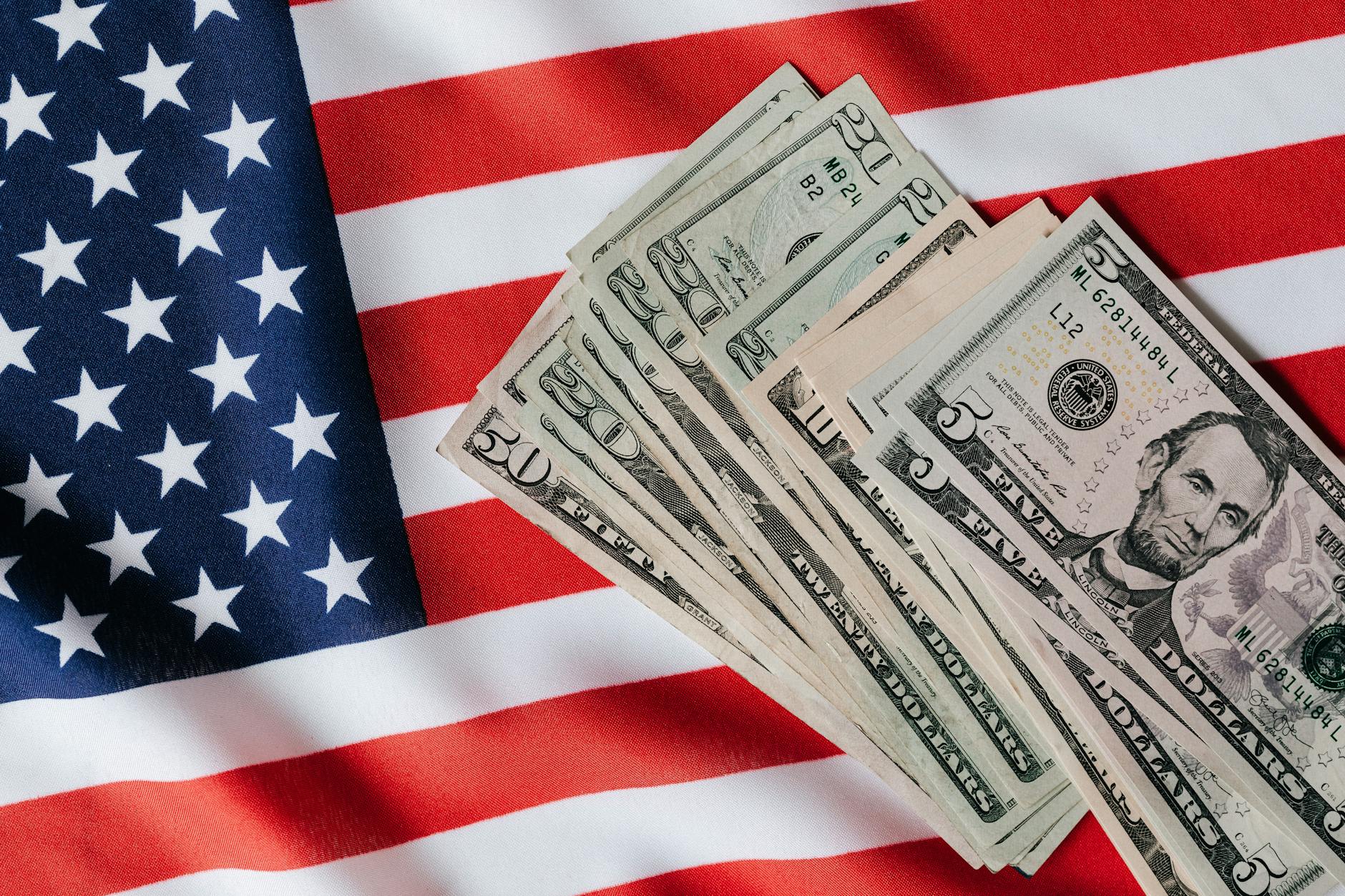
Total U.S. Food Spending Has Reached Staggering Levels
At the national scale, total U.S. food expenditures reached $2.58 trillion in 2024, according to USDA Economic Research Service data. That is not a typo — Americans collectively spent more than $2.5 trillion on food in a single year. To put that in context, the entire GDP of France is roughly $3 trillion.
📨 Get Free Accountability Coverage Alerts
Free · No spam · Unsubscribe anytime
The American food economy, from farm to fork, is one of the largest economic systems on the planet. This scale means that even small percentage changes in food prices move enormous amounts of money. A 3% increase on a $2.58 trillion base means roughly $77 billion in additional spending across the economy in a single year. That money flows from consumers to grocers, restaurants, food manufacturers, and agricultural producers — but the question of who captures the margin along that chain remains one of the most politically charged in the current economic debate.
What Does the 2026 Outlook Actually Look Like?
The USDA’s current forecast for 2026 projects all food prices to increase 3.1%, with a confidence interval ranging from 0.7% to 5.7%. That wide range reflects genuine uncertainty about trade policy, weather patterns, avian influenza containment, and broader macroeconomic conditions. The one piece of relatively good news: egg prices are expected to decline in 2026 as the poultry industry recovers flock sizes, assuming no additional major outbreaks.
For families trying to plan ahead, the realistic expectation is that food costs will continue rising faster than general inflation for at least another year, and the cumulative burden since 2020 is not going to reverse. Prices do not typically come down after inflationary periods — they simply stop rising as fast. A family of four should budget for food costs of $13,000 or more in 2026, and households with teenagers (who eat significantly more than younger children) should plan for even higher totals. The era of $600-a-month family grocery bills is not coming back.
Conclusion
The headline claim — that the average American family spent $12,700 on food in 2025, up $2,900 since 2020 — is approximately accurate when referencing a family of four. The BLS data for average consumer units shows roughly $10,131 in 2024 (up about $2,815 from 2020), and USDA food plans for a four-person family place annual costs squarely in the $12,000 to $13,000 range. Food prices have risen 29.5% since December 2019, outpacing overall inflation and hitting lower-income households hardest, with the bottom quintile spending nearly a third of their after-tax income just to eat.
Looking ahead, there are no credible forecasts predicting food price relief in the near term. The combination of persistent base-level inflation, potential tariff impacts, ongoing avian influenza disruptions, and climate-related supply risks suggests that food will continue consuming a growing share of family budgets through 2026 and beyond. For policymakers, the question is not whether families are spending more — the data is unambiguous — but what, if anything, will be done about it.
Frequently Asked Questions
Where does the $12,700 figure come from?
The $12,700 figure aligns with the USDA’s Moderate-Cost Food Plan for a reference family of four (two adults and two children). The USDA Thrifty Food Plan places the same family at approximately $12,027 per year as of 2025. The BLS Consumer Expenditure Survey reports a lower figure of $10,131 for 2024, but that reflects the average across all household sizes (averaging about 2.5 people), not families of four specifically.
Did food prices really rise faster than overall inflation?
Yes. The all-food CPI rose 23.6% between 2020 and 2024, while overall inflation (all items CPI) rose 21.2% during the same period. Since December 2019, food prices have risen approximately 29.5%, consistently outpacing broader inflation measures.
What percentage of income do Americans spend on food?
On average, Americans spent 10.4% of disposable income on food in 2024. However, this average obscures enormous variation by income level. The lowest-income households spent 32.6% of after-tax income on food in 2023, while higher-income households spent far less as a percentage.
Why are egg prices so high in 2025?
The H5N1 avian influenza outbreak has affected 18.8 million commercial egg layers, dramatically reducing supply. The USDA forecasts egg prices will rise 41% in 2025 compared to the prior year. The good news is that egg prices are expected to decline in 2026 as the poultry industry rebuilds its flocks.
Could tariffs make food even more expensive?
Potentially, yes. Proposed tariffs on imports from Canada, Mexico, and China could raise prices on fresh produce, dairy, meats, seafood, and packaged goods. Mexico supplies the majority of winter fruits and vegetables consumed in the U.S., and tariffs of 25% on those imports would likely be passed through to consumers.
Is food spending expected to come down anytime soon?
No. The USDA forecasts food prices to increase another 3.1% in 2026. Food prices generally do not decline after inflationary periods — they stabilize at higher levels. A family of four should plan on food costs of $13,000 or more in 2026.
You Might Also Like
- Updated Blizzard Forecast for NYC: Up to 28 Inches…Travel Ban Issued…5,000 Sanitation Workers
- Ukraine-Russia Geneva Peace Talks Hit Impasse on Day 1 Already
- US Withdraws Forces From Northeast Syria as Iran Crisis Pulls Military Resources