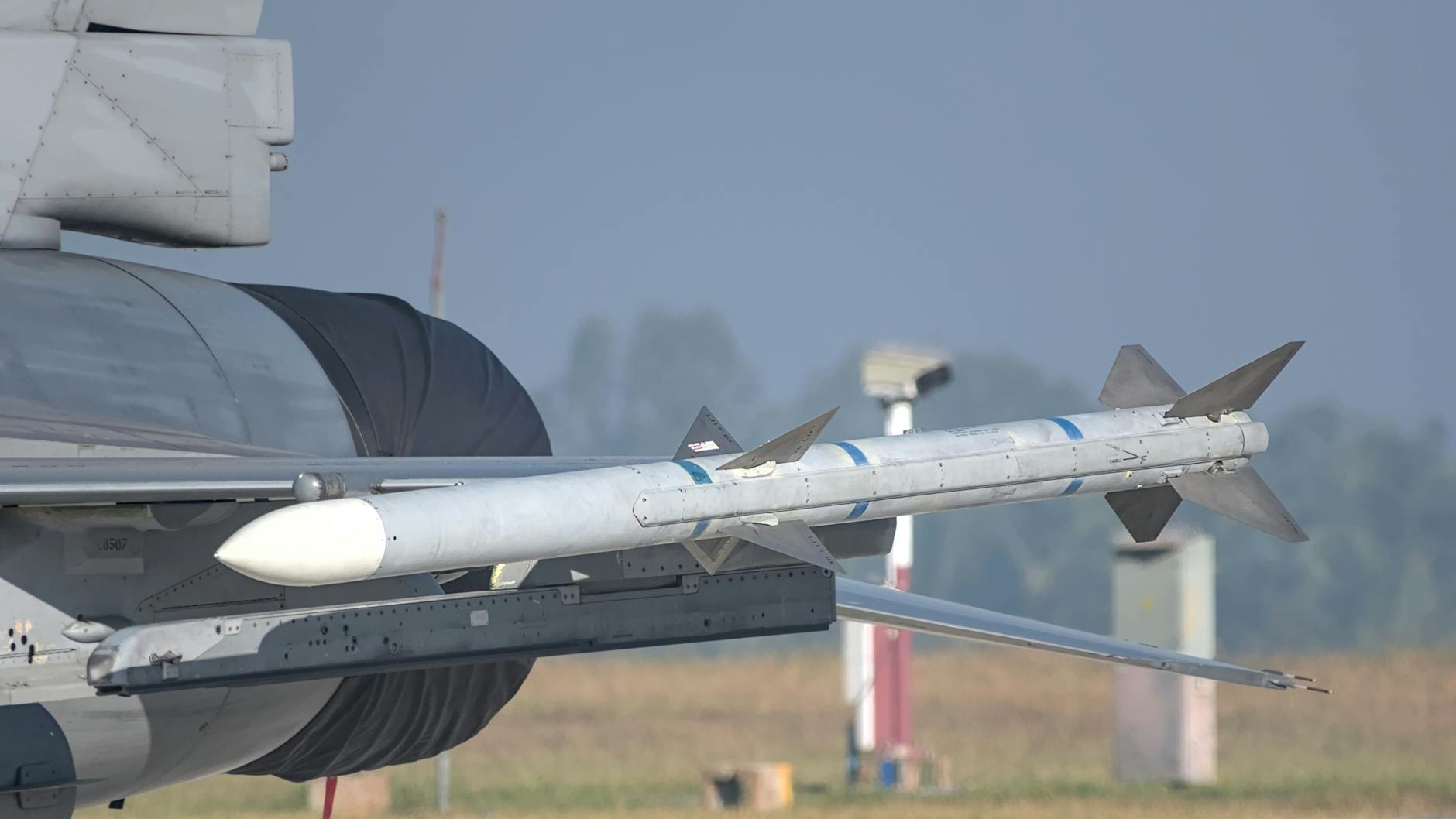
On February 28, 2026, Iran launched a massive retaliatory missile and drone barrage against U.S. military bases in Qatar, Bahrain, Kuwait, Jordan, and the UAE, marking the most significant direct Iranian military attack on American forces in the region’s history. The strikes, which targeted at least 27 military installations where U.S. troops are deployed, killed three American service members, seriously wounded five others, and caused widespread civilian damage across multiple Gulf states. The Islamic Revolutionary Guard Corps confirmed targeting Al Udeid Air Base in Qatar, Ali Al Salem Air Base in Kuwait, Al Dhafra Air Base in the UAE, the U.S.
Navy Fifth Fleet Headquarters in Bahrain, and Muwaffaq al-Salti Air Base in Jordan. The Iranian attacks came hours after the United States and Israel launched a joint military operation codenamed “Operation Epic Fury,” which struck Iranian nuclear sites and IRGC facilities and killed Iran’s Supreme Leader Ayatollah Ali Khamenei. The scale of Iran’s response — 137 missiles and 209 drones toward the UAE alone, and 65 missiles and 12 drones toward Qatar — has thrown the entire Gulf region into crisis. Multiple nations closed their airspace, airports in Dubai and Kuwait were disrupted, and the IRGC reportedly closed the Strait of Hormuz to all shipping traffic. This article covers the full scope of the attacks, the confirmed damage and casualties, the regional fallout, and what this escalation means for American military personnel and civilians living in the Gulf.
Table of Contents
- What Happened When Iran Fired Missiles at U.S. Bases Across Qatar, Bahrain, Kuwait, Jordan, and the UAE?
- How Severe Is the Civilian and Infrastructure Damage Across the Gulf?
- The Strait of Hormuz Closure and Its Global Economic Impact
- What Does This Mean for U.S. Military Personnel and Their Families?
- The Killing of Khamenei and Iran’s Internal Power Dynamics
- Regional Airspace Closures and the Humanitarian Dimension
- What Comes Next in the U.S.-Iran Confrontation
- Conclusion
- Frequently Asked Questions
What Happened When Iran Fired Missiles at U.S. Bases Across Qatar, Bahrain, Kuwait, Jordan, and the UAE?
The IRGC’s retaliatory operation unfolded in waves beginning late on February 28 and continuing into March 1, 2026. iran deployed a combination of ballistic missiles and Shahed-series drones against American military installations spread across five countries. The sheer geographic scope of the attack was unprecedented — rather than concentrating fire on a single base, Iran attempted to overwhelm air defenses across the entire U.S. Central Command footprint in the Middle East. Video footage captured a Shahed drone directly striking a radar dome at the U.S. Navy’s Fifth Fleet headquarters at Juffair in Bahrain, one of the most heavily fortified American installations in the region. The attack on Qatar saw 65 missiles and 12 drones launched toward the country, with most intercepted by air defense systems. Sixteen people were injured from falling debris despite the interceptions — a reminder that even “successful” missile defense creates its own hazards on the ground.
Al Udeid Air Base, which serves as the forward headquarters for U.S. Central Command and houses thousands of American military personnel, was a primary target. The UAE bore the heaviest volume of fire, with 137 missiles and 209 drones directed at the country, overwhelming defenses and causing significant damage in Abu Dhabi and Dubai. As of 9:30 AM ET on March 1, three U.S. service members had been confirmed killed in action and five seriously wounded, with additional personnel sustaining minor shrapnel injuries and concussions. These casualty figures were expected to rise as assessments continued and strikes had not yet ceased. For context, the last time Iran directly killed American service members in a military attack was during a January 2020 missile strike on Al Asad Airbase in Iraq, which resulted in traumatic brain injuries but no deaths. This time, Iran clearly intended to inflict lethal damage.

How Severe Is the Civilian and Infrastructure Damage Across the Gulf?
The civilian toll has been significant and is likely to grow. In the UAE, missile debris struck Abu Dhabi and the Palm Jumeirah area of Dubai. The Fairmont The Palm hotel caught fire, injuring four people. At Abu Dhabi’s airport, at least one person was killed and seven wounded. In Bahrain, a drone struck the Era View residential tower in the Hoora neighborhood, causing heavy damage to the upper floors of what is a civilian apartment building. In Kuwait, a combined drone and missile barrage hit near Kuwait International Airport and adjacent U.S. facilities, injuring several people and damaging portions of the terminal. The infrastructure disruption extends beyond the immediate blast zones.
Both Dubai airport — one of the world’s busiest international hubs — and Kuwait International Airport saw operations disrupted. For the millions of expatriates, business travelers, and tourists who rely on Gulf aviation infrastructure, this represents a cascading economic and logistical crisis. However, it is important to note that the full extent of damage to U.S. military installations has not been publicly disclosed. The Pentagon typically withholds detailed damage assessments during ongoing hostilities, so the picture available to the public as of March 1 is almost certainly incomplete. The civilian damage raises serious legal and diplomatic questions. Iran has claimed its strikes targeted only military installations, but the reality on the ground tells a different story. When you fire hundreds of missiles and drones into densely populated Gulf cities, civilian casualties are not collateral damage — they are a foreseeable consequence. Whether Iran faces international accountability for strikes on civilian infrastructure in sovereign nations that were not party to Operation Epic Fury will be a defining question in the weeks ahead.
The Strait of Hormuz Closure and Its Global Economic Impact
Perhaps the most consequential dimension of Iran’s response is the reported closure of the Strait of Hormuz. The IRGC reportedly began transmitting messages to commercial vessels that no ships would be permitted to pass through the strait. Roughly 20 percent of the world’s oil supply transits the Strait of Hormuz daily, making it the single most important chokepoint in global energy markets. If Iran sustains this blockade for even a few days, the economic consequences will dwarf the physical damage from the missile strikes themselves. Oil prices were already surging in the hours after Operation Epic Fury was announced. A sustained Hormuz closure would send energy markets into crisis territory, with ripple effects hitting everything from gasoline prices in the United States to manufacturing costs in Asia.
For american consumers already dealing with elevated inflation, a disruption to Gulf oil flows would hit household budgets hard and fast. The U.S. Navy’s Fifth Fleet, headquartered at the very base in Bahrain that was struck by an Iranian drone, is tasked with keeping the strait open — but its ability to do so while simultaneously defending against ongoing Iranian attacks is an open question. The economic warfare dimension of this conflict deserves as much attention as the military dimension. Iran has long threatened to close Hormuz in the event of a direct attack, and skeptics dismissed it as bluster. It no longer appears to be bluster.

What Does This Mean for U.S. Military Personnel and Their Families?
For the tens of thousands of American service members stationed across the Gulf, this is no longer a theoretical threat environment. Bases that were considered relatively safe rear-echelon postings — places where families sometimes accompanied service members — are now active conflict zones. Al Udeid, Al Dhafra, Ali Al Salem, and the Fifth Fleet headquarters in Bahrain all host not just combat aircraft and command infrastructure but also dining facilities, housing units, and recreational areas used by thousands of Americans. The tradeoff that successive administrations made in building this base network is now starkly visible. Dispersing forces across multiple Gulf states was meant to create redundancy and deterrence — the idea being that Iran would not risk attacking the sovereign territory of its Gulf neighbors.
That assumption failed on February 28. Every one of those host nations saw Iranian ordnance land on or near its territory, and the diplomatic relationships that underpinned the basing agreements are now under severe strain. Qatar, Kuwait, Bahrain, the UAE, and Saudi Arabia all condemned the Iranian attacks, but condemnation is different from continued consent to host the forces that provoked them. Military families stateside face an agonizing information vacuum. Official casualty notifications are slow by design — the military will not release names until next of kin are notified — and the ongoing nature of the strikes means the situation is fluid. The three confirmed deaths and five serious injuries reported as of March 1 morning are almost certainly not the final tally.
The Killing of Khamenei and Iran’s Internal Power Dynamics
The death of Ayatollah Ali Khamenei in the U.S.-Israeli strikes is a variable that makes this crisis fundamentally different from previous U.S.-Iran confrontations. Khamenei had been Iran’s Supreme Leader since 1989. His death removes the single figure who had ultimate authority over Iran’s military, nuclear, and foreign policy decisions for nearly four decades. The question of who controls Iran’s military apparatus right now — and whether that person or faction has the authority to negotiate a ceasefire — is genuinely unclear. Iranian leaders have publicly projected defiance in the wake of Khamenei’s death, but defiance is not the same as strategic coherence. The IRGC, which operates semi-autonomously from Iran’s elected government, appears to be driving the military response.
If hardline IRGC commanders are operating without the restraining influence of a supreme leader, the strikes could continue to escalate rather than wind down. Israel, for its part, renewed attacks on Tehran even as Iranian missiles were still flying toward Gulf bases — creating a feedback loop of escalation with no obvious off-ramp. The historical comparison that matters here is not the 2020 Soleimani crisis, which resolved relatively quickly. It is the 1979 revolution and the subsequent hostage crisis, during which the collapse of centralized authority in Iran led to months of unpredictable and escalatory behavior. The absence of a supreme leader does not mean Iran is weakened. It may mean Iran is more dangerous because the decision-making process has fragmented.

Regional Airspace Closures and the Humanitarian Dimension
Qatar, Kuwait, Bahrain, the UAE, and Saudi Arabia all temporarily closed their airspace in response to the attacks. For a region that serves as a global aviation hub — Dubai International Airport alone handled over 87 million passengers in recent years — the closures have immediate humanitarian consequences. Thousands of travelers are stranded. Medical evacuation flights, humanitarian supply chains, and diplomatic movements are all disrupted.
📨 Get Free Accountability Coverage Alerts
Free · No spam · Unsubscribe anytime
Commercial airlines rerouting around the Gulf face longer flight times and higher fuel costs, expenses that will be passed directly to consumers. The airspace closures also complicate the U.S. military’s own logistics. Resupply, reinforcement, and medical evacuation flights for the very bases under attack depend on access to regional airspace and airports. The closure, while understandable from the perspective of Gulf governments protecting their civilians, creates an operational challenge for American commanders trying to respond to an ongoing attack.
What Comes Next in the U.S.-Iran Confrontation
As of March 1, 2026, the strikes were continuing. More blasts were reported in Dubai, Doha, and Manama. Israel was simultaneously striking Tehran. There is no ceasefire, no backchannel negotiation that has been publicly acknowledged, and no indication that either side is prepared to stand down. The Strait of Hormuz remains closed to commercial shipping.
The path forward depends on decisions that have not yet been made in Washington, Tehran, and Jerusalem. If the U.S. responds to the base attacks with another round of strikes on Iranian territory, the cycle of escalation continues and the Gulf states — none of whom asked for this war — bear the consequences. If the Hormuz closure holds, global economic disruption will create pressure for diplomatic intervention, possibly from China, which depends heavily on Gulf oil. What is clear is that the post-February 28 Middle East is a fundamentally different strategic environment than what existed before, and the consequences will be measured in years, not days.
Conclusion
Iran’s retaliatory missile and drone attacks on U.S. military bases across five Gulf nations represent an unprecedented escalation in the U.S.-Iran conflict. Three American service members are dead, civilians in multiple countries have been killed and injured, critical infrastructure has been damaged, and the Strait of Hormuz — the world’s most important oil chokepoint — has reportedly been closed. The strikes followed the U.S.-Israeli Operation Epic Fury, which destroyed Iranian nuclear and military sites and killed Supreme Leader Khamenei, removing the central authority figure in Iranian governance at the worst possible moment.
For Americans watching this unfold, the immediate concerns are the safety of U.S. military personnel still under fire, the economic impact of disrupted oil flows and aviation, and whether this escalation can be contained before it becomes a full-scale regional war. The Gulf states that host American bases did not choose this fight, and their willingness to continue hosting U.S. forces in the aftermath is not guaranteed. The coming days will determine whether February 28, 2026 was the beginning of a brief but intense exchange or the opening chapter of a much larger conflict.
Frequently Asked Questions
How many U.S. military bases did Iran attack?
The IRGC claimed to have targeted 27 military bases where U.S. troops are deployed, plus Israeli military sites. Confirmed targets include Al Udeid Air Base in Qatar, Ali Al Salem Air Base in Kuwait, Al Dhafra Air Base in the UAE, the U.S. Navy Fifth Fleet Headquarters in Bahrain, and Muwaffaq al-Salti Air Base in Jordan.
How many American service members have been killed or injured?
As of 9:30 AM ET on March 1, 2026, three U.S. service members were killed in action, five were seriously wounded, and several others sustained minor shrapnel injuries and concussions. These numbers are expected to change as the situation develops.
Is the Strait of Hormuz actually closed?
The IRGC reportedly closed the Strait of Hormuz to shipping, with commercial vessels receiving messages that no ships were allowed to pass. The duration and enforceability of this closure remain uncertain, but any disruption to the strait — through which roughly 20 percent of the world’s oil passes daily — has massive economic implications.
Why did Iran attack U.S. bases in Gulf countries?
The attacks were retaliation for Operation Epic Fury, a joint U.S.-Israeli military operation launched on February 28, 2026, that targeted Iranian nuclear sites and IRGC facilities. The operation also killed Iran’s Supreme Leader Ayatollah Ali Khamenei. Iran struck the U.S. bases that were most accessible in neighboring Gulf states rather than attempting to strike the U.S. homeland.
Were civilians killed in the Iranian attacks?
Yes. At least one person was killed and seven wounded at Abu Dhabi’s airport. Sixteen people were injured by missile debris in Qatar. Four people were injured when the Fairmont The Palm hotel in Dubai caught fire from debris. A drone struck a residential tower in Bahrain. Several people were injured near Kuwait International Airport.
Are the attacks still ongoing?
As of March 1, 2026, yes. Additional blasts were reported in Dubai, Doha, and Manama, and the situation remained fluid. Israel was simultaneously renewing strikes on Tehran.
You Might Also Like
- Trump Launches Operation Epic Fury — U.S. and Israel Begin Massive Strikes Across Iran
- 3 U.S. Service Members Killed, 5 Seriously Wounded in Iran Operation
- Trump Told Congress Iran “Working to Build Missiles”…Hours After Rubio Briefed Gang of Eight Members