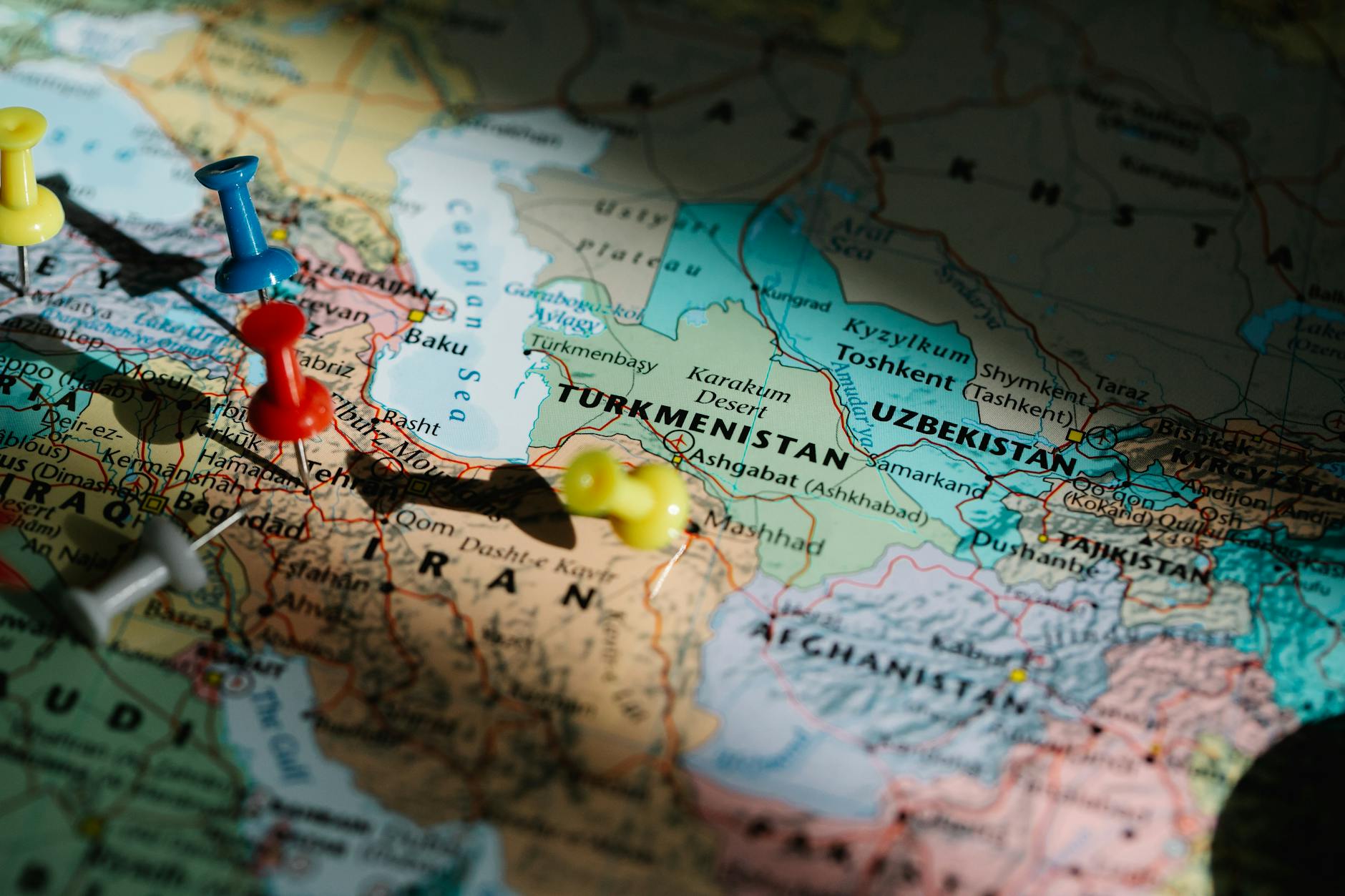
No, Iran is not Iraq, and it is not Afghanistan. The geography is different, the military is different, the political structure is different, and anyone who claims a conflict with Iran would follow the same script as either of those two wars is oversimplifying a dangerously complex situation. But dismissing the comparisons entirely is just as reckless. The United States spent over two decades entangled in Iraq and Afghanistan based on assumptions that turned out to be catastrophically wrong — about the duration of conflict, the cost, the ease of regime change, and the willingness of local populations to embrace Western-backed governance. When senior officials in the Trump administration use language about Iran that echoes the rhetorical buildup to those earlier conflicts, the pattern recognition is not paranoia. It is experience.
The parallels worth examining are not about terrain or troop strength. They are about institutional decision-making failures, intelligence assumptions, the gap between stated war aims and actual outcomes, and the staggering financial and human costs that the American public was never honestly prepared for. Iraq was supposed to be a short engagement. Afghanistan was supposed to be about al-Qaeda, not a twenty-year nation-building project. Iran, with a population of 88 million, a conventional military ranked among the top fifteen globally, and proxy networks spanning four countries, would make both of those conflicts look like dress rehearsals. This article examines where the analogies hold, where they break down, and why the American public should be paying close attention to the rhetoric coming out of Washington right now.
Table of Contents
- Why Do Policymakers Keep Comparing Iran to Iraq and Afghanistan?
- Where the Iran Analogy Breaks Down — and Why That Might Make Things Worse
- The Cost Question — What Iraq and Afghanistan Actually Cost the United States
- Diplomatic Off-Ramps vs. Military Escalation — The Real Tradeoff
- The Intelligence Problem — Why “This Time We Know” Should Raise Red Flags
- What Iran’s Proxy Network Means for the “Limited Strike” Fantasy
- What the American Public Should Actually Be Watching For
- Conclusion
- Frequently Asked Questions
Why Do Policymakers Keep Comparing Iran to Iraq and Afghanistan?
The comparison keeps surfacing because the political mechanics look familiar. In the lead-up to the Iraq invasion in 2003, the American public was presented with a threat narrative built on weapons of mass destruction, ties to terrorism, and the promise that regime change would produce a stable, democratic ally. Intelligence was selectively presented. Dissenting voices within the CIA and State Department were sidelined. Media coverage largely amplified the administration’s framing rather than challenging it. When officials today describe Iran’s nuclear program as an existential threat requiring military options — without equally emphasizing the diplomatic channels that produced the 2015 Joint Comprehensive Plan of Action — the structural pattern is hard to miss. Afghanistan offers a different but equally instructive parallel. The initial intervention in 2001 had broad international support and a clearly defined enemy in al-Qaeda.
But mission creep transformed a targeted counterterrorism operation into the longest war in American history, costing over $2.3 trillion by the time the last troops withdrew in August 2021. The lesson is not that the initial justification was wrong. The lesson is that initial justifications have very little to do with where a military engagement actually ends up ten or fifteen years later. Proponents of military action against Iran tend to describe limited strikes on nuclear facilities. Critics point out that “limited” was also the word used to describe initial plans for both Iraq and Afghanistan. The comparison also persists because many of the same institutional actors are involved. John Bolton, who served as National Security Advisor under Trump and has long advocated for regime change in Tehran, was also a prominent voice in the push for the Iraq war. Several think tanks that provided intellectual cover for the Iraq invasion now publish papers advocating a harder line on Iran. Personnel continuity matters because it suggests that the analytical frameworks that produced past failures have not been replaced — they have simply been redirected toward a new target.

Where the Iran Analogy Breaks Down — and Why That Might Make Things Worse
iran is not a fractured state held together by a dictator, which is what Iraq was under Saddam Hussein. It is a functioning theocratic republic with institutional depth, a professional military, and a parallel Revolutionary Guard Corps (IRGC) that operates its own economic empire, intelligence apparatus, and foreign proxy networks. Iraq’s army collapsed within weeks in 2003 because its command structure depended entirely on Saddam’s regime. Iran’s military infrastructure is decentralized by design, specifically to survive a decapitation strike. This is not a point in favor of military optimism. It means that even a successful initial campaign would face organized, well-funded resistance with no single point of failure to exploit. The geographic comparison is equally unfavorable. Iraq is roughly 169,000 square miles with large stretches of flat, open desert — ideal terrain for the kind of mechanized warfare the U.S. military excels at.
Iran is 636,000 square miles, nearly four times the size, with mountain ranges along almost every border, dense urban centers, and limited invasion corridors. Afghanistan’s mountainous terrain was one of the primary reasons that conflict dragged on for twenty years despite overwhelming American technological superiority. Iran’s terrain is comparable in difficulty but at a dramatically larger scale, with a population nearly three times the size of Iraq’s at the time of the 2003 invasion. However, if the argument is that Iran’s greater military capability means the U.S. would never attempt a ground invasion and would instead rely on air strikes, that assumption carries its own risks. Limited air campaigns have a poor track record of achieving regime change or permanently degrading a determined adversary’s capabilities. NATO’s air campaign against Serbia in 1999 lasted 78 days and succeeded only because Serbia was a small country with limited strategic depth. Iran could absorb strikes on its nuclear facilities and retaliate through Hezbollah in Lebanon, militias in Iraq, the Houthis in Yemen, and direct missile attacks on U.S. bases and allies throughout the Persian Gulf. A “limited” strike on Iran is a concept that exists in PowerPoint presentations but has no real-world precedent to support it.
The Cost Question — What Iraq and Afghanistan Actually Cost the United States
The financial cost of the iraq and Afghanistan wars provides the most concrete basis for comparison. According to Brown University’s Costs of War Project, the total expenditure for post-9/11 military operations — including Iraq, Afghanistan, Pakistan, Syria, and related obligations — reached approximately $8 trillion by 2023. That figure includes direct military spending, veterans’ care for the 1.9 million service members who deployed, interest on war-related borrowing, and homeland security costs. For context, $8 trillion is roughly one-third of the current national debt. These costs were never presented honestly to the public at the outset. In 2002, the Bush administration’s economic advisor Lawrence Lindsey estimated the Iraq war would cost $100 to $200 billion, and he was fired for saying so — the official estimate at the time was $50 to $60 billion.
The actual cost of Iraq alone exceeded $3 trillion. This matters for the Iran discussion because cost projections for military action against Iran, to the extent that any official projections exist at all, would face the same incentive structures that produced the Iraq underestimates. Administrations seeking public support for military action have no institutional reason to present honest cost figures and every political reason to minimize them. A military confrontation with Iran would likely cost significantly more than Iraq for several reasons: Iran’s ability to disrupt global oil shipments through the Strait of Hormuz (through which approximately 20% of the world’s oil passes daily), the need for a larger force structure to cover a country four times Iraq’s size, and the near-certainty of retaliatory attacks on U.S. assets and allied nations in the region that would require additional defensive deployments. The Congressional Budget Office has not published a comprehensive estimate for an Iran conflict scenario, but independent analysts have suggested figures starting at $2 trillion for even a limited engagement — before accounting for the economic disruption of an oil shock that could push global crude prices above $200 per barrel.
Diplomatic Off-Ramps vs. Military Escalation — The Real Tradeoff
The 2015 Iran nuclear deal, formally the Joint Comprehensive Plan of Action (JCPA), was an imperfect agreement. It did not address Iran’s ballistic missile program, it had sunset clauses on certain restrictions, and it left Iran’s regional proxy activities untouched. Critics were right to point out these limitations. But the deal did achieve its primary objective: it verifiably froze Iran’s nuclear enrichment program, extended Iran’s breakout time to a nuclear weapon from roughly two months to over a year, and subjected Iranian facilities to the most intrusive international inspection regime ever negotiated. When the Trump administration withdrew from the deal in May 2018, Iran’s enriched uranium stockpile was within the agreed limits and international inspectors had certified compliance in every quarterly report. The withdrawal was premised on the idea that maximum pressure sanctions would force Iran back to the table for a “better deal.” That did not happen.
Instead, Iran resumed enrichment, has now accumulated enough enriched uranium for multiple weapons if further processed, and reduced cooperation with international inspectors. The strategic position of the United States vis-a-vis Iran’s nuclear program is objectively worse in 2026 than it was in 2017. This outcome mirrors a recurring pattern: the assumption that coercive measures will produce capitulation rather than escalation, which was also the operating theory behind sanctions on Iraq throughout the 1990s — sanctions that devastated the Iraqi civilian population while doing nothing to weaken Saddam’s grip on power. The tradeoff is not between a perfect diplomatic solution and military action. It is between a flawed diplomatic process that constrains Iran’s nuclear program with verification mechanisms, and a military option that would at best delay the program by a few years while guaranteeing a regional conflagration. Every serious military analysis, including those from Israeli defense establishments, concludes that airstrikes cannot permanently destroy Iran’s nuclear infrastructure — they can only set it back temporarily while eliminating any Iranian domestic political constituency that favored negotiated restraint.
The Intelligence Problem — Why “This Time We Know” Should Raise Red Flags
The single most consequential failure in the Iraq war was the intelligence assessment that Saddam Hussein possessed active weapons of mass destruction programs. The 2002 National Intelligence Estimate stated with “high confidence” that Iraq had chemical and biological weapons and was reconstituting its nuclear program. Every major claim turned out to be wrong. Secretary of State Colin Powell’s February 2003 presentation to the UN Security Council, which he later called a “blot” on his record, relied on source material that the intelligence community itself had flagged as unreliable. This history does not mean that current intelligence assessments about Iran are wrong. Iran’s nuclear activities are better documented than Iraq’s WMD programs ever were, in part because of the inspection infrastructure established under the JCPA and preceding agreements.
The International Atomic Energy Agency has reported extensively on Iran’s enrichment levels and stockpile sizes. But the intelligence failure on Iraq was not solely about getting the facts wrong — it was about institutional pressure to interpret ambiguous evidence in the direction that supported a predetermined policy conclusion. When an administration has already decided on confrontation, intelligence agencies face enormous pressure to provide supporting analysis rather than complicating assessments. The warning here is specific: if the public case for military action against Iran relies on classified intelligence that cannot be independently verified, that playbook was already used once with catastrophic results. Any honest assessment of the Iran threat should be built on the extensive public record from the IAEA, not on assertions that require trust in the same intelligence institutions that failed on Iraq. The American public earned the right to skepticism, and exercising it is not disloyalty — it is the basic civic function that was absent in 2002 and 2003.
📨 Get Free Accountability Coverage Alerts
Free · No spam · Unsubscribe anytime

What Iran’s Proxy Network Means for the “Limited Strike” Fantasy
One of the most significant differences between Iran and either Iraq or Afghanistan is Iran’s network of allied militias and proxy forces across the Middle East. Hezbollah in Lebanon maintains an estimated 150,000 rockets and missiles aimed at Israel. Iranian-backed militias in Iraq have attacked U.S. bases dozens of times since 2019. The Houthis in Yemen demonstrated the ability to strike deep into Saudi Arabia and disrupt Red Sea shipping throughout 2024 and into 2025.
Any military action against Iran would activate some or all of these networks simultaneously. This is why the concept of a “limited strike” against Iranian nuclear facilities is considered unrealistic by most military planners outside the political sphere. A strike on Iran proper would trigger retaliatory attacks across multiple theaters, requiring the United States to defend allies, protect its own regional bases, potentially escort commercial shipping through the Strait of Hormuz, and manage the domestic political fallout of a conflict that was described as contained but immediately metastasized. The Iraq war began with “shock and awe” and ended with a two-decade counterinsurgency. The Afghanistan war began with special forces on horseback and ended with a chaotic evacuation from Kabul. Beginnings in the Middle East rarely predict endings.
What the American Public Should Actually Be Watching For
The most useful lesson from Iraq and Afghanistan is not about military strategy. It is about recognizing the rhetorical and institutional patterns that precede a commitment to military action before the public debate has actually occurred. Watch for the gradual elimination of diplomatic options being presented as something that “already failed.” Watch for intelligence claims that are asserted with confidence but sourced to classified materials. Watch for the framing of skeptics as naive or unpatriotic. Watch for cost estimates that assume best-case scenarios.
And watch for the quiet repositioning of military assets — carrier groups, air wings, missile defense systems — that creates operational momentum independent of any congressional authorization. The United States has the right to defend its interests, and Iran’s government is genuinely hostile to American influence in the region. These things can be true simultaneously with the observation that the American track record on Middle Eastern military interventions is abysmal, that the institutional incentives that produced those failures have not been reformed, and that a war with Iran would be the most consequential military decision since the invasion of Iraq. The parallels are not perfect. They never are. But the patterns are there for anyone willing to look, and ignoring them because the analogy is imprecise is exactly the kind of reasoning that got us into the last two wars.
Conclusion
Comparing Iran to Iraq or Afghanistan is not a one-to-one exercise, and anyone who treats it as such is missing the point. Iran is a larger, more capable, more geographically challenging adversary with a functioning state apparatus and a regional network that neither Iraq nor Afghanistan possessed. In almost every measurable dimension — population, military capability, economic leverage through oil markets, proxy reach — Iran represents a more formidable challenge than either prior conflict. The analogy is not about equivalence. It is about pattern recognition.
The patterns that matter are not military. They are political and institutional: the selective use of intelligence, the minimization of costs, the dismissal of diplomatic alternatives, the promise that this time will be different. The American public has been through this process twice in twenty-five years, and the combined cost has been $8 trillion, over 7,000 American service members killed, hundreds of thousands of civilian deaths, and two countries that are not measurably more stable or democratic than they were before the U.S. intervened. Those are not abstract historical parallels. They are recent, documented, and directly relevant to any serious conversation about what comes next with Iran.
Frequently Asked Questions
Has the U.S. ever conducted military strikes against Iran?
The U.S. has not conducted a direct large-scale military strike on Iranian soil, though there have been significant incidents. In January 2020, the U.S. killed IRGC commander Qasem Soleimani in a drone strike in Baghdad, Iraq. Iran retaliated by launching ballistic missiles at U.S. bases in Iraq, injuring over 100 American service members. The U.S. also shot down an Iranian civilian airliner in 1988, killing 290 people, during naval tensions in the Persian Gulf.
Could Iran actually close the Strait of Hormuz?
Iran likely could not permanently close the strait against determined U.S. naval opposition, but it could temporarily disrupt traffic using mines, fast attack boats, and anti-ship missiles. Even a temporary disruption lasting days or weeks would send global oil prices soaring and cause significant economic damage. The U.S. Fifth Fleet is based in Bahrain specifically to ensure transit through the strait, but clearing mines and neutralizing coastal defenses would take time.
Is Iran close to building a nuclear weapon?
As of early 2026, Iran has enriched uranium to 60% purity and accumulated stockpiles that, if further enriched to weapons-grade (90%), could theoretically produce enough fissile material for several weapons. However, building a deliverable nuclear warhead requires additional technical steps beyond enrichment. Most intelligence assessments suggest Iran has not made a political decision to build a weapon, though its “breakout time” has shortened significantly since the U.S. withdrew from the 2015 nuclear deal.
Did Congress authorize the Iraq and Afghanistan wars?
Yes, but through Authorizations for Use of Military Force (AUMFs) rather than formal declarations of war. The 2001 AUMF authorized force against those responsible for the September 11 attacks, and the 2002 AUMF authorized force against Iraq. Both authorizations were drafted broadly and were subsequently used to justify military operations far beyond their original scope, in countries and against groups that did not exist when the authorizations were passed. The 2002 Iraq AUMF was finally repealed in 2023.
How large is Iran’s military compared to Iraq’s in 2003?
Iran’s active military consists of approximately 580,000 personnel, plus an estimated 190,000 in the IRGC and several hundred thousand Basij militia members who can be mobilized. Iraq’s military in 2003 was nominally around 375,000 but was severely degraded by a decade of sanctions and the 1991 Gulf War. More importantly, Iran’s military has been specifically organized to fight an asymmetric defensive war against a technologically superior adversary — a strategic posture that Iraq never adopted.
You Might Also Like
- Neoconservatives Celebrate the Iran Strikes — Progressives and Libertarians Are United in Opposition
- Trump’s Iran War Could Push Dozens of Countries Closer to China and Russia
- Trump Pulled Out of the Iran Nuclear Deal in 2018 — 8 Years Later He’s Bombing Tehran