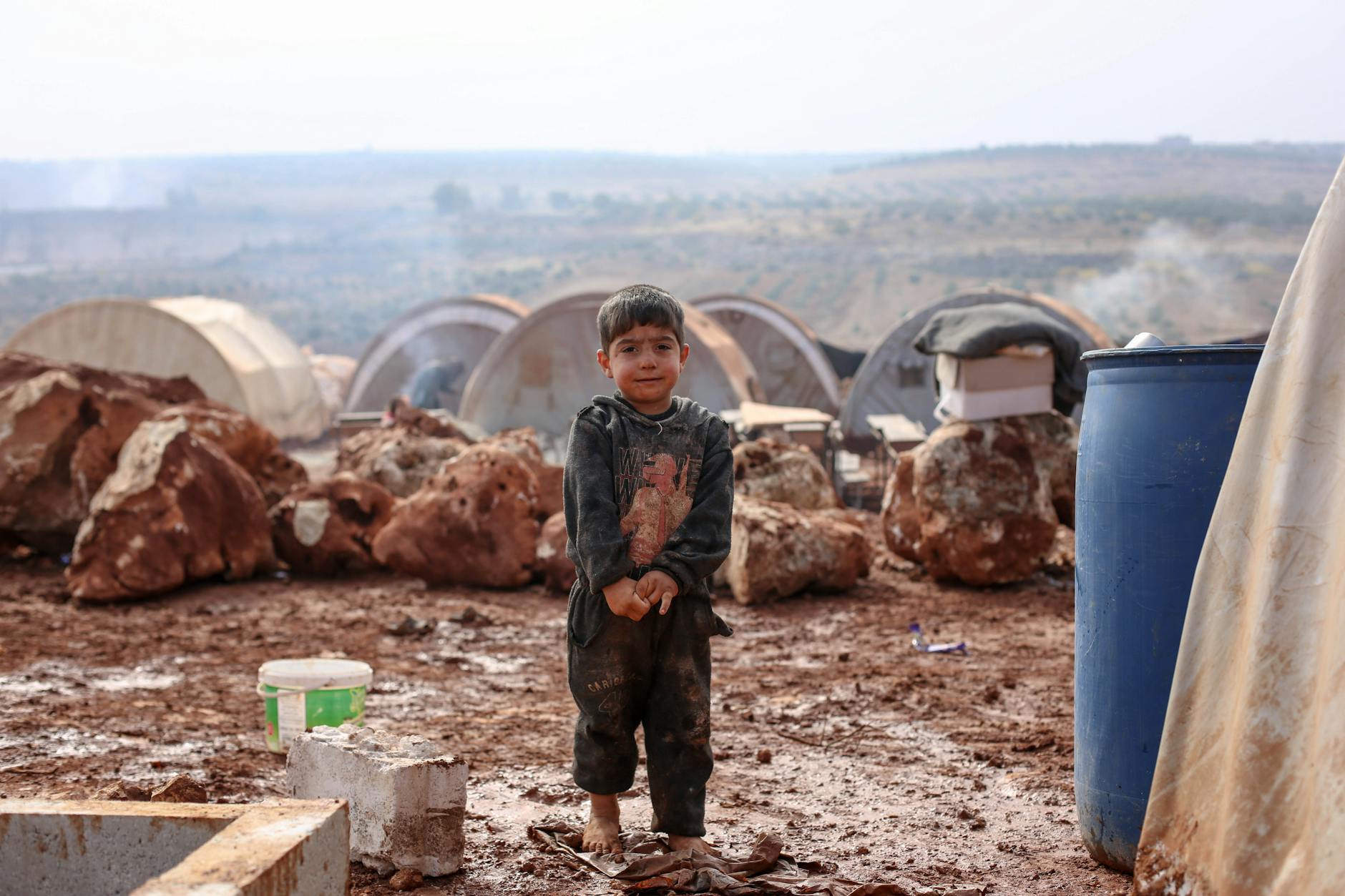
The humanitarian crisis inside Iran is deteriorating at an alarming pace, driven by a collision of crushing international sanctions, domestic economic mismanagement, and a government that continues to prioritize military spending and regional proxy operations over the basic needs of its own people. As of early 2026, inflation has rendered the Iranian rial nearly worthless for ordinary citizens, medicine shortages have reached critical levels in hospitals across Tehran and provincial cities alike, and UN agencies report that millions of Iranians now face food insecurity that would have been unthinkable a decade ago. The situation worsened sharply after the Trump administration reimposed and expanded secondary sanctions targeting Iran’s oil exports, banking sector, and trade networks, effectively cutting the country off from much of the global economy. This is not simply an Iranian government problem or an American foreign policy problem. It is a human problem.
A seventy-year-old diabetic in Isfahan who cannot find insulin at any price did not enrich uranium. A mother in Ahvaz rationing bread for her children did not fund Hezbollah. Yet the practical consequences of maximum pressure sanctions fall disproportionately on these people, while the regime’s leadership continues to live comfortably and fund its strategic priorities without meaningful interruption. This article examines the specific dimensions of the crisis, from healthcare collapse to economic freefall, the role of U.S. sanctions policy, what humanitarian exemptions actually look like in practice versus on paper, and what accountability mechanisms exist or fail to exist for the civilians caught in the middle.
Table of Contents
- What Is Driving the Humanitarian Crisis Inside Iran to Worsen So Rapidly?
- How U.S. Sanctions Policy Creates a Gap Between Humanitarian Exemptions and Reality
- The Healthcare System Under Siege
- What Options Do Iranian Civilians Have and What Are the Tradeoffs?
- Accountability Gaps and the Limits of International Law
- The Role of Regional Instability
- Where This Goes From Here
- Conclusion
- Frequently Asked Questions
What Is Driving the Humanitarian Crisis Inside Iran to Worsen So Rapidly?
The speed of deterioration traces to multiple compounding pressures hitting simultaneously. The reimposition of U.S. secondary sanctions under the Trump administration, particularly those targeting Iran’s Central Bank and oil export revenues beginning in 2018 and dramatically expanded through 2025 and into 2026, removed the financial infrastructure Iran relied on to import food, medicine, and industrial goods. Even where humanitarian exemptions technically exist under U.S. law, foreign banks and shipping companies have broadly refused to process transactions involving Iran for fear of being caught in secondary sanctions enforcement. This is known as overcompliance or the chilling effect, and it is well documented by organizations including Human Rights Watch and the International Crisis Group. A European pharmaceutical company may have every legal right to sell chemotherapy drugs to an Iranian hospital, but if no bank will process the payment and no shipping company will carry the cargo, the legal exemption is functionally meaningless. Domestically, the Iranian government bears enormous responsibility for compounding what sanctions alone would not have caused.
Corruption within the Islamic Revolutionary Guard Corps’ business empire siphons billions from the legitimate economy. Subsidies that once kept staple goods affordable have been slashed or redirected. The government’s response to protests over economic conditions, most notably the nationwide uprisings in 2022 and subsequent smaller demonstrations, has been violent repression rather than reform. Iran’s official inflation rate hovered around 40 to 50 percent through 2025, but independent economists estimate the real rate for food and essential goods is significantly higher. The rial, which traded at roughly 32,000 to the dollar before the 2018 sanctions snapback, has cratered past 600,000 on the open market as of early 2026. Water scarcity adds another layer of crisis that receives less international attention. Decades of mismanaged dam projects, agricultural overuse, and climate change have dried up rivers and aquifers across central and southern Iran. Lake Urmia, once the largest lake in the Middle East, has shrunk to a fraction of its former size, devastating farming communities in the northwest. These environmental pressures were building long before the current sanctions regime, but the economic stranglehold makes adaptation and infrastructure investment nearly impossible.

How U.S. Sanctions Policy Creates a Gap Between Humanitarian Exemptions and Reality
On paper, U.S. sanctions against iran include carve-outs for humanitarian goods. The Treasury Department’s Office of Foreign Assets Control has issued general licenses permitting the sale of food, medicine, and medical devices to Iran. The Biden administration established a humanitarian channel through Swiss banks in 2020, and the Trump administration has publicly maintained that humanitarian trade is not targeted. However, the gap between policy language and on-the-ground reality is vast, and this gap is where people suffer and die. The core problem is that sanctions are enforced through the global financial system, and that system runs on risk aversion. When the U.S. designates Iran’s Central Bank, virtually every major international bank recalculates its exposure and decides that no Iranian transaction is worth the compliance risk.
OFAC penalties for sanctions violations can reach billions of dollars, as BNP Paribas learned when it paid an $8.9 billion fine in 2014. No humanitarian exemption letter from Treasury can fully offset that institutional fear. The result is that even licensed transactions face months of delays, inflated costs from intermediary fees, and frequent outright refusal. Iranian hospitals have reported waiting six months or longer for shipments of specialized drugs that were technically approved for export on day one. There is, however, a critical distinction that honest analysis requires. The Iranian government also manipulates the humanitarian narrative for strategic purposes. Tehran has at times diverted humanitarian imports, inflated shortage numbers for propaganda value, and refused to allocate its own accessible funds toward civilian needs when doing so would undermine its political messaging about Western cruelty. The truth is that both the sanctioning government and the sanctioned government share responsibility, in different ways and different proportions, for civilian suffering. Anyone who tells you it is entirely one side’s fault is either uninformed or lying to you.
The Healthcare System Under Siege
Iran once had one of the more functional healthcare systems in the Middle East. Its medical schools trained competent physicians, its pharmaceutical industry produced a wide range of generic drugs domestically, and its hospital infrastructure, while uneven between cities and rural areas, provided basic coverage to most of the population. That system is now buckling under the weight of supply shortages, brain drain, and funding collapse. The most immediate crisis is in specialized medications. Cancer treatments, immunosuppressants for transplant patients, drugs for rare diseases, and certain anesthetics have become scarce or entirely unavailable. Iran’s domestic pharmaceutical industry can produce many generics, but it depends on imported raw materials, active pharmaceutical ingredients, and manufacturing equipment, all of which are entangled in the sanctions web.
Dr. Mohsen Rezaei, a pseudonym used by a Tehran oncologist who spoke to international media in late 2025, described triaging cancer patients not by medical need but by which drugs happened to be available that week. Patients with treatable cancers are dying not because medicine does not exist, but because it cannot reach them. The brain drain compounds everything. Iranian physicians, nurses, and medical researchers have been leaving the country in record numbers, seeking opportunities in the Gulf states, Turkey, Europe, and North America. The Iranian Medical Council reported that applications for credential verification, the first step toward practicing abroad, increased by over 40 percent between 2023 and 2025. Those who remain face collapsing salaries in real terms, equipment shortages, and the psychological toll of practicing medicine in a system that cannot provide what their patients need.
What Options Do Iranian Civilians Have and What Are the Tradeoffs?
For ordinary Iranians trying to survive the crisis, the options are limited and each carries significant costs. The most common coping strategy is informal economy participation, including black market currency exchange, smuggling of consumer goods across borders with Iraq, Turkey, and Pakistan, and reliance on hawala networks for remittances from family abroad. These informal channels keep millions of families fed and housed, but they operate outside any regulatory framework, expose participants to exploitation and legal risk, and often enrich the very criminal and quasi-governmental networks that contribute to the country’s dysfunction. Emigration is another option, but one available primarily to the educated, the young, and those with some remaining financial resources. Iran has experienced several waves of emigration since the 1979 revolution, but the current wave is notable for its breadth. It is not just dissidents and the wealthy leaving. Middle-class professionals, tradespeople, and even individuals with government connections are seeking exits.
The tradeoff is stark. Those who leave often sacrifice family ties, professional standing, and cultural identity. Those who stay sacrifice economic security and, increasingly, access to basic services. For the elderly and the poor, emigration is not a realistic option at all, and they bear the heaviest burden of the crisis with the fewest resources to cope. There is also the question of internal mutual aid. Iranian civil society, despite severe government repression, has maintained informal networks of charitable giving, neighborhood support, and community kitchens. These efforts are genuine and meaningful, but they are nowhere near sufficient to substitute for functioning state services and international trade. They are a testament to human resilience, not a solution to structural collapse.
Accountability Gaps and the Limits of International Law
One of the most frustrating dimensions of this crisis is the near-total absence of accountability for the civilian toll. Under international law, sanctions regimes are supposed to be designed and administered in ways that minimize harm to civilian populations. The UN Charter, various human rights treaties, and even U.S. domestic law all contain provisions that should, in theory, constrain the most damaging effects of economic warfare. In practice, enforcement of these obligations is almost nonexistent. The United States faces no meaningful legal accountability for the humanitarian consequences of its sanctions policy. While UN special rapporteurs have repeatedly criticized the overcompliance problem and called for more effective humanitarian channels, these reports carry no enforcement mechanism. No U.S. official has ever faced legal consequences for the civilian impact of sanctions on Iran or any other country.
The International Court of Justice ruled in 2018 that the U.S. must ensure that sanctions do not affect humanitarian goods, following a case brought by Iran. The Trump administration responded by withdrawing from the optional protocol that gave the ICJ jurisdiction. The ruling stands as a legal precedent with no practical enforcement. On the Iranian side, accountability is equally absent but for different reasons. The Iranian government faces no meaningful domestic check on its allocation of resources. Military and security spending figures are opaque. The IRGC’s commercial empire operates outside normal budgetary oversight. When Iranian officials claim that all civilian suffering is caused by external sanctions, they face no independent domestic press or legislative body capable of challenging that narrative with evidence about internal misallocation. Iranian citizens who attempt to organize around these issues face arrest, imprisonment, and worse.
📨 Get Free Accountability Coverage Alerts
Free · No spam · Unsubscribe anytime
The Role of Regional Instability
The humanitarian crisis inside Iran cannot be separated from the broader regional context. Iran’s financial and military commitments to allied groups in Lebanon, Syria, Iraq, and Yemen have continued even as domestic conditions deteriorate. The cost of sustaining these operations is difficult to estimate precisely, with figures ranging from $1 billion to $16 billion annually depending on the source and methodology, but it represents a significant allocation of resources away from civilian needs. This creates a bitterly ironic dynamic.
The sanctions are imposed largely because of Iran’s regional military activities, but the regime continues those activities while shifting the economic pain onto civilians. The population most harmed by the policy is the population with the least influence over the behavior the policy is designed to change. This is not a new observation. It has been a central critique of comprehensive sanctions regimes since Iraq in the 1990s, when UNICEF estimated that sanctions contributed to the deaths of hundreds of thousands of Iraqi children. The humanitarian architecture supposedly built to prevent a repeat of the Iraq experience has proven inadequate in the Iranian case.
Where This Goes From Here
The trajectory is not encouraging. Absent a diplomatic breakthrough, whether a revived nuclear agreement, a narrower sanctions relief deal, or some other framework, the economic pressure on Iran will continue to intensify. The Trump administration has shown no interest in sanctions relief and has instead expanded designations and enforcement. Iran’s government has shown no willingness to make the concessions that might lead to relief.
The civilians trapped between these two positions have no leverage over either one. What could change the calculus is unpredictable. A domestic political shift in either country, a regional crisis that forces diplomatic engagement, or a sufficiently dramatic humanitarian catastrophe that generates sustained international media attention and political pressure could all alter the trajectory. But hoping for a crisis bad enough to force action is itself a grim commentary on the current state of affairs. The more realistic near-term expectation is continued deterioration, continued emigration, and a generation of Iranians who will carry the physical and psychological scars of this period for the rest of their lives.
Conclusion
The humanitarian crisis inside Iran is the product of deliberate policy choices by multiple governments, none of whom are bearing the primary costs of those choices. U.S. sanctions policy, whatever its strategic rationale, is functionally strangling civilian access to medicine, food, and economic opportunity through a combination of direct restrictions and the chilling effect on international financial institutions. The Iranian government, meanwhile, continues to prioritize regime survival, military spending, and regional influence projection over the basic welfare of its population.
International legal frameworks designed to protect civilians in these situations have proven toothless. For readers of this site who care about government accountability, this crisis is a case study in what happens when accountability mechanisms fail on every side simultaneously. American taxpayers and voters deserve honest information about what their government’s sanctions actually do to real people, not just press conference talking points about humanitarian exemptions that barely function in practice. Iranian citizens deserve a government that allocates resources toward their survival rather than toward enriching insiders and funding foreign militias. And the international community needs to reckon with the fact that comprehensive economic sanctions, as currently designed and enforced, reliably produce humanitarian catastrophe while unreliably producing the policy changes they are supposed to incentivize.
Frequently Asked Questions
Do U.S. sanctions on Iran actually exempt food and medicine?
Technically, yes. OFAC general licenses permit humanitarian trade. However, the practical reality is that overcompliance by international banks and shipping companies makes these exemptions largely theoretical. Foreign financial institutions fear secondary sanctions penalties and refuse to process most Iran-related transactions, even those that are legally permitted.
Is the Iranian government also responsible for the humanitarian crisis?
Significantly, yes. Corruption, military spending priorities, mismanagement of water resources, repression of civil society, and refusal to allocate accessible funds toward civilian needs all compound the damage caused by external sanctions. Honest analysis requires acknowledging both external and internal causes.
How many Iranians are affected by the current crisis?
UN agencies estimate that tens of millions of Iranians face some degree of food insecurity or reduced access to healthcare. The World Food Programme and other organizations have reported that purchasing power for basic goods has declined dramatically for the majority of the population, with the poorest and most vulnerable communities hit hardest.
Can individual Americans legally send money or goods to family in Iran?
U.S. persons can send remittances to family members in Iran under certain OFAC general licenses, but the practical channels for doing so are limited and expensive. Most major U.S. banks will not process Iran-related transfers. Some specialized licensed money service businesses facilitate remittances, but transaction costs are high and processing times are unpredictable.
What would it take to resolve the crisis?
A meaningful resolution would require either significant sanctions relief tied to a diplomatic agreement, a fundamental shift in Iranian government spending priorities, or ideally both. Neither appears likely in the current political environment. Incremental improvements could come from more effective humanitarian channels, expanded use of licensed financial intermediaries, and greater international pressure on both governments to prioritize civilian welfare.
You Might Also Like
- What Regime Change in Iran Could Actually Look Like Based on History
- Weapons Scattered Across Iran After Regime Collapse Could Arm Extremists for Decades
- War Crimes Allegations Are Already Emerging From the Iran Bombing Campaign