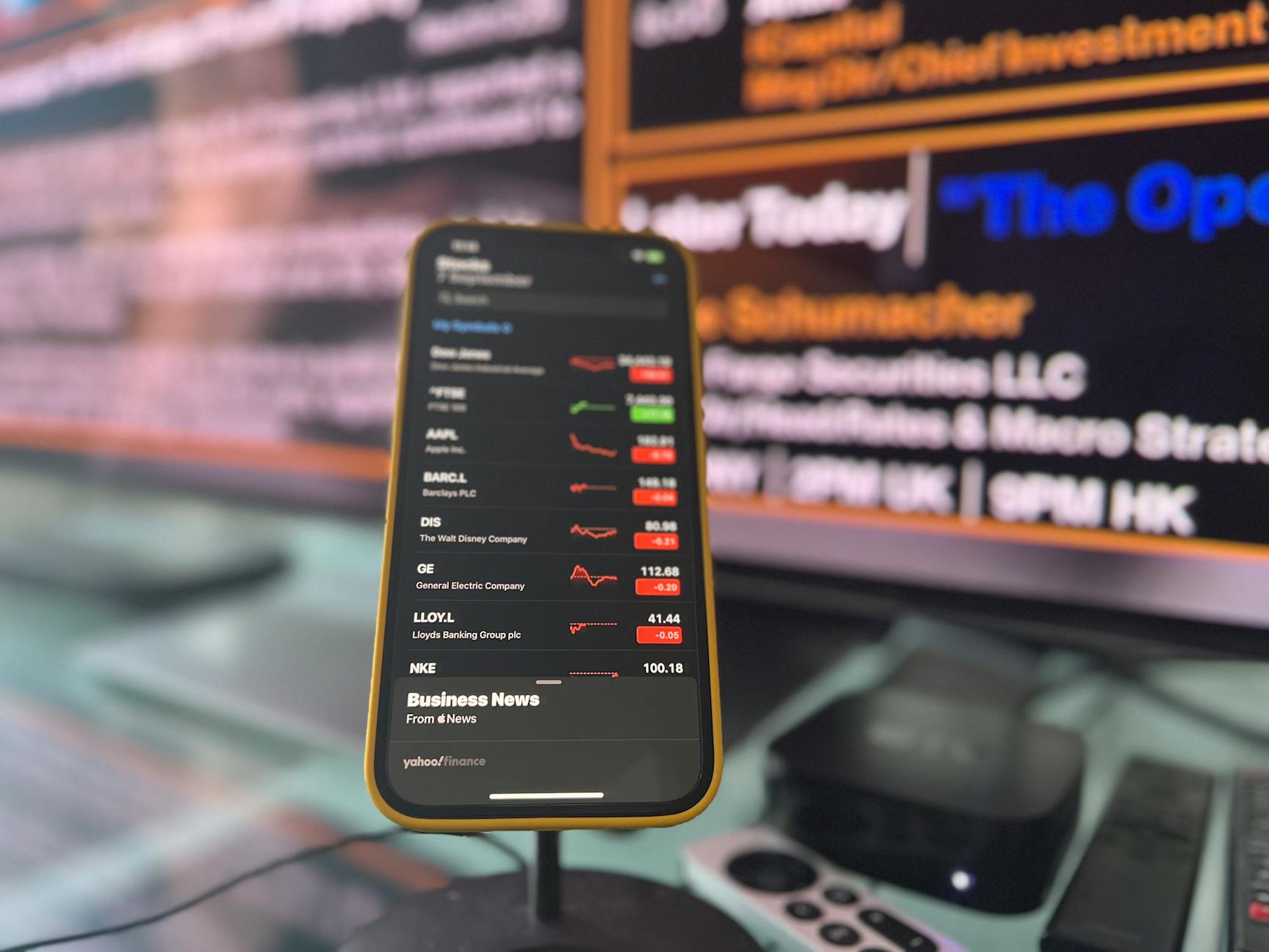
Tech stocks are in retreat in early 2026, and the money is moving somewhere very specific. The Nasdaq has fallen roughly 2.5% year-to-date, posting its worst monthly performance since March 2025 with a decline of over 3% in February alone. Meanwhile, the S&P 500 energy sector has surged approximately 21% since January, and defense contractors like Lockheed Martin are up 36% on the year. This is not a minor tremor — it is a full-blown sector rotation, the kind that reshapes portfolios and punishes investors who refuse to read the room.
The catalysts are not abstract. U.S.-Israeli strikes on Iranian nuclear and naval infrastructure on February 28, 2026, sent oil prices spiking and defense stocks soaring. President Trump’s proposed $1.5 trillion defense budget, announced March 2, has been described as igniting a “security supercycle.” And institutional funds that spent years pouring money into software-as-a-service companies are now reallocating into dividend-paying value stocks as a hedge against sticky inflation. This article breaks down the numbers behind the tech selloff, examines which defense and energy names are leading the charge, and considers what this rotation means for ordinary investors trying to protect their savings.
Table of Contents
- Why Are Tech Stocks Falling While Defense and Energy Sectors Rise?
- Defense Stocks and the $1.5 Trillion Budget Proposal
- Oil Prices, Iran Tensions, and the Energy Sector Rally
- What the Rotation Means for Retail Investors and Retirement Accounts
- The AI Spending Question and Why Software Stocks Are Taking the Hardest Hit
- Geopolitical Risk as the Market’s New Dominant Variable
- Where the Rotation Goes From Here
- Conclusion
- Frequently Asked Questions
Why Are Tech Stocks Falling While Defense and Energy Sectors Rise?
The simplest explanation is that wall Street is repricing risk. For years, mega-cap tech and software companies commanded premium valuations on the promise of future growth, particularly around artificial intelligence. That thesis has started to crack. Microsoft has fallen roughly 20% on investor concerns that its massive AI data center capital expenditures are not generating proportional profit growth. The iShares Expanded Tech-Software ETF is down nearly 23% year-to-date, with February alone accounting for a 10% drop. The broader S&P 500 tech sector has declined about 3% since January, while the S&P 500 itself is roughly flat at +0.49%. The carnage in individual software names is striking.
Intuit is down 38.25% on the year. Workday, Gartner, and The Trade Desk have each fallen more than 37%. ServiceNow has dropped 31%, Salesforce 30%, and Oracle 21%. These are not speculative startups — they are established companies with real revenue. But when institutional “long-only” funds decide that overextended SaaS valuations no longer compensate for risk in an environment of geopolitical conflict and persistent inflation, even blue-chip software gets sold. Compare that to the Dow Jones Industrial Average, which is up 1.9% year-to-date. The Dow is far less exposed to high-growth tech than the Nasdaq, and that gap — nearly 4.5 percentage points of divergence — tells the story of a market rotating decisively from growth toward value.

Defense Stocks and the $1.5 Trillion Budget Proposal
The defense sector has been the most dramatic beneficiary of the current rotation. Lockheed Martin is up approximately 36% year-to-date, making it the standout performer in the sector. Northrop Grumman has climbed about 27.4%, hitting a 52-week high of $758.82. These gains are not based on sentiment alone — Lockheed’s backlog stands at a record $194 billion, and Northrop Grumman’s sits at $95.7 billion as of late 2025. The policy backdrop is doing the heavy lifting. Trump’s proposed $1.5 trillion defense budget, announced on March 2, 2026, represents a significant escalation in military spending.
NATO spending is forecast to reach 2.8% of GDP by 2030, implying roughly 7% compound annual growth across the alliance. For defense contractors, this translates into years of guaranteed revenue visibility, which is exactly what investors crave when the rest of the market feels uncertain. However, investors should be cautious about chasing defense stocks after a 30%+ run. Budget proposals are not appropriations — Congress still has to pass the spending, and political negotiations can delay or dilute even the most ambitious proposals. Moreover, defense stocks historically give back gains quickly when geopolitical tensions de-escalate. If a diplomatic resolution to the iran situation materializes, the sector could pull back sharply even as the underlying budget trajectory remains positive. The backlog numbers are real, but the stock prices already reflect a good deal of optimism.
Oil Prices, Iran Tensions, and the Energy Sector Rally
The energy sector’s 21% gain since January is driven by a combination of geopolitical risk and fundamental demand. Brent crude surged 10-13% toward $80 per barrel, and WTI rose more than 8% to approximately $73, following the U.S.-Iran military escalation and heightened concerns about the Strait of Hormuz — a chokepoint through which roughly 20% of the world’s oil supply passes daily. ExxonMobil has been a primary beneficiary, climbing approximately 24% year-to-date and pushing its market cap to $622.9 billion. Some analysts now project that Exxon could join the $1 trillion market cap club by 2030 at its current trajectory.
Caterpillar, often viewed as a barometer of the “physical economy,” has soared 32% in the first two months of 2026, reflecting broader investor enthusiasm for companies that build, extract, and manufacture tangible goods rather than software. The energy rally also reflects a philosophical shift among large institutional investors. After years of underinvestment in fossil fuel infrastructure — driven partly by ESG mandates and partly by the assumption that renewable energy would rapidly displace hydrocarbons — the market is now confronting the reality that global oil demand has not peaked and that supply disruptions can still move prices violently. For investors in energy names, the key risk is a sudden de-escalation in the Middle East or a demand shock from a global economic slowdown, either of which could reverse the sector’s gains in short order.

What the Rotation Means for Retail Investors and Retirement Accounts
The practical impact of this rotation is felt most acutely by retail investors and retirement savers whose portfolios are heavily weighted toward tech. A standard target-date fund or growth-oriented 401(k) allocation likely has significant exposure to Microsoft, the major software names, and the Nasdaq more broadly. A 20% decline in Microsoft alone is enough to materially affect retirement projections for millions of Americans. The tradeoff facing investors is uncomfortable. Selling tech after a steep decline locks in losses and risks missing a rebound — markets opened deep in the red on March 2, 2026, before dip-buying in tech helped claw back intraday losses, demonstrating that the sector is not in free fall so much as in a volatile repricing.
On the other hand, doing nothing while defense and energy stocks run means missing the sectors where capital is actually flowing. The Dow’s 1.9% gain versus the Nasdaq’s 2.5% loss illustrates that simply being in “the market” is not a uniform experience right now. Where you are in the market matters enormously. For those considering rebalancing, the most prudent approach is incremental rather than wholesale. Trimming overweight tech positions and adding measured exposure to energy and defense can reduce concentration risk without making a binary bet on the rotation’s permanence. No one knows whether this shift lasts six months or six years.
The AI Spending Question and Why Software Stocks Are Taking the Hardest Hit
The software sector’s outsized losses deserve particular scrutiny because they reveal a growing skepticism about the AI investment thesis. Microsoft’s 20% decline is directly tied to concerns about the gap between massive AI data center spending and actual revenue returns. The market is essentially asking: when does all this capital expenditure start producing profits at scale? Until that question gets a convincing answer, investors are treating AI-adjacent software companies as overvalued. This skepticism has broader implications. The iShares Expanded Tech-Software ETF’s 23% year-to-date decline suggests that the selloff is not limited to a handful of names but reflects a sector-wide reassessment.
Companies like ServiceNow and Salesforce, which had positioned themselves as AI beneficiaries, are being sold alongside pure-play software firms. The market is not distinguishing between AI winners and losers — it is discounting the entire narrative. The warning for investors is that this kind of indiscriminate selling often overshoots. Some of these companies will emerge with genuine AI-driven revenue growth, and their current prices may look like bargains in retrospect. But timing that recovery is extremely difficult, and catching a falling knife in software while defense and energy are outperforming requires conviction that most institutional managers apparently do not have right now.
📨 Get Free Accountability Coverage Alerts
Free · No spam · Unsubscribe anytime

Geopolitical Risk as the Market’s New Dominant Variable
The U.S.-Israeli strikes on Iranian nuclear and naval infrastructure on February 28, 2026, functioned as an accelerant for trends that were already underway. Defense and energy were already outperforming before the strikes, but the military escalation triggered an immediate flight-to-quality that amplified the rotation. Oil prices jumped, defense contractors spiked, and tech — perceived as having no direct benefit from geopolitical conflict — sold off further. This dynamic puts investors in a position where portfolio performance is increasingly tied to geopolitical outcomes rather than earnings reports or economic data.
That is an uncomfortable place to be, because geopolitical events are inherently unpredictable. A diplomatic breakthrough with Iran could unwind weeks of defense and energy gains in a single trading session. Conversely, further escalation could push oil above $90 and send defense stocks even higher. For most investors, the honest answer is that they have no edge in predicting these outcomes, which argues for diversification rather than concentrated sector bets.
Where the Rotation Goes From Here
Looking ahead, the sustainability of this rotation depends on several converging factors. If the Trump administration’s $1.5 trillion defense budget moves through Congress in something close to its proposed form, defense stocks have a fundamental floor beneath them regardless of short-term geopolitical shifts. NATO’s projected spending growth to 2.8% of GDP by 2030 provides an additional multi-year tailwind that extends beyond U.S. politics. For energy, the picture is more contingent.
Oil prices are elevated on geopolitical risk, but that risk premium can evaporate quickly. The structural case for energy — underinvestment in supply, resilient global demand — is real but less dramatic than the geopolitical case. And for tech, the key variable is whether AI spending begins to convert into measurable earnings growth. If it does, the current selloff will look like a buying opportunity. If it does not, the repricing has further to go. The market is in the middle of a genuine regime change in sector leadership, and the only certainty is that the investors who insist on treating 2026 like 2024 will be the most surprised by the outcome.
Conclusion
The first two months of 2026 have delivered a clear message: the era of tech-stock dominance is, at minimum, pausing. The Nasdaq’s 2.5% decline against the energy sector’s 21% surge and defense stocks’ 27-36% gains represents one of the most pronounced sector rotations in recent memory. The catalysts — geopolitical conflict with Iran, a record defense budget proposal, AI spending skepticism, and institutional rebalancing away from overvalued software — are reinforcing each other in ways that make this more than a temporary blip.
For investors, the actionable takeaway is to assess portfolio concentration honestly. If your holdings are overwhelmingly in tech and software, you are exposed to a trend that has already cost some of the largest companies in the world 20-38% of their value this year. Diversification into defense and energy is not about chasing returns — it is about acknowledging that the market environment has changed and that the assumptions underpinning the last several years of portfolio construction may no longer hold. Review your allocations, understand what you own, and make deliberate decisions rather than hoping the old playbook still works.
Frequently Asked Questions
How much has the Nasdaq fallen in 2026?
The Nasdaq is down approximately 2.5% year-to-date as of late February 2026 and posted its worst monthly performance since March 2025, declining over 3% in February alone.
Which defense stocks have gained the most in 2026?
Lockheed Martin leads the defense sector with a roughly 36% year-to-date gain, followed by Northrop Grumman at approximately 27.4%. Both companies carry record backlogs — $194 billion for Lockheed and $95.7 billion for Northrop Grumman.
Why are software stocks falling more than other tech sectors?
Software stocks are bearing the brunt because investors are questioning whether massive AI-related capital expenditures will translate into proportional profit growth. The iShares Expanded Tech-Software ETF is down nearly 23% year-to-date, with names like Intuit (-38%), Workday (-37%), and ServiceNow (-31%) leading the decline.
What caused oil prices to spike in early 2026?
Brent crude surged 10-13% toward $80 per barrel and WTI rose more than 8% to approximately $73 following U.S.-Israeli strikes on Iranian nuclear and naval infrastructure on February 28, 2026, and heightened concerns about the Strait of Hormuz shipping lane.
Is it too late to buy defense and energy stocks?
After gains of 21-36% in the first two months of the year, these sectors are no longer cheap entry points. Defense stocks in particular could pull back sharply if geopolitical tensions de-escalate. Incremental position-building with clear risk management is more prudent than chasing momentum at current levels.
You Might Also Like
- Renewable Energy Stocks Rise as Fossil Fuel Supply Vulnerability Gets Exposed
- Hospitals in Tehran Are Overwhelmed as Strikes Continue Into Day Two
- Energy Markets Face Their Biggest Disruption Since the 2022 Russia-Ukraine Crisis