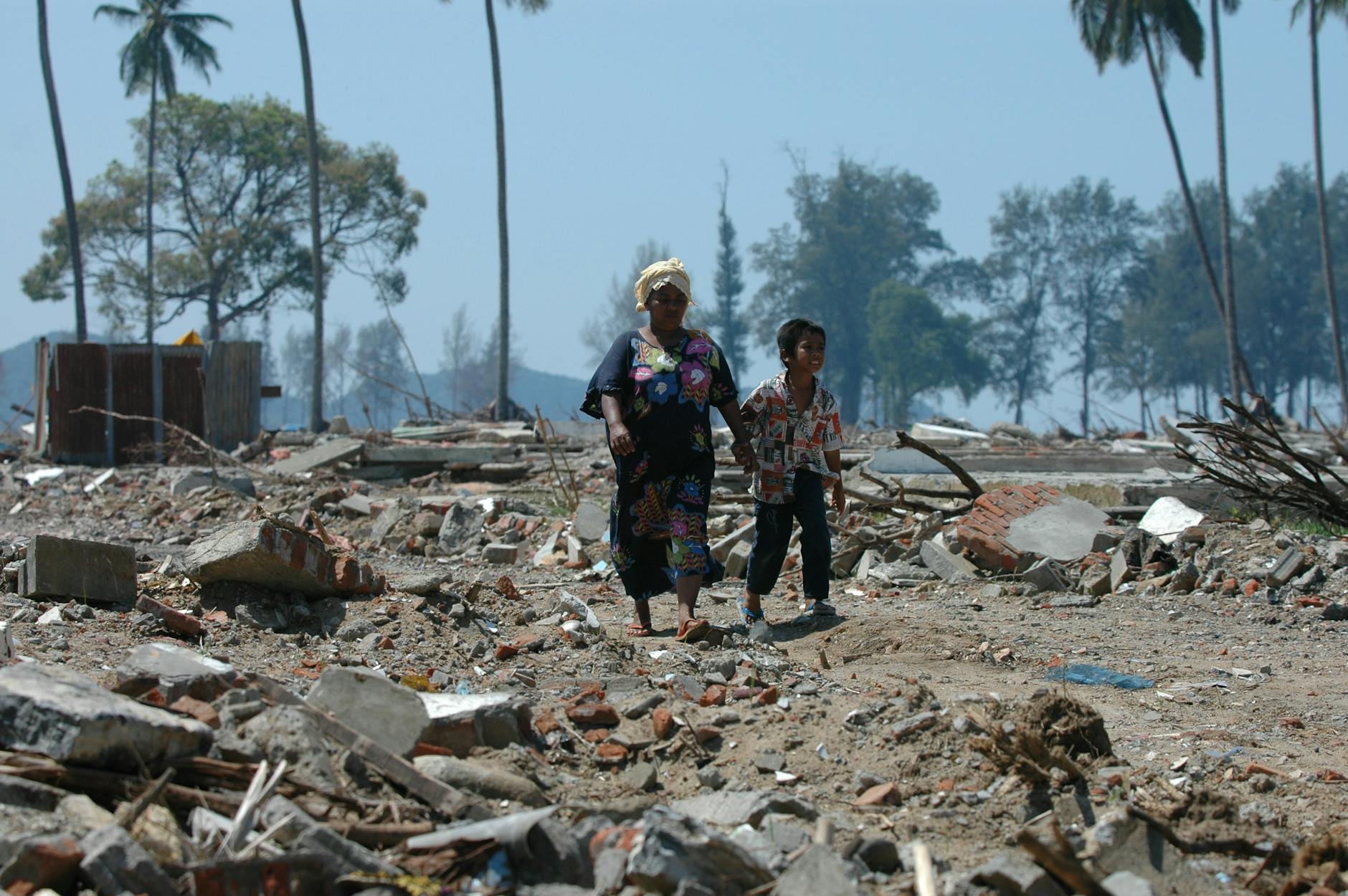
Rebuilding Iran after the February 2026 U.S.-Israeli strikes could cost somewhere between $500 billion and well over $1 trillion, depending on how you define “rebuilding” — and virtually no government, international body, or coalition has put forward a plan to address it. The strikes, which hit over 1,000 targets across the country and killed Supreme Leader Ali Khamenei, destroyed or disabled more than 120 residential towers, energy facilities, and nuclear sites. Iran’s oil exports collapsed from roughly 1.7 million barrels per day to just 102,000 barrels per day after Kharg Island was shut down. The economic damage is staggering, and yet the conversation in Washington, Brussels, and even Tehran has barely begun. This is not a hypothetical problem. Iran’s GDP had already shrunk from approximately $600 billion in 2010 to an estimated $356 billion in 2025, and the World Bank projects further contraction in 2026.
Inflation is running at roughly 60 percent. The rial has collapsed from 42,000 to over 1.1 million against the U.S. dollar. Poverty is projected to reach 38.8 percent in the 2026-2027 period, pushing an additional 3 million people into destitution. The country was already falling apart before the bombs dropped. Now, with nuclear facilities at Fordow, Natanz, and Esfahan largely destroyed and its missile arsenal cut in half, Iran faces a reconstruction challenge that dwarfs anything the modern Middle East has seen. This article breaks down the estimated costs, the pre-existing economic crisis that makes recovery nearly impossible without outside help, the infrastructure that was destroyed, and why the international community has yet to propose anything resembling a plan.
Table of Contents
- How Much Could Rebuilding Iran Actually Cost — And Why Is Nobody Discussing It?
- The Scale of Infrastructure Destruction Is Difficult to Overstate
- Iran’s Pre-Existing Economic Collapse Makes Recovery Far Harder
- The Impossible Choice Between Military Rebuilding and Civilian Needs
- Why No International Reconstruction Framework Exists
- The Human Cost Behind the Dollar Figures
- What Comes Next for Iran — And Why It Matters Beyond the Middle East
- Conclusion
- Frequently Asked Questions
How Much Could Rebuilding Iran Actually Cost — And Why Is Nobody Discussing It?
Middle East experts have estimated the reconstruction cost at $500 to $600 billion, a figure that accounts for the physical damage from the strikes but likely underestimates the full economic fallout. Even before the February 2026 conflict, Tehran’s own government estimated it needed more than $500 billion in foreign investment simply to modernize outdated roads, electrical grids, and ports — infrastructure that had been neglected for decades while the regime funneled money into military programs. Iran’s military spending over the past 30 years totaled approximately $2 trillion, a staggering diversion of resources from civilian needs. Now stack the war damage on top of that deferred maintenance, and you begin to see how the real number could push well past a trillion dollars. For comparison, iraq‘s post-ISIS reconstruction was estimated at $88.2 billion, and the United States spent roughly $60 billion over nine years rebuilding Iraq after the 2003 invasion. Iran is a country of 88 million people — more than twice Iraq’s population — with a far larger and more complex economy. The scale of what was destroyed is proportionally larger as well. A single internet blackout during the final hours of the conflict inflicted nearly $500 million in economic losses alone. When you add together destroyed energy infrastructure, collapsed oil exports, obliterated military installations, damaged civilian housing, and the cascading effects on supply chains, employment, and government revenue, the $500-600 billion estimate looks conservative.
The reason nobody is discussing it is partly political and partly structural. There is no international reconstruction framework in place. After World War II, the Marshall Plan rebuilt Europe. After the Iraq War, the U.S. led (however imperfectly) a coalition reconstruction effort. For Iran, no equivalent proposal exists. No coalition of nations has stepped forward. No international institution has drafted a plan. The Trump administration, which ordered the strikes, has not signaled any interest in funding reconstruction. And Iran’s remaining leadership is caught between rebuilding its military deterrent and addressing a civilian crisis that threatens the regime’s survival.

The Scale of Infrastructure Destruction Is Difficult to Overstate
Operation Epic Fury and Israel’s Roaring Lion campaign hit iran with a level of coordinated destruction that satellite imagery is still cataloging weeks later. Over 1,000 targets were struck, including military bases, nuclear enrichment facilities, command centers, naval vessels, submarines, and communications infrastructure. The nuclear sites at Fordow, Natanz, and Esfahan — the backbone of Iran’s enrichment program — were largely destroyed. According to analysis from the Institute for Science and International Security, Iran cannot currently enrich uranium in any significant manner. More than 120 residential towers, energy facilities, and nuclear installations were destroyed or rendered inoperable. Iran’s missile arsenal was reduced from approximately 2,500 to somewhere between 1,000 and 1,200 missiles, and serviceable mobile launchers dropped from 480 to around 100. Six top nuclear scientists and roughly 20 senior military commanders were killed in the strikes, along with at least 610 civilians, with more than 4,700 injured according to Iran’s Health Ministry.
The human cost is significant, but the infrastructure cost is what will define the next decade. However, it is important to note that the full extent of the damage is still being assessed. Satellite imagery provides a partial picture, and Iran’s government has incentives both to exaggerate civilian damage (to garner international sympathy) and to downplay military losses (to maintain deterrence). The $500-600 billion reconstruction estimate should be understood as a preliminary figure, not a final accounting. The energy sector alone represents a crisis within the crisis. With Kharg Island shut down and oil exports reduced to a trickle — from 1.7 million barrels per day to just 102,000 — Iran has lost its primary source of hard currency. Oil revenue funded everything from government salaries to food subsidies to infrastructure maintenance. Without it, the regime cannot pay for reconstruction even if it had a plan, which it does not.
Iran’s Pre-Existing Economic Collapse Makes Recovery Far Harder
This is not a country that was thriving before the strikes and simply needs to repair war damage. Iran’s economy was already in a prolonged decline driven by decades of international sanctions, systemic corruption, and the regime’s decision to prioritize military spending over civilian welfare. GDP fell from roughly $600 billion in 2010 to an estimated $356 billion in 2025 — a decline of more than 40 percent in 15 years. Inflation was already running at approximately 60 percent before a single bomb fell in February 2026. The Iranian rial, which traded at 42,000 to the dollar not long ago, had already collapsed past 1.1 million to the dollar. The World Bank projected that poverty would reach 38.8 percent in the 2026-2027 period, pushing an additional 3 million Iranians below the poverty line on top of the 2 million who fell into poverty in 2025. These projections were made before the full impact of the strikes was factored in.
The actual numbers will almost certainly be worse. When you have a country where more than a third of the population is already impoverished, where inflation has rendered savings worthless, and where the primary export commodity has been effectively shut off, the capacity to self-finance reconstruction is essentially zero. This is what separates Iran’s situation from other post-conflict rebuilding efforts. Germany after World War II had an educated workforce and industrial base that could be restarted with capital infusion. Iraq after 2003 had oil exports that could fund part of the recovery. Iran in 2026 has a currency in freefall, oil exports reduced by 94 percent, a population in economic freefall, and no international partner willing to write large checks. The math does not work without massive external investment, and no one is offering it.

The Impossible Choice Between Military Rebuilding and Civilian Needs
Iran’s remaining leadership faces a strategic dilemma with no good answer. The regime can attempt to rebuild its military infrastructure — its nuclear program, its missile arsenal, its air defense systems — to restore deterrence against future strikes. Or it can direct scarce resources toward the acute civilian crisis: collapsing public services, 60 percent inflation, a currency in freefall, and a population that was already protesting in the streets before the war. It cannot do both. There is not enough money, not enough time, and not enough institutional capacity to pursue both tracks simultaneously. The Alma Center, an Israeli research institute, has documented this dual crisis in detail. Iran’s missile stockpile was cut roughly in half, from 2,500 to between 1,000 and 1,200.
Its mobile launcher fleet was reduced from 480 to approximately 100. Rebuilding this capability would cost tens of billions of dollars and require years of manufacturing and procurement — assuming Iran can even acquire the components under existing sanctions. Meanwhile, every dollar spent on missiles is a dollar not spent on food subsidies, hospital repairs, or restoring electrical service to damaged cities. The tradeoff is existential for the regime. If it fails to rebuild military deterrence, it remains vulnerable to further strikes and loses leverage in any future negotiations. If it fails to address civilian suffering, it risks the kind of mass uprising that has repeatedly threatened the Islamic Republic over the past decade. The celebrations that erupted in multiple Iranian cities — Karaj, Qazvin, Shiraz, Kermanshah, Isfahan, and Sanandaj — after Khamenei’s death suggest that a significant portion of the population is not mourning the regime’s losses but welcoming them. A government that cannot feed its people while also rebuilding its arsenal is a government that may not survive.
Why No International Reconstruction Framework Exists
After every major conflict of the past century, some form of international reconstruction effort eventually materialized. The Marshall Plan rebuilt Western Europe. The U.S. and coalition partners funded Iraq’s rebuilding, however imperfectly. The international community contributed to reconstruction in the Balkans, in Afghanistan (at least nominally), and in post-tsunami and post-earthquake disaster zones around the world. For Iran in 2026, nothing of the sort has been proposed, and there are structural reasons why. First, the United States initiated the strikes. Washington is not going to fund the reconstruction of a country it just bombed, particularly under a Trump administration that views Iran as a hostile power and has shown no appetite for nation-building. Second, Iran’s traditional allies — Russia and China — are constrained.
Russia is still mired in the economic consequences of its own conflict in Ukraine and has limited capacity to fund Iranian reconstruction. China, which was Iran’s largest oil customer, may have strategic interest in rebuilding economic ties but has shown no inclination toward large-scale infrastructure investment in a country under U.S. sanctions. Third, European nations and international institutions like the World Bank and IMF are effectively sidelined by the sanctions regime, which makes large-scale lending or investment legally and politically difficult. The warning here is straightforward: without some kind of international framework, Iran’s reconstruction will either not happen or will happen on a timeline measured in decades rather than years. The absence of a plan is itself a policy choice with consequences. A country of 88 million people without functioning energy infrastructure, with 60 percent inflation, with a third of its population in poverty, and with a leadership vacuum at the top does not simply stabilize on its own. It becomes a source of regional instability, refugee flows, and potential further conflict. The question of who pays for rebuilding Iran is not an academic exercise — it is a security question that affects the entire Middle East and, by extension, global energy markets.
The Human Cost Behind the Dollar Figures
Behind every reconstruction estimate is a population in crisis. At least 610 Iranian civilians were killed in the strikes and more than 4,700 were injured, according to Iran’s Health Ministry. These are the immediate casualties. The longer-term toll — from damaged hospitals, disrupted medical supply chains, contaminated water systems, and the psychological impact of sustained bombardment — will take years to fully manifest. Iran’s healthcare system was already strained before the conflict. Sanctions had limited access to medical equipment and pharmaceuticals for years.
📨 Get Free Accountability Coverage Alerts
Free · No spam · Unsubscribe anytime
The destruction of additional infrastructure has pushed that system closer to collapse. The 3 million additional people projected to fall into poverty in the 2026-2027 period are not an abstraction. These are families who were barely getting by on the margins of an already-shrinking economy and who have now lost the last threads of stability. When poverty reaches nearly 40 percent in a country with a young, urbanized, and historically politically active population, the consequences are not just humanitarian — they are political. The celebrations in multiple cities after Khamenei’s death were not organized by any opposition movement. They were spontaneous expressions of a population that has spent years suffering under a regime that spent $2 trillion on its military while its people grew poorer.
What Comes Next for Iran — And Why It Matters Beyond the Middle East
The next 12 to 24 months will likely determine whether Iran stabilizes or spirals further. Without its supreme leader, without its nuclear program, without its missile deterrent at full strength, and without oil revenue, the regime’s remaining power brokers will need to make fundamental choices about the country’s direction. If hardliners consolidate control and prioritize military rebuilding, expect further economic deterioration, deeper poverty, and likely renewed confrontation with the West. If reformist or pragmatic factions gain influence — a possibility given the popular reaction to Khamenei’s death — there may be an opening for negotiations that could ease sanctions and unlock some form of international investment. For American taxpayers and policymakers, this is not a distant problem.
Instability in Iran affects global oil prices, regional security dynamics involving Israel and Gulf states, and the broader trajectory of U.S. foreign policy in the Middle East. The $500-600 billion reconstruction estimate is a bill that someone will eventually have to address, whether through planned investment, emergency humanitarian aid, or the far more expensive consequences of prolonged state failure. The fact that nobody is discussing it yet does not mean it will go away. It means the discussion is already overdue.
Conclusion
The February 2026 strikes on Iran achieved their immediate military objectives — destroying nuclear enrichment capacity, killing the supreme leader, and degrading the country’s missile arsenal. But they also created a reconstruction challenge of historic proportions in a country that was already in economic freefall. With estimates starting at $500-600 billion and potentially climbing far higher when pre-existing infrastructure neglect is factored in, Iran faces a rebuilding effort that dwarfs post-ISIS Iraq by a factor of six or more. The regime cannot fund it alone. No international coalition has offered to help. And the 88 million people living inside Iran’s borders are bearing the immediate consequences.
The silence around this issue is itself a form of policy failure. Whether one supported or opposed the strikes, the question of what comes next cannot be deferred indefinitely. A country with nearly 40 percent poverty, 60 percent inflation, a collapsed currency, and devastated infrastructure does not simply wait patiently for the world to notice. The costs of inaction — measured in human suffering, regional instability, and eventual emergency intervention — will almost certainly exceed the costs of a deliberate, structured approach to reconstruction. Someone needs to start that conversation. So far, nobody has.
Frequently Asked Questions
How much would it cost to rebuild Iran after the 2026 strikes?
Middle East experts estimate reconstruction costs at $500-600 billion, though this figure may be conservative. Even before the strikes, Iran’s government estimated it needed over $500 billion in foreign investment just to modernize its aging civilian infrastructure. When war damage is added to decades of deferred maintenance, the true cost could exceed $1 trillion.
How does Iran’s reconstruction compare to Iraq’s post-war rebuilding?
Iraq’s post-ISIS reconstruction was estimated at $88.2 billion, and the U.S. spent roughly $60 billion over nine years rebuilding Iraq after 2003. Iran’s situation is significantly larger in scale — the country has more than twice Iraq’s population, a larger economy, and suffered more extensive infrastructure damage across a wider geographic area.
Can Iran fund its own reconstruction?
Almost certainly not in the near term. Iran’s oil exports collapsed from 1.7 million barrels per day to approximately 102,000 barrels per day after Kharg Island was shut down. GDP was already declining before the strikes, inflation is running at 60 percent, and the rial has lost the vast majority of its value. Without external investment, self-funded reconstruction would take decades.
Is there an international plan to help rebuild Iran?
No. As of early March 2026, no government, international coalition, or institution has proposed a reconstruction framework for Iran. This stands in contrast to post-World War II Europe (Marshall Plan), post-2003 Iraq (U.S.-led coalition rebuilding), and other post-conflict reconstruction efforts. Sanctions, political dynamics, and the lack of a clear governing partner in Iran all complicate the prospect of international involvement.
What happened to Iran’s nuclear program?
The nuclear sites at Fordow, Natanz, and Esfahan were largely destroyed in the strikes. According to the Institute for Science and International Security, satellite imagery confirms that Iran cannot currently enrich uranium in any significant manner. Six top nuclear scientists were also killed. Rebuilding this capability would require years and billions of dollars, assuming Iran chose to pursue it.
How many people were affected by the strikes?
Iran’s Health Ministry reported at least 610 civilians killed and over 4,700 injured. Beyond direct casualties, the World Bank projects that poverty will reach 38.8 percent in 2026-2027, with an additional 3 million people falling below the poverty line. The destruction of energy and communications infrastructure affects tens of millions of Iranians who depend on these systems for daily life.
You Might Also Like
- The Iran War Could Last Weeks, Months, or Years — Nobody Knows
- Weapons Scattered Across Iran After Regime Collapse Could Arm Extremists for Decades
- The Iran War Is Costing American Taxpayers Millions of Dollars Per Day