
What happens when the world’s most powerful military topples a government and has no plan for the day after? Iraq answered that question in the most devastating terms imaginable. The 2003 invasion succeeded in removing Saddam Hussein in roughly three weeks, but the absence of any coherent post-war strategy unleashed two decades of sectarian civil war, the rise of ISIS, nearly 4.9 million displaced people, and a civilian death toll that has surpassed 200,000 documented violent deaths. The Iraq war stands as the most expensive and consequential lesson in modern history about what happens when you win the war and lose the peace. The failures were not inevitable. They were the product of specific decisions made by specific people who ignored extensive pre-war planning that already existed, dismissed warnings from military leaders who said more troops were needed, and then compounded every early mistake with ideology-driven policies that turned a defeated population into an armed insurgency.
Secretary of Defense Donald Rumsfeld insisted on a light military footprint, assuming Iraqis would simply welcome liberation and that existing political institutions would keep functioning. Combat units found themselves governing large urban areas with no orders or guidance on what to do next. The chaos that followed — looting, sectarian massacres, a trillion-dollar reconstruction boondoggle, and the birth of the deadliest terrorist organization in modern history — was not the result of bad luck. It was the result of no planning. This article breaks down the specific policy failures that created the Iraq catastrophe, the human and financial costs that followed, the rise of ISIS from the ashes of de-Baathification, the displacement crisis that persists to this day, and what Iraq looks like twenty years later as a nation still struggling to function.
Table of Contents
- Why Did Iraq Descend Into Chaos After Saddam Was Removed?
- The Human Cost — How Many Civilians Died Because of Failed Post-War Planning?
- How De-Baathification Created ISIS
- The Financial Reckoning — Where Did Trillions of Dollars Go?
- The Displacement Crisis That Never Ended
- What $60 Billion in Reconstruction Actually Built
- Iraq Twenty Years Later — A Shaky Democracy Built on Sectarian Foundations
- Conclusion
- Frequently Asked Questions
Why Did Iraq Descend Into Chaos After Saddam Was Removed?
The short answer is that the United States broke Iraq and then had no blueprint for putting it back together. The longer answer involves a series of catastrophic decisions in the first weeks of the occupation that made recovery nearly impossible. The most damaging was Coalition Provisional Authority Order #2, issued in May 2003, which disbanded the entire Iraqi army and intelligence services — roughly 400,000 soldiers — and barred Baath Party members from government jobs. An estimated 30,000 ex-Baathists were expelled from ministries, and these were not just loyal Saddam cronies. They included teachers, engineers, doctors, and civil servants who had joined the Baath Party because it was the only way to hold a government job. Overnight, the U.S. created a massive pool of armed, unemployed, and furious men with military training and nothing to lose. Before those orders even took effect, looting had already erupted across Baghdad with no orders issued to prevent it. American troops stood by as museums, government buildings, hospitals, and infrastructure were stripped bare.
The resulting lawlessness was not just a property crime — it shattered Iraqi confidence in the U.S. occupation before it even began. According to a Brookings Institution analysis of the reconstruction failures, the physical destruction from looting alone set back rebuilding efforts by months, and the psychological damage was permanent. Iraqis who might have cooperated with the occupation concluded that the Americans either could not or would not protect them. The combination of a dissolved military, a gutted civil service, and unchecked lawlessness created exactly the conditions for an insurgency. By mid-2003, attacks on coalition forces were escalating. By 2004, a full-blown resistance was underway. The United States had removed the lid from a pressure cooker of sectarian tensions that Saddam’s brutal dictatorship had kept suppressed, and it had simultaneously destroyed every institution capable of managing those tensions. What followed was entirely predictable to anyone who had studied post-conflict reconstruction — and indeed, the State Department’s Future of Iraq Project had predicted many of these outcomes. Its findings were ignored.

The Human Cost — How Many Civilians Died Because of Failed Post-War Planning?
The Iraq Body Count project, which tracks documented violent civilian deaths through media reports and official records, has recorded between 185,194 and 208,167 civilian deaths from 2003 through 2020. That number is conservative — it only counts deaths that were individually documented and reported. The actual toll is almost certainly higher, with some epidemiological studies suggesting total excess deaths in the hundreds of thousands when including indirect deaths from destroyed healthcare infrastructure, contaminated water, and displacement. The killing started immediately. Approximately 12,000 civilians were killed in 2003 alone — 7,000 during the invasion itself and another 5,000 in the so-called peace that followed. But the worst was yet to come.
The peak year was 2006, when 29,526 documented civilian deaths occurred during the height of the sectarian civil war that de-Baathification and the power vacuum had made inevitable. The methods of killing tell their own story about the depth of the collapse: execution after abduction was the number one cause of civilian death at 33 percent, with 29 percent of those cases involving torture. Small arms fire accounted for 20 percent, suicide bombs 14 percent, vehicle bombs 9 percent, and air attacks 5 percent. However, raw death counts do not capture the full scope of the disaster. These numbers do not include the psychological trauma inflicted on an entire generation of Iraqis, the destruction of families, or the erosion of social trust that makes rebuilding a functioning society exponentially harder. A country where your neighbor might be a death squad member, where a trip to the market could end in a car bombing, and where the occupying force cannot keep the lights on is not a country that can recover quickly — if it recovers at all.
How De-Baathification Created ISIS
The line from CPA Order #2 to the rise of the Islamic State is not speculation — it is documented history. When the U.S. disbanded the Iraqi army and barred Baath Party members from government, thousands of former Sunni military officers with professional training, weapons knowledge, and organizational skills were left with no income, no prospects, and a deep grievance against both the American occupiers and the Shia-dominated government that replaced Saddam. Many of these men joined the armed resistance. A significant number eventually formed the backbone of Al-Qaeda in Iraq, which later reconstituted itself as ISIS. Full-scale sectarian civil war raged from 2006 to 2008, primarily between extremist Shia and Sunni groups. Death squads roamed Baghdad neighborhoods. Entire communities were ethnically cleansed.
Families that had lived side by side for generations were separated or slaughtered based on which branch of Islam they practiced. The Shia-dominated government, backed by the U.S., carried out its own abuses, further alienating the Sunni population and feeding recruitment for extremist groups. When U.S. forces finally withdrew in 2011, the underlying sectarian divisions had not been resolved — they had been temporarily suppressed by the troop surge of 2007-2008. The Sunni grievances that fueled the insurgency remained. When ISIS swept across northern Iraq in 2014, capturing Mosul — Iraq’s second-largest city — with shocking speed, the Iraqi army collapsed because it was hollowed out by the same corruption and sectarian dysfunction that the post-war political system had institutionalized. The war to retake territory from ISIS killed thousands more civilians and displaced millions. All of it traces back to decisions made in the spring of 2003.

The Financial Reckoning — Where Did Trillions of Dollars Go?
Before the invasion, the Bush administration estimated the war would cost roughly $80 to $100 billion over a two-year involvement. The actual cost, as estimated by Brown University researcher Neta Crawford in 2020, reached approximately $1.922 trillion — including Pentagon spending, State Department costs, veteran healthcare, and interest on war debt. Some estimates that factor in long-term veteran care and debt service push the total past $3 trillion. The pre-war estimate was off by a factor of more than twenty. The reconstruction spending alone tells a story of staggering waste. The United States spent $60 billion on rebuilding Iraq, but most of that money went to military and police training rather than infrastructure. Roughly 10 percent — $6 billion — is completely unaccounted for, and at least another 15 percent, or $8 billion-plus, was wasted on fraud and failed projects.
The examples are grim and specific: a $40 million prison sits in rubble, half-completed and abandoned. A $108 million wastewater treatment plant in Fallujah ran eight years behind schedule and, when it was finally operational, served only 9,000 homes. These are not isolated cases — they represent a systemic failure of oversight, accountability, and basic project management in a war zone that the U.S. was not prepared to administer. The comparison to what that money could have accomplished at home is unavoidable but worth stating plainly. Nearly $2 trillion is more than the entire annual discretionary budget of the United States government. It could have funded universal pre-K, rebuilt every structurally deficient bridge in the country, or eliminated student loan debt — with change to spare. Instead, it bought a failed state, a refugee crisis, and the conditions that created ISIS.
The Displacement Crisis That Never Ended
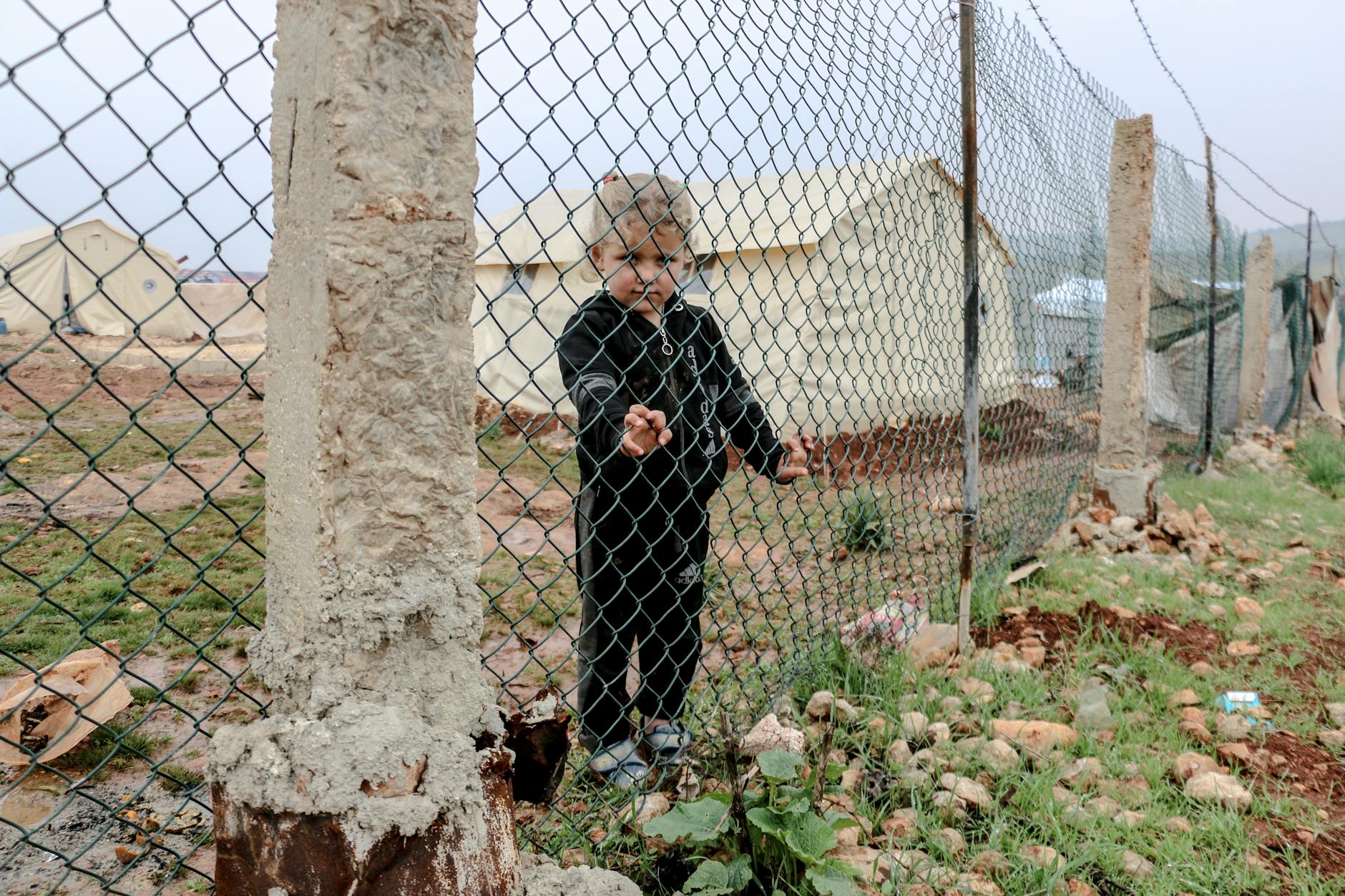
At the peak of the crisis, approximately 4.89 million Iraqis were displaced from their homes — a staggering number in a country that had a pre-war population of roughly 25 million. As of 2024, nearly 1.2 million Iraqis remain internally displaced, unable or unwilling to return to communities that were destroyed or where they no longer feel safe. The displacement crisis did not end with the fighting. It became a permanent feature of Iraqi life. The statistics on prolonged displacement are particularly damning as an indictment of the post-war failure. Ninety percent of those still displaced have been unable to return for three or more years.
Seventy percent have been displaced for five years or longer. Over 104,000 people still live in IDP camps in the Kurdistan Region of Iraq, many in conditions that were supposed to be temporary a decade ago. Iraq also hosts between 280,000 and 344,000 refugees and asylum-seekers, mostly Syrian — adding to the burden on a country that can barely support its own displaced population. The warning here is that displacement is not just a humanitarian problem. It is a security problem. Displaced populations that cannot return home, cannot find work, and cannot access services are recruitment pools for extremist organizations. Every year that passes without meaningful resettlement or return increases the likelihood that displacement becomes permanent and that the next generation grows up with no connection to their home communities, no education, and no reason to trust the government that failed to protect them.
What $60 Billion in Reconstruction Actually Built
The Special Inspector General for Iraq Reconstruction spent years documenting how American taxpayer money was spent, and the final report to Congress was a catalog of failure. The fundamental problem was that reconstruction priorities were driven by political timelines in Washington rather than conditions on the ground in Iraq. Projects were designed to show progress for congressional hearings, not to deliver functioning infrastructure to Iraqi communities.
📨 Get Free Accountability Coverage Alerts
Free · No spam · Unsubscribe anytime
The wastewater plant in Fallujah is perhaps the most emblematic example. Originally budgeted at a fraction of its final cost, the project ballooned to $108 million, ran eight years behind schedule, and when completed served only 9,000 homes in a city of several hundred thousand people. Meanwhile, the $40 million prison that sits in rubble represents money that simply vanished into a war zone with inadequate oversight. When auditors attempted to trace spending, they found that $6 billion was completely unaccounted for — not misallocated, not misspent, but simply gone with no documentation of where it went or what it was supposed to accomplish.
Iraq Twenty Years Later — A Shaky Democracy Built on Sectarian Foundations
Two decades after the invasion, Iraq is what the Council on Foreign Relations describes as a “shaky democracy” with persistent corruption, sectarian power-sharing arrangements known as muhasasa, and weakened institutions that struggle to deliver basic services. Chatham House, in a 2023 retrospective, was blunter: “The architects of the ‘new Iraq’ designed an undemocratic state.” The post-invasion political system did not build inclusive governance — it institutionalized sectarianism, dividing power along ethnic and religious lines in a way that guarantees continued dysfunction. Three million Iraqis still need humanitarian assistance, including one million in acute need as of 2023. The country has oil wealth but cannot reliably provide electricity, clean water, or employment to its population.
The political class that emerged from the post-invasion order is widely viewed as corrupt and self-serving. Iraq’s trajectory is not one of recovery — it is one of managed decline, punctuated by occasional crises. The lesson for future policymakers is not complicated: if you break a country, you own the consequences for generations. And if you go in without a plan, the consequences will be worse than anything you imagined.
Conclusion
The Iraq war is the definitive case study in what happens when military planning stops at the moment of victory. Every major disaster that followed the fall of Saddam — the looting, the insurgency, the sectarian civil war, the rise of ISIS, the displacement of millions, the waste of trillions — was a direct consequence of the decision to invade without a post-war plan. The specific choices made in the first weeks of the occupation, particularly the disbanding of the Iraqi army and the sweeping de-Baathification order, transformed a defeated country into a breeding ground for the worst terrorist organization the world has ever seen. More than 200,000 documented civilian deaths later, nearly 1.2 million people remain displaced, and 3 million still need humanitarian assistance.
The cost to the United States exceeded $1.9 trillion by conservative estimates — more than twenty times what was projected — and the reconstruction effort wasted tens of billions of dollars on projects that were never completed, never functional, or never accounted for. Twenty years on, Iraq remains a fragile, corrupt, sectarian state that the Chatham House think tank concluded was designed to be undemocratic from the start. The lesson is as expensive as it is obvious: wars are easy to start and almost impossible to end well, and the absence of a plan for the day after the shooting stops is not optimism. It is negligence on a civilizational scale.
Frequently Asked Questions
How many Iraqi civilians died as a result of the Iraq War?
The Iraq Body Count project has documented between 185,194 and 208,167 violent civilian deaths from 2003 through 2020. Approximately 12,000 civilians were killed in 2003 alone, and the deadliest year was 2006 with 29,526 documented deaths during the sectarian civil war.
How much did the Iraq War cost the United States?
Brown University estimated the total cost at approximately $1.922 trillion as of 2020, including Pentagon spending, State Department costs, veteran healthcare, and interest on war debt. Some estimates that include long-term costs exceed $3 trillion. The pre-war estimate of $80-100 billion was off by a factor of more than twenty.
What was CPA Order #2 and why was it so destructive?
Coalition Provisional Authority Order #2, issued in May 2003, disbanded the entire Iraqi army and intelligence services — roughly 400,000 soldiers — and barred Baath Party members from government employment. This expelled an estimated 30,000 people from ministries, including teachers, doctors, and engineers, creating a massive pool of armed, unemployed men who fueled the insurgency and eventually formed the backbone of ISIS.
How many Iraqis are still displaced?
As of 2024, nearly 1.2 million Iraqis remain internally displaced. Ninety percent of those still displaced have been unable to return for three or more years, and over 104,000 still live in IDP camps in the Kurdistan Region.
What happened to the $60 billion in U.S. reconstruction spending?
Most of the $60 billion went to military and police training rather than civilian infrastructure. Approximately $6 billion is completely unaccounted for, and at least $8 billion more was wasted on fraud and failed projects, including a $40 million prison left in rubble and a $108 million wastewater plant that ran eight years behind schedule.
What is Iraq like today?
Iraq is described as a “shaky democracy” with persistent corruption, sectarian power-sharing, and weakened institutions. Three million Iraqis still need humanitarian assistance. Chatham House concluded in 2023 that the post-invasion political system institutionalized sectarianism rather than building inclusive governance.
You Might Also Like
- Weapons Scattered Across Iran After Regime Collapse Could Arm Extremists for Decades
- Turkey Quietly Reassesses Its Own Military Capabilities After Watching Iran’s Collapse
- The Power Vacuum After Iran’s Government Falls Could Be Worse Than the War Itself