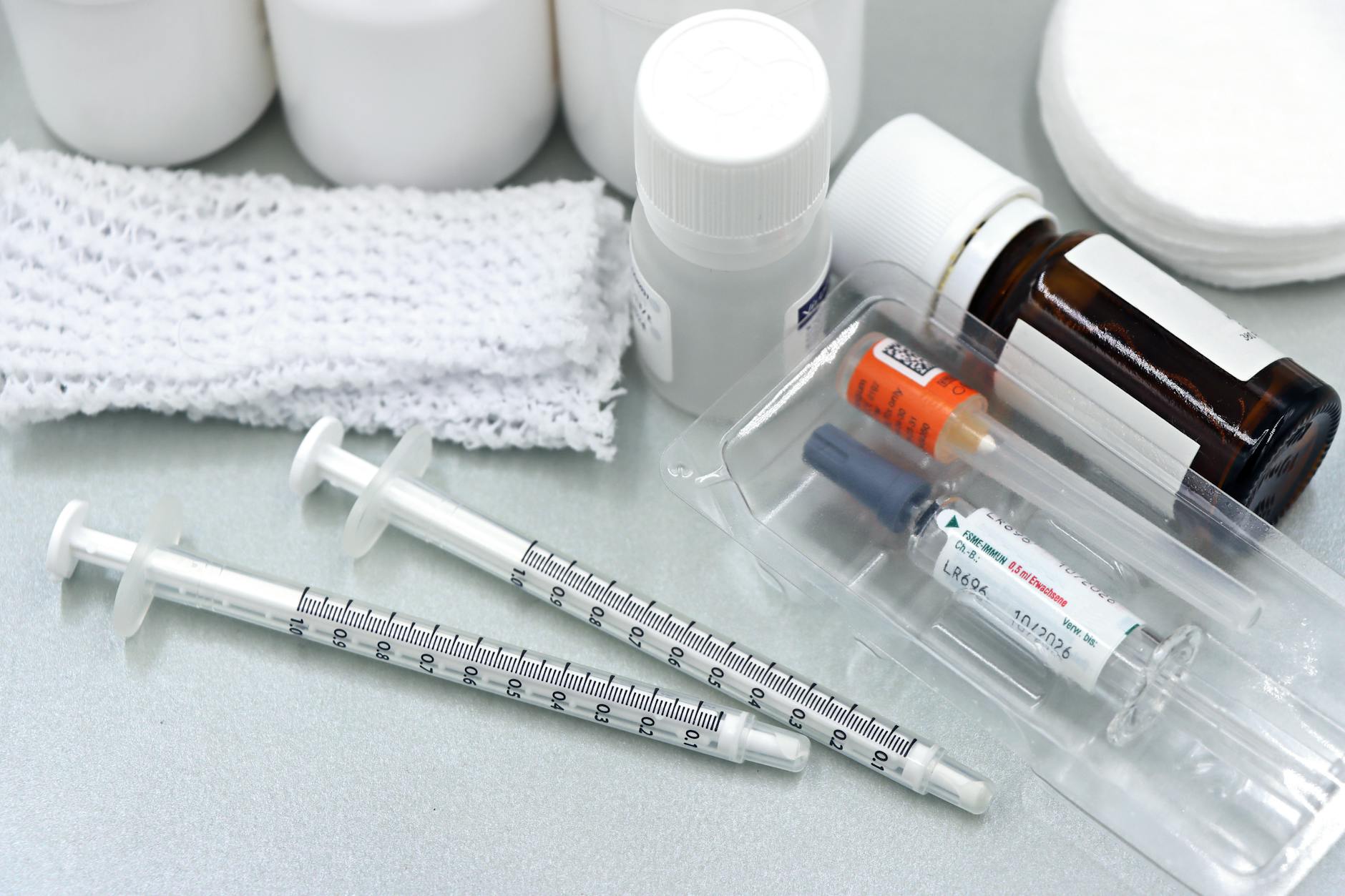
Yes, polio could theoretically return to the United States, and the person now leading federal vaccine advisory policy is openly questioning whether the polio vaccine should even be required for school attendance. Dr. Kirk Milhoan, a pediatric cardiologist appointed by HHS Secretary Robert F. Kennedy Jr. to chair the CDC’s Advisory Committee on Immunization Practices, stated on a podcast in late January 2026 that polio and measles vaccines should be optional rather than mandated. This is not a fringe blogger or a social media provocateur — this is the chair of the committee that shapes vaccination policy for the entire country, and his remarks have drawn sharp rebukes from medical organizations, public health experts, and polio survivors who lived through the disease firsthand.
Currently, every U.S. state requires children to be vaccinated against polio to attend public schools. That requirement, paired with decades of consistent immunization, is the reason the Americas have been polio-free for 31 years. But vaccination rates are already sliding. Kindergarten polio and measles vaccine coverage dropped from roughly 95 percent in the 2019-20 school year to 92.5 percent by 2024-25, and vaccine exemptions among kindergarteners have nearly tripled since 2012. Milhoan’s comments arrive against the backdrop of the CDC’s January 2026 decision to slash the number of routinely recommended childhood immunizations from 17 to 11 — a move that, while it kept polio on the list, signaled a broader shift in how the federal government approaches childhood vaccination. This article breaks down who is driving these policy changes, what the CDC’s revised schedule actually says, what the real risk of a polio resurgence looks like based on current data, and what public health experts and polio survivors are warning about the path ahead.
Table of Contents
- Why Is Trump’s Top Vaccine Adviser Questioning Childhood Polio Vaccinations?
- What Did the CDC’s January 2026 Vaccine Schedule Overhaul Actually Change?
- How Quickly Could Polio Actually Return Without High Vaccination Rates?
- What Are the Real Tradeoffs Between Vaccine Mandates and Parental Choice?
- How Do U.S. Funding Cuts to Global Health Programs Increase Domestic Risk?
- The AAP’s Break With the CDC Sets Up a Two-Track System for Families
- Where Vaccine Policy Goes From Here
- Conclusion
- Frequently Asked Questions
Why Is Trump’s Top Vaccine Adviser Questioning Childhood Polio Vaccinations?
Dr. Kirk Milhoan’s appointment to lead ACIP was itself a dramatic departure from how the committee has historically operated. HHS Secretary Robert F. Kennedy Jr. fired all previous ACIP members in June 2025 before installing Milhoan as chair. Kennedy, who spent years as one of America’s most prominent vaccine skeptics before entering government, effectively rebuilt the committee from scratch. Milhoan, a pediatric cardiologist rather than an infectious disease specialist or immunologist, has argued that vaccine mandates “have really harmed and increased hesitancy” — framing the issue as one of individual rights rather than collective public health protection. The distinction matters.
Milhoan is not saying the polio vaccine doesn’t work. He’s arguing that requiring it for school attendance is counterproductive and that parents should be free to decline it without their children being barred from public education. On its face, this sounds like a reasonable autonomy argument. But public health experts point out that school-entry mandates are the single most effective tool for maintaining the high vaccination coverage — typically above 95 percent — needed to prevent outbreaks. Compare this to seasonal flu vaccination, which has never been mandated for school entry in most states and hovers around 50 percent coverage nationally. The mandate structure is not incidental to the success of polio eradication. It is the mechanism. The National Medical Association issued a statement strongly rejecting Milhoan’s proposal, and the american Academy of Pediatrics has already broken with the CDC over the broader vaccine schedule changes, maintaining its own guidance based on the pre-2026 recommendations. When the nation’s largest pediatric medical organization refuses to follow the CDC’s lead, that is not a routine policy disagreement — it is a fracture in the institutional infrastructure that has kept vaccine-preventable diseases at bay for decades.
What Did the CDC’s January 2026 Vaccine Schedule Overhaul Actually Change?
On January 5, 2026, acting CDC Director Jim O’Neill authorized a reduction in the number of routinely recommended childhood immunizations from 17 to 11 diseases. The revised schedule was modeled after Denmark’s vaccination program, following a trump executive order directing the CDC to examine how “peer nations” structure their vaccine recommendations. Polio, DTaP, Hib, pneumococcal, MMR, HPV, and varicella remained on the universally recommended list. Vaccines for rotavirus, hepatitis A, hepatitis B, meningitis, and seasonal flu were moved to a category called “shared clinical decision-making,” meaning they are no longer recommended for all children but instead left to individual discussions between doctors and parents. The framing of this as aligning with Denmark’s approach deserves scrutiny, however. Denmark has a robust universal healthcare system where virtually every child sees a physician regularly from birth.
The United States does not. Roughly 5 million American children lack health insurance, and millions more see a doctor only when they are sick. “Shared clinical decision-making” works when every family has consistent access to a clinician who can explain risks and benefits. In a fragmented healthcare system where many families rely on school-entry requirements as the prompt to vaccinate, moving vaccines off the universal list effectively means fewer children will receive them — not because parents made an informed choice, but because the nudge disappeared. It is worth noting that polio vaccination is still officially recommended by the CDC. Milhoan’s comments about making it optional go further than even the revised schedule. If his position were adopted as policy — and if states followed by weakening or eliminating school-entry requirements — the gap between the current 92.5 percent coverage rate and the threshold needed for community protection would begin to close in the wrong direction.
How Quickly Could Polio Actually Return Without High Vaccination Rates?
The reassuring headline is that polio is not about to sweep across the country next month. Experts say vaccination rates would need to drop by 30 to 40 percentage points before the United States would face a risk of polio reemergence comparable to what endemic countries experience. With approximately 93 percent of U.S. children vaccinated against polio by age two, we are a long way from that threshold. Globally in 2024, there were only 99 confirmed wild polio cases, all in Afghanistan and Pakistan — the last two countries where the virus remains endemic. But the 2022 case in Rockland County, New York — the first U.S. polio case in roughly three decades — demonstrated that the virus does not need to be endemic here to cause harm.
That case occurred in a community with notably low vaccination rates, and subsequent wastewater surveillance detected poliovirus circulating in several New York counties. It was a contained event, but it was also a warning. Polio does not need nationwide coverage collapse to reemerge. It needs pockets of vulnerability, and those pockets are growing. In the 2023-24 school year, 3.3 percent of kindergarteners had a vaccine exemption, nearly all nonmedical, up from 1.2 percent in 2011-12. That tripling did not happen overnight, and if the trend accelerates — pushed along by policy signals from the nation’s top vaccine advisory body — the math changes. Grace Rossow, a polio survivor whose leg remains paralyzed from the disease, put the stakes plainly: “We don’t have a healthcare infrastructure to take care of a polio outbreak.” She called the polio vaccine “a victim of its own success” — so effective that most Americans alive today have never seen a case, which makes the threat feel abstract. But the virus does not care whether people remember it.

What Are the Real Tradeoffs Between Vaccine Mandates and Parental Choice?
Milhoan’s argument — that mandates breed resistance and therefore voluntary vaccination would produce better outcomes — has an intuitive appeal but little empirical support. States with stricter school-entry requirements consistently have higher vaccination rates than states with broad exemption policies. Mississippi and West Virginia, which for decades allowed only medical exemptions, maintained some of the highest childhood vaccination rates in the country. Meanwhile, states that introduced “personal belief” exemptions saw measurable declines in coverage and, in some cases, outbreaks of diseases like measles. The tradeoff is not between freedom and tyranny. It is between a system that achieves 93-plus percent coverage through mandates with medical exemptions, and a system where coverage drops to unpredictable levels because vaccination becomes one more thing parents mean to get around to but don’t. The comparison to Denmark, which the CDC’s revised schedule cites as a model, is instructive here.
Denmark achieves over 95 percent childhood vaccination coverage without school mandates — but it does so through a nationalized healthcare system that provides free, automatic appointment scheduling from birth, home visits by nurses, and digital reminders. It is a system designed to make vaccination the path of least resistance. The United States, by contrast, relies on mandates precisely because it lacks those structural supports. Remove the mandate without building the alternative, and you are not adopting the Danish model. You are just removing the only tool that works in the American context. The existing vaccine system in the United States has prevented an estimated 1.1 million deaths over the past 30 years. That figure represents the real-world outcome of the mandate-plus-recommendation framework that Milhoan and the current administration are now dismantling piece by piece.
How Do U.S. Funding Cuts to Global Health Programs Increase Domestic Risk?
Polio is a global eradication target, and the United States has historically been the largest funder of that effort. But experts have warned that recent U.S. funding cuts to international programs like USAID and Gavi, the Vaccine Alliance, could increase polio and measles cases globally — and that directly raises the risk of reimportation into the United States. Viruses do not respect borders, and the reason Americans have been safe from polio for decades is partly because the disease was being aggressively stamped out in the places where it still circulates. If funding to international vaccination programs is reduced while domestic vaccination rates simultaneously decline, the United States faces a compounding risk: more poliovirus circulating globally, and less immunity at home to stop it from taking hold if it arrives.
The Pan American Health Organization highlighted 31 years without polio in the Americas as of October 2025, but explicitly called for continued vaccination vigilance. That vigilance has both a domestic and international component, and the current policy trajectory is weakening both simultaneously. This is not hypothetical. The 2022 Rockland County case was caused by a vaccine-derived poliovirus strain that originated abroad and found a foothold in an under-vaccinated community. The pathway from international funding cuts to domestic cases is not a slippery slope argument — it is a documented transmission chain that has already occurred once in the United States in the past four years.

The AAP’s Break With the CDC Sets Up a Two-Track System for Families
When the American Academy of Pediatrics announced it would maintain the broader pre-2026 vaccine schedule in its own guidance rather than follow the CDC’s reduced list, it created something unprecedented in modern American pediatric medicine: two competing official recommendations. Pediatricians who follow AAP guidance will continue recommending hepatitis B vaccination for all newborns, hepatitis A for toddlers, and meningitis vaccines for adolescents. Those who follow the CDC’s revised schedule will present these as optional conversations rather than standard care. For parents trying to make informed decisions, this split is confusing at best and dangerous at worst.
📨 Get Free Accountability Coverage Alerts
Free · No spam · Unsubscribe anytime
A family in one practice may be told their child needs the hepatitis B vaccine at birth. A family across town may be told it is a personal choice. The result will be inconsistent coverage driven not by evidence but by which authority a given pediatrician chooses to follow. And for polio specifically, if Milhoan’s preference for eliminating mandates gains traction in state legislatures, the inconsistency will extend beyond the doctor’s office and into school enrollment policies.
Where Vaccine Policy Goes From Here
The immediate question is whether Milhoan’s stated preference — making polio and measles vaccines optional for school attendance — will translate into actual policy or regulatory changes. ACIP recommendations are influential but not binding on states. School-entry vaccination requirements are set at the state level, and any change would require action by state legislatures or governors. Several states have already been debating broader exemption policies, and Milhoan’s remarks hand ammunition to legislators who want to weaken mandates. The longer-term concern is the compounding effect of multiple policy shifts happening at once: a reduced CDC schedule, a fractured relationship between the CDC and the AAP, declining vaccination rates, rising exemptions, and cuts to international disease surveillance programs.
No single one of these changes is likely to bring polio back to the United States. But taken together, they are methodically dismantling the redundant layers of protection that kept polio at bay for three decades. Public health systems are not designed to survive the simultaneous removal of multiple safeguards. They are designed with redundancy precisely because any individual layer can fail. The question is how many layers can be stripped away before one of the most devastating diseases in human history finds its way back.
Conclusion
The polio vaccine is one of the most successful public health interventions in history. It turned a disease that paralyzed tens of thousands of American children annually into something most people have never seen. That success rests on a framework of universal recommendation, school-entry mandates, and consistent public investment — a framework that is now being challenged at the highest levels of federal vaccine policy. Dr. Kirk Milhoan’s suggestion that polio vaccination should be optional, combined with the CDC’s broader schedule reduction and funding cuts to global eradication efforts, represents a convergence of risks that public health experts say should not be dismissed.
For parents, the immediate practical advice is straightforward: vaccinate your children against polio. The vaccine remains on the CDC’s recommended list, every state still requires it for school entry, and the AAP continues to recommend it without qualification. The medical consensus on this point has not changed even as the political landscape shifts around it. For citizens concerned about the broader policy trajectory, the arena to watch is state legislatures, where school-entry vaccination requirements are set and where the pressure to weaken mandates is likely to intensify. The 1.1 million deaths prevented by the current vaccine system over the past 30 years are not an abstract statistic. They are the measure of what is at stake.
Frequently Asked Questions
Is polio still required for school enrollment in the United States?
Yes. As of early 2026, every U.S. state requires children to be vaccinated against polio to attend public schools. Dr. Milhoan’s comments about making the vaccine optional represent his personal position, not current policy. Any changes to school-entry requirements would need to happen at the state level through legislative action.
Did the CDC remove the polio vaccine from its recommended schedule?
No. The CDC’s January 2026 schedule reduction from 17 to 11 recommended vaccines kept polio on the universally recommended list. The vaccines moved to “shared clinical decision-making” were rotavirus, hepatitis A, hepatitis B, meningitis, and seasonal flu. Polio, DTaP, Hib, pneumococcal, MMR, HPV, and varicella remain universally recommended.
How close is the U.S. to losing herd immunity against polio?
Currently, about 93 percent of U.S. children are vaccinated against polio by age two. Experts say rates would need to drop 30 to 40 percentage points before reaching risk levels comparable to endemic countries. However, localized outbreaks can occur in communities with lower coverage, as the 2022 Rockland County, New York case demonstrated.
What happened with the 2022 polio case in New York?
In 2022, a case of polio was confirmed in Rockland County, New York — the first U.S. case in roughly three decades. The patient was infected with a vaccine-derived poliovirus strain that originated abroad and spread in an under-vaccinated community. Wastewater surveillance subsequently detected poliovirus in several New York counties.
Why did the American Academy of Pediatrics break with the CDC on vaccine recommendations?
The AAP chose to maintain the broader pre-2026 vaccine schedule in its own guidance rather than adopt the CDC’s reduced list of 11 universally recommended vaccines. This means the AAP continues to recommend vaccines for hepatitis A, hepatitis B, rotavirus, meningitis, and seasonal flu for all children, while the CDC now considers those “shared clinical decisions.”
Does the U.S. have the infrastructure to handle a polio outbreak?
According to polio survivor and advocate Grace Rossow, the answer is no. The United States dismantled much of the specialized care infrastructure for polio patients decades ago because the disease was considered eradicated domestically. A significant outbreak would strain a healthcare system that has no modern experience managing the disease at scale.
You Might Also Like
- Customs Will Stop Collecting Trump’s Tariffs…Government May Not Return $175 Billion
- Updated Blizzard Forecast for NYC: Up to 28 Inches…Travel Ban Issued…5,000 Sanitation Workers
- Ukraine-Russia Geneva Peace Talks Hit Impasse on Day 1 Already