
Iran’s Kurdish population, long subjected to systematic repression, is now seizing what many Kurdish leaders describe as a historic window of opportunity. The chaos unleashed by the Twelve-Day War between Israel and Iran in June 2025, followed by a regime consumed with internal crackdowns and massive protests, has created conditions that five major Kurdish political parties believe could lead to genuine self-determination in Eastern Kurdistan. On February 22, 2026, those parties formally established the Coalition of Political Forces of Iranian Kurdistan, a unified front spanning secular nationalists to leftists, with the stated goal of overthrowing the Islamic Republic and establishing democratic governance. The formation of this coalition is not happening in a vacuum.
Since protests erupted on December 28, 2025, the Kurdish-majority provinces in western Iran have seen the most intense clashes and the highest casualty figures. The Kurdistan Human Rights Network has documented at least 240 Kurdish citizens killed and over 2,000 arrested as of mid-February 2026. The Jewish Institute for National Security of America has assessed that “Iran’s protest movement cannot succeed without the Kurds,” a statement that underscores both the strategic importance and the enormous risks facing Kurdish communities right now. This article examines how the war weakened Iran’s grip, why the Kurdish coalition formed when it did, what their governance plans look like, and whether this moment will prove to be a genuine turning point or another chapter of crushed aspirations.
Table of Contents
- How Did the Chaos of War Create an Opening for Iran’s Kurdish Population?
- The Disproportionate Crackdown That Fueled Kurdish Resistance
- The December Protests and Kurdish Casualties on the Front Lines
- Inside the Kurdish Coalition and Its Two-Phase Strategy
- Why Iran’s Regime Cannot Afford to Ignore the Kurdish Factor
- The International Dimension and Foreign Fighter Involvement
- What Comes Next for Eastern Kurdistan
- Conclusion
- Frequently Asked Questions
How Did the Chaos of War Create an Opening for Iran’s Kurdish Population?
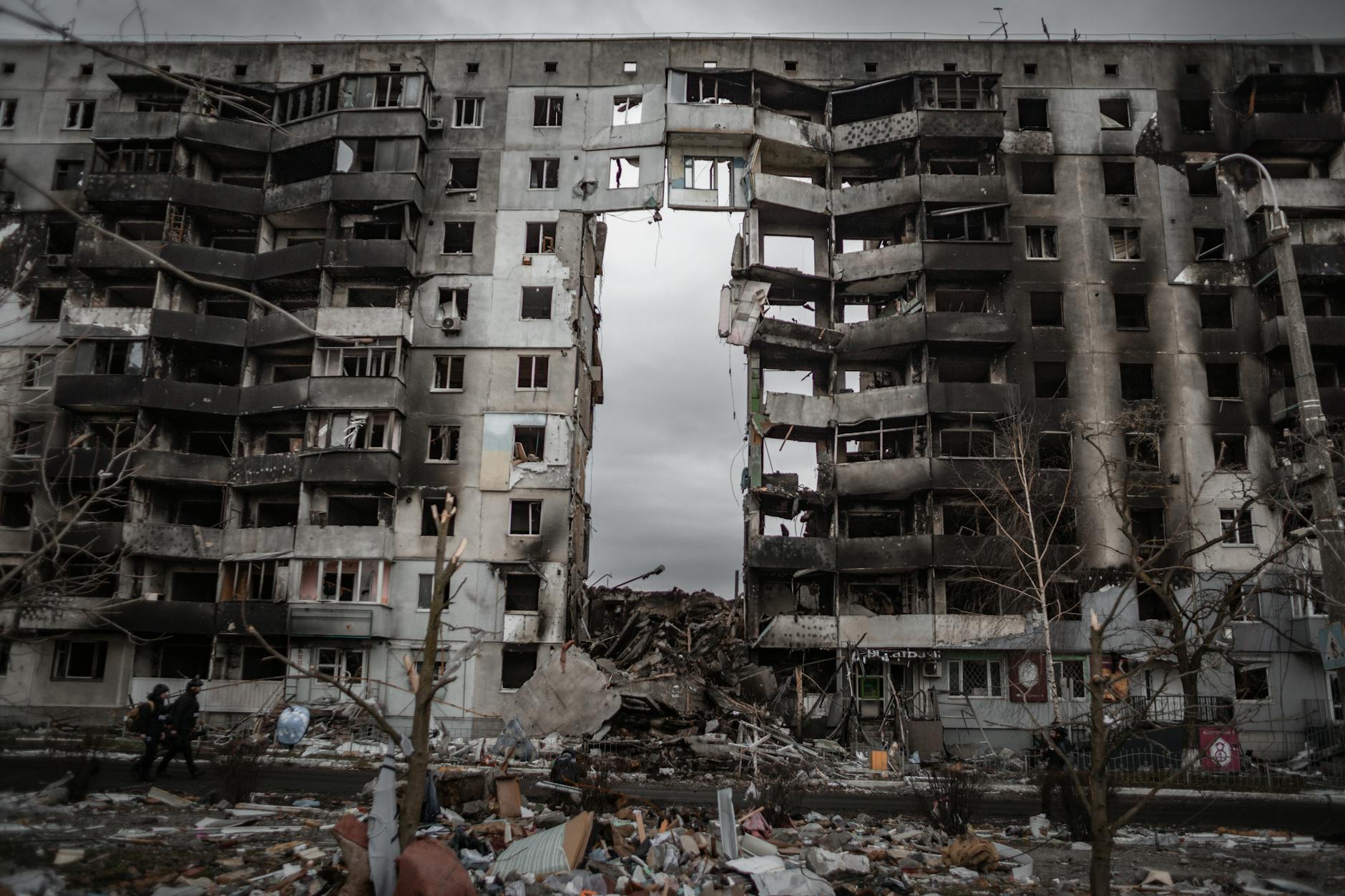
The Twelve-Day War, fought between June 13 and 24, 2025, did not just destroy Iranian military infrastructure. It shattered a carefully maintained illusion of regime invincibility. Israeli strikes killed prominent military leaders, nuclear scientists, and civilians. By June 28, the Human Rights Activists News Agency reported that the strikes had killed 1,190 people and wounded over 4,000, including 436 confirmed civilians and 435 military personnel. For a regime that had spent decades projecting strength, the war exposed profound vulnerabilities that minority populations, particularly Kurds, immediately recognized. The aftermath was telling. Rather than rallying national unity, the Iranian government turned inward with a ferocity that revealed its own insecurity.
Police announced the detention of 21,000 suspects, including 260 accused of spying. The New Lines Institute described this post-war crackdown as “punishing vulnerability,” a pattern in which the state targets its most marginalized populations precisely when the regime itself is weakest. For Kurds, who had endured decades of similar treatment, the war confirmed something many had long suspected: the Islamic Republic’s security apparatus, when genuinely threatened, does not distinguish between external enemies and internal minorities. It treats them as one and the same. This dynamic created a paradox. The regime’s heavy-handed response, rather than suppressing dissent, amplified it. When a government detains 21,000 people in the wake of a foreign military attack, it sends a clear message to its own citizens about where the real threat perception lies. Kurdish leaders read that message clearly, and began coordinating in ways they had not attempted in decades.
The Disproportionate Crackdown That Fueled Kurdish Resistance
The numbers tell a story that iranian authorities would prefer to keep quiet. Kurds make up an estimated 8 to 17 percent of Iran’s approximately 90 million people, concentrated in the western and northwestern provinces. Yet according to the Hengaw Organization for Human Rights, Kurds accounted for 14 percent of state executions and a staggering 47 percent of all detainees in Iran in 2025. That gap between population share and persecution share is not a statistical anomaly. It is policy. Amnesty International described the execution rate as “the highest figure recorded in decades,” and specifically noted that the executions were intended to suppress dissent among minority populations. This is a critical distinction.
The regime was not responding to a specific Kurdish military threat. It was using the post-war chaos as cover to accelerate a longstanding campaign of ethnic and political repression. However, if Iranian authorities believed that mass executions and detentions would pacify the Kurdish regions, they miscalculated badly. The crackdown became its own accelerant, pushing fence-sitters toward opposition and giving Kurdish political organizations a recruitment surge they could not have manufactured on their own. There is an important limitation to acknowledge here. Disproportionate repression does not automatically translate into effective resistance. The Kurdish population in Iran, while significant in number, lacks the territorial control and international backing that Kurds in Iraq’s Kurdistan Region have built over decades. The gap between grievance and governance capacity remains wide, and history is full of examples where justified anger was met with even greater state violence rather than concession.
The December Protests and Kurdish Casualties on the Front Lines
When protests erupted on December 28, 2025, beginning in Tehran’s Grand Bazaar and spreading rapidly across the country, they quickly escalated into one of the largest movements since the founding of the Islamic Republic. But the geography of violence was uneven. The most intense clashes and highest casualty figures were recorded in Iran’s western, Kurdish-majority provinces, a pattern consistent with both the regime’s targeting priorities and the depth of Kurdish grievances. The Kurdistan Human Rights Network documented the toll with grim precision: at least 240 Kurdish citizens killed and over 2,000 arrested as of mid-February 2026. On January 14, 2026, the Iran Human Rights NGO reported something alarming.
Security forces deployed in Kurdish regions “did not speak Persian,” suggesting the involvement of foreign fighters. The next day, CNN reported, citing an Iraqi source, that nearly 5,000 fighters from Iraqi militias had crossed into Iran in the preceding weeks. The use of non-Persian-speaking forces against Kurdish civilians carries a particular sting. It signals that the regime views Kurdish regions not as parts of the national body that need calming, but as occupied territory requiring outside muscle to subdue. The scale of the protests, which the Iranian government itself acknowledged resulted in 3,117 killed nationwide, placed enormous strain on the regime’s security apparatus. For Kurdish political organizations, watching the regime stretch thin across multiple fronts simultaneously was the catalyst they needed to formalize cooperation.
Inside the Kurdish Coalition and Its Two-Phase Strategy
The Coalition of Political Forces of Iranian Kurdistan, formally announced on February 22, 2026, brought together five parties that had often operated at cross purposes. The members span a wide ideological range: the KDPI led by Mustafa Hijri, the PAK under Hussein Yazdanpanah, Khabat led by Baba Sheikh Hosseini, the leftist PJAK under Viyan Peyman, and Komala led by Reza Kaabi. An initial coordination meeting was held on January 5, 2026, meaning the groundwork was laid within days of the protests erupting. The coalition outlined a two-phase strategy. Phase one focuses on the liberation of Eastern Kurdistan, known in Kurdish as Rojhelat. Phase two involves the construction of democratic governance, including free elections, protection of civil and political rights, gender equality, environmental stewardship, and minority rights guarantees.
To operationalize these goals, the coalition established a joint diplomatic committee and a joint Peshmerga and guerrilla command center. A central alliance body would administer liberated areas and organize elections. The tradeoff inherent in this coalition is significant. Unifying parties from secular nationalists to leftist organizations required compromises on ideology that could fracture under pressure. The KDPI’s traditional nationalism and PJAK’s ideological alignment with the PKK represent fundamentally different visions for Kurdish governance. Coalition politics have historically been the graveyard of Kurdish unity movements, both in Iran and across the broader Kurdish diaspora. The question is whether the severity of the current crisis provides enough external pressure to hold the alliance together despite its internal tensions.
Why Iran’s Regime Cannot Afford to Ignore the Kurdish Factor
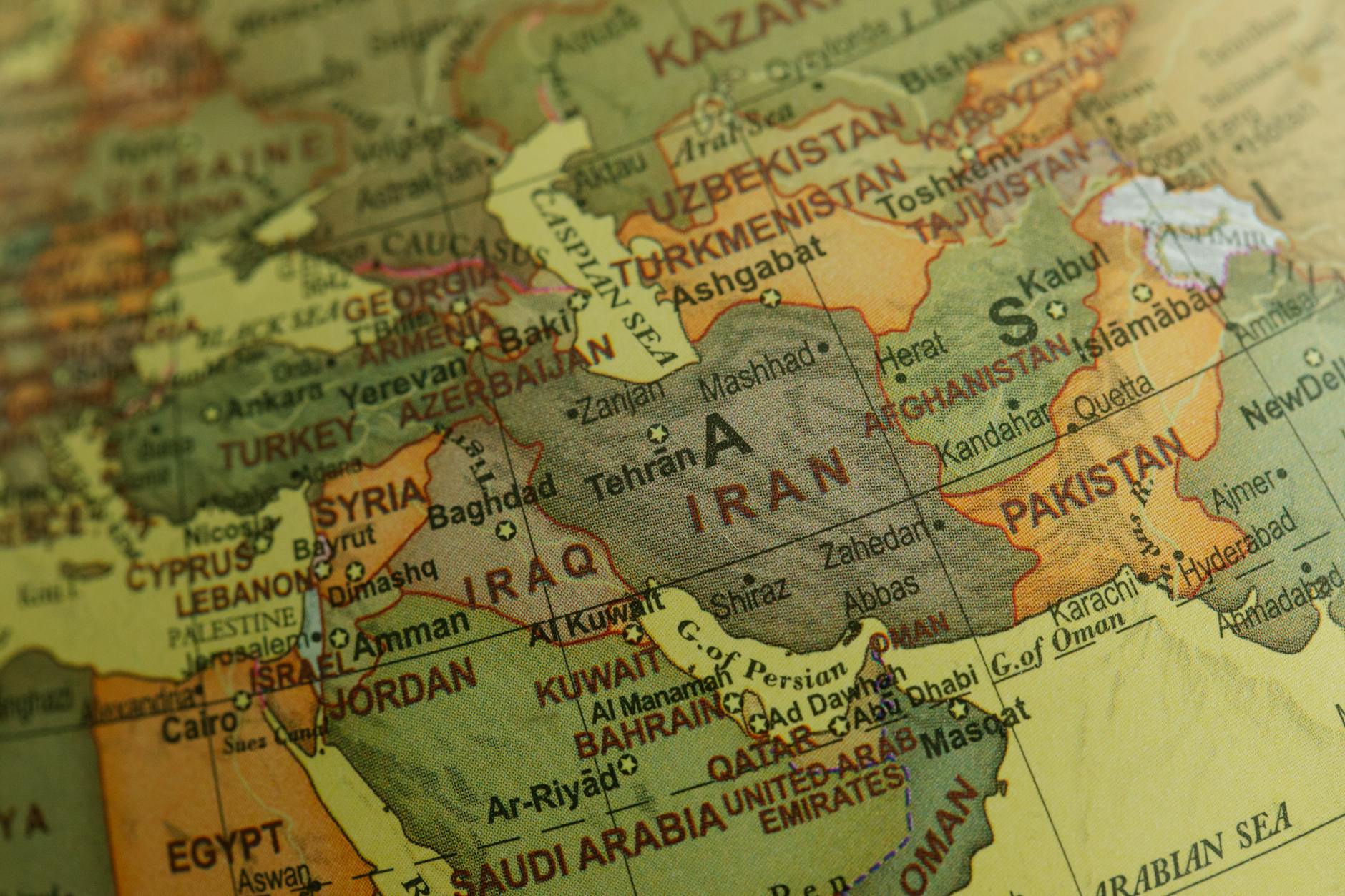
The JINSA assessment that “Iran’s protest movement cannot succeed without the Kurds” is not flattery. It is a strategic reality rooted in geography and demographics. Kurdish-majority provinces sit along Iran’s western border with Iraq, where the Kurdistan Regional Government operates with substantial autonomy. This border region provides logistical corridors, political relationships, and a model of Kurdish governance that Iranian Kurds can point to as proof of concept. However, this same geography creates enormous risks. A Jerusalem Post report quoted a Kurdish leader saying Iran is “nearing a Soviet-style break point,” a comparison that carries both hope and warning.
The Soviet Union’s dissolution did produce independent states, but it also produced frozen conflicts, economic collapse, and in several cases, authoritarian regimes that replaced the previous authoritarian regime. Kurdish leaders invoking this comparison should be pressed on which post-Soviet outcome they are actually preparing for. The Kurdish Peace Institute has analyzed both the risks and opportunities of the new coalition, and their assessment is notably cautious. The involvement of nearly 5,000 Iraqi militia fighters in Iran’s internal crackdown demonstrates that the regime has regional allies willing to help suppress Kurdish aspirations. Any Kurdish bid for self-determination will not just face the Iranian state. It will face a network of Shia militia organizations with their own interests in preventing the emergence of another autonomous Kurdish region on their borders.
The International Dimension and Foreign Fighter Involvement
The report that security forces in Kurdish regions did not speak Persian, combined with CNN’s reporting of nearly 5,000 Iraqi militia fighters crossing into Iran, introduces a dimension that transforms this from a domestic crisis into a regional confrontation. Iraqi militias entering Iran to suppress Kurdish protests means that any international response, or lack thereof, carries implications far beyond Iran’s borders.
📨 Get Free Accountability Coverage Alerts
Free · No spam · Unsubscribe anytime
It raises questions about Iraqi sovereignty, the role of Iran-aligned militias in post-war Iraq, and whether the international community views the suppression of Kurdish populations as a regional security concern or an internal Iranian matter. For the Kurdish coalition, foreign fighter involvement is both a propaganda gift and a military complication. It validates their narrative that the Iranian regime cannot hold its own territory without outside help, but it also means they face a more diverse and potentially more brutal set of adversaries than the Iranian security forces alone.
What Comes Next for Eastern Kurdistan
The coming months will likely determine whether the Coalition of Political Forces of Iranian Kurdistan becomes a durable political force or another in a long series of Kurdish alliances that splintered under pressure. The coalition’s governance plans, including free elections and minority rights guarantees, are aspirational documents written by exile politicians and underground leaders. Translating them into reality requires holding territory, building administrative capacity, and maintaining unity across five organizations with different command structures, funding sources, and strategic visions.
What distinguishes this moment from previous Kurdish mobilizations in Iran is the convergence of factors: a regime weakened by war, nationwide protests stretching the security apparatus thin, international attention focused on Iran’s internal dynamics, and a level of inter-party Kurdish cooperation that has not been seen in decades. Whether that convergence produces lasting change or is met with the kind of overwhelming force the regime has deployed before remains the central question. The answer will shape not just the future of Iran’s estimated 7 to 15 million Kurds, but the stability of the entire western Iranian borderland for years to come.
Conclusion
Iran’s Kurdish population is making a calculated bet that the post-war chaos and nationwide protest movement have created conditions for genuine self-determination. The formation of the Coalition of Political Forces of Iranian Kurdistan on February 22, 2026, the documented disproportionate crackdown on Kurdish communities, and the regime’s reliance on foreign fighters all point to a situation that has moved well beyond the familiar cycle of protest and repression. The numbers alone are damning: Kurds comprising 47 percent of all detainees while making up at most 17 percent of the population tells you everything about who the regime considers its primary internal threat. The road ahead is extraordinarily dangerous.
Kurdish movements in Iran have faced betrayal, internal division, and overwhelming state violence before. But the structural conditions are different now. A regime that needed 5,000 foreign militia fighters to control its own western provinces, that executed its citizens at the highest rate in decades, and that detained 21,000 people after a war it did not start is a regime operating from weakness, not strength. Whether the Kurdish coalition can exploit that weakness before the regime reconsolidates is the defining question of this chapter in Middle Eastern politics.
Frequently Asked Questions
How large is Iran’s Kurdish population?
Estimates range from 8 to 17 percent of Iran’s approximately 90 million people, placing the Kurdish population between roughly 7 and 15 million. They are concentrated in the western and northwestern provinces, along the border with Iraq’s Kurdistan Region.
What was the Twelve-Day War?
The Twelve-Day War refers to the conflict between Israel and Iran from June 13 to 24, 2025, during which Israel launched strikes on Iranian military and nuclear facilities. HRANA reported 1,190 people killed and over 4,000 wounded in Iran by June 28, 2025.
What is the Coalition of Political Forces of Iranian Kurdistan?
Formally established on February 22, 2026, it is an alliance of five major Iranian Kurdish parties: KDPI, PAK, Khabat, PJAK, and Komala. Their stated objectives include the overthrow of the Islamic Republic and the establishment of democratic governance in Eastern Kurdistan.
Why are Kurds disproportionately targeted by the Iranian regime?
According to the Hengaw Organization for Human Rights, Kurds accounted for 14 percent of state executions and 47 percent of all detainees in 2025 despite making up at most 17 percent of the population. Amnesty International described the execution rate as the highest in decades, aimed at suppressing minority dissent.
Were foreign fighters used against Kurdish protesters?
Yes. On January 14, 2026, IHRNGO reported that security forces in Kurdish regions did not speak Persian, and CNN reported that nearly 5,000 fighters from Iraqi militias had crossed into Iran in the preceding weeks.
What are the coalition’s governance plans?
The coalition outlined a two-phase strategy: liberation of Eastern Kurdistan followed by construction of democratic governance, including free elections, civil and political rights protections, gender equality, environmental stewardship, and minority rights guarantees.
You Might Also Like
- Who Actually Profits From the Iran War — A Look at the Money
- There Is No Public Exit Strategy for the Iran War
- The Power Vacuum After Iran’s Government Falls Could Be Worse Than the War Itself