No, Iran’s government has not collapsed — at least not yet. Despite coordinated U.S.-Israeli airstrikes that killed Supreme Leader Ali Khamenei on February 28, 2026, and despite Washington’s apparent expectation that the regime would fracture rapidly, Tehran’s ruling structure has held together with what the Washington Post called “surprising resilience.” As of March 10, there have been no significant security force defections and no urban areas have fallen outside government control. The Assembly of Experts named Mojtaba Khamenei, the late supreme leader’s son, as successor on March 8, signaling that hardline factions still hold the reins. That does not mean the regime is stable.
Iran was already reeling from the largest nationwide protests since the 1979 Islamic Revolution, a currency in freefall, and crippling international sanctions before the first bomb fell on Tehran. The question analysts are now wrestling with is not whether the Islamic Republic is weakened — it plainly is — but whether the damage is terminal or survivable. A classified U.S. National Intelligence Council report, details of which surfaced around March 7-9, concluded that even a full-scale interstate war would be “unlikely to dislodge or drastically alter” the current regime. This article examines the strikes, the succession crisis, the economic collapse that preceded the military action, and what the intelligence community and independent analysts actually project going forward.
Table of Contents
- Did Washington Expect Iran’s Government to Collapse Faster Than It Has?
- What the Classified Intelligence Report Actually Says About Regime Survival
- The Economic Crisis That Preceded the Bombs
- Mojtaba Khamenei’s Succession and What It Signals
- Why “Regime Collapse” Does Not Mean What Washington Thinks It Means
- The Role of Protests and Civil Unrest in Shaping Outcomes
- Where This Goes From Here
- Conclusion
- Frequently Asked Questions
Did Washington Expect Iran’s Government to Collapse Faster Than It Has?
All signs point to yes. At 2:30 AM EST on February 28, President trump posted an eight-minute video on Truth Social laying out what amounted to a regime change rationale for the strikes. The framing was not subtle. The coordinated operation with Israel targeted high-ranking officials in Tehran and succeeded in killing Khamenei along with multiple members of his family, including his daughter Hoda, his son-in-law, his granddaughter, and his daughter-in-law. His wife, Mansoureh Khojasteh Bagherzadeh, died from injuries the following day. The scale of the decapitation strike suggested planners believed removing the top of the command structure would trigger a cascading internal breakdown. It did not happen that way.
Iranian state media confirmed Khamenei’s death on March 1 and declared 40 days of mourning, but the institutional apparatus — the IRGC, the security services, the clerical establishment — did not splinter. An Israeli strike destroyed the building where the Assembly of Experts was scheduled to meet on March 3, delaying the formal succession process by several days, but even that disruption did not produce the kind of visible chaos Washington appeared to be banking on. By March 5, the Washington Post was reporting that despite devastating losses, the ruling structure in Tehran had remained intact. The war’s trajectory has been described by analysts as “more protracted and unpredictable than decision-makers in Washington anticipated.” The comparison to Iraq in 2003 is instructive but misleading. Saddam Hussein’s government was built almost entirely around one man and his sons; removing them caused the state to evaporate. Iran’s theocratic system has deeper institutional roots — parallel military structures, a sprawling network of clerical oversight bodies, and decades of planning for exactly this kind of existential threat. That does not make it invincible, but it makes the “fast collapse” theory look like it was grounded more in hope than in intelligence analysis.

What the Classified Intelligence Report Actually Says About Regime Survival
The leaked National Intelligence Council assessment, reported on around March 7-9, delivered a conclusion that should have sobered anyone expecting a quick resolution: even full-scale interstate war would be “unlikely to dislodge or drastically alter” Iran’s regime. This is not a fringe opinion from an outside think tank. The NIC represents the U.S. intelligence community’s consensus analytical product, and its findings carry significant weight in policy circles — or at least they are supposed to. The report’s conclusion creates an uncomfortable contradiction with the administration’s apparent strategy. If the intelligence community’s own assessment is that military force alone will not topple the regime, then the strikes on February 28 were either intended to achieve something short of regime change (despite Trump’s video suggesting otherwise) or were launched in defiance of the intelligence community’s best judgment.
Neither interpretation is reassuring. The middle east Institute’s analysis struck a middle position, arguing that “regime collapse is likely — democracy is not,” suggesting that the Islamic Republic may eventually fall but that what follows could be equally authoritarian or worse. However, if internal economic conditions continue to deteriorate at the rate they have been — and there is every reason to believe they will given the additional disruption of active military conflict — the NIC’s assessment could prove too conservative. Intelligence estimates are snapshots, not prophecies. The Stimson Center has outlined specific indicators of regime collapse, including mass security force defections and loss of territorial control, that have not yet been met as of March 10. But “not yet” is doing a lot of work in that sentence. The situation is fluid, and anyone who claims certainty about where this ends is selling something.
The Economic Crisis That Preceded the Bombs
The military strikes did not land on a functioning state. By the time U.S. and Israeli bombs hit Tehran on February 28, Iran was already experiencing what may have been the most severe economic crisis in its modern history. On December 28, 2025, nationwide anti-government protests erupted across more than 100 cities — the largest uprising since the 1979 Islamic Revolution. The Iranian rial, which had already been under pressure for years, collapsed from roughly 42,000 to over 1.1 million against the U.S. dollar. That is not a devaluation. That is a currency ceasing to function as a credible store of value.
Soaring inflation, widespread shortages of basic goods, and the cumulative weight of international sanctions drove the unrest. These were not student protests confined to Tehran’s universities. They spread to working-class neighborhoods, provincial cities, and regions that had historically been regime strongholds. The breadth of the December uprising matters because it demonstrated that the social contract between the Islamic Republic and its base — we provide stability and basic services in exchange for political acquiescence — had broken down before any foreign military intervention occurred. This context is critical for understanding the current situation. The Hudson Institute’s Michael Doran argued that “the Islamic Republic is dying” and “will not emerge from 2026 with its authority, cohesion, or capacity preserved.” That assessment predates the airstrikes and was based primarily on the economic and social deterioration. The military action layered a decapitation strike on top of a regime that was already struggling to maintain legitimacy with its own population. Whether that combination proves fatal or merely debilitating remains the central question.
Mojtaba Khamenei’s Succession and What It Signals
On March 8, the Assembly of Experts named Mojtaba Khamenei as Iran’s new supreme leader. The selection of the late leader’s son was not a surprise to Iran watchers, but it carries significant implications. On one hand, it demonstrates that the regime’s institutional machinery still functions — the succession process, though delayed by the Israeli strike on the Assembly’s meeting location, ultimately produced a result. On the other hand, the choice of a dynastic successor in a system that theoretically derives its legitimacy from clerical scholarship rather than bloodline exposes a contradiction that opposition figures will exploit. The tradeoff for Iran’s hardliners is straightforward. Mojtaba Khamenei represents continuity and signals that the revolutionary establishment will not make concessions under fire. That message is aimed at both domestic audiences and foreign adversaries. But continuity is only an asset if the system being continued is viable.
Appointing a new supreme leader does not restore the rial, end the sanctions, rebuild destroyed military infrastructure, or persuade millions of Iranians who took to the streets in December that the regime deserves their loyalty. Al Jazeera’s analysis of the succession noted the regime’s deep institutional roots while questioning whether those roots are strong enough to survive the compounding pressures of war, economic collapse, and popular discontent simultaneously. The comparison between Mojtaba and his father is also worth noting. Ali Khamenei, whatever his faults, spent decades consolidating power and building relationships across Iran’s fractious political landscape. Mojtaba inherits the title but not the personal authority. He takes over a system under active military assault, with a collapsed economy and a population that was already in revolt. Even under the best circumstances, a leadership transition of this magnitude would be destabilizing. These are not the best circumstances.
Why “Regime Collapse” Does Not Mean What Washington Thinks It Means
The phrase “regime collapse” has been thrown around freely in Washington since the February 28 strikes, but analysts who study these things for a living are more careful with the term. The Stimson Center’s framework for evaluating regime collapse in Iran identifies specific indicators: mass defections from security forces, loss of government control over urban areas, fragmentation of the military command structure, and the emergence of alternative governance structures. As of March 10, none of these indicators have been fully met. This matters because the gap between “severely weakened” and “collapsed” is enormous, and policy decisions made on the assumption that collapse is imminent can be catastrophic if it is not. The Middle East Institute’s warning that “regime collapse is likely — democracy is not” deserves particular attention.
The assumption embedded in much of the Washington discourse is that if the Islamic Republic falls, something better replaces it. History — in Iraq, Libya, Syria, and elsewhere — suggests otherwise. A regime can collapse into civil war, warlordism, or a different kind of authoritarianism just as easily as it can collapse into democracy. There is also a warning for those tracking this situation from the consumer and financial perspective. Iran’s economic crisis, the collapse of the rial, and the broader instability in the region have ripple effects on global energy markets, supply chains, and the financial instruments tied to them. Anyone with exposure to Middle Eastern markets or energy-dependent investments should be paying close attention to the gap between Washington’s rhetoric about imminent collapse and the intelligence community’s more cautious assessment.
📨 Get Free Accountability Coverage Alerts
Free · No spam · Unsubscribe anytime
The Role of Protests and Civil Unrest in Shaping Outcomes
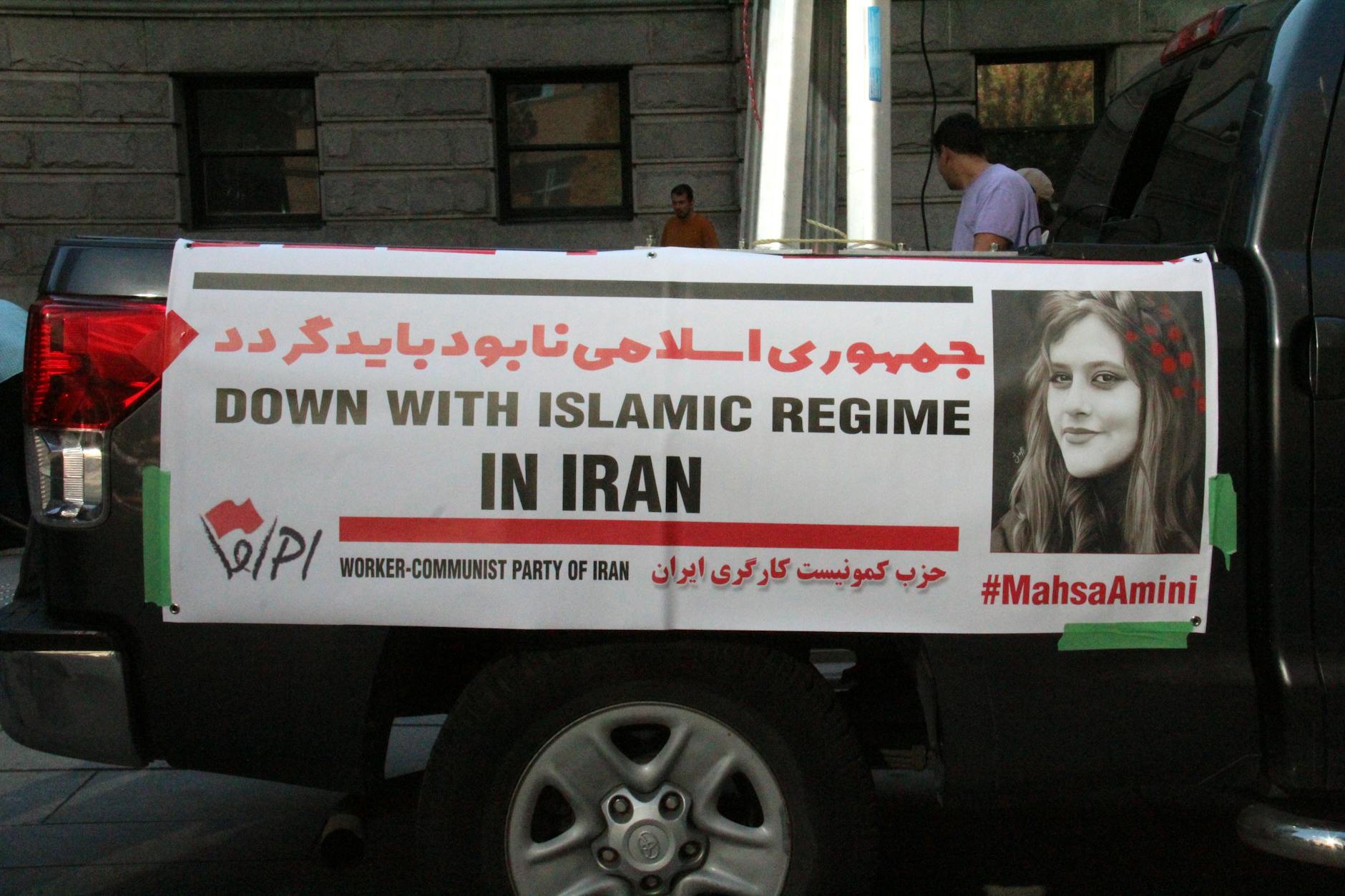
The December 2025 protests across more than 100 Iranian cities represent a variable that neither the regime nor Washington fully controls. These were not organized by any single opposition group or foreign intelligence service. They were driven by economic desperation — people who could not afford bread, fuel, or medicine taking to the streets because they had nothing left to lose.
That kind of unrest is both more powerful and more unpredictable than anything engineered from outside. If the protests reignite at scale during the current military conflict — and the economic conditions that caused them have only worsened — the combination of external military pressure and internal civil unrest could exceed the regime’s capacity to manage both simultaneously. That is the scenario in which the Stimson Center’s collapse indicators begin to be met. But it is also the scenario most likely to produce chaos rather than an orderly transition, which is why the intelligence community’s caution about the limits of military force deserves more weight than it appears to be getting in current policy discussions.
Where This Goes From Here
The honest answer is that nobody knows. The classified NIC report says the regime is unlikely to be dislodged by military force alone. The Hudson Institute says the Islamic Republic is dying. The Middle East Institute says collapse is likely but democracy is not. These are not necessarily contradictory assessments — they operate on different timelines and define success differently.
What is clear is that the situation as of March 10, 2026, is more protracted and unpredictable than decision-makers in Washington anticipated when the strikes were ordered on February 28. The coming weeks will be shaped by several factors: whether Mojtaba Khamenei can consolidate authority or becomes a figurehead presiding over internal power struggles; whether the Iranian security forces maintain cohesion or begin to fracture under sustained pressure; whether the protest movement resurfaces; and whether the U.S. and Israel escalate further or recalibrate their expectations. For readers following this from an accountability perspective, the key question is whether the administration’s apparent regime-change objectives were grounded in credible intelligence assessments — or whether they ran contrary to the intelligence community’s own conclusions. That gap, if it exists, has implications that extend well beyond Iran.
Conclusion
Iran’s government has not collapsed as of March 10, 2026, despite the killing of Supreme Leader Ali Khamenei, devastating airstrikes, a currency in freefall, and the largest popular uprising since 1979. The succession of Mojtaba Khamenei demonstrates that the regime’s institutional machinery still functions, even if its long-term viability is deeply in question. The classified NIC assessment that military force alone is unlikely to topple the regime stands in tension with the administration’s apparent expectations, and that tension deserves scrutiny. What happens next depends on factors that no single actor controls.
The regime is severely weakened but not yet broken. The economy was in crisis before the bombs fell and is worse now. The protest movement that erupted in December demonstrated that millions of Iranians have lost faith in the system, but losing faith and overthrowing a government are different things. For those tracking this from an accountability standpoint, the critical task is holding policymakers to the standard of their own intelligence community’s assessments and demanding honest answers about what the endgame actually looks like — not what anyone in Washington hoped it would be.
Frequently Asked Questions
Has Iran’s government actually collapsed?
No. As of March 10, 2026, the Iranian regime remains intact, though severely weakened. The Assembly of Experts named Mojtaba Khamenei as the new supreme leader on March 8, and there have been no significant security force defections or losses of territorial control.
Who is Mojtaba Khamenei?
Mojtaba Khamenei is the son of the late Supreme Leader Ali Khamenei, who was killed in U.S.-Israeli airstrikes on February 28, 2026. He was named as the new supreme leader by Iran’s Assembly of Experts on March 8, signaling that hardline factions retain control of the succession process.
What did the classified U.S. intelligence report say about regime change in Iran?
A classified National Intelligence Council report, details of which emerged around March 7-9, concluded that even a full-scale interstate war would be “unlikely to dislodge or drastically alter” the current Iranian regime. This assessment appears to be in tension with the administration’s stated objectives.
How bad is Iran’s economic crisis?
The Iranian rial collapsed from roughly 42,000 to over 1.1 million against the U.S. dollar. Nationwide protests erupted across more than 100 cities on December 28, 2025, driven by soaring inflation, widespread shortages, and the cumulative impact of international sanctions. These were the largest protests since the 1979 revolution.
Could Iran still collapse?
Analysts are divided. The Hudson Institute argues the Islamic Republic “will not emerge from 2026 with its authority, cohesion, or capacity preserved.” The Middle East Institute says “regime collapse is likely — democracy is not.” The Stimson Center has outlined specific collapse indicators that have not yet been fully met. The situation remains fluid and unpredictable.
You Might Also Like
- The Iran Hawks Have Wanted This War for Over 20 Years — They Finally Got It
- The Geopolitical Fallout From Epic Fury Will Last Far Longer Than the Bombing
- The Federal Reserve May Need to Adjust Policy in Response to Iran War Inflation