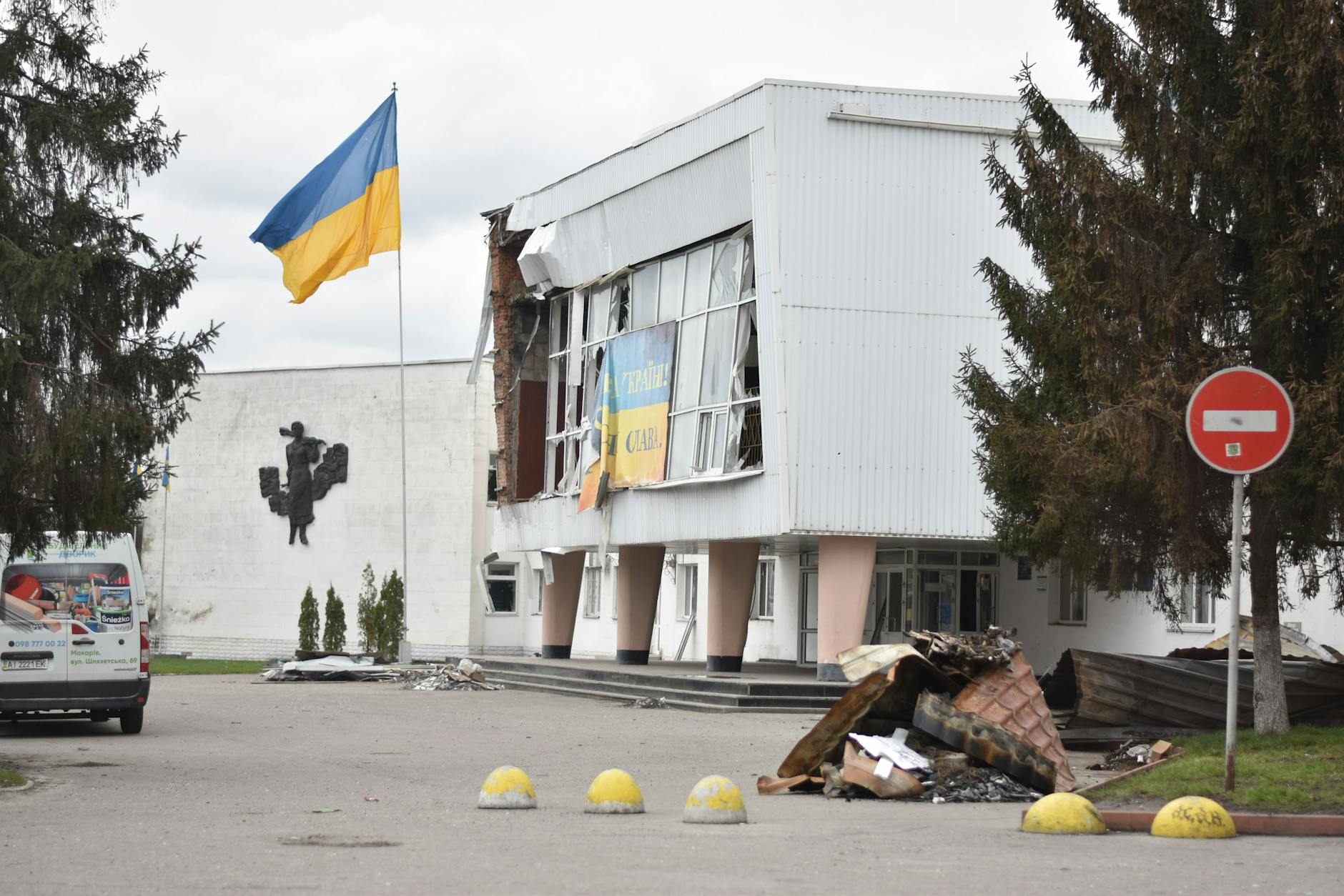
Iran’s infrastructure damage from the coordinated U.S.-Israeli military strikes of 2025 and 2026 is so extensive that full recovery will almost certainly take decades — if it happens at all. The destruction of key nuclear facilities at Natanz, Fordow, and Isfahan, the elimination of roughly half of Iran’s ballistic missile stockpile, and the “near-total and indefinite” loss of the Kharg Island oil terminal have collectively set the country back by years across military, energy, and economic dimensions. Conservative estimates put immediate rebuilding costs for power grids, refineries, and transportation networks alone in the tens of billions of dollars, and that figure does not account for the nuclear program or missile arsenal. The scale of damage is not theoretical.
Satellite imagery from late 2025 through February 2026 shows Iran conducting emergency fortification efforts — filling craters, sealing tunnel openings, pouring concrete over entrances — rather than rebuilding destroyed facilities. IAEA Director Grossi described the strikes as causing “severe damage” but stopped short of calling it “total damage,” a distinction that matters enormously for what comes next. Iran still retains approximately 400 kilograms of fissile material enriched to 60% and the scientific knowledge to reconstitute a weapons program, but the physical infrastructure to do so is largely gone. This article examines the full scope of the destruction across Iran’s nuclear sites, missile capabilities, and energy infrastructure. It breaks down what was hit, what survived, what Iran is doing to rebuild, and why experts believe the timeline for recovery stretches not across months but across decades.
Table of Contents
- How Severe Is the Infrastructure Damage From the Strikes on Iran’s Nuclear Facilities?
- What Happened to Iran’s Missile Arsenal and Can It Be Rebuilt?
- The Economic Catastrophe at Kharg Island and Iran’s Oil Revenue Collapse
- Rebuilding Strategy — Going Deeper Underground vs. Restoring What Was Lost
- The February 2026 Operation and Its Cascading Regional Consequences
- The Role of External Powers in Iran’s Recovery Timeline
- What Comes Next — The Long Road Ahead
- Conclusion
- Frequently Asked Questions
How Severe Is the Infrastructure Damage From the Strikes on Iran’s Nuclear Facilities?
The damage to iran‘s nuclear infrastructure is the most strategically significant outcome of both the June 2025 war and the February 28, 2026 Operation Epic Fury. At Natanz, Iran’s primary enrichment site, aboveground facilities have been assessed as “completely destroyed” according to Israeli intelligence. The underground facility known as “Pickaxe Mountain,” located south of Natanz, may still contain centrifuges buried at extreme depth, but no significant efforts to rehabilitate the site have been observed since June 2025. Fordow, the heavily fortified enrichment site buried inside a mountain, suffered “major damage.” Satellite imagery shows dump trucks and bulldozers working to fill impact craters — not to rebuild, but to prevent further structural collapse. At Isfahan, both the uranium reprocessing facility and metallurgy facilities were destroyed outright, with Iranian engineers now focused on sealing tunnel openings rather than resuming operations. Israeli assessments state the strikes delayed Iran’s nuclear program “by a number of years,” though they did not eliminate it entirely. The critical distinction here is between physical infrastructure and institutional knowledge.
Iran’s centrifuge cascades, enrichment halls, and processing equipment are wrecked or buried. But the physicists, engineers, and accumulated research data still exist. experts assess Iran could eventually rebuild a nuclear program, but likely not on the same scale unless it receives substantial outside assistance from Russia, China, or North Korea. The comparison that matters is this: after the Stuxnet cyberattack in 2010, Iran recovered its enrichment capacity within roughly two years. The physical destruction from these strikes is orders of magnitude more severe, which is why the recovery timeline is measured in decades rather than months. One important limitation to keep in mind: “delayed” is not “destroyed.” The 400 kilograms of 60%-enriched fissile material Iran retains is a significant quantity. If Iran chose to pursue a crash weaponization program using that material, the infrastructure damage would slow but not necessarily prevent it. The strikes bought time; they did not buy permanent security.
What Happened to Iran’s Missile Arsenal and Can It Be Rebuilt?
Iran’s missile inventory has been cut roughly in half. Before the June 2025 war, Iran possessed an estimated 2,500 missiles. After firing approximately 550 during that conflict and losing between one-third to one-half of its remaining stockpile to Israeli strikes, current estimates place the arsenal at between 1,000 and 1,200 missiles. The medium-range ballistic missile array — Iran’s primary tool for projecting power across the Middle East — experienced what analysts describe as “critical attrition.” However, the picture is more complicated than raw numbers suggest. Iran’s underground missile infrastructure survived the strikes in significant part. Hardened tunnels and subterranean storage facilities proved more resilient than aboveground launch sites and production facilities.
This means Iran retains the physical architecture for missile storage and potentially for future production, if it can obtain the necessary raw materials. And that is precisely what appears to be happening: reports indicate Iran is already establishing sanctions-bypassing supply chains from China to replenish solid fuel stocks, the critical component for its ballistic missile program. The warning here is straightforward. If the international community fails to enforce sanctions on Iran’s procurement networks — particularly those running through Chinese intermediaries — the missile arsenal could be partially reconstituted within years rather than decades. The underground infrastructure that survived the strikes becomes a recovery accelerator rather than a ruin. This is the opposite dynamic from the nuclear program, where the specialized above-and-below-ground facilities are far harder to replace than conventional missile components.
The Economic Catastrophe at Kharg Island and Iran’s Oil Revenue Collapse
The strike on Kharg Island may prove to be the most economically devastating single action of the entire campaign. Kharg Island is Iran’s primary oil export terminal, historically handling the vast majority of the country’s crude oil shipments. The damage has been assessed as causing “near-total and indefinite” loss of export capacity. For a country where oil revenues historically account for 25 to 40 percent of the government budget, this is not merely an inconvenience — it is a fiscal emergency that cascades into every corner of the Iranian state. At current oil prices, Iran’s annual revenue shortfall from the loss of Kharg Island alone could exceed $50 billion. To put that in perspective, Iran’s entire annual government budget has historically hovered around $70 to $90 billion.
Partial recovery through alternative ports is theoretically possible, but would require months to years of infrastructure development and would capture only a fraction of the volume Kharg Island handled. Iran’s smaller export terminals were never designed to absorb this kind of capacity, and expanding them requires exactly the kind of capital investment that the revenue loss makes difficult to fund. This creates a vicious cycle that is worth understanding clearly. Iran needs tens of billions of dollars to rebuild its energy infrastructure, military capabilities, and damaged civilian systems. But the primary revenue source that would fund that rebuilding — oil exports — is itself one of the things that was destroyed. Without external financing from allied nations or a dramatic easing of international sanctions, Iran faces a reconstruction timeline that is constrained not just by engineering complexity but by fundamental inability to pay for it.
Rebuilding Strategy — Going Deeper Underground vs. Restoring What Was Lost
Iran’s observable response to the strikes reveals a strategic choice: rather than simply rebuilding what was destroyed, Iran is fortifying and burying what remains. Satellite imagery shows strengthened tunnel entrances reinforced with fresh concrete, additional soil and rock cover over surviving facilities, and expanded security perimeters around key sites. At the nuclear facilities, Iran is rebuilding deeper underground to reduce vulnerability to the deep-penetration munitions — including the U.S. GBU-57 Massive Ordnance Penetrator — that proved so effective in the strikes. This approach involves a fundamental tradeoff. Building deeper provides better protection against future strikes, but it is dramatically more expensive and time-consuming than surface-level reconstruction.
Deep underground construction requires specialized boring equipment, extensive ventilation and power systems, and significantly more concrete and structural steel. It also makes the facilities harder to operate and maintain, since everything from centrifuge installation to waste removal becomes more complex at greater depth. Iran is essentially choosing long-term survivability over short-term recovery speed. The comparison to North Korea’s nuclear infrastructure is instructive. North Korea has spent decades building its nuclear and missile facilities deep inside mountains, and those facilities have proven extremely difficult for the international community to even locate, let alone target. Iran appears to be moving toward a similar model, but starting from a position of severe damage rather than building from scratch. The question is whether Iran can sustain the enormous cost of deep underground construction while simultaneously dealing with collapsed oil revenues and international sanctions.
The February 2026 Operation and Its Cascading Regional Consequences
Operation Epic Fury, launched on February 28, 2026, escalated the conflict to a level that fundamentally changed the strategic landscape. The coordinated U.S.-Israeli operation targeted over 1,000 sites on the first day alone, striking leadership targets, military installations, missile sites, and nuclear facilities simultaneously. The operation killed Iran’s Supreme Leader Ayatollah Khamenei, decapitating the country’s political and religious leadership structure. Three U.S. service members were killed in the operation. The regional fallout was immediate and severe.
Iran retaliated by striking sites in at least nine countries within 36 hours of the operation’s launch, hitting every Gulf Cooperation Council member state. This is a critical development that extends the damage assessment beyond Iran’s borders. The strikes and counter-strikes have created infrastructure damage across the broader Middle East, disrupted energy markets globally, and introduced a level of regional instability that compounds Iran’s own reconstruction challenges. Countries that might otherwise serve as trade partners or reconstruction facilitators — particularly Gulf states — now have their own damage to address and their own grievances against Tehran. The limitation that must be acknowledged here is that the full scope of damage from both the original strikes and Iran’s retaliatory attacks is still being assessed. The February 28 operation occurred just days ago as of this writing, and comprehensive damage assessments from independent sources will take weeks or months to compile. What is clear already is that each round of escalation makes the reconstruction timeline longer and the diplomatic path to de-escalation narrower.

The Role of External Powers in Iran’s Recovery Timeline
Whether Iran’s reconstruction takes one decade or three depends heavily on outside assistance. Russia, China, and North Korea have been identified as the most likely sources of technical and financial support. Iran is already pursuing Chinese supply chains for missile fuel components, and the precedent of Russian and North Korean cooperation on weapons programs suggests those channels could expand. However, each of these relationships comes with its own constraints.
📨 Get Free Accountability Coverage Alerts
Free · No spam · Unsubscribe anytime
Russia is consumed by its own military commitments and economic pressures. China has historically been cautious about openly violating sanctions regimes that could trigger secondary sanctions on Chinese firms. North Korea can provide technical knowledge but lacks the financial resources to fund large-scale reconstruction. Without significant external assistance, experts assess that Iran could rebuild a nuclear program but likely not on the same scale as what existed before the strikes. The combination of destroyed physical infrastructure, collapsed oil revenues, and ongoing international sanctions creates a reconstruction environment far more hostile than anything Iran has faced in its nuclear program’s history.
What Comes Next — The Long Road Ahead
The forward-looking picture for Iran’s infrastructure is one of partial, selective recovery rather than comprehensive rebuilding. Iran will likely prioritize its nuclear program and missile capabilities over civilian energy infrastructure, because the regime views those programs as existential necessities. This means the economic pain from lost oil revenue and damaged power grids will persist for Iranian citizens long after military capabilities begin to recover.
The tens of billions of dollars needed for civilian infrastructure reconstruction will compete directly with military spending for a shrinking pool of available resources. The broader implication for U.S. and Israeli policy is that the strikes have opened a window — measured in years, not months — during which Iran’s ability to project military power is significantly diminished. How that window is used, whether for diplomatic engagement, further military action, or strategic patience, will determine whether the decades-long reconstruction timeline becomes a pathway to a different regional order or simply a countdown to the next conflict.
Conclusion
The damage to Iran’s infrastructure from the 2025 and 2026 strikes is comprehensive and genuinely historic in scale. Nuclear facilities at Natanz, Fordow, and Isfahan are destroyed or severely damaged. The missile arsenal has been cut roughly in half. The Kharg Island oil terminal — Iran’s economic lifeline — has suffered near-total loss. Rebuilding costs run into the tens of billions of dollars, and the primary revenue source that would fund reconstruction has itself been destroyed.
Iran’s strategic response of building deeper underground, while rational from a survivability standpoint, adds years and billions more to the recovery timeline. The decades-long reconstruction estimate is not hyperbole. It reflects the convergence of massive physical destruction, collapsed revenue streams, international sanctions, regional instability from retaliatory strikes across nine countries, and the sheer engineering complexity of rebuilding nuclear and missile infrastructure underground. Iran retains the scientific knowledge and some fissile material to eventually reconstitute its programs, but the road from here to there is long, expensive, and uncertain. The strikes bought time. What matters now is what gets done with it.
Frequently Asked Questions
Did the strikes completely eliminate Iran’s nuclear weapons capability?
No. IAEA Director Grossi described the damage as “severe” but not “total.” Iran still retains approximately 400 kilograms of fissile material enriched to 60% and the scientific expertise to eventually rebuild. The strikes delayed the program by years but did not permanently end it.
How much of Iran’s missile arsenal was destroyed?
Iran’s missile inventory dropped from an estimated 2,500 pre-war to between 1,000 and 1,200. Roughly half was lost through a combination of missiles fired during the June 2025 war and direct strikes on storage and production facilities. Underground missile infrastructure survived in significant part.
What is the estimated cost to rebuild Iran’s damaged infrastructure?
Conservative estimates place immediate rebuilding costs for power grids, refineries, and transportation networks in the tens of billions of dollars. The nuclear and missile programs would cost billions more. Meanwhile, the loss of Kharg Island could reduce Iran’s annual revenue by over $50 billion, creating a severe funding gap.
Is Iran currently rebuilding its nuclear facilities?
As of early 2026, satellite imagery shows fortification efforts — strengthened tunnel entrances, additional concrete and soil cover, expanded security perimeters — rather than major facility rebuilding at key sites like Natanz and Fordow. Iran appears to be prioritizing protection of surviving assets over rapid reconstruction.
Could Iran get help from other countries to rebuild faster?
Potentially. Iran is already pursuing supply chains from China for missile fuel components, and Russia and North Korea are possible sources of technical assistance. However, each faces its own constraints — Russia’s military commitments, China’s caution about sanctions exposure, and North Korea’s limited financial resources — making large-scale assistance uncertain.
What was Operation Epic Fury?
Operation Epic Fury was the U.S. codename for the February 28, 2026 coordinated strike with Israel (which called its component Operation Roaring Lion). The operation targeted over 1,000 sites on the first day, including leadership targets, military installations, missile sites, and nuclear facilities. It resulted in the death of Supreme Leader Khamenei and three U.S. service members.
You Might Also Like
- Red Crescent Reports Widespread Infrastructure Damage Across Iranian Civilian Areas
- Ethnic Azerbaijanis in Northern Iran Could Push for Separation From Tehran
- Environmental Experts Warn Oil Fires in Iran Could Cause Widespread Ecological Damage