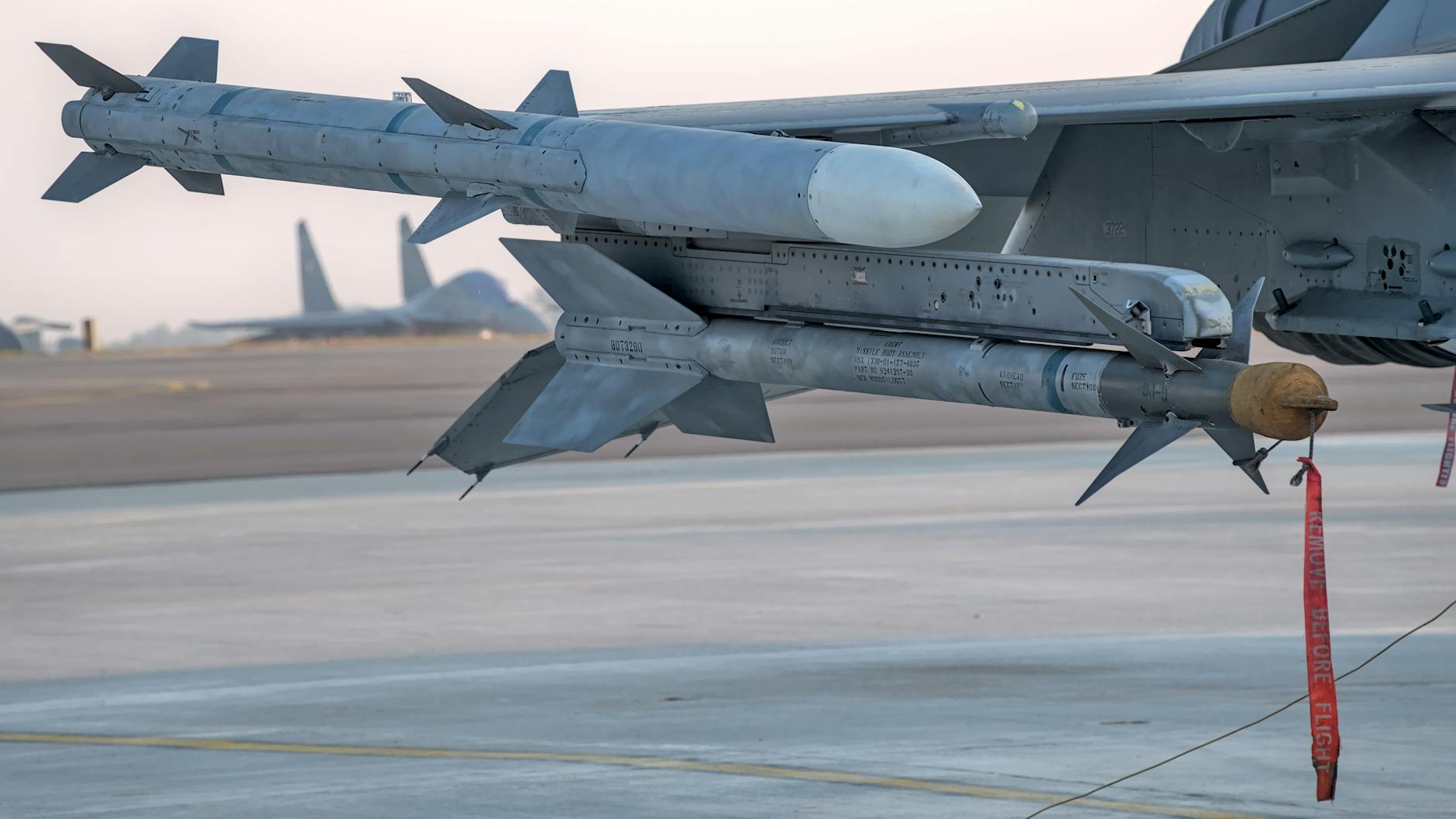
On March 1, 2026, an Iranian ballistic missile scored a direct hit on a synagogue in Beit Shemesh, a city near Jerusalem, killing nine people and injuring over 40 others in the deadliest single missile strike on Israeli soil during the current conflict with Iran. The attack came just hours after the United States and Israel launched a joint military operation against Iran — codenamed “Roaring Lion” by Israel and “Operation Epic Fury” by the U.S. — that killed Supreme Leader Ayatollah Ali Khamenei on February 28, 2026. Eight victims were declared dead at the scene by Magen David Adom, Israel’s ambulance service, with a ninth victim declared dead shortly after. A 10-year-old girl was reported in critical condition. The Iranian retaliation was not limited to Beit Shemesh.
The IRGC launched missiles and drones targeting 27 U.S. military bases across the Middle East — spanning Jordan, Kuwait, Bahrain, Qatar, Iraq, Saudi Arabia, and the UAE — as well as Israeli military facilities. Three U.S. soldiers were killed and five seriously wounded. A woman in her 50s was killed in the Tel Aviv area, with at least 121 others injured across Israel. This article examines the full scope of Iran’s retaliatory strikes, the humanitarian toll on both sides, the implications for U.S. military personnel deployed in the region, and what this escalation means for civilian populations caught in the crossfire.
Table of Contents
- What Happened When Iran Retaliated With Missiles on Israel and Hit a Synagogue Near Jerusalem?
- The Joint U.S.-Israeli Strike on Iran That Triggered the Retaliation
- Three U.S. Soldiers Killed — The American Military Cost of Escalation
- Civilian Protection Failures on Both Sides of the Conflict
- The Legal and Accountability Questions Nobody Is Answering Yet
- What 27 Targeted U.S. Bases Tells Us About Regional Exposure
- Where This Escalation Goes From Here
- Conclusion
- Frequently Asked Questions
What Happened When Iran Retaliated With Missiles on Israel and Hit a Synagogue Near Jerusalem?
The Beit Shemesh synagogue strike represents a grim escalation in the conflict between Iran and israel. The iranian ballistic missile destroyed the synagogue and caused extensive damage to a public bomb shelter beneath the building, along with surrounding residential homes. Twenty-eight of the injured were transported to hospitals. The fact that the bomb shelter itself was compromised is particularly alarming — these shelters are the primary civilian defense infrastructure Israelis rely on during missile attacks. When the shelter beneath the synagogue failed under the direct hit, it eliminated the one layer of protection civilians had been counting on. For comparison, Iran’s April 2024 missile and drone attack on Israel — which involved over 300 projectiles — resulted in zero Israeli deaths, largely because of coordinated missile defense efforts by Israel, the U.S., the UK, Jordan, and others.
The March 2026 strikes produced a fundamentally different outcome. Prime Minister Netanyahu acknowledged that Iran’s strikes were bringing “painful days” to Israel, a notably somber admission from a leader who has historically projected confidence about Israel’s defensive capabilities. The targeting of a synagogue — whether intentional or the result of imprecise ballistic missile guidance — adds a dimension that goes beyond military calculus. Beit Shemesh is a predominantly residential city with a large religious population. There is no military installation at or near the strike site. Whether Iran specifically targeted the synagogue or whether it was collateral damage from a broader salvo aimed at Israeli infrastructure, the result is the same: civilians at prayer and in shelter were killed.

The Joint U.S.-Israeli Strike on Iran That Triggered the Retaliation
The Iranian retaliation cannot be assessed without understanding what provoked it. On February 28, 2026, the United States and Israel launched a joint military operation against Iran that killed Supreme Leader Ayatollah Ali khamenei along with other key targets. The operation represented a crossing of a line that had been treated as essentially untouchable for decades — the direct assassination of Iran’s head of state by foreign military forces. Iran’s response was swift, arriving within hours rather than the weeks of deliberation that preceded its April 2024 strikes. However, the consequences of the joint operation extended far beyond the targeted leadership kills. Preliminary figures from Iran reported 201 dead and more than 747 injured from the U.S.-Israeli strikes.
Among the most devastating incidents was a strike on a girls’ school in Minab that killed at least 148 people. If confirmed, that single strike on a school would constitute one of the deadliest attacks on a civilian educational institution in any modern conflict. The scale of civilian casualties in Iran is likely to shape international opinion and legal accountability discussions for months to come. It is worth noting that casualty figures on all sides remain fluid and contested. The situation is rapidly evolving, and both Iranian and Israeli authorities have incentives to frame the numbers in ways that serve their respective narratives. Independent verification of strikes inside Iran is especially difficult given media restrictions. What is not in dispute is that both sides have suffered significant civilian casualties, and the escalation cycle shows no signs of slowing.
Three U.S. Soldiers Killed — The American Military Cost of Escalation
The iranian retaliatory strikes killed three U.S. soldiers and seriously wounded five others. The IRGC targeted 27 American military installations across the Middle East, spanning seven countries: Jordan, Kuwait, Bahrain, Qatar, Iraq, Saudi Arabia, and the UAE. This is the broadest simultaneous attack on U.S. military positions in the region since at least the January 2020 Iranian missile strikes on Al Asad Airbase in Iraq, which caused traumatic brain injuries to over 100 service members but no deaths. The death of three American soldiers changes the domestic political equation significantly. Prior Iranian-linked attacks on U.S.
forces — including the January 2024 drone strike in Jordan that killed three soldiers at Tower 22 — generated intense political pressure for retaliation. Now the U.S. has already escalated to the level of killing Iran’s supreme leader, and American troops are still dying. The question for policymakers is whether additional escalation can actually protect U.S. forces, or whether the troop presence itself across 27 targeted bases represents an inherent vulnerability that no amount of offensive action against Iran can resolve. For military families and veterans watching this unfold, the pattern is familiar and troubling. American service members are deployed across a region where they are now active targets of a state military — not a proxy militia, not a non-state actor, but Iran’s Islamic Revolutionary Guard Corps directly. The distinction matters because IRGC capabilities far exceed those of the proxy groups that have been striking U.S. positions for years.
Civilian Protection Failures on Both Sides of the Conflict
The Beit Shemesh synagogue strike exposed a critical limitation of Israel’s missile defense systems. Israel operates one of the most sophisticated multi-layered air defense networks in the world — Iron Dome, David’s Sling, and Arrow — yet a ballistic missile penetrated these defenses and struck a populated residential area. No missile defense system is 100 percent effective, and Iran’s decision to launch a large-scale salvo appears to have been designed to overwhelm Israeli interceptors through sheer volume. The tradeoff facing both populations is brutal. Israeli civilians rely on a combination of missile defense and bomb shelters for protection. When a ballistic missile — traveling at several times the speed of sound — defeats the defense layers, the bomb shelter is the last line.
In Beit Shemesh, the shelter beneath the synagogue was destroyed by the direct hit, meaning both layers of protection failed simultaneously. Contrast this with the experience of most Israelis during the April 2024 attack, when defense systems intercepted the vast majority of incoming projectiles and shelters were never tested by a direct strike. On the Iranian side, the destruction of a girls’ school in Minab that killed at least 148 people raises equally urgent questions about civilian protection — or the complete absence of it. Iran does not have a comparable missile defense system. Iranian civilians are essentially undefended against precision-guided munitions delivered by the U.S. and Israeli militaries. The asymmetry in defensive capability means that while Israeli civilians face real but partly mitigable danger, Iranian civilians face strikes with virtually no technological protection layer.
The Legal and Accountability Questions Nobody Is Answering Yet
The killing of a head of state by foreign military action, strikes on civilian infrastructure including schools and synagogues, and attacks on military bases across sovereign nations all raise serious questions under international humanitarian law. The targeting of Ayatollah Khamenei may face scrutiny under laws governing assassinations of foreign leaders — a practice the U.S. has historically prohibited by executive order, though enforcement and interpretation of that prohibition have varied across administrations. The strike on the Minab girls’ school, if the preliminary casualty figures hold, would likely constitute a violation of the principle of distinction under the Geneva Conventions — the requirement to distinguish between military and civilian targets. However, accountability for such strikes has historically been difficult to achieve.
The U.S. has a pattern of initially denying or disputing civilian casualty reports, conducting internal investigations that take months or years, and rarely holding individuals accountable even when violations are confirmed. Similarly, Iran’s missile strikes on residential areas in Israel — regardless of whether specific buildings like the Beit Shemesh synagogue were intentionally targeted — raise accountability questions. Ballistic missiles are inherently imprecise weapons compared to guided munitions, and launching them at populated areas carries a near-certainty of civilian casualties. The use of such weapons against cities has been condemned in other conflicts, including the Saudi-led coalition’s strikes on Yemen.
What 27 Targeted U.S. Bases Tells Us About Regional Exposure
The scope of Iran’s retaliation — targeting U.S. military installations in seven different countries — reveals the extraordinary breadth of American military exposure across the Middle East. Bases in Jordan, Kuwait, Bahrain, Qatar, Iraq, Saudi Arabia, and the UAE were all struck or targeted. Each of those host nations now faces its own political reckoning over whether hosting U.S. forces has made them safer or turned them into targets. Qatar hosts Al Udeid Air Base, the largest U.S. military facility in the Middle East and the forward headquarters of U.S.
📨 Get Free Accountability Coverage Alerts
Free · No spam · Unsubscribe anytime
Central Command. Bahrain is home to the U.S. Fifth Fleet. Kuwait, Jordan, and Iraq all host significant troop deployments. The fact that Iran struck or attempted to strike all of these simultaneously suggests a level of intelligence and targeting capability that should concern defense planners. It also puts host governments in an impossible position — they cannot publicly demand U.S. withdrawal without disrupting long-standing security arrangements, but their populations are now absorbing the consequences of American military adventurism on their soil.
Where This Escalation Goes From Here
The cycle now in motion — assassination of Iran’s supreme leader, massive retaliatory strikes killing civilians in Israel and U.S. soldiers across the region, and the near-certainty of further Israeli and American responses — has no obvious off-ramp. Both sides have crossed thresholds that were previously considered red lines. Iran has killed American soldiers and Israeli civilians in a synagogue. The U.S.
and Israel have killed Iran’s head of state and at least 148 children in a school strike. The question that matters most right now is whether any party has the political will to accept a ceasefire or de-escalation before the casualty figures climb further. History suggests that escalation spirals of this magnitude rarely reverse without either exhaustion, external mediation, or a catastrophic event that shocks all parties into stopping. None of those conditions appear imminent. For American citizens, Israeli civilians, and Iranian families, the coming days are likely to bring more of what the last 48 hours have delivered — destruction, grief, and the grim arithmetic of retaliation.
Conclusion
The Iranian ballistic missile strike on a synagogue in Beit Shemesh that killed nine people, the deaths of three U.S. soldiers across the region, and the devastating toll on Iranian civilians — including at least 148 killed in a girls’ school in Minab — represent a catastrophic escalation that has already surpassed the worst-case scenarios that analysts were warning about just weeks ago. The joint U.S.-Israeli decision to kill Supreme Leader Khamenei on February 28 set in motion a retaliatory chain that has now claimed lives on three sides of this conflict within hours.
What happens next depends on decisions being made right now in Washington, Jerusalem, and Tehran. The verified facts as of March 1, 2026, paint a picture of a conflict that has moved beyond the proxy warfare and limited exchanges of the past two years into direct state-on-state violence with mass civilian casualties. Anyone following this situation should rely on verified reporting from multiple sources, remain skeptical of early casualty figures that may shift as more information emerges, and understand that the full scope of this escalation is still unfolding.
Frequently Asked Questions
How many people were killed in the Beit Shemesh synagogue missile strike?
Nine people were killed. Magen David Adom, Israel’s ambulance service, declared eight dead at the scene, with a ninth victim declared dead shortly after. Over 40 were injured, with 28 taken to hospitals. A 10-year-old girl was reported in critical condition.
What was Operation Roaring Lion / Operation Epic Fury?
These were the codenames for the joint Israeli-U.S. military operation launched on February 28, 2026, against Iran. Israel called it “Roaring Lion” and the U.S. called it “Operation Epic Fury.” The strikes killed Supreme Leader Ayatollah Ali Khamenei among other key targets and resulted in at least 201 Iranian deaths and over 747 injuries according to preliminary figures.
How many U.S. soldiers were killed in Iran’s retaliatory strikes?
Three U.S. soldiers were killed and five were seriously wounded. Iran’s IRGC targeted 27 U.S. military bases across seven countries in the Middle East: Jordan, Kuwait, Bahrain, Qatar, Iraq, Saudi Arabia, and the UAE.
Were other areas of Israel hit besides Beit Shemesh?
Yes. A woman in her 50s was killed in the Tel Aviv area, and at least 121 people were injured across Israel from Iranian missile and drone attacks targeting both civilian areas and Israeli military facilities.
What happened at the girls’ school in Minab, Iran?
A U.S.-Israeli strike hit a girls’ school in Minab, Iran, killing at least 148 people according to preliminary reports. This was among the deadliest single incidents from the February 28 joint operation. Casualty figures remain subject to change as the situation evolves.
Is the conflict still ongoing?
As of March 1, 2026, the situation is rapidly evolving. Both sides have conducted strikes resulting in significant casualties, and no ceasefire or de-escalation agreement has been announced. Casualty figures may continue to change as more information becomes available.
You Might Also Like
- Trump Launches Operation Epic Fury — U.S. and Israel Begin Massive Strikes Across Iran
- Saudi Arabia and Israel Both Lobbied Trump for Weeks to Strike Iran — Report
- Iran Fires Missiles at U.S. Bases in Qatar, Bahrain, Kuwait, Jordan, and UAE