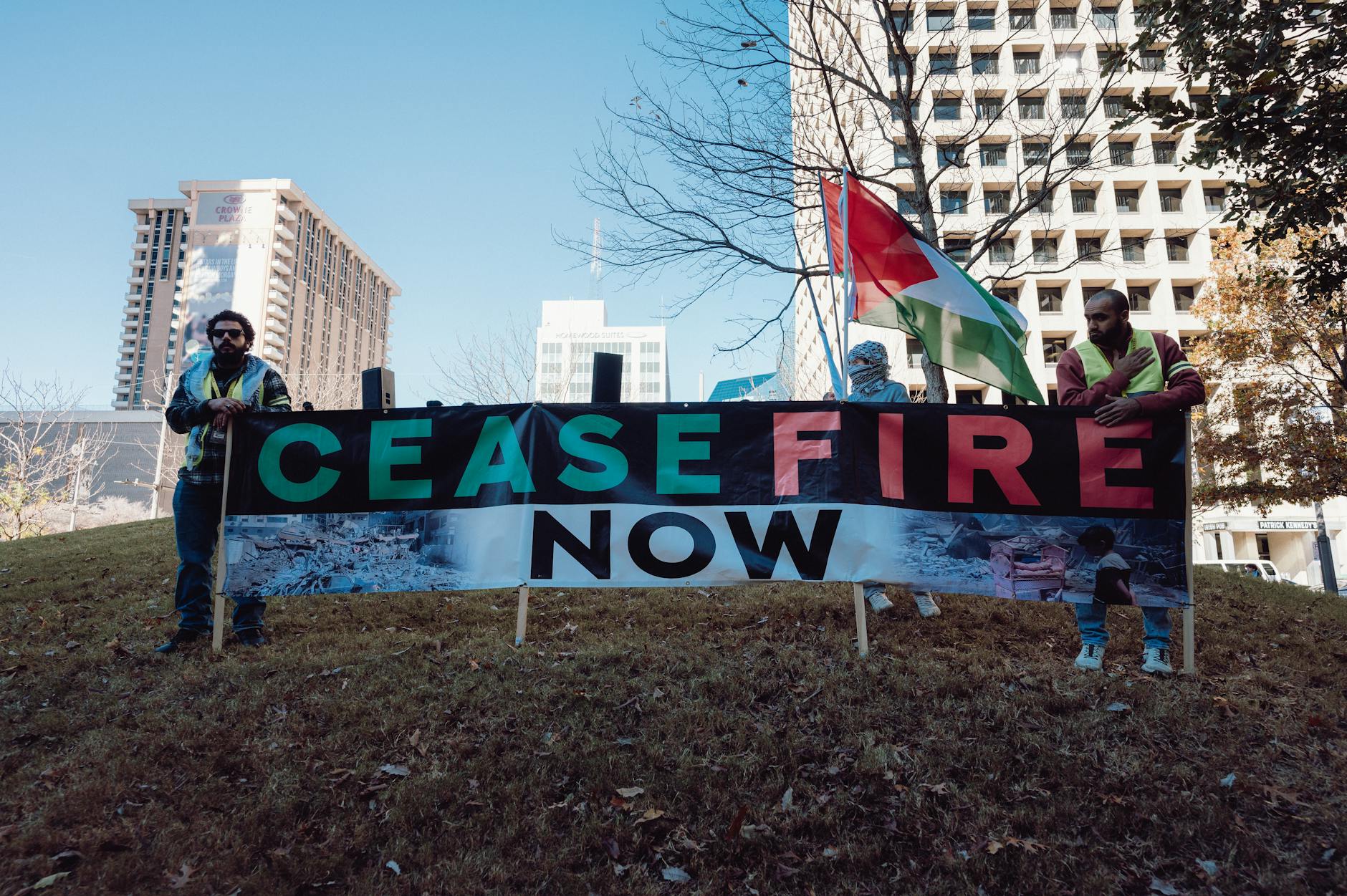
Germany, alongside France and the United Kingdom, has called on Iran to halt its military strikes and return to negotiations following a dramatic escalation in the Middle East. On February 28, 2026, German Chancellor Friedrich Merz joined French President Emmanuel Macron and UK Prime Minister Keir Starmer in issuing a joint E3 statement condemning Iranian attacks on countries in the region “in the strongest terms” and demanding that Tehran “refrain from indiscriminate military strikes.” The statement came in the immediate aftermath of US and Israeli strikes on Iran that reportedly killed Supreme Leader Ali Khamenei and other senior Iranian officials, triggering retaliatory counterstrikes from Tehran that hit targets across the Gulf region.
Merz went further on March 1, 2026, calling on the United States and European partners to begin planning for a “day after” agenda for Iran — a post-conflict framework that would address everything from Middle East stability to Iran’s nuclear program. His remarks signaled that Berlin views the current crisis not merely as a military confrontation but as a potential turning point for the entire region. This article examines Germany’s diplomatic positioning, the E3 joint statement, Merz’s four-point plan, the broader international reaction, and what this moment means for transatlantic relations and the future of Iran.
Table of Contents
- What Is Germany Calling for in the Iran Ceasefire Crisis?
- The E3 Joint Statement and Its Limitations
- Merz’s “Day After” Plan and the Historical Warnings
- Where Germany Stands Between Washington and Tehran
- The Broader International Response and Its Fractures
- Germany’s Domestic Political Context
- What Comes Next for German and European Diplomacy
- Conclusion
- Frequently Asked Questions
What Is Germany Calling for in the Iran Ceasefire Crisis?
Germany’s position is layered. At the immediate level, the E3 joint statement issued on February 28, 2026, called on Iran to stop its retaliatory strikes and resume negotiations toward a diplomatic solution. The three European leaders said they had “consistently urged Iran to end its nuclear programme, curb its ballistic missile program, refrain from its destabilizing activity in the region and cease appalling violence and repression against its own people.” That language is not new — it echoes years of European diplomacy on Iran — but the context has changed drastically. With Khamenei reportedly killed in the US-Israeli strikes and Iran launching counterstrikes across the Gulf, the statement carried a different weight than prior diplomatic communiqués. What distinguishes Germany’s response from a generic call for de-escalation is Merz’s March 1 speech outlining four concrete objectives for a post-conflict framework.
First, establish a new order of peace and stability in the middle east with all neighbors recognizing Israel’s right to exist. Second, permanently end Iran’s military nuclear and ballistic missile program. Third, contribute to a stable future for Iran. Fourth, help Iranians decide their own fate. These are ambitious goals, and Merz himself acknowledged the difficulty by warning that “comparisons with Afghanistan, Iraq and Libya may be only partially helpful, but they show how real the medium-term risks are.” In other words, Germany is pushing for a diplomatic endgame while flagging the lessons of past regime-change scenarios that produced prolonged instability rather than lasting peace.

The E3 Joint Statement and Its Limitations
The joint statement from Merz, Macron, and Starmer represents the most significant coordinated European response to the iran crisis. Published simultaneously on GOV.UK and the Élysée’s website, the statement condemned Iran’s counterattacks and urged a return to the negotiating table. It was notable for its firmness — describing Iran’s strikes as attacks “on countries in the region” rather than narrowly framing them as responses to provocation — while stopping short of endorsing the US-Israeli military operation that triggered the escalation. However, the E3 statement has clear limitations.
It does not include a mechanism for enforcement. It does not propose sanctions, military consequences, or specific diplomatic steps beyond urging Iran to negotiate. Critics have noted that European calls for restraint carry limited weight when Europe has no military presence in the theater and no direct leverage over Tehran’s decision-making. Germany’s position is further complicated by the fact that Merz explicitly confirmed that Germany did not take part in the US-Israeli strikes on Iran. That distinction matters: Berlin is calling for a ceasefire in a conflict it chose not to join militarily, which gives it diplomatic credibility with some parties but also limits its influence with others, particularly Washington, which may view European calls for restraint as unhelpful second-guessing.
Merz’s “Day After” Plan and the Historical Warnings
Merz’s March 1 call for a “day after” agenda is the most forward-looking element of Germany’s response. By invoking the need to plan for post-conflict Iran, Merz positioned Germany as a voice for long-term strategic thinking at a moment when most of the world’s attention was focused on the immediate military exchange. His four objectives — regional stability with Israeli recognition, an end to Iran’s nuclear and missile programs, a stable Iranian future, and Iranian self-determination — read like a blueprint for a comprehensive Middle East settlement. They are also extraordinarily difficult to achieve.
Merz’s explicit reference to Afghanistan, Iraq, and Libya as cautionary examples is significant. Each of those cases involved Western military intervention that toppled a government without producing lasting stability. Germany sat out the Iraq war in 2003 and was a reluctant participant in the Libya intervention in 2011, and Merz’s invocation of those precedents signals that Berlin is deeply skeptical of the idea that military force alone can reshape Iran. “We do not know how far the region will be drawn into escalation by Iran’s harsh counterstrikes,” Merz stated, underscoring the uncertainty of the current trajectory. The implication is clear: without a diplomatic framework, the strikes on Iran risk producing another failed state in a region that already has several.

Where Germany Stands Between Washington and Tehran
Germany’s diplomatic positioning involves a difficult balancing act. On one hand, Merz affirmed Germany’s commitment to Israel’s security — a bedrock principle of German foreign policy rooted in historical responsibility. On the other hand, Germany declined to participate in the US-Israeli strikes, creating daylight between Berlin and Washington at a moment of maximum tension. This is not unprecedented; Germany similarly declined to join the 2003 Iraq invasion while maintaining its alliance with the United States. But the current situation is more volatile, and the stakes of transatlantic disagreement are higher.
The tradeoff for Germany is real. By staying out of the military operation, Berlin preserved its ability to serve as a mediator or honest broker in any future negotiations. European diplomatic channels with Iran, while strained, have historically been more active than American ones. But that positioning only matters if negotiations actually materialize. If the conflict escalates further, Germany may find itself sidelined — too distant from Washington’s military approach to influence it, and too closely aligned with Western interests to be trusted by Tehran. EU Commission President Ursula von der Leyen’s signal backing regime change in Iran further complicates the picture, suggesting that the European consensus may be more hawkish than Germany’s own stated position.
The Broader International Response and Its Fractures
Germany is far from alone in calling for de-escalation. UN Secretary-General António Guterres urged an immediate ceasefire amid the escalation, and the UN Security Council convened an emergency session to address the crisis. Oman’s Foreign Minister Badr Albusaidi, who had been mediating US-Iran talks prior to the strikes, urged a ceasefire in a direct call with Iranian Foreign Minister Araghchi. Multiple nations — including Turkey, Spain, Norway, Denmark, Finland, Malaysia, and Indonesia — also called for restraint.
But the international response is fractured. The calls for de-escalation are not uniform in their framing or their targets. Some nations have focused their criticism primarily on Iran’s retaliatory strikes, while others have questioned the legality and wisdom of the initial US-Israeli operation. The UN Security Council emergency session was notable for the divisions it revealed rather than any consensus it produced. For Germany, this fragmented international landscape means that its call for a ceasefire exists in a crowded field of competing voices, and the practical impact of diplomatic statements depends entirely on whether the parties actually fighting — the United States, Israel, and Iran — are willing to listen.
📨 Get Free Accountability Coverage Alerts
Free · No spam · Unsubscribe anytime

Germany’s Domestic Political Context
Merz’s response to the Iran crisis is also shaped by domestic factors. As a relatively new chancellor, Merz is navigating Germany’s historically cautious foreign policy tradition while facing pressure to demonstrate leadership on the world stage.
Germany’s postwar foreign policy has generally emphasized multilateralism, diplomacy, and restraint — values reflected in both the E3 statement and Merz’s “day after” framework. His decision to explicitly reference the failures in Afghanistan, Iraq, and Libya was likely aimed at a domestic audience as much as an international one, signaling that Germany would not be drawn into another military adventure without a clear plan for what comes next.
What Comes Next for German and European Diplomacy
The coming weeks will determine whether Germany’s calls for negotiation gain traction or fade into the background noise of a widening conflict. If Iran’s counterstrikes continue or escalate, the diplomatic window that Merz is trying to hold open may close. If, on the other hand, the shock of the initial strikes and the death of Khamenei creates a moment of political transition within Iran, Germany’s “day after” framework could become relevant in ways that are difficult to predict.
Much depends on Washington. The Trump administration’s willingness to engage with European diplomatic proposals — rather than pursue a purely military strategy — will be the single most important variable in determining whether Germany’s approach has any practical effect. Merz has laid out a vision. Whether anyone with the power to act on it is listening remains an open question.
Conclusion
Germany’s response to the Iran crisis reflects a consistent thread in Berlin’s foreign policy: a preference for diplomatic solutions, skepticism of military-only approaches, and a willingness to voice disagreement with allies when necessary. The E3 joint statement and Merz’s “day after” plan together represent the most detailed European framework for addressing the crisis, even if their practical impact remains uncertain. By explicitly declining to participate in the strikes while affirming its commitment to Israel’s security, Germany has tried to carve out a position that allows it to engage with all sides.
The risks of this approach are real. Diplomatic calls for restraint carry limited weight without leverage, and the pace of military escalation may outrun the pace of negotiation. But Merz’s warnings about Afghanistan, Iraq, and Libya are worth taking seriously. The question is not just whether a ceasefire can be achieved in the short term, but whether the international community — including Germany — can build a framework that prevents the current crisis from producing the same kind of long-term instability that has defined previous interventions in the region.
Frequently Asked Questions
Did Germany participate in the US-Israeli strikes on Iran?
No. Chancellor Friedrich Merz confirmed on March 1, 2026, that Germany did not take part in the US-Israeli strikes on Iran, though he affirmed Germany’s commitment to Israel’s security.
What is the E3 joint statement on Iran?
The E3 statement, issued February 28, 2026, by the leaders of Germany, France, and the United Kingdom, condemned Iranian attacks on countries in the region and called on Iran to “refrain from indiscriminate military strikes” and resume negotiations.
What is Merz’s “day after” plan for Iran?
Merz proposed four objectives: establishing a new order of peace and stability in the Middle East with all neighbors recognizing Israel’s right to exist, permanently ending Iran’s military nuclear and ballistic missile program, contributing to a stable future for Iran, and helping Iranians decide their own fate.
What triggered the current crisis between the US, Israel, and Iran?
The US and Israel launched strikes on Iran around February 28, 2026, reportedly killing Supreme Leader Ali Khamenei and other Iranian officials. Iran launched retaliatory counterstrikes hitting targets in the Gulf region, prompting widespread calls for de-escalation.
Which other countries have called for a ceasefire?
Beyond the E3 nations, Turkey, Spain, Norway, Denmark, Finland, Malaysia, Indonesia, UN Secretary-General António Guterres, and Oman’s Foreign Minister Badr Albusaidi have all urged de-escalation or a ceasefire.
You Might Also Like
- Russia Calls Emergency Session Over the Bombing of Iran
- UN Security Council Emergency Meeting Called After Iran Strikes Begin
- Trump’s Iran Policy Went From “Maximum Pressure” to Airstrikes in 14 Months