
On February 28, 2026, Iran launched retaliatory strikes against eight countries simultaneously — Israel, Jordan, UAE, Qatar, Bahrain, Saudi Arabia, Kuwait, and Iraq — hitting 27 military bases hosting US troops and multiple Israeli military facilities. The attacks came within four hours of a joint US-Israeli military operation that killed Iran’s Supreme Leader Ayatollah Ali Khamenei and destroyed over 1,000 targets inside Iran. At least four civilians were killed and dozens wounded across the Gulf states alone, three US service members were killed, and civilian airports in Dubai and Abu Dhabi were struck, forcing airlines across the Middle East to suspend flights. The speed and breadth of Iran’s response stunned observers.
The Islamic Revolutionary Guard Corps announced coordinated strikes on targets ranging from Al Udeid Air Base in Qatar to the US Navy’s 5th Fleet headquarters in Bahrain to Kuwait International Airport — all within the same window. Debris from intercepted missiles hit Dubai’s Burj Al Arab hotel facade and caused fires at the city’s main port. This was not a symbolic gesture. It was a pre-planned contingency operation executed across thousands of miles of airspace in a matter of hours. This article breaks down what was hit, where, the casualty toll, and what it means for Gulf security, US military posture, and civilian populations caught in the crossfire.
Table of Contents
- How Did Iran Strike Israel, Jordan, UAE, Qatar, Bahrain, Saudi Arabia, and Kuwait at the Same Time?
- The Civilian Toll and the Gulf States’ Security Dilemma
- US Military Casualties and the Cost of Forward Deployment
- Comparing Iran’s 2026 Response to Previous Retaliatory Strikes
- The Aviation and Economic Fallout
- What Happened to Iran’s Leadership — and Who Gives the Orders Now
- What Comes Next for the Region and US Policy
- Conclusion
- Frequently Asked Questions
How Did Iran Strike Israel, Jordan, UAE, Qatar, Bahrain, Saudi Arabia, and Kuwait at the Same Time?
The short answer is that iran had clearly war-gamed this scenario well before February 28. The four-hour response time between the US-israeli strikes — codenamed “Roaring Lion” by Israel and “Operation Epic Fury” by the Pentagon — and Iran’s retaliatory barrage strongly suggests pre-positioned assets and pre-programmed targeting data. The IRGC’s announcement that it was engaging 27 US military bases plus Israeli facilities like Tel Nof Airbase and the HaKirya command headquarters in Tel Aviv indicated a target list that had been compiled over months, if not years. The simultaneous nature of the strikes is what distinguishes this from previous Iranian military actions. Past confrontations — the 2020 strikes on Al Asad Air Base in Iraq following the Soleimani killing, for example — were geographically limited and came with advance warning.
This was different. Iran fired missiles and drones at targets in eight sovereign nations at once, treating every country hosting US military infrastructure as a legitimate target regardless of that nation’s own diplomatic stance. Jordan, Qatar, Kuwait, Bahrain, Saudi Arabia, and the UAE all found themselves absorbing Iranian ordnance not because of their own actions, but because of the American bases on their soil. The operational challenge of coordinating strikes across this geographic range — from the Eastern Mediterranean to the Persian Gulf — required a combination of ballistic missiles, cruise missiles, and drone swarms launched from Iranian territory and potentially from proxy positions. Most projectiles at Al Udeid Air Base in Qatar were intercepted, but the sheer volume — 65 missiles and 12 drones at that single installation — was designed to overwhelm air defense systems. In several locations, it succeeded.

The Civilian Toll and the Gulf States’ Security Dilemma
The strikes killed at least four civilians and wounded dozens across the Gulf states, according to Emirati authorities. Three people were killed in the UAE alone, where strikes targeted Al Dhafra Air Base but also struck civilian infrastructure at Dubai and Abu Dhabi airports. In Kuwait, one person was killed and 32 were injured when Ali Al Salem Air Base and Kuwait International Airport were hit. At Al Udeid in Qatar, 16 people were injured despite most incoming projectiles being intercepted. These numbers may seem modest compared to the scale of the operation, but the implications are enormous. Countries like the UAE, Qatar, and Bahrain have spent decades building reputations as safe, stable hubs for international business, tourism, and aviation.
Dubai alone welcomed over 80 million travelers through its airport in recent years. When missile debris strikes the facade of the Burj Al Arab — one of the most recognizable buildings on Earth — and fires break out at a major commercial port, that carefully constructed image of stability takes a direct hit. As TIME reported, Iran’s retaliatory strikes “challenge the image of Gulf stability” that these nations had spent decades cultivating. However, there is a critical distinction that many initial reports glossed over: the Gulf states did not invite this fight. Saudi Arabia called the strikes “blatant and cowardly.” These countries host US military bases under longstanding defense agreements, but most had no role in the decision to launch Operation Epic Fury. If you are a Gulf nation that has hosted American forces for decades under the assumption that their presence enhances your security, the events of February 28 force a painful recalculation — the same bases that were supposed to protect you just made you a target.
US Military Casualties and the Cost of Forward Deployment
Three US service members were killed and five seriously wounded in the Iranian strikes — the first American casualties of the operation. While the Pentagon has not specified which base or country these casualties occurred at, the concentration of fire on Al Udeid, Ali Al Salem, and Al Dhafra makes those the most likely locations. These were the first US combat deaths directly attributable to Iranian state military action, as opposed to proxy attacks, in decades. The deaths puncture a narrative that had been building in Washington in the hours after operation epic Fury launched. The initial US-Israeli strikes were portrayed as overwhelming and decisive — over 1,000 targets hit, the Supreme Leader killed, the command structure decapitated. The implication was that Iran had been so thoroughly degraded that meaningful retaliation would be impossible or, at worst, token. Three dead Americans and five seriously wounded within hours proved otherwise.
Iran’s military, even under catastrophic attack, retained the capacity to inflict real costs. This matters for the domestic political debate. The Trump administration authorized Operation Epic Fury alongside Israel, and the early framing emphasized the elimination of Khamenei and Ali Shamkhani, secretary of Iran’s Supreme National Security Council. But the American public has historically been far more sensitive to US casualties than to enemy leadership kills. The 1983 Beirut barracks bombing killed 241 US service members and led to a withdrawal from Lebanon. The 2020 Al Asad strikes caused traumatic brain injuries that the Pentagon initially downplayed, producing a lasting credibility problem. How the administration handles these three deaths — and whether more follow — will shape public support for whatever comes next.

Comparing Iran’s 2026 Response to Previous Retaliatory Strikes
Iran’s 2026 retaliation dwarfs every previous Iranian military response in modern history, both in geographic scope and political consequences. After the US killed IRGC Commander Qasem Soleimani in January 2020, Iran fired approximately a dozen ballistic missiles at Al Asad Air Base and a facility in Erbil, Iraq. There were no US fatalities — partly because Iran gave advance warning through Iraqi intermediaries. In April 2024, Iran launched over 300 drones and missiles at Israel in response to the bombing of its Damascus consulate. The vast majority were intercepted by a US-led coalition, and the attack caused minimal damage. The February 2026 strikes are qualitatively different. Iran hit eight countries, not one. It struck civilian airports, not just military bases. It killed Americans, not just frightened them.
And there was no advance warning to minimize casualties — this was intended to inflict maximum damage. The four-hour response window left no time for the kind of diplomatic back-channeling that preceded the 2020 and 2024 attacks. When you kill a nation’s supreme leader and destroy over 1,000 targets on its soil, the calculation for proportionality changes fundamentally. The tradeoff for Iran is significant, however. By striking Gulf states that had no direct role in Operation Epic Fury, Iran risks turning potential sympathizers into enemies. Qatar has historically maintained working diplomatic channels with Tehran. The UAE had been quietly normalizing economic ties. Bahrain’s Shia-majority population has cultural and religious connections to Iran. Hitting these countries’ airports and killing their civilians could consolidate a broader regional coalition against Tehran at a moment when Iran is already reeling from the decapitation of its leadership. Whether Iran’s military planners considered this tradeoff acceptable or simply had no other way to reach American forces is a question that will define the next phase of this conflict.
The Aviation and Economic Fallout
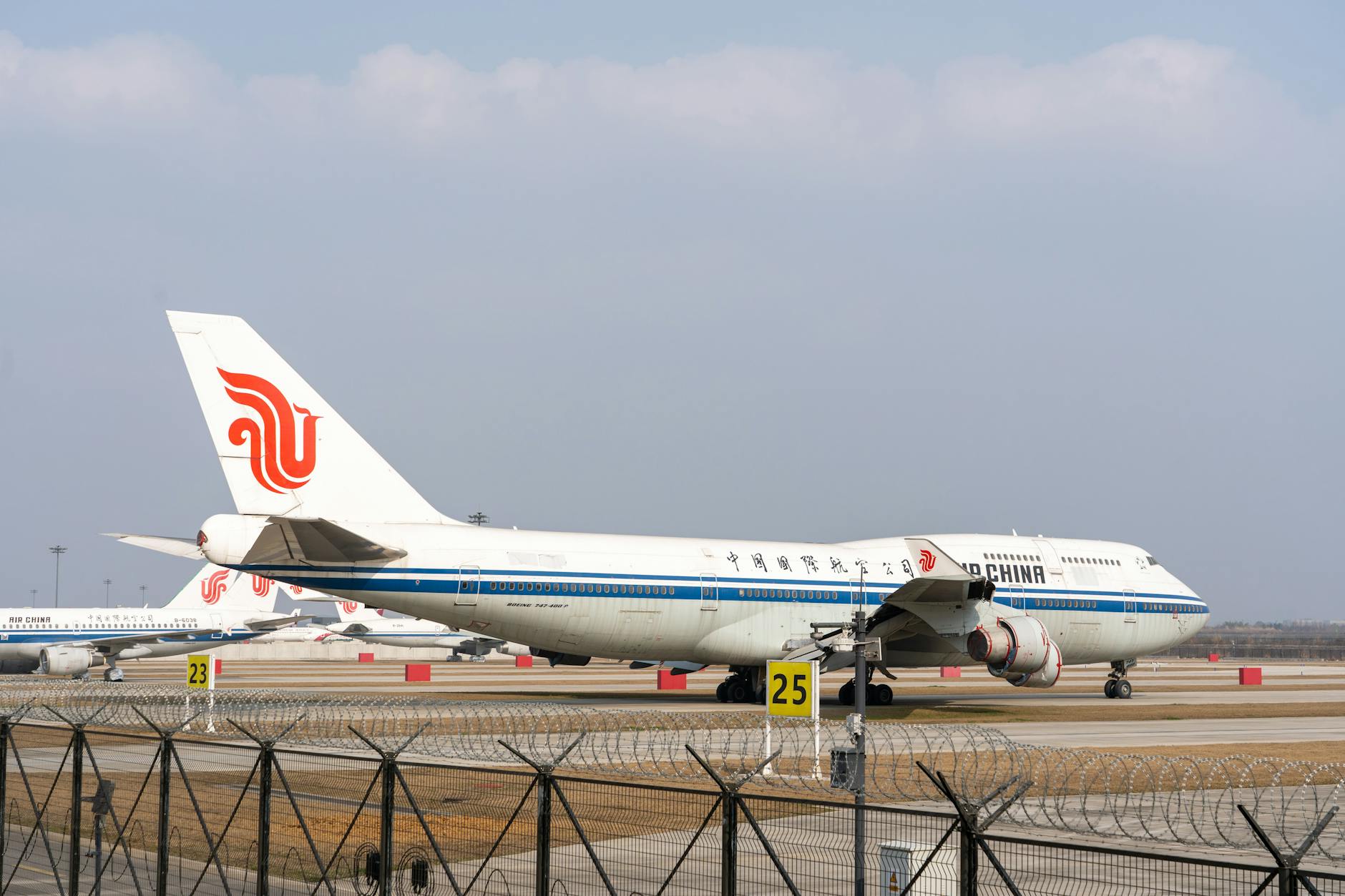
Airlines suspended flights across the Middle East immediately following the strikes, and this disruption alone carries enormous economic consequences. Dubai International Airport and Abu Dhabi International Airport are two of the busiest air hubs in the world, serving as critical connectors between Europe, Asia, and Africa. Qatar’s Hamad International Airport, adjacent to Al Udeid Air Base, is the home hub of Qatar Airways. Kuwait International Airport was directly struck. When these airports go dark, the ripple effects cascade through global logistics, business travel, and supply chains within hours. The physical damage compounds the disruption. Fires at Dubai’s main port threaten shipping and trade flows at a moment when global supply chains were already strained. The Burj Al Arab — while a hotel rather than critical infrastructure — is a symbol of Dubai’s aspirational brand.
Images of missile debris scarring its facade will circulate for years in investment risk assessments. Insurance premiums for Gulf-based operations will spike. Corporate boards that were considering regional headquarters in Dubai or Riyadh will pause. The damage extends well beyond what can be measured in crater diameters. There is a warning here for anyone with financial exposure to the region: the assumption that Gulf states exist in a security bubble, insulated from the conflicts around them by American military protection and sophisticated air defenses, has been shattered. Chatham House published early analysis noting the strikes represent a significant escalation and a direct challenge to Gulf stability. Investors, expatriates, and multinational corporations that built their Middle East strategies on the premise of Gulf invulnerability now face a fundamentally different risk environment. That recalculation will not be quick, and it will not be cheap.
What Happened to Iran’s Leadership — and Who Gives the Orders Now
The US-Israeli strikes killed Ayatollah Ali Khamenei, Iran’s Supreme Leader since 1989, by destroying his compound. They also killed Ali Shamkhani, the secretary of the Supreme National Security Council, severing two critical nodes in Iran’s command hierarchy. The fact that Iran still managed a coordinated multi-country retaliatory strike within four hours of these killings suggests either that operational authority had already been delegated to IRGC commanders, or that the contingency plans were so thoroughly pre-arranged that they could execute without top-level authorization. This creates a dangerous uncertainty.
📨 Get Free Accountability Coverage Alerts
Free · No spam · Unsubscribe anytime
Decapitation strikes are premised on the theory that removing leadership creates chaos and paralysis. When the opposite happens — when the decapitated entity strikes back harder and faster than expected — it raises the question of whether the operation achieved its strategic objective or merely its tactical one. Iran’s Supreme Leader is dead, but Iran’s missiles still fly. The identity and intentions of whoever is now making decisions in Tehran may be the single most consequential unknown in global security.
What Comes Next for the Region and US Policy
The coming days and weeks will determine whether February 28, 2026, was the climax of this confrontation or merely its opening chapter. Iran has demonstrated that it can strike across the region even while under devastating attack. The US and Israel have demonstrated that they can eliminate a nation’s senior leadership and destroy a thousand targets in a single operation. Neither side has demonstrated that it can achieve a decisive outcome.
For Gulf states, the immediate question is whether to double down on US security partnerships or begin hedging. For the US, it is whether three dead service members and a region on fire constitute an acceptable cost for killing Khamenei. For Iran — whoever is running it now — the question is whether continued escalation serves any strategic purpose when the leadership that ordered the retaliation may no longer exist to see its consequences. The answers to these questions will reshape Middle Eastern security architecture for a generation. None of them are simple.
Conclusion
Iran’s simultaneous strikes on eight countries on February 28, 2026, represent the most geographically expansive military retaliation in modern Middle Eastern history. At least four Gulf-state civilians were killed and dozens wounded. Three US service members died. Civilian airports in Dubai, Abu Dhabi, and Kuwait were hit. Fires burned at Dubai’s port. Airlines across the region grounded flights.
The Gulf states’ decades-long project of building themselves as safe, stable international hubs took direct and possibly lasting damage — not from their own choices, but from the consequences of hosting American military bases. The US-Israeli Operation Epic Fury achieved its stated objective of eliminating Iran’s Supreme Leader and degrading Iran’s military infrastructure. But the speed and scale of Iran’s response demonstrated that decapitation does not equal disarmament. With Khamenei dead, Shamkhani dead, and Iran’s retaliatory capacity clearly intact, the region faces a period of profound uncertainty. The old security framework — American bases guaranteeing Gulf stability while containing Iranian aggression — failed its stress test on live television. Whatever replaces it will be built on the wreckage of the assumptions that defined Middle Eastern geopolitics for the past three decades.
Frequently Asked Questions
Which countries did Iran strike in its February 2026 retaliation?
Iran struck eight countries simultaneously: Israel, Jordan, UAE, Qatar, Bahrain, Saudi Arabia, Kuwait, and Iraq. The targets were primarily US military bases and Israeli military facilities, but civilian airports and infrastructure were also hit.
How many people were killed in Iran’s retaliatory strikes?
At least four civilians were killed across the Gulf states, with three of those deaths in the UAE. Three US service members were also killed and five seriously wounded, marking the first American combat fatalities of the operation. Dozens of civilians were wounded across multiple countries.
Why did Iran attack Gulf countries that weren’t involved in the strikes on Iran?
Iran targeted US military bases located in those countries. Al Udeid Air Base in Qatar, Ali Al Salem in Kuwait, Al Dhafra in the UAE, and the US Navy’s 5th Fleet headquarters in Bahrain were all struck because they host American forces, not because of any action taken by the host nations themselves.
Were civilian airports actually hit?
Yes. Kuwait International Airport was directly struck, killing one person and injuring 32. Airports in Dubai and Abu Dhabi were also hit. Airlines suspended flights across the Middle East following the attacks.
How quickly did Iran respond to the US-Israeli strikes?
Iran launched its retaliatory strikes within four hours of the initial US-Israeli operation, strongly suggesting the response was based on pre-planned contingency operations rather than improvised.
What was the US-Israeli operation that triggered Iran’s response?
The joint operation — codenamed “Roaring Lion” by Israel and “Operation Epic Fury” by the US — struck over 1,000 targets in Iran on February 28, 2026. It killed Supreme Leader Ayatollah Ali Khamenei and Ali Shamkhani, secretary of the Supreme National Security Council.
You Might Also Like
- Operation Midnight Hammer Hit Nuclear Sites — Epic Fury Targets Everything Else
- Kataib Hezbollah in Iraq Threatens to Attack U.S. Bases in Response
- Iran’s Air Force Bases Hit in First Wave of Operation Epic Fury