The difference between Iranians overthrowing their own regime and America doing it is, in a word, legitimacy. When Iranians rise up — as they did in the 2022 Woman, Life, Freedom movement after the death of Jina Mahsa Amini — they are fighting for their own future, on their own terms, with moral authority that no foreign power can manufacture. When the United States drops bombs to kill a Supreme Leader, it does not liberate a population. It replaces one strongman with another, hardens the regime’s grip, and hands the ruling class the one thing it needs most: a foreign enemy to point to. That is not a theory. It is exactly what happened in 1953, and it is unfolding again right now. On February 28, 2026, the United States and Israel launched large-scale military strikes on Iran, killing Supreme Leader Ali Khamenei.
Within days, Iran’s Assembly of Experts named his son, Mojtaba Khamenei — widely considered more hardline than his father — as the new Supreme Leader. A pre-war U.S. intelligence assessment had already concluded that neither limited airstrikes nor prolonged military campaigns would likely result in regime change. The intelligence community was right. The regime did not fall. It consolidated. Meanwhile, the Woman, Life, Freedom movement, which had genuinely threatened the Islamic Republic from within, now faces the impossible task of organizing domestic dissent while bombs fall from the sky. This article examines why externally imposed regime change has never worked in Iran, why internally driven movements have come the closest, and what the current war means for the Iranian people caught in the middle.
Table of Contents
- Why Does It Matter Whether Iranians Overthrow Their Own Regime or America Does It?
- The Woman, Life, Freedom Movement Proved Iranians Can Challenge Their Own Government
- The IRGC Is the Regime — Killing the Supreme Leader Changes Less Than You Think
- What the Polling Tells Us About American Support for This War
- How American Military Action Delegitimizes Iranian Opposition Movements
- The Administration Cannot Agree on What the Goal Actually Is
- What Happens Next — And What History Suggests
- Conclusion
Why Does It Matter Whether Iranians Overthrow Their Own Regime or America Does It?
It matters because the source of the overthrow determines what comes next. When a population overthrows its own government, the successor regime has a built-in constituency — the people who fought for it. When a foreign power topples a government, the successor regime has a built-in problem: it looks like a puppet. This is not abstract political science. It is the documented history of Iran itself. On August 19, 1953, the CIA and MI6 overthrew Iran’s democratically elected Prime Minister Mohammad Mossadegh after he nationalized the country’s oil industry. The coup installed Shah Mohammad Reza Pahlavi as an absolute ruler for 25 years. The CIA has since acknowledged the coup was “undemocratic.” The Shah’s quarter-century of authoritarian rule fueled such deep anti-American sentiment that it directly contributed to the 1979 Islamic Revolution, which replaced a Western-backed dictator with an anti-Western theocracy.
The 1953 coup removed moderate, secular iranian politicians and paved the way for radical Islamists led by Ayatollah Khomeini. That is the core problem with externally imposed regime change: you do not get to choose what fills the vacuum. America chose the Shah. The Iranian people eventually chose Khomeini — in part because he was the opposite of everything the Shah and his American backers represented. The 2026 strikes have followed the same pattern. The United States killed the Supreme Leader. Iran’s clerical establishment chose his son. The Iranian people were not consulted either time.

The Woman, Life, Freedom Movement Proved Iranians Can Challenge Their Own Government
The 2022 protests that erupted after the death of 22-year-old Jina Mahsa Amini in morality police custody were the most widespread revolt since the 1979 revolution, spanning 26 of Iran’s 31 provinces. They were not organized by any foreign intelligence agency. They were sparked by a young woman’s death and fueled by decades of frustration with mandatory hijab laws, economic mismanagement, and political repression. The movement’s slogan — “Woman, Life, Freedom” — resonated precisely because it came from within Iranian society. The regime’s response was brutal. An estimated 551 protesters were killed by state forces, including 49 women and 68 children. The UN Fact-Finding Mission found evidence of crimes against humanity. The movement was suppressed, but not discredited.
That distinction is critical. When a domestic movement is crushed by force, it retains its moral authority. The grievances that sparked it do not disappear. The protesters are still viewed as heroes by much of the population. However, when an outside power intervenes militarily, the calculus changes entirely. The Iranian government can — and does — paint domestic dissidents as agents of the same foreign power that is bombing the country. The 1953 coup remains the prism through which Tehran frames every Western gesture of support for internal dissent. Every American bomb dropped in 2026 makes that framing more convincing to ordinary iranians who might otherwise sympathize with reform.
The IRGC Is the Regime — Killing the Supreme Leader Changes Less Than You Think
One of the most dangerous misconceptions driving the 2026 military campaign is the idea that killing the Supreme Leader is equivalent to regime change. It is not. As military analysts have pointed out, “Taking out the Supreme Leader is not regime change. The IRGC is the regime.” The Islamic Revolutionary Guard Corps has decentralized its command structure so that mid-ranking officers can act independently. Each commander has three named successors. The organization was designed to survive exactly this kind of decapitation strike. The killing of Ali khamenei triggered a predictable rally-around-the-flag effect. Crowds chanted pro-regime slogans.
The Assembly of Experts convened and selected Mojtaba Khamenei within days. The succession was orderly, not chaotic. The new Supreme Leader was chosen from within the same power structure, by the same people, using the same process. Nothing about the system itself changed. Compare this to the Woman, Life, Freedom movement, which — despite being ultimately suppressed — actually challenged the ideological foundations of the Islamic Republic. Protesters were not trying to replace one leader with another. They were questioning whether the system of clerical rule should exist at all. That is a far more fundamental threat to the regime than any airstrike.
What the Polling Tells Us About American Support for This War
The American public is not enthusiastic about the 2026 war in Iran, and the numbers tell a story of eroding trust in military interventions. Only 38% of Americans approve of the military action, while 49% disapprove. Approximately 75% of voters oppose sending ground troops to Iran. Even Republican support sits at roughly 70% — which sounds high until you compare it to the 96% Republican support for the Afghanistan war or the approximately 90% support for the Iraq war at their respective outsets. The post-9/11 consensus that justified two decades of Middle Eastern military intervention is gone. The Pentagon reports six U.S.
service members killed and estimates the war costs approximately $1 billion per day. Those numbers will grow. The tradeoff here is stark: the United States is spending billions of dollars and risking American lives on a military campaign that its own intelligence community assessed would not achieve regime change, while the 2022 protest movement — which cost the U.S. government nothing in blood or treasure — came closer to genuinely shaking the foundations of the Islamic Republic than any bomb has. The Atlantic Council has argued that the U.S. needs a regime change strategy that empowers Iranian civil society rather than one built on military intervention. That argument looks stronger by the day.
📨 Get Free Accountability Coverage Alerts
Free · No spam · Unsubscribe anytime
How American Military Action Delegitimizes Iranian Opposition Movements
This is the most damaging and least discussed consequence of the 2026 strikes. Responsible Statecraft has warned that U.S.-driven regime change delegitimizes indigenous opposition movements because the Iranian government can paint them as foreign agents. This is not a hypothetical concern. It is happening now. Every Iranian activist, journalist, labor organizer, or women’s rights advocate operating inside Iran must now contend with the accusation that they are working on behalf of the country that is actively bombing their homeland. The regime has always used this playbook.
After the 1953 coup, any Iranian who advocated for democratic governance could be dismissed as a CIA stooge. After the 2026 strikes, any Iranian who advocates for reform can be dismissed as carrying water for the same foreign power that killed the Supreme Leader. The practical effect is that the people best positioned to change Iran from within — the educated middle class, the women’s movement, the labor unions, the student organizations — are now more vulnerable, not less. Military intervention does not clear the path for these movements. It puts a target on their backs. This is perhaps the most important limitation of the current U.S. approach: even if the stated goal is to help the Iranian people, the method actively undermines the Iranians most capable of helping themselves.
The Administration Cannot Agree on What the Goal Actually Is
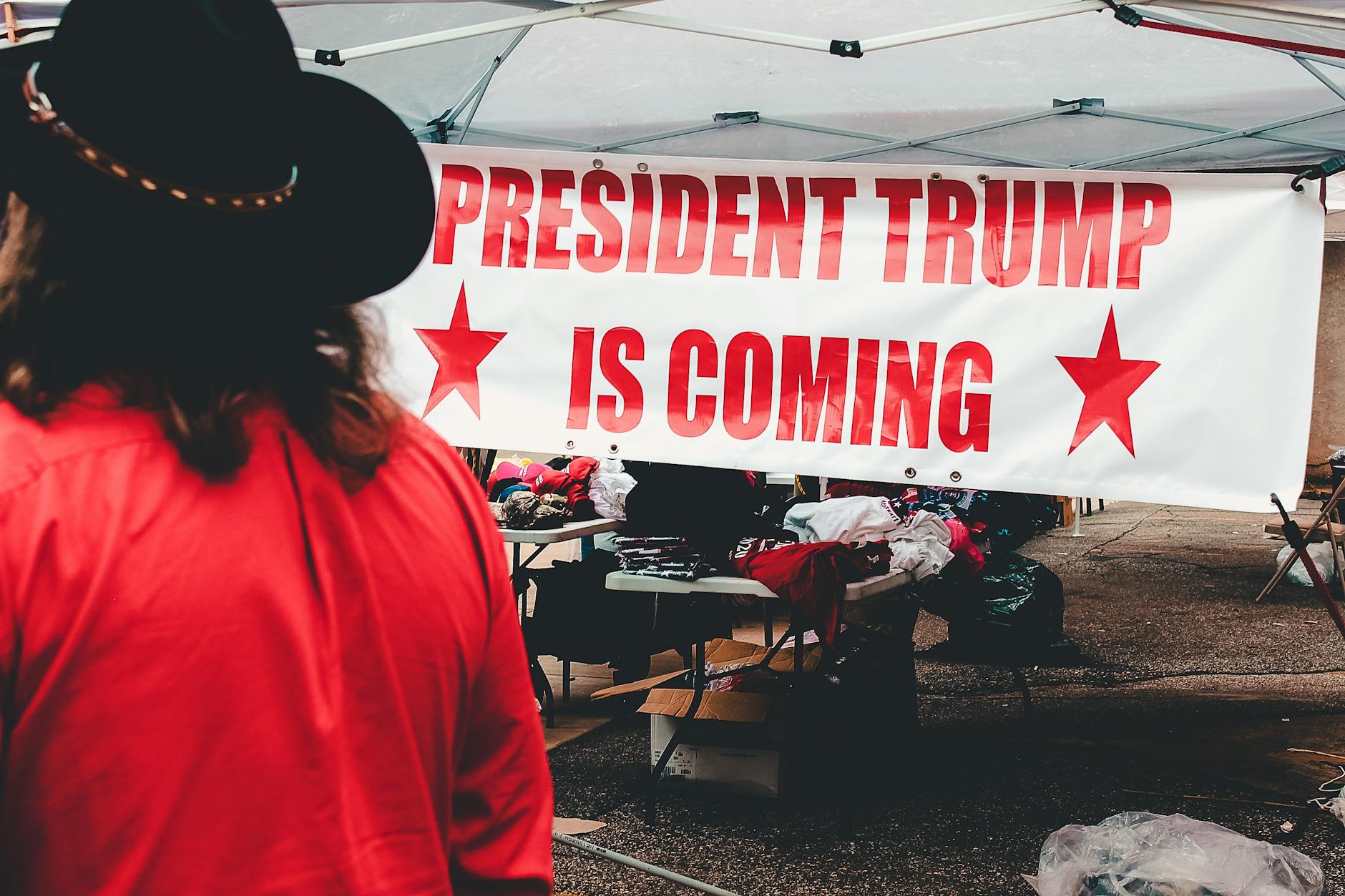
The internal contradictions within the Trump administration’s stated objectives are telling. Defense Secretary Pete Hegseth has said the war is “not aimed at regime change.” President Trump has said regime change is something he wants. Secretary of State Marco Rubio has articulated more limited goals: destroying Iran’s nuclear and drone programs and its navy. These are three different wars with three different endpoints, described by three different officials in the same administration.
This matters because a military campaign without a coherent political objective tends to expand rather than contract. If the goal is destroying specific military capabilities, that is a finite mission. If the goal is regime change, the pre-war intelligence assessment already concluded it will not work through military means. If the goal is something in between, no one in the administration has articulated what that looks like or how America will know when it has been achieved. The $1 billion per day price tag keeps running regardless.
What Happens Next — And What History Suggests
History suggests that the 2026 strikes will strengthen the Iranian regime in the short term and radicalize it in the long term — the same pattern as 1953. The immediate rally-around-the-flag effect is already visible. The installation of a more hardline Supreme Leader is already complete. The delegitimization of internal opposition is already underway. The question is whether the Woman, Life, Freedom movement — or its successor — can survive this period and eventually reassert itself as a domestic force for change, despite the enormous damage that foreign military intervention has done to its credibility and operating space.
The lesson of Iran’s modern history is consistent and uncomfortable: outsiders cannot liberate a country whose people have not already decided to liberate themselves. When Iranians have risen up on their own, they have shaken the regime to its foundations. When foreign powers have intervened, they have entrenched it. That pattern has held for seven decades. Nothing about the current war suggests it will be the exception.
Conclusion
The difference between Iranians overthrowing their own regime and America doing it is not a matter of style or preference. It is a matter of whether the outcome is sustainable. The 1953 coup produced 25 years of dictatorship followed by an Islamic revolution. The 2022 Woman, Life, Freedom movement, despite being brutally suppressed, represented the most authentic challenge to the Islamic Republic’s legitimacy in its history.
The 2026 military strikes killed a Supreme Leader and got a more hardline one in return, at a cost of $1 billion per day and with the approval of barely more than a third of the American public. The Iranian people have demonstrated — repeatedly, at enormous personal cost — that they are capable of challenging their own government. What they need is not American bombs, which give the regime its most powerful propaganda tool. What they need is for the international community to support their movements without co-opting them, to hold the regime accountable for crimes against humanity documented by the UN, and to stop repeating the same mistakes that created the current theocracy in the first place. Seventy-three years after the CIA overthrew Mossadegh, the United States is still learning the same lesson the hard way.
You Might Also Like
- Iranians Protested Their Own Government for Years — Then America Bombed It For Them
- The Think Tanks That Advocated for Iran Regime Change for Decades Got Their Wish
- The Non-Aligned World Is Watching Closely How America Uses Its Military Power