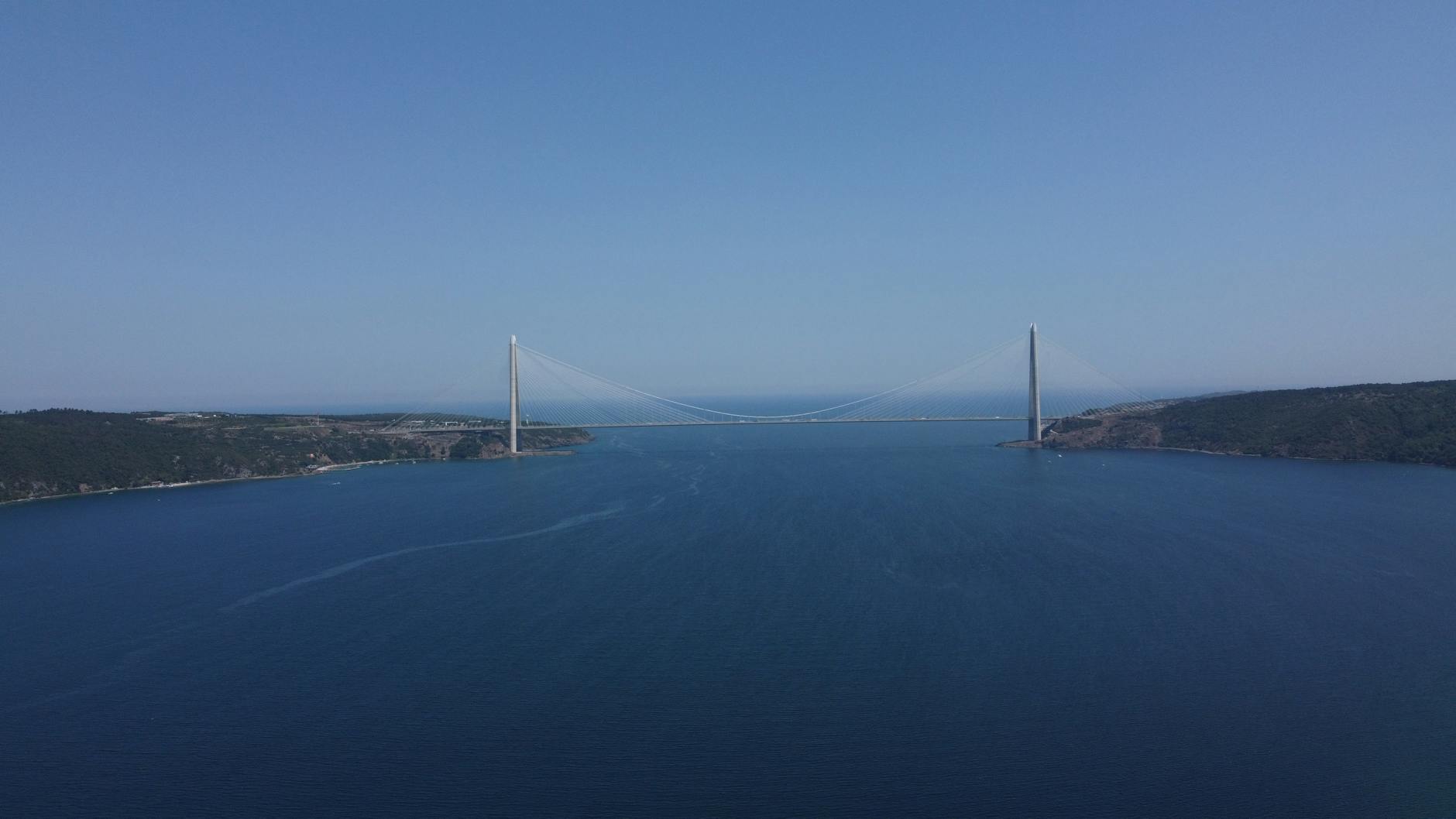
Yes, the Strait of Hormuz could be blocked — and the consequences are already unfolding. On February 28, 2026, following U.S. and Israeli military strikes against Iran, Iranian naval ships broadcast warnings on emergency VHF radio channels telling commercial vessels that “no ship is allowed to pass the Strait of Hormuz.” More than 200 oil and LNG tankers have dropped anchor in surrounding waters, tanker traffic through the strait has effectively halted, and Brent crude has jumped roughly 10% to about $80 per barrel. The strait carries approximately 20 million barrels of oil per day — around 20% of global oil consumption and 31% of all seaborne oil trade — making any disruption a direct threat to the global economy. The situation remains fluid and contradictory.
While the EU confirmed receiving reports of Iranian Revolutionary Guard Corps broadcasts warning ships away, Iran has not officially closed the strait. On March 1, a former IRGC commander stated the strait is “open to tankers until further notice” and that Iran does not currently impose restrictions on international shipping. President Trump, meanwhile, claimed the U.S. military destroyed 9 Iranian warships and is working to neutralize the rest of Iran’s navy. What follows is a breakdown of what the strait actually carries, who gets hurt if it closes, what the oil price fallout looks like, and what ordinary consumers should be watching for in the days ahead.
Table of Contents
- What Happens If the Strait of Hormuz Is Blocked and 20% of Global Oil Flows Stop?
- Who Depends Most on Strait of Hormuz Oil — and Who Gets Hit Hardest?
- How the U.S.-Iran Military Escalation Triggered the Current Crisis
- What Oil Prices Tell Us — and What They Don’t
- Why “Open Until Further Notice” Is Not the Same as Safe
- The LNG Dimension Most People Are Missing
- What Comes Next for Global Energy Markets
- Conclusion
- Frequently Asked Questions
What Happens If the Strait of Hormuz Is Blocked and 20% of Global Oil Flows Stop?
To understand the scale of this chokepoint, consider the numbers. Roughly 20 million barrels of oil transit the Strait of Hormuz every single day, according to the U.S. Energy Information Administration. Global oil demand currently sits above 103 million barrels per day as of early 2026, per the International Energy Agency’s February report. That means the strait handles about one-fifth of everything the world burns.
On top of that, approximately one-fifth of global liquefied natural gas trade — primarily from Qatar — also passes through this narrow waterway. The annual energy trade through the strait is valued at nearly $500 billion. A full blockage would not just raise prices — it would physically remove supply from the market faster than any alternative infrastructure could compensate. The strait is only 21 miles wide at its narrowest point, and the shipping lanes used by tankers are even tighter. There is no pipeline network on Earth that can replace 20 million barrels per day of seaborne capacity. Saudi Arabia has some pipeline alternatives that bypass the strait, but their capacity covers only a fraction of what flows through daily. Compare this to the Suez Canal disruptions of recent years, which caused shipping delays and modest price bumps — a Hormuz closure would be an order of magnitude worse because it physically blocks the oil from leaving the Persian Gulf in the first place.

Who Depends Most on Strait of Hormuz Oil — and Who Gets Hit Hardest?
China, India, Japan, and South Korea account for a combined 69% of all crude oil and condensate flowing through the Strait of Hormuz. These are not peripheral economies — they represent the manufacturing backbone of the global supply chain. If tanker traffic remains halted for more than a few days, these nations face the most immediate supply crunch. Japan and South Korea, which have limited domestic energy production, are particularly vulnerable. China has built up strategic petroleum reserves in recent years, but those reserves buy time measured in weeks, not months.
However, if the blockage proves short-lived — as Iran’s mixed signals on March 1 suggest it might — the damage could be more psychological than physical. Markets price in fear before they price in actual shortages. The 10% jump in Brent crude on March 1 happened before a single barrel of oil was technically denied passage by force. Insurance markets are already reacting: marine hull insurance rates in the Gulf could climb to between 25% and 50%, according to Bloomberg, which raises shipping costs even if the strait technically reopens. The warning here is that even a brief disruption or credible threat of closure can cascade through insurance, shipping, and futures markets in ways that hit consumers at the pump long after the geopolitical crisis fades.
How the U.S.-Iran Military Escalation Triggered the Current Crisis
The immediate trigger was straightforward. On February 28, 2026, the United States and Israel launched military strikes against Iran. Tehran responded with strikes on Israeli territory and American bases in the region. The tit-for-tat escalation moved from airstrikes to naval posturing within hours. Iranian naval vessels began broadcasting warnings to commercial shipping, and at least three tankers sustained damage off the Gulf coast from collateral effects of the strikes and Iranian retaliation.
UK Maritime Trade Operations warned of “significant military activity” in the strait and flagged an incident just 2 nautical miles north of Oman’s Kumzar. Shipping companies did not wait for official guidance — they pulled their tankers out of harm’s way. The result was more than 200 vessels sitting idle in anchorages around the strait and surrounding waters, according to Al Arabiya. This is a commercial decision, not a military blockade in the traditional sense. No mines have been laid, no physical barrier exists. But when insurance becomes unaffordable and the risk of a missile hitting your $100 million tanker is nonzero, the economic blockade is just as effective as a physical one.

What Oil Prices Tell Us — and What They Don’t
Brent crude jumped roughly 10% to about $80 per barrel in over-the-counter trading on Sunday, March 1. It had settled at $72.48 on Friday, already carrying a year-to-date gain of about 19%. U.S. WTI crude closed at $62.02, up roughly 16% year-to-date. These are significant moves, but they remain well below the triple-digit prices that analysts warn could materialize if the strait actually closes for an extended period.
The tradeoff for policymakers is uncomfortable. Analysts warn that a full closure could be “three times the severity of the Arab oil embargo and Iranian revolution in the 1970s” and could drive oil well into triple digits. LNG prices could retest the record highs of 2022 if the strait is blocked, hitting European and Asian consumers who are still recovering from the energy price shocks of that era. On the other hand, if the situation de-escalates quickly — as Iran’s contradictory statements on March 1 suggest is possible — crude could settle back down, and the price spike becomes a brief episode rather than a structural shift. The danger is that markets overshoot in both directions: panic buying drives prices up further than fundamentals warrant, and then a sudden resolution causes a crash that hurts producers and energy investors.
Why “Open Until Further Notice” Is Not the Same as Safe
Iran’s messaging on March 1 was deliberately ambiguous. An ex-IRGC commander stated the strait is “open to tankers until further notice,” but the same statement noted that U.S. warships may be attacked. This is not reassurance — it is a conditional threat wrapped in diplomatic language. The EU confirmed receiving the earlier IRGC broadcasts warning all ships away, but noted that Iran has not officially closed the strait.
The distinction between an official closure and a de facto one matters legally but not practically. Shipping companies and their insurers do not operate on diplomatic nuance. When marine hull insurance rates could reach 25% to 50% of a vessel’s value, few operators will voluntarily transit the strait regardless of what any government says. The limitation here is critical to understand: even if Iran walks back its threats entirely, the insurance and risk premiums take weeks or months to normalize. The 200-plus tankers sitting at anchor will not resume transit the moment a press release is issued. Supply chains have inertia, and the disruption to delivery schedules, refinery inputs, and downstream fuel availability will persist well beyond any ceasefire announcement.

The LNG Dimension Most People Are Missing
Oil dominates the headlines, but roughly one-fifth of global LNG trade also flows through the Strait of Hormuz, primarily from Qatar, one of the world’s largest LNG exporters. If LNG shipments are disrupted alongside oil, the impact on electricity prices in Europe and Asia could be severe.
📨 Get Free Accountability Coverage Alerts
Free · No spam · Unsubscribe anytime
CNBC analysts have noted that LNG prices could retest the record highs of 2022 — a period when European natural gas prices spiked over 300% and drove electricity bills to levels that forced factory closures across the continent. Countries that pivoted away from Russian pipeline gas after the Ukraine invasion specifically turned to Qatari LNG as a replacement, making the Hormuz chokepoint even more consequential for European energy security than it was five years ago.
What Comes Next for Global Energy Markets
The next 72 to 96 hours will likely determine whether this crisis becomes a footnote or a turning point. If U.S. and Iranian forces disengage and tanker traffic resumes, oil prices will retreat and the episode will be remembered as a scare. If hostilities intensify — particularly if Iran makes good on threats to target U.S.
warships or if additional tankers are damaged — the strait could become functionally closed for weeks, and the global economy enters uncharted territory. The $500 billion in annual energy trade that passes through this waterway does not have a backup route. Strategic petroleum reserves in the U.S., China, and IEA member states can cushion the blow temporarily, but they are designed for disruptions measured in weeks, not months. The one thing that is certain: the Strait of Hormuz just reminded the world that the global energy system still runs through a 21-mile-wide bottleneck, and no amount of renewable energy buildout has changed that fact yet.
Conclusion
The Strait of Hormuz crisis that erupted on February 28, 2026, has exposed the fragility of global energy supply in real time. Twenty percent of the world’s oil, one-fifth of its LNG, and nearly $500 billion in annual trade flow through a chokepoint that can be functionally shut down not just by mines or warships, but by radio broadcasts and insurance premiums. More than 200 tankers are sitting idle, at least three have been damaged, and oil prices have already jumped 10% before any sustained physical blockade has materialized.
For consumers, the practical implications are straightforward: gasoline and energy prices are likely to rise in the near term regardless of how the military situation resolves. The insurance, shipping, and futures market disruptions have already baked in costs that will take weeks to unwind even in the best-case scenario. For anyone watching their energy bills, fuel costs, or investment portfolios, the next few days matter enormously — not because of what politicians say, but because of what tanker captains and insurance underwriters decide to do.
Frequently Asked Questions
Has Iran officially closed the Strait of Hormuz?
No. As of March 1, 2026, the EU confirmed that Iran has not officially closed the strait. An ex-IRGC commander stated the strait is “open to tankers until further notice.” However, Iranian naval ships did broadcast warnings on emergency channels telling commercial ships that passage was not allowed, and tanker traffic has effectively halted as shipping companies take precautionary measures.
How much oil passes through the Strait of Hormuz daily?
Approximately 20 million barrels per day transited the strait in 2024, representing roughly 20% of global oil consumption and about 31% of all seaborne oil trade, according to the U.S. Energy Information Administration.
Which countries are most affected by a Strait of Hormuz disruption?
China, India, Japan, and South Korea account for a combined 69% of all crude oil and condensate flowing through the strait. These nations face the most immediate supply risk from any disruption.
How high could oil prices go if the strait is fully blocked?
Analysts warn a full closure could be “three times the severity of the Arab oil embargo and Iranian revolution in the 1970s” and could drive oil into triple digits. Brent crude has already jumped about 10% to approximately $80 per barrel as of March 1, 2026.
Are there alternative routes for oil that normally goes through the Strait of Hormuz?
Saudi Arabia has some pipeline infrastructure that bypasses the strait, but existing alternatives can only handle a fraction of the 20 million barrels per day that normally transits the waterway. There is no pipeline network capable of replacing this volume of seaborne capacity.
What about natural gas — is that affected too?
Yes. Approximately one-fifth of global LNG trade passes through the Strait of Hormuz, primarily from Qatar. Analysts have warned that LNG prices could retest the record highs of 2022 if shipments are disrupted.
You Might Also Like
- Oil Prices Surge as U.S. Bombs Iran’s Military Infrastructure
- USS Abraham Lincoln Led the Strike From the North Arabian Sea
- U.S. Uses Low-Cost Attack Drones in Combat for the First Time Ever