
China has effectively lost its most important energy corridor through Iran to the Persian Gulf. The joint U.S.-Israeli military strikes on Iran launched on February 28, 2026, and Iran’s retaliatory closure of the Strait of Hormuz to vessel traffic, have shattered Beijing’s decade-long strategy of using Iran as a secure, discounted energy pipeline — a cornerstone of the Belt and Road Initiative. The $400 billion, 25-year China-Iran Comprehensive Strategic Partnership signed in 2021 was supposed to insulate China from exactly this kind of disruption. Instead, the war has exposed what analysts call China’s “Hormuz dilemma”: a dangerous over-reliance on a single maritime chokepoint through which roughly 1.7 million barrels per day of Iranian crude flowed to Chinese refineries. The damage is already measurable.
Oil prices have surged past $100 per barrel. Iran has still managed to ship at least 11.7 million barrels of crude through the contested strait since the war began — all of it bound for China — but the volumes are unstable and the risks are climbing daily. Qatar’s LNG shipments, another critical energy source for China, have been disrupted. Miles Yu of the Hudson Institute has put it bluntly: China “bet its Middle East strategy on Iran,” and that bet has failed. This article examines the full scope of what China has lost, how its backup plans are holding up, the Shandong refinery network that kept Iranian oil flowing through sanctions, and the paradoxical green energy angle that could reshape the crisis in Beijing’s favor.
Table of Contents
- How Did China Lose Its Energy Corridor Through Iran to the Persian Gulf?
- The Belt and Road Bet That Collapsed Under Fire
- Shandong’s Shadow Refineries and the Sanctions Pipeline
- How China Is Scrambling to Secure Alternative Energy Supplies
- The Hormuz Dilemma and What It Means for Global Energy Markets
- The Green Energy Paradox Working in China’s Favor
- What Comes Next for China’s Middle East Energy Strategy
- Conclusion
- Frequently Asked Questions
How Did China Lose Its Energy Corridor Through Iran to the Persian Gulf?
The short answer is war. When the United States and Israel struck iran on February 28, 2026, the Islamic Revolutionary Guard Corps retaliated with missile and drone attacks on U.S. military bases, Israeli territory, and other Gulf states. Critically, the IRGC issued warnings prohibiting vessel passage through the Strait of Hormuz — the narrow waterway through which roughly 20 percent of the world’s oil supply transits. For China, which buys approximately 90 percent of Iran’s oil exports, this was not an abstract geopolitical event. It was a direct hit to energy security. Iran accounts for roughly 13 percent of China’s total crude oil imports, with Venezuela supplying another 4 percent. That 13 percent was not just oil — it was cheap oil.
Chinese refineries, particularly small independent operations in Shandong province, had been purchasing Iranian crude at a discount of $8 to $10 per barrel below market prices, a savings that added up to billions annually. The Strait of Hormuz crisis did not merely threaten the volume; it threatened the pricing advantage that made China’s entire Iranian energy arrangement economically attractive. Compare this to China’s other major supplier, Russia. Russian oil reaches China primarily via pipeline — the Power of Siberia route and the Eastern Siberia-Pacific Ocean pipeline — which means it is largely insulated from maritime chokepoints. Iranian oil has no such alternative route to China. Every barrel must transit the Strait of Hormuz, then cross the Indian Ocean and transit the Strait of Malacca. The vulnerability was always there. The war simply proved it was not theoretical.

The Belt and Road Bet That Collapsed Under Fire
China had positioned Iran as a key node in the China–Central Asia–West Asia Economic Corridor, one of six major corridors under the Belt and Road Initiative. The vision was ambitious: build overland rail links, invest in Iranian ports, and develop energy infrastructure that would give China a route to Middle Eastern oil that bypassed U.S.-dominated maritime chokepoints entirely. The 2021 Comprehensive strategic Partnership was the framework — $400 billion in Chinese investment over 25 years in exchange for a stable, long-term energy relationship. However, the gap between the plan on paper and the reality on the ground was always wide. Most of the promised BRI investments in Iran never materialized at scale, hampered by existing U.S. sanctions, Iranian bureaucratic dysfunction, and Beijing’s own reluctance to sink capital into a country under heavy international pressure. The overland corridor that was supposed to bypass the Strait of Hormuz was never built to the capacity needed to replace maritime shipping.
When the war hit, there was no functioning alternative route. The entire rationale for the China-Iran corridor — that it would be more secure than the sea lanes — collapsed. This is a critical limitation that deserves emphasis. Even without the war, the overland energy corridor was years away from operational viability. The conflict did not destroy a functioning system; it destroyed the assumption that the system would eventually function. For Chinese strategic planners, the lesson is that infrastructure investments in unstable regions carry a specific kind of risk that no amount of contractual language can mitigate. The $400 billion partnership is now a piece of paper sitting in a war zone.
Shandong’s Shadow Refineries and the Sanctions Pipeline
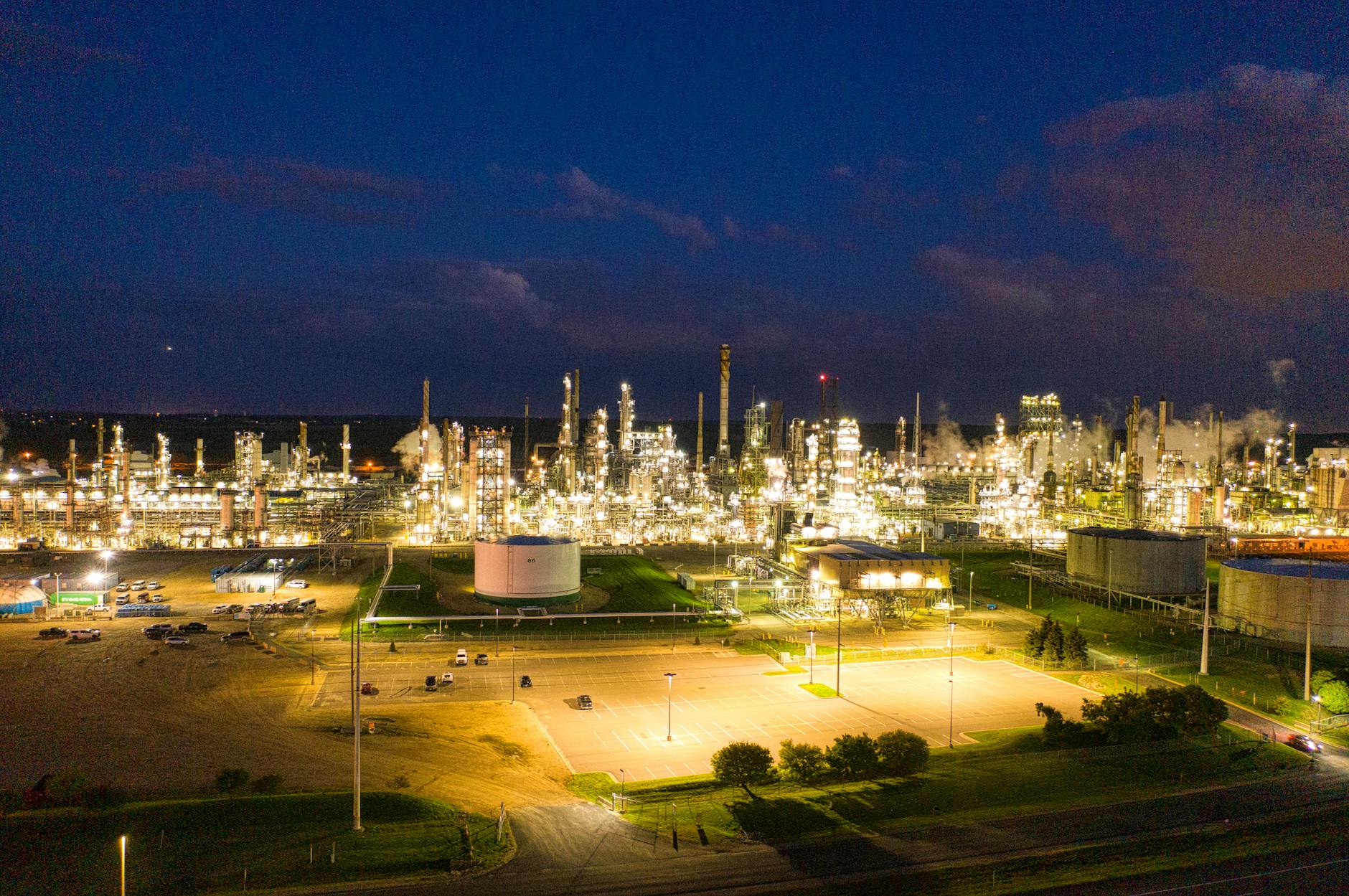
One of the less-discussed aspects of the China-Iran energy relationship is who in China was actually buying all that oil. The answer, overwhelmingly, is small independent refineries in Shandong province. According to the Congressional Research Service and multiple tracking firms, these so-called “teapot refineries” account for an estimated 90 percent of Iran’s oil exports to China. They have been the backbone of a sanctions-evasion supply chain that relied on ship-to-ship transfers, falsified cargo documents, and a shadow fleet of tankers operating with transponders switched off. This arrangement worked precisely because it operated in a gray zone. Chinese state-owned oil giants like Sinopec and PetroChina largely stayed away from direct Iranian crude purchases to avoid U.S. secondary sanctions exposure.
The Shandong independents, being smaller and less internationally exposed, bore the sanctions risk in exchange for cheap feedstock. The system was fragile by design — dependent on the willingness of small operators to absorb legal and financial risk, and on the continued inability or unwillingness of U.S. authorities to crack down effectively. The war has changed that calculus. With oil prices above $100 and the physical risk of shipping through the Strait of Hormuz now involving actual military confrontation, the risk-reward math for Shandong’s teapot refineries has shifted dramatically. Even though Iran was still loading about 1.5 million barrels per day in March 2026, with China receiving approximately 1.25 million barrels per day, these flows are operating under duress. Insurance costs have spiked, shipping routes are contested, and the discount that made Iranian oil attractive is shrinking against the backdrop of global price surges.
How China Is Scrambling to Secure Alternative Energy Supplies
Beijing’s response to the crisis has been a combination of diplomacy and diversification. On the diplomatic front, China is pressing Iran directly to keep the Strait of Hormuz open. Senior executives at Chinese state-owned gas firms have urged their Iranian counterparts not to target oil and LNG tankers transiting the strait, with particular concern for Qatari LNG shipments that China depends on for power generation and industrial use. The fact that China is lobbying Iran — its supposed strategic partner — to not disrupt Chinese energy supplies tells you everything about how this partnership has frayed. On the diversification side, China has been building strategic petroleum reserves for years as a buffer against exactly this kind of shock. Beijing has also spread its supplier base across Russia, the broader Middle East, Latin America, and Africa. The question is whether these alternatives can absorb the loss of 1.7 million barrels per day of Iranian crude at anything close to the price China was paying.
Russian crude is available but pipeline capacity has limits. Saudi and Iraqi oil is more expensive. Venezuelan crude is heavy and sour, requiring specialized refinery configurations. The tradeoff is stark. China can replace Iranian oil volumes — eventually — but not at the same price. That $8 to $10 per barrel discount on Iranian crude translated into a structural cost advantage for Chinese manufacturing and petrochemicals. Losing it means higher input costs across the economy at a time when China is already grappling with sluggish domestic demand and a property sector crisis. There is no free replacement for cheap, sanctioned oil.
The Hormuz Dilemma and What It Means for Global Energy Markets
China’s vulnerability at the Strait of Hormuz is not new — strategists have written about it for decades under the label “Malacca Dilemma,” referring to China’s broader dependence on maritime chokepoints for energy imports. The current crisis has given that theoretical concern a new name — the “Hormuz dilemma” — and proven that it is not hypothetical. Roughly 20 percent of global oil supply passes through the strait, and any sustained disruption sends shockwaves far beyond China. The warning for other import-dependent economies is clear. Japan, South Korea, and India all rely heavily on Persian Gulf oil transiting the same chokepoint.
If China — which had a direct strategic partnership with Iran and presumably some degree of back-channel influence — could not prevent its own energy corridor from being severed, no import-dependent nation can consider maritime energy routes through conflict zones to be secure. The limitation of any energy strategy built around maritime chokepoints is that military conflict overrides commercial logic. For global oil markets, the immediate effect has been a price spike past $100 per barrel. But the longer-term consequence may be more significant: a permanent repricing of geopolitical risk into energy markets. Insurers, shippers, and refiners are all recalculating their exposure to strait-dependent supply chains. That repricing does not go away when the shooting stops.
The Green Energy Paradox Working in China’s Favor
There is an irony embedded in this crisis that several analysts have noted. While the Strait of Hormuz disruption is painful for China’s fossil fuel supply chain, it may paradoxically consolidate China’s dominance in the global green energy sector. As Foreign Policy has reported, fossil fuel disruptions of this magnitude accelerate global demand for alternatives — solar panels, batteries, electric vehicles — and China dominates the manufacturing base for all three.
📨 Get Free Accountability Coverage Alerts
Free · No spam · Unsubscribe anytime
China produces roughly 80 percent of the world’s solar panels, controls the majority of global battery supply chains, and is the largest manufacturer of electric vehicles. Every dollar that oil prices rise above $100 makes the economic case for electrification stronger, and that case runs through Chinese factories. Beijing’s long-term energy strategy has been to reduce its own dependence on fossil fuel imports by building out domestic renewable capacity while simultaneously becoming the world’s indispensable supplier of clean energy technology. The Iran war, perversely, may accelerate that transition.
What Comes Next for China’s Middle East Energy Strategy
The most consequential question going forward is whether China draws the lesson that its Iran bet was a one-time strategic miscalculation or a systemic flaw in how it approaches energy security in unstable regions. Analysts have noted that Beijing began reshaping its energy security strategy around the assumption of recurring geopolitical shocks as early as the 2010s, diversifying across suppliers, technologies, and energy sources. The Iran crisis tests whether that diversification was sufficient. The Belt and Road corridor through Iran is not dead permanently, but its viability depends on a stable post-conflict outcome that is nowhere in sight.
For the foreseeable future, China will have to manage its energy security without the Iranian corridor it spent a decade planning. That means leaning harder on Russian pipelines, accelerating domestic renewable buildouts, continuing to fill strategic reserves when prices dip, and accepting that the era of deeply discounted Iranian crude may be over. The Hormuz dilemma is no longer a think-tank scenario. It is China’s reality.
Conclusion
China’s loss of its energy corridor through Iran represents one of the most significant strategic setbacks for Beijing’s Middle East policy in decades. The $400 billion partnership, the Belt and Road corridor plans, the Shandong refinery network feeding on discounted crude — all of it has been disrupted by a military conflict that China could not prevent and cannot control. The numbers tell the story: 13 percent of crude imports at risk, 1.7 million barrels per day in jeopardy, oil prices past $100, and a maritime chokepoint that China’s entire Iranian energy strategy depended upon now contested by military force. The path forward for Beijing involves no easy choices.
Replacing Iranian crude volumes is possible but expensive. The green energy pivot is real but cannot substitute for petrochemical feedstocks overnight. Strategic reserves provide a buffer measured in months, not years. What has changed permanently is the credibility of the idea that China could build a secure energy corridor through one of the most volatile regions on earth and expect it to function when it mattered most. That illusion is gone, and Chinese energy strategists will be working in its absence for years to come.
Frequently Asked Questions
How much of China’s oil comes from Iran?
Iran accounts for approximately 13 percent of China’s crude oil imports, with China purchasing roughly 90 percent of Iran’s total oil exports — about 1.7 million barrels per day before the crisis escalated.
Has Iranian oil actually stopped flowing to China?
Not entirely. Despite the Strait of Hormuz crisis, Iran has shipped at least 11.7 million barrels of crude through the strait since the war began, all destined for China. Iran was still loading about 1.5 million barrels per day in March 2026, with China receiving approximately 1.25 million barrels per day, though these flows face escalating risk.
Why does China buy Iranian oil instead of cheaper alternatives?
Iranian crude is sold at a discount of $8 to $10 per barrel below market prices due to sanctions pressure. Small independent refineries in Shandong province, which account for an estimated 90 percent of Iran’s oil exports to China, have been willing to absorb the sanctions risk in exchange for cheaper feedstock.
What was the Belt and Road plan for Iran?
China positioned Iran as a key node in the China–Central Asia–West Asia Economic Corridor under the Belt and Road Initiative. The 2021 China-Iran Comprehensive Strategic Partnership envisioned $400 billion in investment over 25 years in Iranian ports, rail corridors, and energy infrastructure. Most of these projects never reached operational scale.
Could this crisis help China’s green energy sector?
Paradoxically, yes. Fossil fuel disruptions accelerate global demand for solar panels, batteries, and electric vehicles — all sectors where China dominates manufacturing. Analysts at Foreign Policy have noted the conflict could consolidate China’s position as the world’s leading clean energy supplier.
What is the “Hormuz dilemma”?
The Hormuz dilemma refers to China’s heavy dependence on energy imports passing through a single maritime chokepoint — the Strait of Hormuz. Analysts have used this term to describe the structural vulnerability that the current crisis has exposed, building on the older concept of China’s “Malacca Dilemma.”
You Might Also Like
- The Distance From the Persian Gulf to Tehran Is Over 500 Miles of Difficult Terrain
- Suburban Women Voters Are the Demographic Most Opposed to Military Action in Iran
- Russia Loses a Strategic Buffer on Its Southern Flank If Iran’s Government Collapses