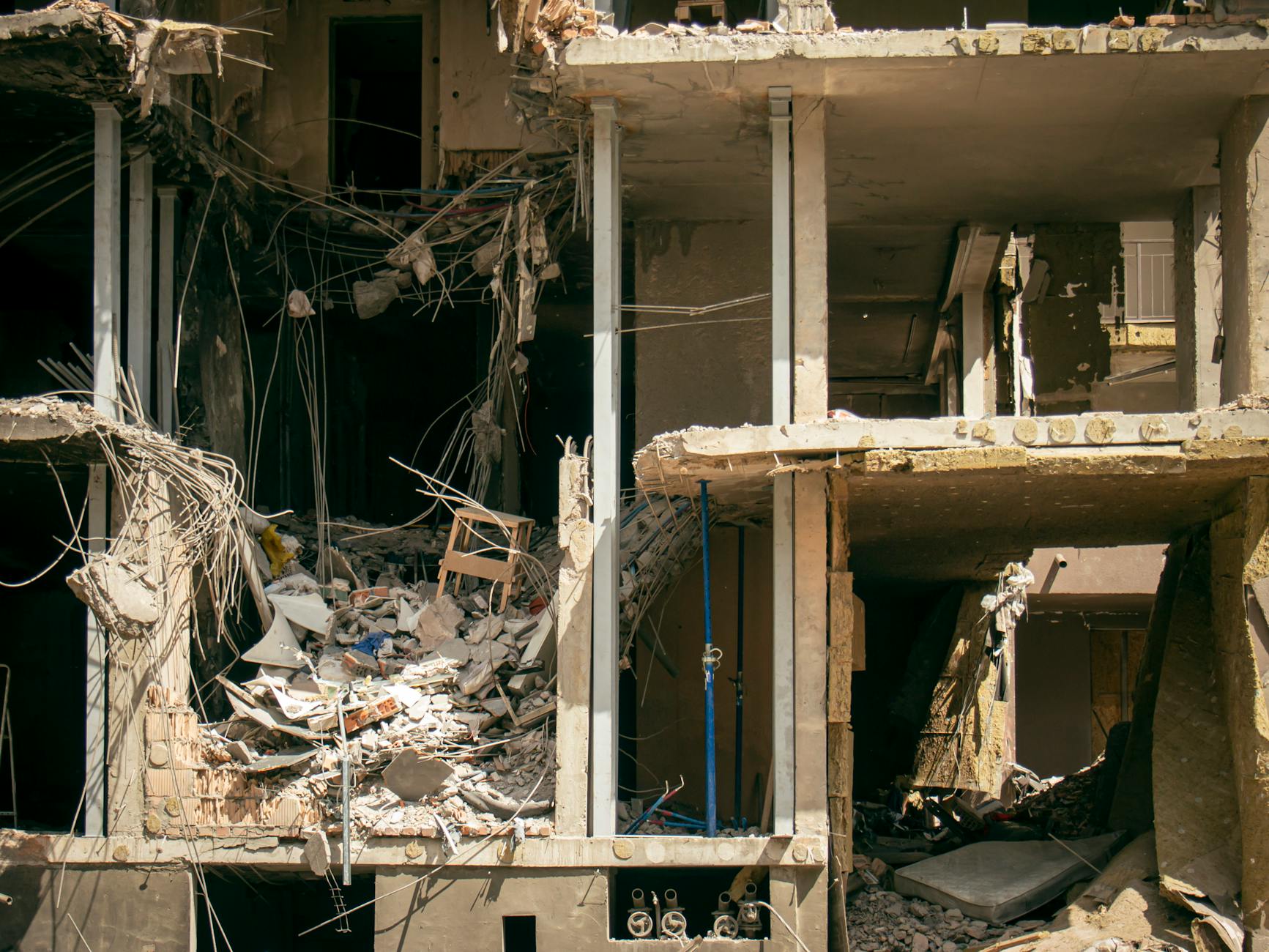
If Iran’s government were to collapse — whether through internal revolution, economic implosion, or external pressure — the fallout would not stay within its borders. The destabilization of a country with 88 million people, vast oil reserves, and deep entanglements across the Middle East would send shockwaves through at least a dozen neighboring and allied nations, from Iraq and Lebanon to Afghanistan and the Gulf states. This is not speculation; it is the consensus view among regional analysts, military strategists, and diplomats who have studied Iran’s role as a linchpin of Middle Eastern power dynamics for decades.
The Trump administration has at various points pursued a “maximum pressure” campaign against Tehran, and some policy voices in Washington have openly discussed regime change as a desirable outcome. What is rarely addressed in those conversations is the day-after problem: who fills the vacuum, who absorbs the refugees, who secures Iran’s military assets, and who prevents sectarian violence from cascading across a region already scarred by decades of war. This article examines the specific countries that would bear the greatest burden, the mechanisms through which instability would spread, and why even Iran’s adversaries have reason to fear a sudden collapse rather than a managed transition. The following sections break down the geographic and strategic impact zone country by country, assess the economic disruptions to global energy markets, consider the humanitarian crisis that would follow, and evaluate whether any international framework exists to manage such a scenario.
Table of Contents
- Which Countries Would Be Hit First by Regional Instability From Iran’s Collapse?
- How Would Iran’s Collapse Disrupt Global Energy Markets and Gulf State Economies?
- The Refugee Crisis That Would Dwarf the Syrian Displacement
- What Happens to Iran’s Military Assets in a Collapse Scenario?
- Why Even Regime Change Advocates Should Fear an Unmanaged Collapse
- The Economic Sanctions Paradox and Accelerating Internal Pressure
- What a Managed Transition Would Actually Require
- Conclusion
- Frequently Asked Questions
Which Countries Would Be Hit First by Regional Instability From Iran’s Collapse?
Iraq would almost certainly be the first and hardest-hit country. Iran’s influence over Iraqi politics, militias, and religious institutions is so deeply embedded that a sudden loss of Iranian state coordination could trigger factional warfare among Shia militia groups that currently operate under Tehran’s umbrella. The Popular Mobilization Forces, which include an estimated 100,000 to 150,000 fighters, receive funding, training, and strategic direction from Iran’s Islamic Revolutionary Guard Corps. Without that organizing force, these groups could splinter into competing warlord factions, each vying for territory and resources in a country whose own central government remains fragile. Lebanon would face a parallel crisis. Hezbollah, which functions as both a political party and a military force more powerful than the Lebanese army itself, depends on Iranian financial and logistical support estimated at $700 million to $1 billion annually.
A collapsed Iranian state would cut that lifeline. While some analysts might view a weakened Hezbollah as a positive development, the immediate consequence would be a power vacuum in southern Lebanon and the Bekaa Valley, areas where Hezbollah currently provides governance, social services, and security. The collapse of those structures without any replacement would likely push Lebanon — already in the grip of a severe economic crisis — into outright state failure. Syria presents a third immediate concern. The Assad government’s survival through the civil war was made possible in large part by Iranian military intervention, including the deployment of irgc advisors and Iranian-backed Afghan and Pakistani militias. Even in a post-conflict Syria, Iranian-aligned forces maintain a significant presence. A sudden withdrawal or disorganization of those forces could reignite territorial conflicts, particularly in eastern Syria where ISIS remnants continue to operate and where Kurdish, Turkish, and American interests already clash.

How Would Iran’s Collapse Disrupt Global Energy Markets and Gulf State Economies?
Iran sits on approximately 12 percent of the world’s proven oil reserves and controls the northern shore of the Strait of Hormuz, through which roughly 20 percent of the world’s oil supply passes daily. Even during periods of heavy sanctions, Iran has exported between 1.5 and 2.5 million barrels per day through various channels. A collapse scenario would not simply remove Iranian oil from the market — it would create active danger to shipping through the strait itself. Rogue military units, desperate factions seeking revenue, or simple lack of maritime coordination could make the waterway unpredictable and dangerous for tankers. Saudi Arabia and the United Arab Emirates, despite being Iran’s geopolitical rivals, would face severe consequences. Both countries have spent years diversifying their economies away from oil dependence, but neither has completed that transition. A spike in oil prices might seem beneficial in the short term, but the associated regional instability would threaten their own internal security.
Saudi Arabia shares a coastline with Iran across the Persian Gulf and has a significant Shia minority population in its Eastern Province — precisely where most of its oil infrastructure is located. The UAE, home to over 400,000 Iranian expatriates and a major hub for Iran-related trade, including the emirate of Dubai, would face massive disruptions to its commercial ecosystem. However, if the collapse were gradual rather than sudden — a slow deterioration rather than a dramatic implosion — energy markets might have time to adjust. This distinction matters enormously. A managed decline with international coordination could allow alternative suppliers to fill gaps and shipping routes to be secured. A sudden collapse, triggered by a military coup, popular revolution, or external military strike, would allow no such adjustment period. The difference between these scenarios could mean the difference between $90 oil and $200 oil, with cascading effects on global inflation, transportation costs, and food prices worldwide.
The Refugee Crisis That Would Dwarf the Syrian Displacement
Iran has a population of approximately 88 million people. For comparison, Syria’s population was roughly 21 million when its civil war began in 2011, and that conflict produced over 6 million refugees and another 6 million internally displaced persons — a humanitarian catastrophe that reshaped European politics and strained the resources of Turkey, Jordan, and Lebanon for over a decade. An Iranian collapse affecting even a fraction of its much larger population would create a displacement crisis of unprecedented scale in the modern Middle East. Turkey, which shares a 534-kilometer border with Iran, would be the most immediate destination. Turkey already hosts approximately 3.5 million Syrian refugees and has experienced significant domestic political backlash over that burden.
The prospect of millions of Iranian refugees crossing the eastern border would be politically explosive. Pakistan, which shares a 959-kilometer border with Iran through the restive Balochistan region, has its own severe economic challenges and limited capacity to absorb large displaced populations. Afghanistan, already in humanitarian crisis under Taliban governance, could see reverse migration of the estimated 3 million Afghan nationals currently living and working in Iran — people returning to a country with no capacity to reintegrate them. The Gulf states — Kuwait, Bahrain, Qatar, Oman — have historically resisted accepting refugees in significant numbers despite their wealth. Bahrain presents a particularly volatile case: its population is majority Shia governed by a Sunni monarchy, and Iran has long been accused of fomenting unrest there. An Iranian collapse could embolden opposition movements in Bahrain while simultaneously sending refugees toward its shores, creating a dual crisis that the small island nation is poorly equipped to handle.

What Happens to Iran’s Military Assets in a Collapse Scenario?
One of the most dangerous and least-discussed aspects of an Iranian collapse is the question of military asset security. Iran possesses one of the largest ballistic missile arsenals in the Middle East, with an estimated 3,000 or more missiles of various ranges, including some capable of reaching Southern Europe. It maintains advanced drone technology that has already been exported to proxy forces and, according to Western intelligence assessments, to Russia. While Iran does not currently possess nuclear weapons, it has enriched uranium to 60 percent purity — a short technical step from weapons-grade — and maintains the scientific and industrial infrastructure for a rapid breakout. In a collapse scenario, the chain of command over these assets could fracture. The IRGC operates as a parallel military and economic institution with its own command structure separate from the regular Iranian army. If the political leadership falls, these two military establishments could find themselves in competition rather than cooperation.
Individual commanders might attempt to sell weapons systems to the highest bidder, use them as bargaining chips for political survival, or deploy them preemptively against perceived enemies. The precedent from Libya’s collapse in 2011 is instructive: weapons from Gaddafi’s arsenals ended up fueling conflicts across North Africa and the Sahel for years afterward. Iran’s arsenal is orders of magnitude more sophisticated and dangerous. The comparison to the Soviet Union’s collapse in 1991 is frequently invoked but imperfect. The Soviet breakup, while messy, was managed by successor states that maintained relatively coherent military command structures. The Nunn-Lugar Cooperative Threat Reduction Program invested billions of dollars over decades to secure Soviet nuclear and chemical weapons. No equivalent framework exists for Iran, and the current state of U.S.-Iran relations makes it nearly impossible to develop one proactively. Israel, which considers Iran’s missile and nuclear programs existential threats, might feel compelled to act unilaterally to secure or destroy these assets — an intervention that could itself trigger the broader regional war it sought to prevent.
Why Even Regime Change Advocates Should Fear an Unmanaged Collapse
The assumption underlying some hawkish policy positions is that removing Iran’s current government would produce a more moderate, Western-friendly successor state. History provides very little support for this theory. Iraq after 2003, Libya after 2011, and Yemen after 2012 all demonstrate that toppling an authoritarian government without a viable transition plan produces not democracy but chaos, and often results in the empowerment of the most extreme factions rather than the most moderate ones. Iran’s internal ethnic and religious diversity adds another layer of complexity that is frequently overlooked in Washington policy debates. Persians make up roughly 54 percent of the population, but the country also includes significant Azerbaijani (approximately 16 percent), Kurdish (10 percent), Lur (6 percent), Arab (2 percent), and Baloch (2 percent) populations, among others. Many of these groups have active separatist or autonomist movements.
A central government collapse could trigger multiple simultaneous independence or autonomy conflicts, turning Iran into not one crisis but several overlapping ones, each with cross-border dimensions — Kurdish areas connecting to Iraq’s Kurdistan Region and Turkey’s southeast, Azerbaijani areas bordering the Republic of Azerbaijan, Baloch areas straddling the Pakistani border, and Arab areas adjacent to Iraq’s Shia south. The limitation that even well-intentioned international intervention faces in such a scenario is one of sheer scale and complexity. The United States military, after two decades of operations in Iraq and Afghanistan, does not have the appetite or the force structure for another large-scale Middle Eastern intervention. European allies are consumed with their own security challenges. The United Nations Security Council would almost certainly be paralyzed by competing vetoes. The practical reality is that there is no international institution currently capable of managing an Iranian collapse, which is precisely why preventing an uncontrolled one should be a higher priority than pursuing regime change without a credible day-after plan.
📨 Get Free Accountability Coverage Alerts
Free · No spam · Unsubscribe anytime

The Economic Sanctions Paradox and Accelerating Internal Pressure
There is a genuine tension in current U.S. policy that deserves more honest discussion. Maximum pressure sanctions are designed to weaken the Iranian government, but they also weaken the Iranian economy and civil society in ways that make a chaotic collapse more likely rather than less.
When inflation runs above 40 percent, when the currency has lost over 80 percent of its value in a decade, and when youth unemployment hovers around 27 percent, the conditions for sudden upheaval are present whether or not that is the policy’s intent. The 2022-2023 Mahsa Amini protests demonstrated that Iranian society contains enormous pent-up frustration capable of erupting rapidly. Those protests, while ultimately suppressed, spread to over 150 cities and involved participation across ethnic, class, and generational lines in ways that previous protest movements had not. A policy framework that simultaneously weakens the regime’s capacity to govern while offering no pathway for a stable transition is, in effect, a policy that increases the probability of exactly the kind of unmanaged collapse whose consequences are outlined throughout this article.
What a Managed Transition Would Actually Require
Any serious policy discussion about Iran’s future needs to grapple with the transition problem rather than treating regime change as an endpoint. A managed transition — however unlikely under current political conditions — would require advance coordination among the United States, European allies, Gulf states, Turkey, Russia, and China, all of whom have competing interests in Iran’s future.
It would require humanitarian pre-positioning for refugee flows, security frameworks for weapons containment, economic stabilization plans to prevent hyperinflation and famine, and diplomatic channels to Iran’s various internal factions, including elements of the IRGC, the reformist movement, ethnic minority leaders, and civil society organizations. None of this infrastructure currently exists, and building it would require a fundamental shift in how the United States and its allies approach Iran policy — from a posture focused on punishment and containment to one that incorporates contingency planning for the range of possible futures, including the most dangerous ones. The costs of such planning are modest compared to the costs of being caught unprepared by a collapse that, given Iran’s internal pressures and external isolation, may be more a question of when than if.
Conclusion
The regional instability that would follow an Iranian collapse is not a theoretical exercise. It is a scenario with identifiable mechanisms, predictable flashpoints, and quantifiable risks that would directly affect Iraq, Lebanon, Syria, Turkey, Pakistan, Afghanistan, Bahrain, Saudi Arabia, the UAE, Kuwait, Qatar, Oman, and, through energy markets and refugee flows, the entire global economy. The countries in the immediate impact zone are, in many cases, already fragile states or states managing their own internal tensions, making them poorly equipped to absorb the additional shocks that an Iranian collapse would generate.
For American policymakers, the key takeaway should be that Iran policy cannot be evaluated solely through the lens of what pressures Tehran. It must also be evaluated through the lens of what happens if those pressures succeed too well, too quickly, and without a framework to manage the aftermath. The historical record of regime change without transition planning is unambiguous, and Iran — larger, more complex, and more strategically consequential than Iraq or Libya — would produce consequences on a correspondingly larger scale. Whether one views Iran’s current government as an adversary to be confronted or a problem to be managed, the case for serious contingency planning is overwhelming, and its absence from mainstream policy debate is a failure of strategic imagination that could prove extraordinarily costly.
Frequently Asked Questions
Has the U.S. government publicly planned for an Iranian collapse scenario?
No publicly available U.S. government document outlines a comprehensive plan for managing an Iranian state collapse. While the Pentagon and intelligence agencies almost certainly maintain classified contingency plans, there has been no public interagency process comparable to the post-Soviet nuclear security initiatives of the 1990s. Congressional hearings on Iran policy have focused overwhelmingly on sanctions and nuclear negotiations rather than collapse contingencies.
How many countries would be directly affected by instability from Iran’s collapse?
At minimum, twelve countries would face direct and immediate consequences: Iraq, Syria, Lebanon, Turkey, Pakistan, Afghanistan, Bahrain, Saudi Arabia, the UAE, Kuwait, Qatar, and Oman. When indirect effects through energy markets, refugee flows, and terrorism risks are included, the number extends to virtually every country in the broader Middle East and Central Asian regions, plus major energy-importing economies worldwide.
Could Iran’s collapse lead to nuclear proliferation?
This is one of the most serious risks. Iran has enriched uranium to near weapons-grade levels and possesses the technical knowledge for weapons development. In a collapse scenario, nuclear materials and expertise could be dispersed, potentially reaching non-state actors or triggering a nuclear arms race among regional powers like Saudi Arabia and Turkey, both of which have expressed interest in nuclear capabilities as a hedge against Iranian threats.
What happened to weapons stockpiles in other countries that experienced government collapse?
Libya’s 2011 collapse resulted in the dispersal of an estimated 20,000 man-portable air defense systems and vast quantities of conventional weapons across North Africa, the Sahel, and the Middle East, fueling conflicts in Mali, Syria, and elsewhere. Iraq’s post-2003 weapons dispersal armed the insurgency and later ISIS. Iran’s arsenal is significantly larger and more technologically advanced than either of those precedents.
Would Iran’s collapse benefit Israel’s security?
In the short term, it would remove a state adversary that funds Hezbollah and Hamas. In the medium to long term, the picture is far more complicated. A fragmented Iran could produce ungoverned spaces where extremist groups operate freely, missile systems that fall into unpredictable hands, and regional chaos that draws in multiple state actors with competing agendas — none of which serves Israeli security interests. Israeli military and intelligence officials have privately acknowledged that a chaotic collapse could be more dangerous than a contained adversary.
You Might Also Like
- The Weapons Depots Across Iran Would Take Years to Fully Secure Even With Ground Forces
- This Division of Labor Lets Both Countries Claim Different Objectives
- The Distance From the Persian Gulf to Tehran Is Over 500 Miles of Difficult Terrain