
The United States is on the verge of deploying thousands of additional troops to the Middle East, with reports indicating the Pentagon aims to complete its troop surge by mid-March 2026. Gen. Dan Caine, Chairman of the Joint Chiefs of Staff, confirmed on March 2, 2026, that more service members are heading to the region as part of Operation Epic Fury, the military campaign launched in February 2026 after nuclear negotiations with Iran collapsed. Caine’s sobering warning to expect “additional losses” as operations continue underscores the gravity of what is now the largest American military buildup in the Middle East since the 2003 invasion of Iraq. The scale of what has already been deployed is staggering.
Two aircraft carrier strike groups, 16 surface warships, and more than 150 military aircraft have flowed into the Middle East and eastern Mediterranean since mid-February. The USS Gerald R. Ford carrier strike group alone brought three destroyers and more than 5,000 service members, while a second strike group added approximately 5,700 more. Now, with the Army canceling a major training exercise for the 82nd Airborne Division’s headquarters element, speculation is mounting that ground combat units could be next. This article examines the full scope of the deployment, what it means for military readiness, the political and legal questions it raises, and what American families and taxpayers should know going forward.
Table of Contents
- How Many Additional U.S. Troops Are Being Deployed to the Middle East Region?
- What Is Operation Epic Fury and Why Did It Launch Now?
- The Naval Buildup — Carrier Strike Groups and What They Signal
- The Air Power Surge and Its Strategic Implications
- The 82nd Airborne and the Ground Force Question
- Congressional Oversight and the Legal Framework
- What Comes Next and What to Watch For
- Conclusion
- Frequently Asked Questions
How Many Additional U.S. Troops Are Being Deployed to the Middle East Region?
The Pentagon has not disclosed exact numbers for the next wave of troops heading to the region, but the picture that has emerged through official statements and reporting is one of rapid, large-scale escalation. As of early March 2026, the two carrier strike groups alone account for roughly 10,700 additional service members deployed since the crisis began. On top of that, the more than 150 military aircraft sent to the region since February 17 — when the second round of nuclear talks with Iran broke off — represent what Military Times has described as the largest surge in U.S. airpower in the Middle East since the Iraq war. Gen.
Caine’s March 2 confirmation that “more tactical aviation is flowing into theater” suggests the air component will continue to grow. But it is the ground force signals that have drawn the most attention. The Washington Post reported on March 6 that the Army canceled a major training exercise for the headquarters element of the 82nd Airborne Division, one of the military’s premier rapid-deployment units composed of elite paratroopers. Canceling a scheduled exercise for a unit like the 82nd is not routine — it typically signals that the unit needs to be available for real-world contingencies. For comparison, the 82nd Airborne was among the first conventional forces deployed during the 2003 Iraq invasion and was put on alert during the January 2020 crisis with Iran after the killing of Qasem Soleimani. The planned timeline to complete the troop deployment by mid-March 2026 means the coming days are critical. If that deadline holds, the full scope of the buildup should become clearer within the next week or two, though the Pentagon’s reluctance to share specific numbers makes independent verification difficult.

What Is Operation Epic Fury and Why Did It Launch Now?
Operation Epic Fury is the U.S. military campaign launched in February 2026 in direct response to the breakdown of nuclear negotiations with Iran. The second round of talks collapsed on February 17, and within days, the military began surging forces into the region at a pace not seen in over two decades. The operation’s name and scope signal that the Trump administration views the current standoff as something beyond routine posturing — this is a named combat operation with an open-ended mandate, not a temporary show of force. However, it is important to recognize what remains unclear.
The administration has not formally articulated the specific military objectives of Operation Epic Fury beyond responding to “escalating tensions.” There has been no new Authorization for Use of Military Force submitted to Congress, and the legal basis for sustained operations — if they go beyond defensive postures — remains an open question. If the operation escalates to direct kinetic strikes on Iranian territory or assets, the War Powers Resolution would require the president to notify Congress within 48 hours and would limit sustained hostilities to 60 days without congressional authorization. The distinction between a defensive buildup and an offensive campaign matters enormously from both a legal and a human cost standpoint, and right now, that line is blurry. The speed of the buildup itself is notable. Assembling the largest naval force in the Middle East since 2003, deploying 150-plus aircraft, and potentially freeing up elite airborne units — all within roughly three weeks — reflects extensive pre-positioning and planning that almost certainly predates the February 17 breakdown in talks.
The Naval Buildup — Carrier Strike Groups and What They Signal
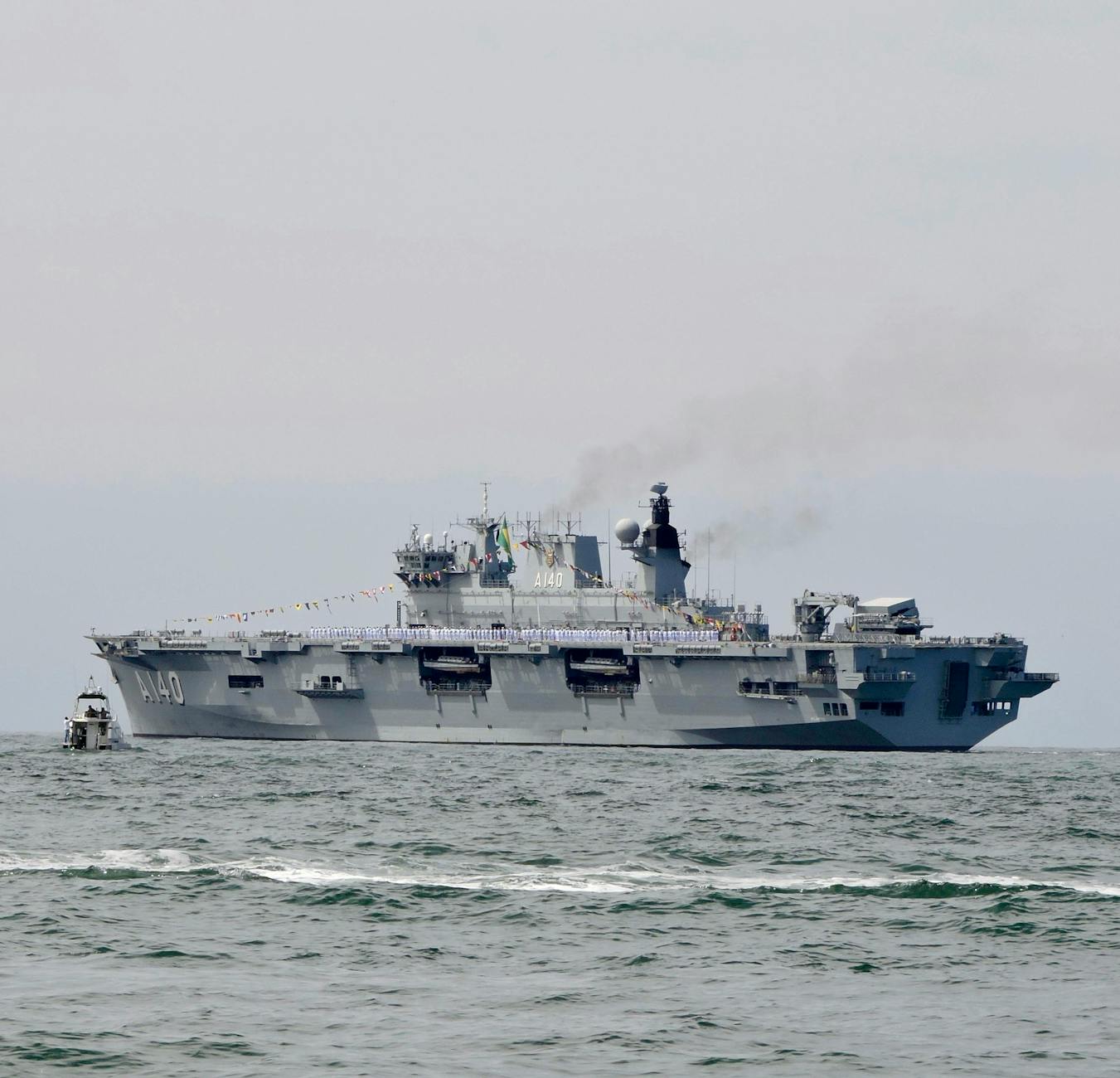
The presence of two aircraft carrier strike groups and 16 surface warships in the Middle East and eastern Mediterranean is the clearest indicator of how seriously the Pentagon is treating this situation. Aircraft carriers are the most visible projection of American military power, and deploying two simultaneously to a single theater is a decision that carries enormous logistical costs and strategic trade-offs. Each carrier strike group typically includes the carrier itself, a guided-missile cruiser, multiple destroyers, and a carrier air wing of 70 or more aircraft, along with 5,000 to 6,000 personnel. The USS Gerald R. Ford, the Navy’s newest and most advanced carrier, was ordered to the region with three destroyers and more than 5,000 additional service members. The Ford-class carriers represent a significant upgrade over their Nimitz-class predecessors, with electromagnetic launch systems and advanced radar capabilities.
Sending the Ford signals that the Navy is deploying its most capable assets, not simply rotating existing forces. The second strike group brought approximately 5,700 more service members, pushing the total naval personnel surge past 10,000. For context, the last time the U.S. had a comparable naval presence in the region was during the March 2003 invasion of Iraq, when five carrier strike groups were operating in the Persian Gulf and eastern Mediterranean. The current two-carrier presence is smaller than that peak, but it is far larger than the single-carrier rotational presence that has been the norm for most of the past decade. Al Jazeera and other international outlets have been tracking the buildup closely, and the sheer concentration of firepower has not gone unnoticed by regional actors.
The Air Power Surge and Its Strategic Implications
More than 150 military aircraft deployed to the Middle East since February 17 represents the largest surge in American airpower in the region since the Iraq war. That number includes fighter jets, bombers, tankers, surveillance aircraft, and other support platforms, though the Pentagon has not provided a detailed breakdown. The confirmation that “more tactical aviation is flowing into theater” suggests the number will continue to climb in the coming days. The airpower buildup serves multiple purposes. Offensively, it provides the capacity for sustained strike operations against a wide range of targets. Defensively, it bolsters the ability to protect U.S. forces and regional allies from missile and drone attacks — a threat that Iran and its proxy networks have demonstrated repeatedly in recent years.
The tradeoff, however, is significant. Concentrating this many aircraft in the Middle East necessarily draws resources away from other theaters. The Pacific, where competition with China remains the Pentagon’s stated top priority, and Europe, where the war in Ukraine continues, both lose capacity when this many assets are redirected. Every squadron deployed to the Middle East is a squadron that is not available for deterrence or contingency operations elsewhere. This is not a hypothetical concern. Defense analysts at CSIS and other institutions have noted that the scale of the Middle East buildup raises real questions about whether the U.S. military can sustain this level of commitment while maintaining readiness in the Indo-Pacific. The current force structure was not designed for simultaneous large-scale operations in two major theaters, and Operation Epic Fury is testing those limits.
The 82nd Airborne and the Ground Force Question
The most alarming signal in recent days has been the Army’s decision to cancel a major training exercise for the headquarters element of the 82nd Airborne Division, as reported by the Washington Post on March 6, 2026. The 82nd Airborne is not a garrison unit — it is the Army’s global response force, designed to deploy anywhere in the world within 18 hours. When the 82nd’s schedule gets disrupted, it usually means the unit is being held in reserve for a real-world mission. This does not confirm that ground troops will be sent to the Middle East, and it is important not to overstate what is currently known. The Pentagon has not announced any ground force deployment, and the canceled exercise could reflect a precautionary measure rather than an imminent deployment order. However, the pattern is familiar.
Before the 2003 Iraq invasion, similar exercise cancellations and deployment preparations for the 82nd preceded the division’s deployment to the combat zone. Military families associated with the 82nd and other rapid-deployment units are understandably on edge. The introduction of ground combat forces would represent a dramatic escalation beyond the current naval and air buildup. Air and naval forces can operate from international waters and allied bases at a relative distance from Iranian territory. Ground troops would imply a fundamentally different kind of operation — one with higher casualty risks, greater logistical demands, and far more complex political implications. Gen. Caine’s warning to expect “additional losses” has only heightened concerns that the administration is preparing the public for a conflict that goes beyond standoff strikes.
📨 Get Free Accountability Coverage Alerts
Free · No spam · Unsubscribe anytime

Congressional Oversight and the Legal Framework
The scale and pace of Operation Epic Fury raise serious questions about congressional oversight. Under the War Powers Resolution of 1973, the president can deploy military forces without a formal declaration of war, but must notify Congress within 48 hours and cannot sustain hostilities beyond 60 days without congressional authorization.
As of early March, no new Authorization for Use of Military Force has been introduced, and members of both parties have expressed concern about the lack of formal briefings. For example, several senators on the Armed Services Committee have publicly stated they have received only limited information about the operation’s objectives, rules of engagement, and projected costs. The disconnect between the speed of military action and the pace of congressional deliberation is not new — it has been a recurring tension in American military policy since the Vietnam era — but the current situation is testing those boundaries in real time.
What Comes Next and What to Watch For
The planned completion of the troop deployment by mid-March 2026 means the next several days will be decisive. If the buildup is intended as coercive diplomacy — a show of force designed to bring Iran back to the negotiating table — then the peak deployment may be followed by a pause and renewed diplomatic outreach. If it is preparation for sustained military operations, the indicators to watch include additional deployment orders for ground combat units, the pre-positioning of medical and logistics assets, and any changes to the rules of engagement.
American families with service members in the affected units, taxpayers footing the bill for a deployment of this scale, and citizens concerned about the prospect of another major Middle East conflict all have a stake in demanding transparency from the administration and accountability from Congress. The last time the U.S. assembled a force of this size in the Middle East, it led to a war that lasted nearly a decade. The decisions made in the coming days will shape whether this buildup follows a different path.
Conclusion
The United States is in the midst of its most significant military buildup in the Middle East since 2003. Two carrier strike groups, 16 warships, more than 150 aircraft, and over 10,000 additional service members have already been deployed as part of Operation Epic Fury, with the Pentagon confirming that more are on the way. The cancellation of a training exercise for the 82nd Airborne Division has fueled speculation that ground forces may follow, and Gen. Caine’s warning about “additional losses” suggests the administration is preparing for the possibility of direct combat.
What remains unclear is whether this buildup is a bargaining chip or a prelude to war. The legal authority for sustained operations has not been established through Congress, the specific military objectives have not been publicly articulated, and the tradeoffs with readiness in other theaters are real and growing. For now, the most important thing Americans can do is pay attention, demand answers from their elected representatives, and resist the urge to treat a deployment of this magnitude as routine. It is not.
Frequently Asked Questions
How many U.S. troops have been deployed to the Middle East as part of Operation Epic Fury?
The two carrier strike groups alone have brought more than 10,700 additional service members to the region, with the USS Gerald R. Ford group contributing over 5,000 and the second strike group adding approximately 5,700. The total number including air and support personnel has not been officially disclosed.
What is the legal basis for the military buildup?
The administration has not submitted a new Authorization for Use of Military Force to Congress. The deployment currently falls under the president’s authority as commander in chief, but sustained hostilities would trigger the War Powers Resolution’s requirements for congressional notification and approval.
Does the 82nd Airborne cancellation mean ground troops are being deployed?
Not necessarily. The cancellation of a training exercise for the 82nd Airborne Division’s headquarters element is a significant signal, but it does not confirm a deployment order. It could be a precautionary measure to keep the unit available for a potential mission.
When is the deployment expected to be complete?
Reports indicate the U.S. was planning to complete the troop deployment by mid-March 2026, meaning the full scope of the buildup should become clearer within days.
How does this compare to previous Middle East buildups?
Military Times has described this as the largest naval force assembled in the Middle East since the 2003 Iraq invasion, and the air deployment as the largest surge in U.S. airpower in the region since the same period. The 2003 buildup ultimately involved five carrier strike groups.
You Might Also Like
- Additional F-35 Squadrons Were Quietly Deployed to Gulf Bases Before the Strike
- What’s Left of Iran’s Nuclear Program After Two U.S. Strikes in Eight Months
- U.S. Intelligence Watched Iran Rebuild in Real Time — Then Decided to Strike Again