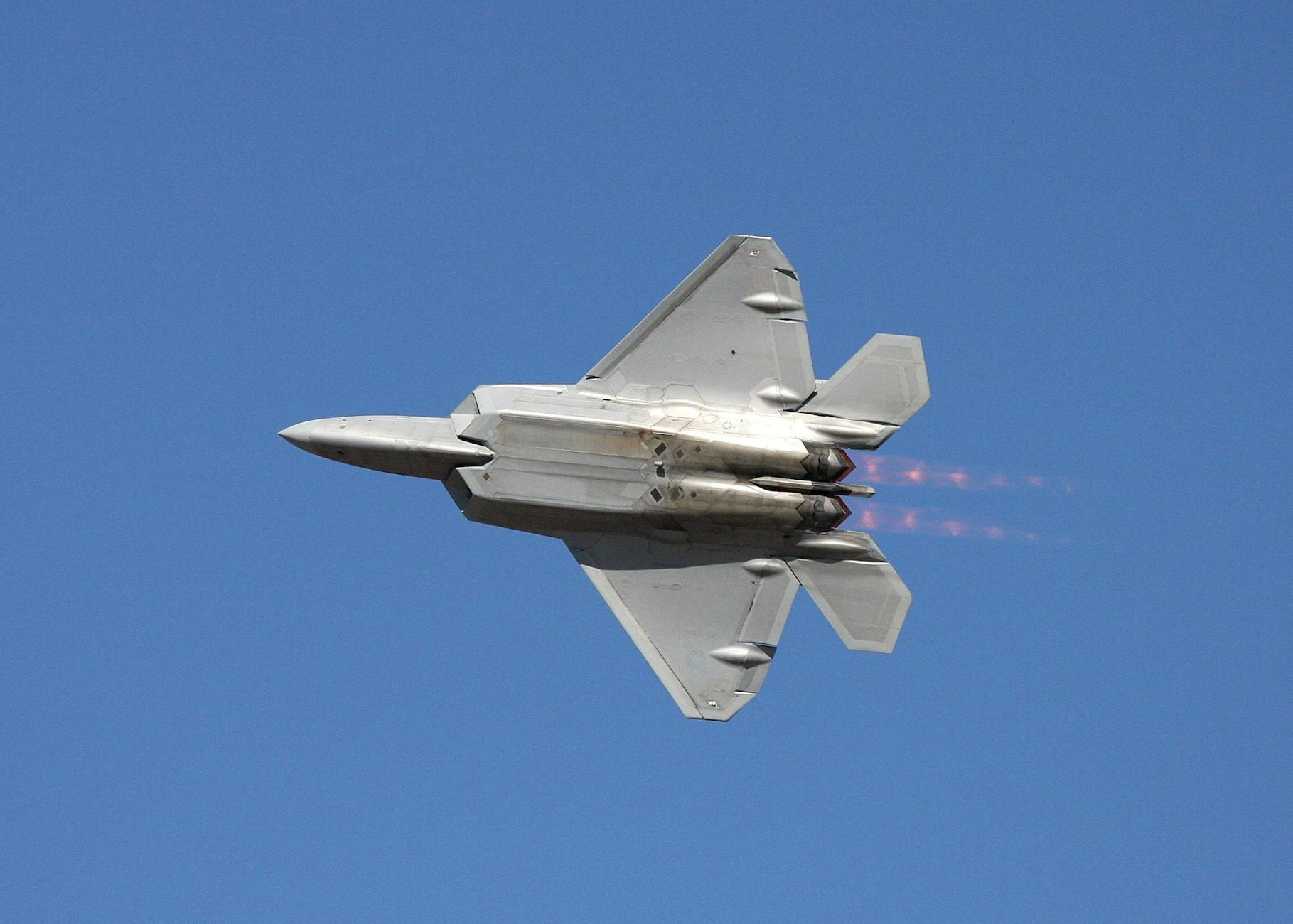
In over a century of modern warfare, air power alone has never achieved lasting regime change. Not once. Robert Pape, professor of political science at the University of Chicago and one of the foremost scholars on coercive air campaigns, puts it bluntly: “For over a century, states have been trying to topple regimes with air power alone and — it has never worked.” His decades of research, published in the landmark study *Bombing to Win: Air Power and Coercion in War*, systematically assessed every major bombing campaign of the modern era and found zero cases where aerial bombardment by itself brought down a government and replaced it with something stable. This matters right now because the United States and Israel are engaged in military strikes against Iran in early 2026, and serious voices in Washington are floating the idea of achieving regime change through air power without committing ground troops.
PolitiFact fact-checked Senator Chris Murphy’s claim on *Face the Nation* that airstrikes alone have never produced regime change and rated it as historically supported by experts. The Carnegie Endowment for International Peace published an analysis in March 2026 titled “Bombing Campaigns Do Not Bring About Democracy. Nor Does Regime Change Without a Plan,” reinforcing the same conclusion. This article walks through the historical record — from Libya to Iraq to Serbia to Ukraine — examines why air campaigns fail to topple regimes on their own, and applies those lessons to the current situation with Iran.
Table of Contents
- Why Has Air Power Alone Never Achieved Lasting Regime Change?
- The Historical Record From Libya to Iraq — And Where Air Campaigns Fell Short
- Why Bombing Often Strengthens the Regimes It Targets
- The Iran Question — Air Power Without Boots on the Ground
- The Democracy Problem — Why Bombing Does Not Build Nations
- What Air Power Can Actually Accomplish
- Where This Debate Goes From Here
- Conclusion
- Frequently Asked Questions
Why Has Air Power Alone Never Achieved Lasting Regime Change?
The core reason is structural. According to Pape’s research, regimes do not collapse from external destruction alone. They collapse when insiders — military commanders, political elites, security chiefs — conclude that the ruler can no longer protect them. The pattern runs like this: elite fear leads to hesitation, hesitation leads to defection, and defection leads to regime collapse. Bombing from 30,000 feet does not reliably trigger this internal chain reaction. In many documented cases, it produces the opposite effect: populations and elites rally around the flag, and nationalist cohesion strengthens rather than fractures. Consider the 1999 NATO bombing of Serbia.
Operation Allied Force lasted 78 days and dropped thousands of munitions on Serbian military and infrastructure targets. It succeeded in forcing Slobodan Milošević to make concessions over Kosovo, but it did not produce regime change. Milošević remained in power for another year and a half, until October 2000, when he was overthrown by a popular uprising driven by internal Serbian politics — not by NATO jets. Kosovo itself did not declare independence until 2008, nine years after the bombing ended. The air campaign achieved a limited tactical objective, but the political transformation came from within. Air power is exceptional at destroying hardware — runways, radar installations, missile batteries, fuel depots. What it cannot do is rewrite the internal political calculations of a regime’s inner circle with any predictability. Dictators who survive bombing campaigns often emerge with a tighter grip on power, having purged anyone who wavered during the crisis.
The Historical Record From Libya to Iraq — And Where Air Campaigns Fell Short
The 1986 U.S. airstrikes on Libya targeted Moammar Gadhafi directly, hitting his compound in Tripoli. The Reagan administration hoped the strikes would destabilize his rule. They failed entirely at regime change. Gadhafi remained in power for another 25 years, until 2011, when he was finally overthrown — and that required a full-scale ground uprising by Libyan rebels backed by NATO air support. Even then, the aftermath was catastrophic: Libya descended into civil war and remains fractured today. The lesson is double-edged. Air power alone could not remove Gadhafi, and even when combined with ground forces, the absence of a political plan produced a failed state rather than a functioning democracy. The Gulf War of 1991 offers an even starker example. The United States and its coalition launched one of the most devastating aerial bombardments in history during Operation Desert Storm, flying over 100,000 sorties and systematically dismantling Iraq’s military infrastructure.
Saddam Hussein’s army was degraded, his air force was destroyed, and his command-and-control networks were shattered. Yet Saddam himself remained firmly in power for 12 more years. It took a full-scale ground invasion in 2003 — Operation Iraqi Freedom’s “Shock and Awe” campaign followed by 150,000 ground troops — to actually topple his government. And even that ground invasion, conducted without adequate post-war planning, led to years of insurgency and sectarian violence. However, advocates of air power sometimes point to Bosnia in 1995 as a counterexample. NATO’s bombing campaign against Bosnian Serb positions did help bring the warring parties to the Dayton peace talks. But this was emphatically not air power alone. Croatian army forces and the Army of Bosnia and Herzegovina were simultaneously seizing territory on the ground, fundamentally changing the military balance. The bombing complemented a ground offensive — it did not substitute for one. Conflating the two misreads the history.
Why Bombing Often Strengthens the Regimes It Targets
One of the most counterintuitive findings in Pape’s research is that aerial bombardment frequently consolidates the power of the regime it is meant to destroy. The mechanism is straightforward: when bombs fall on a country’s cities, the population’s anger is directed outward at the attacker, not inward at their own government. Nationalist sentiment surges. Dissidents who might have challenged the regime are silenced — either by genuine patriotic feeling or by the regime’s ability to brand any opposition as treason during wartime. The ongoing conflict in Ukraine provides a contemporary example. Since February 2022, Russia has repeatedly struck Kyiv and other Ukrainian cities with cruise missiles, ballistic missiles, and drones. The stated and implied goal was to break Ukrainian will and destabilize the Zelenskyy government. The result has been precisely the opposite.
Ukrainian national cohesion strengthened under bombardment. Zelenskyy’s approval ratings soared. International support solidified. Rather than fracturing Ukraine’s political system, Russian air and missile attacks unified it. The Carnegie Endowment analysis underscores this pattern: weakening central authority through aerial bombardment alone does not bring regime change, freedom, or democracy. It often creates the conditions for exactly the opposite. This dynamic should give pause to anyone proposing that sustained air campaigns against Iran will cause the Islamic Republic to crumble from within. Authoritarian regimes are often at their most resilient when under external military pressure, because the threat justifies their security apparatus and delegitimizes internal opposition.

The Iran Question — Air Power Without Boots on the Ground
The current U.S. and Israeli military campaign against Iran has brought this debate from the history seminar into the headlines. Al Jazeera reported that the Trump administration’s apparent strategy amounts to “regime change without U.S. boots on the ground” — a goal that experts consider historically unprecedented. The Washington Examiner reported that defense analysts warned airstrikes alone make regime change in Iran “difficult,” which, given the historical record, qualifies as understatement. Israel’s Operation Rising Lion in June 2025 demonstrated both the extraordinary capability and the fundamental limitation of modern air power. Over 12 days, Israeli aircraft flew more than 1,400 sorties against Iranian targets located over 1,000 miles away without losing a single manned aircraft.
The tactical achievement was remarkable. Iran’s nuclear and missile infrastructure sustained heavy damage, and Ayatollah Khamenei was killed in a strike on Tehran. Yet the regime persisted. Rather than collapsing, Iran’s surviving leadership adapted toward what analysts describe as “calibrated, episodic bursts of aggression.” The death of a supreme leader, the destruction of major military assets — and still, no regime change. The tradeoff is clear. Air campaigns can degrade a country’s military capability, destroy specific targets, and impose enormous costs. What they cannot do, based on every available historical precedent, is replace one government with another. That requires either an internal revolution, a ground invasion, or some combination of both — and any of those options carries its own enormous risks and costs that air power advocates are often trying to avoid in the first place.
The Democracy Problem — Why Bombing Does Not Build Nations
Even in cases where regime change does eventually follow military action, the bombing itself does not produce democratic governance. The Carnegie Endowment’s March 2026 analysis, “Bombing Campaigns Do Not Bring About Democracy. Nor Does Regime Change Without a Plan,” drives this point home. Destroying a regime’s military infrastructure demolishes the state’s capacity to function — its bureaucracy, its utilities, its civil order — without creating any replacement. The result is often a power vacuum filled by warlords, militias, sectarian factions, or a new authoritarian government. Libya after 2011 is the cautionary tale.
NATO air power helped rebels overthrow Gadhafi, but without a ground presence or political framework for what came next, the country splintered. Over a decade later, Libya still has competing governments, active militia warfare, and has become a hub for human trafficking. Iraq after 2003 tells a similar story: even with 150,000 ground troops and years of occupation, the absence of a coherent post-war political plan produced a violent insurgency, the rise of ISIS, and decades of instability. The warning for Iran is stark. Iran has 88 million people, a complex multiethnic society, a sophisticated security apparatus, and a political system with deep institutional roots. The assumption that destroying enough military targets from the air will cause this system to reform itself into a democracy is not supported by a single historical example. If regime change were somehow achieved without a plan for what follows, the likely result — based on every comparable precedent — is chaos, not freedom.

What Air Power Can Actually Accomplish
None of this means air power is useless as a military tool. It is devastatingly effective at specific, limited objectives: destroying enemy air defenses, degrading military capability, enforcing no-fly zones, providing close air support for ground forces, and compelling tactical concessions. The 1999 Kosovo campaign did force Milošević to withdraw forces from Kosovo, even though it did not remove him from power.
📨 Get Free Accountability Coverage Alerts
Free · No spam · Unsubscribe anytime
Coalition air power in the Gulf War destroyed Iraq’s ability to project force beyond its borders, even though Saddam remained in charge. The critical distinction is between coercion — forcing an adversary to change specific behaviors — and compellence to the point of regime collapse. Air power has a mixed but real track record on the former. On the latter, its track record is zero for zero across more than a century of trying.
Where This Debate Goes From Here
The tension between what air power can do and what political leaders want it to do is not going away. The appeal is obvious: air campaigns allow leaders to project force without the political cost of body bags, without the logistical nightmare of occupation, and without the open-ended commitment that ground wars demand. That appeal will continue to tempt policymakers into believing that this time will be different, that advances in precision munitions and drone technology have finally made regime change from the air achievable.
But technology changes the efficiency of destruction, not the political dynamics of regime survival. The fundamental insight from Pape’s research — that regimes fall from internal defection, not external demolition — is a finding about human political behavior, not about weapons systems. Until someone can explain a plausible mechanism by which bombing alone reliably triggers elite defection inside an authoritarian state, the historical record stands: zero cases in over 100 years. Policymakers and the public should demand that any strategy for Iran or any future conflict grapple honestly with that record rather than wish it away.
Conclusion
The historical evidence is unambiguous. From Libya in 1986 to Iraq in 1991 to Serbia in 1999 to Israel’s strikes on Iran in 2025, no air campaign has ever produced lasting regime change on its own. Robert Pape’s comprehensive research across all major air campaigns of the modern era found zero successful cases. Regimes fall when their internal elites defect, and bombing alone does not reliably trigger that dynamic — it often strengthens the very cohesion it aims to shatter. The Carnegie Endowment, PolitiFact, and defense analysts across the political spectrum have confirmed this finding in the context of the current Iran strikes.
For Americans watching the current military campaign against Iran, the policy question is not whether U.S. and Israeli air power can destroy Iranian military targets — it clearly can, and has. The question is whether destruction from the air translates into the political outcome being promised. Every historical precedent says it does not. Citizens and lawmakers should press for honest answers about what the actual strategy is, what regime change would require beyond bombing, and what plan exists for the aftermath. The cost of ignoring a century of evidence is not just strategic failure — it is the kind of instability and human suffering that the post-Gadhafi Libya and post-Saddam Iraq have made impossible to ignore.
Frequently Asked Questions
Has any air campaign in history ever achieved regime change without ground forces?
No. According to Robert Pape’s comprehensive research spanning over a century of modern warfare, there are zero cases where air power alone achieved lasting regime change. Every successful regime change involved either ground forces, an internal uprising, or both.
What about the NATO bombing of Serbia in 1999 — didn’t that work?
The NATO bombing forced Milošević to make concessions over Kosovo, but it did not remove him from power. He remained president of Yugoslavia until October 2000, when he was overthrown by a domestic popular uprising — more than a year after the bombing ended. Kosovo declared independence in 2008, nine years after the air campaign.
Didn’t Israel’s Operation Rising Lion in 2025 kill Iran’s supreme leader? Why didn’t that cause regime change?
Israel flew over 1,400 sorties and killed Ayatollah Khamenei, but the regime adapted and persisted rather than collapsing. This is consistent with the historical pattern: destroying leaders or infrastructure does not automatically trigger the internal elite defection required for regime collapse.
Why does bombing sometimes make regimes stronger?
External military attacks tend to trigger nationalist rallying effects. Populations direct their anger at the attacker rather than their own government, and regimes use the crisis to brand domestic opposition as treasonous. This was clearly observed in Ukraine after Russian missile strikes, where national cohesion strengthened rather than fractured.
What can air power actually accomplish?
Air power is effective at destroying military infrastructure, enforcing no-fly zones, degrading an adversary’s ability to project force, and compelling limited tactical concessions. It is not effective at replacing one government with another or building democratic institutions.
What would actual regime change in Iran require?
Based on historical precedent, it would require either a ground invasion (which no serious analyst is recommending given Iran’s size and terrain), an internal revolution driven by Iranian elites and citizens, or some combination of external pressure and internal upheaval — along with a detailed political plan for governance afterward. Air power alone does not meet any of these conditions.
You Might Also Like
- The Think Tanks That Advocated for Iran Regime Change for Decades Got Their Wish
- The Iranian People Have Wanted Regime Change for Years — But Not Delivered by Foreign Bombs
- Liberation Delivered by Foreign Bombs Has Never Been Popular With the People Being “Liberated”