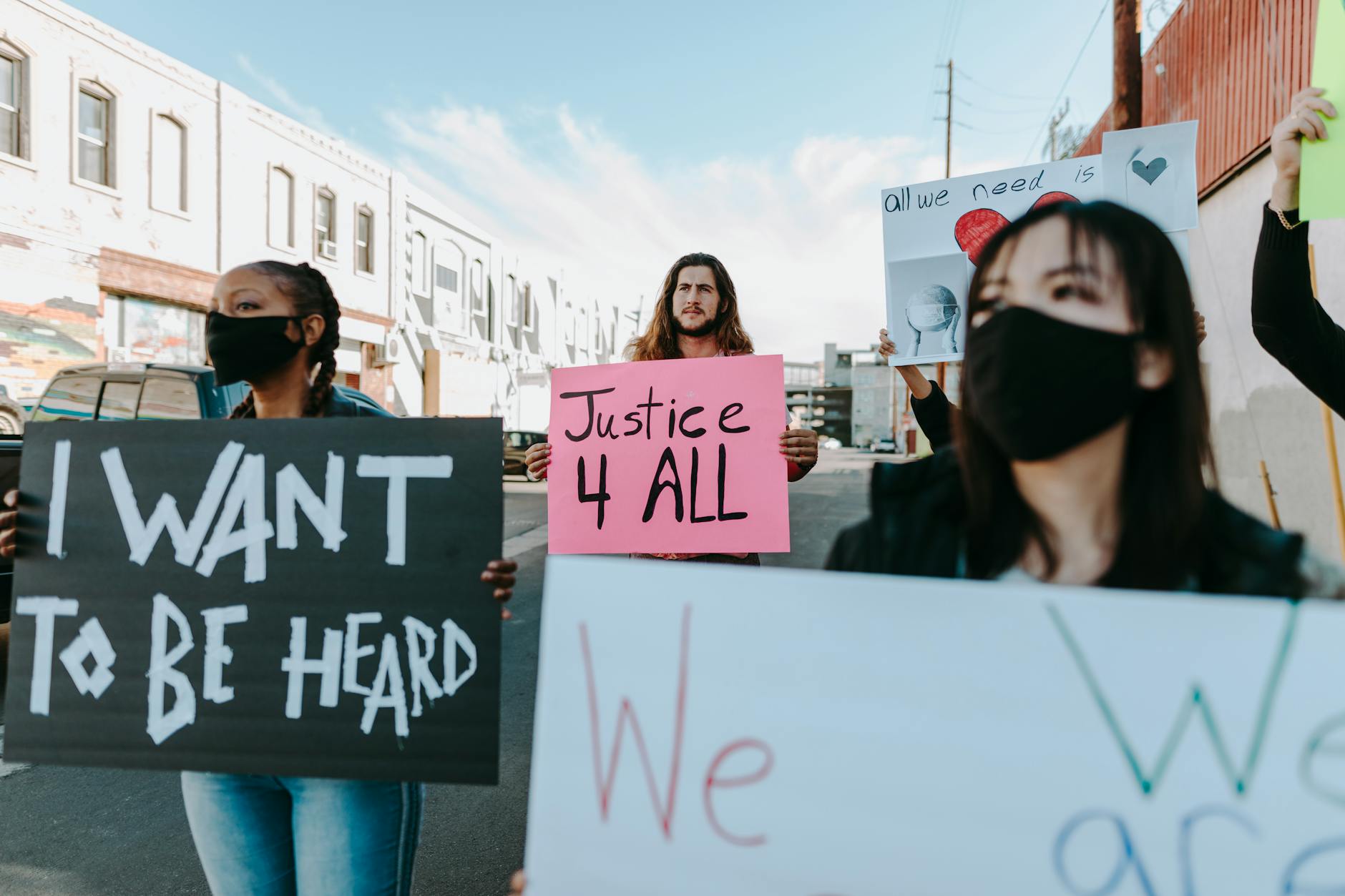
The Iranian people have wanted regime change for years, and the data proves it. Across multiple waves of the GAMAAN survey, 70 to 80 percent of Iranians say they would not vote for the Islamic Republic if given the choice. An overwhelming 89 percent support a democratic political system. When protests erupted on December 28, 2025, amid a crushing economic crisis, they spread to over 100 cities and became the largest uprising since the 1979 Islamic Revolution. The desire for a new Iran is not hypothetical. It is documented, widespread, and has been paid for in blood — with estimates of protesters killed between February 2025 and February 2026 ranging from 2,000 to 36,500.
But wanting regime change and having it delivered by foreign bombs are two fundamentally different things. When the United States and Israel launched Operation Epic Fury on February 28, 2026 — killing Supreme Leader Ali Khamenei and striking nuclear and missile sites — they claimed to be finishing what the Iranian people started. The strikes have killed more than 555 people in Iran, including 180 at a girls’ school. Israeli Prime Minister Netanyahu addressed the Iranian people in Farsi, urging them to “come to the streets, come out in your millions, to finish the job, to overthrow the regime of fear.” Yet no country’s government has ever been deposed and replaced with a friendlier one by air power alone. The historical record on this point is unambiguous. This article examines what Iranians actually want, why bombing campaigns fail to deliver it, the rally-around-the-flag risk that could strengthen the regime, and what the fractured opposition landscape means for any post-Islamic Republic future.
Table of Contents
- What Do Iranians Actually Want When They Say They Want Regime Change?
- Why Air Power Has Never Successfully Replaced a Government
- The Rally-Around-the-Flag Problem
- What the Diaspora Response Reveals About the Tradeoffs
- The Fractured Opposition and Why It Matters
- The Historical Pattern of Failed Externally Imposed Regime Change
- Where This Goes From Here
- Conclusion
- Frequently Asked Questions
What Do Iranians Actually Want When They Say They Want Regime Change?
The polling data from GAMAAN — the Group for Analyzing and Measuring Attitudes in Iran, based at a Dutch university — paints a picture that is both clear and complicated. Support for regime change as a precondition for meaningful progress has been the most popular position across every survey wave. Iranians broadly agree that the current system cannot be reformed from within. Where they diverge sharply is on what comes next. Roughly one-third of Iranians are strong supporters of Reza Pahlavi and a restored monarchy, while another third strongly oppose him. This monarchist support base remained stable from 2022 through 2025, with a marked increase in pro-monarchy sentiment first appearing in 2025. The remaining third is scattered across various democratic, secular, and federalist visions. This matters because regime change is not a single destination.
It is a direction. The 89 percent who say they want a democratic political system includes people who disagree fundamentally about what democracy should look like. Meanwhile, 43 percent agreed in 2024 with having “a strong leader who does not have to bother with parliament and elections” — a figure that was significantly higher among those without higher education. Iran’s opposition, in other words, is united in what it opposes but fractured on what it supports. That fracture is precisely why external military force cannot substitute for an internal political process. Compare this to the 2011 Egyptian revolution, where a broad coalition toppled Hosni Mubarak but then spent years in bitter conflict over the country’s direction, ultimately ending up under military rule again. The absence of a unified opposition vision is not a minor detail. It is the central obstacle to any stable transition, and bombs do nothing to resolve it.
Why Air Power Has Never Successfully Replaced a Government
The historical record is stark. According to analysis published in The Conversation, no country’s government has ever been deposed and replaced with a friendlier one by air power alone. This is not a matter of insufficient firepower. The United States has had overwhelming aerial superiority in every conflict since World War II. The problem is structural. Governments are not buildings you can flatten. They are networks of power — bureaucratic, military, economic, and social — that persist even when their physical infrastructure is destroyed. In Iran, this structural reality is embodied by the Islamic Revolutionary Guard Corps. The irgc is not merely a military organization.
It is deeply embedded in Iran’s economy and governance structure, controlling vast business interests, infrastructure projects, and patronage networks. For regime change to succeed through military means, the IRGC would need to either switch sides or be fully depleted. Neither condition is currently met, and aerial bombardment cannot achieve either one. You cannot bomb a patronage network. You cannot missile-strike an economic interest that has spent four decades weaving itself into the fabric of daily life. However, if the IRGC’s rank-and-file soldiers begin to see their personal interests as separate from the regime’s survival — as happened with elements of the Iranian military in 1979 — then internal fractures could accelerate change in ways that external force cannot. The key variable is not how many bombs are dropped but whether the security forces continue to view their fate as tied to the regime’s. UK Prime Minister Keir Starmer put it plainly when he stated that he “does not believe in regime change from the skies.” That is not a political preference. It is a reading of history.
The Rally-Around-the-Flag Problem
One of the most predictable consequences of bombing a country is that its citizens rally behind their government, even a government they despise. This is not speculation. It is one of the most well-documented phenomena in political science. The Christian Science Monitor reported that some Iranians who oppose the Islamic Republic are now rallying behind the government in response to foreign attacks on their country. The very people who were protesting in the streets weeks earlier are now directing their anger outward rather than inward. This is the cruel irony of Operation Epic Fury. The December 2025 protests represented a genuine, organic, mass movement against the Islamic Republic — the largest since its founding.
Those protesters were risking their lives to demand change on their own terms. When foreign bombs began falling on February 28, 2026, the narrative shifted. It was no longer Iranians versus their government. It became Iran versus foreign aggressors. Netanyahu’s Farsi-language appeal for Iranians to “finish the job” only reinforced the perception that the protests were a foreign project rather than a domestic one — a framing the Islamic Republic has used for decades to discredit dissent. The naming of Mojtaba Khamenei, the late Supreme Leader’s son, as the new leader illustrates how the regime is using the crisis to consolidate rather than collapse. A dynastic succession that might have been deeply unpopular under normal circumstances becomes easier to execute when the country is under foreign attack and nationalist sentiment is running high.

What the Diaspora Response Reveals About the Tradeoffs
The Iranian diaspora’s reaction to Operation Epic Fury has been split in ways that mirror the broader dilemma. Celebratory rallies were held worldwide, with diaspora Iranians waving anti-Islamic Republic symbols, including the pre-revolution Lion and Sun flag. For many who fled the regime, watching Khamenei’s assassination felt like the beginning of the end they had waited decades to see. Their celebration is understandable on a human level — these are people whose families were tortured, executed, and driven from their homeland by the Islamic Republic. But the diaspora response is genuinely mixed. Others oppose the bombing of their homeland regardless of who sits in power, because their parents, siblings, and childhood friends are the ones living under the flight path of American and Israeli missiles.
The 180 people killed at a girls’ school were not IRGC commanders. They were children. This is the tradeoff that advocates of military-driven regime change consistently fail to address: you cannot separate the regime from the population it governs when you are dropping bombs from 30,000 feet. The precision of modern munitions does not change the imprecision of the political logic behind their use. The comparison between diaspora celebrations and the on-the-ground reality inside Iran is instructive. It is far easier to support regime change by foreign force when you are not the one whose neighborhood is being struck.
The Fractured Opposition and Why It Matters
Many Iranians who oppose the government are, as the Christian Science Monitor reported, united only in hostility toward it. The factions calling for a restored monarchy under Reza Pahlavi, those demanding a secular democratic republic, Kurdish and Baluchi groups seeking federalism or autonomy, leftist organizations, and liberal reformists share almost nothing beyond their opposition to theocratic rule. This is not a coalition. It is an anti-coalition — a collection of groups that would likely turn on each other the moment the Islamic Republic fell. This matters because regime change without a successor regime is not regime change. It is state collapse.
Iraq after 2003 demonstrated what happens when a deeply embedded authoritarian state is destroyed without a viable political alternative ready to govern. The IRGC’s role in Iran is arguably even more entrenched than the Baath Party’s was in Iraq, and the sectarian and ethnic fault lines — Persian, Azeri, Kurdish, Arab, Baluchi — are no less complex. The absence of a unified opposition vision is not a problem that resolves itself once the old regime is gone. It becomes the defining crisis of whatever comes next. The warning here is direct: those who point to the 70 to 80 percent of Iranians who reject the Islamic Republic as evidence that regime change will be welcomed are conflating opposition to the current system with agreement on a replacement. These are not the same thing, and treating them as equivalent is the kind of analytical error that has produced catastrophic results in Iraq, Libya, and Afghanistan.
The Historical Pattern of Failed Externally Imposed Regime Change
The Carnegie Endowment for International Peace and the Stimson Center have both published analyses in the wake of Operation Epic Fury that place the Iran campaign within a broader historical pattern. In Libya, NATO air power helped topple Muammar Gaddafi in 2011, but the country descended into a civil war that continues today, with competing governments, militia rule, and open-air slave markets. In Iraq, the 2003 invasion removed Saddam Hussein but produced a sectarian civil war, the rise of ISIS, and Iranian influence expanding across the region — the precise opposite of what the invasion’s architects intended.
📨 Get Free Accountability Coverage Alerts
Free · No spam · Unsubscribe anytime
Afghanistan’s 20-year experiment in externally supported state-building ended with the Taliban retaking Kabul in a matter of days. Each of these cases shared a common feature: the assumption that removing a despised leader would unlock a natural democratic transition. In each case, that assumption proved catastrophically wrong. Iran’s situation has its own specificities, but the structural dynamics — a deeply embedded security apparatus, a fractured opposition, and the rally-around-the-flag effect — suggest that the pattern is more likely to repeat than to break.
Where This Goes From Here
The most likely near-term outcome is not the clean regime change that Operation Epic Fury’s architects envision. Mojtaba Khamenei has assumed the role of Supreme Leader, the IRGC remains intact as an institution, and the bombing campaign — while devastating — has not broken the state’s capacity to govern or repress. If the strikes continue without a ground component, the historical precedent suggests a prolonged campaign of diminishing returns, rising civilian casualties, and growing international opposition. The Iranian people’s desire for change is real, deep, and documented.
But meaningful regime change has always come from within — from the people who have to live with the consequences. The December 2025 protests showed what that looks like. The question now is whether the foreign military campaign has strengthened or destroyed the internal movement that was Iran’s best chance at a democratic future. Early signs — the rally-around-the-flag effect, the regime’s consolidation under a new Supreme Leader, and the shifting of public anger from the government to foreign attackers — suggest the latter.
Conclusion
The facts are not in dispute. The vast majority of Iranians want the Islamic Republic gone. They have said so in surveys, shouted it in the streets of over 100 cities, and died for it in numbers that may reach into the tens of thousands. Their grievance is legitimate, their courage is extraordinary, and their right to self-determination is fundamental. None of that is in question. What is in question is whether foreign bombs can deliver what the Iranian people want.
History says no. Air power has never successfully replaced a government. The IRGC remains structurally embedded and operationally intact. The opposition is united in what it opposes but deeply divided on what should come next. And the bombing campaign risks triggering the very nationalist backlash that could extend the Islamic Republic’s life rather than end it. The Iranian people deserve regime change. They do not deserve to have it imposed by forces that have failed to achieve it in every previous attempt — and that have killed their children in the process.
Frequently Asked Questions
Do most Iranians support regime change?
Yes. GAMAAN survey data consistently shows that 70 to 80 percent of Iranians would not vote for the Islamic Republic, and 89 percent support a democratic political system. Support for regime change as a precondition for progress has been the most popular position across all survey waves.
Has foreign military force ever successfully achieved regime change through air power alone?
No. According to conflict scholars, no country’s government has ever been deposed and replaced with a friendlier one by air power alone. Ground forces, internal defections, or popular uprisings have been necessary in every historical case of regime change.
What is Operation Epic Fury?
Operation Epic Fury is the joint US-Israeli military campaign that began on February 28, 2026, targeting Iran’s nuclear facilities, ballistic missile program, and leadership. Supreme Leader Ali Khamenei was killed in the initial strikes, but his son Mojtaba Khamenei was subsequently named as his successor.
What is the rally-around-the-flag effect?
It is a well-documented political phenomenon in which citizens rally behind their government during foreign attacks, even if they previously opposed it. Reports from inside Iran indicate that some Iranians who participated in anti-government protests are now directing their anger at foreign attackers rather than the regime.
What happened in the 2025-2026 Iranian protests?
Protests began on December 28, 2025, amid a severe economic crisis and spread to over 100 cities across Iran. They became the largest uprising since the 1979 Islamic Revolution. Estimates of protesters killed by security forces range from 2,000 to 36,500.
Is the Iranian opposition unified on what should replace the Islamic Republic?
No. While Iranians broadly agree on wanting regime change, they are deeply divided on what comes next. Roughly one-third support a restored monarchy under Reza Pahlavi, another third strongly oppose him, and the rest favor various forms of secular democracy, federalism, or other systems.
You Might Also Like
- The Iran Hawks Have Wanted This War for Over 20 Years — They Finally Got It
- The Think Tanks That Advocated for Iran Regime Change for Decades Got Their Wish
- Most Countries in the World Have Not Endorsed the U.S. Strikes on Iran