
The United Nations High Commissioner for Refugees has activated emergency response plans for countries neighboring Iran, preparing for potential mass displacement scenarios that could send hundreds of thousands of people across borders into Afghanistan, Pakistan, Turkey, and Iraq. This activation reflects growing concern within the international humanitarian community about instability in the region, whether driven by internal political crises, natural disasters, or the downstream effects of intensified sanctions and geopolitical pressure — including policies advanced by the current U.S. administration that have ratcheted up tensions with Tehran. The UNHCR’s emergency protocols for Iran’s neighbors are not entirely new.
The agency has historically maintained contingency frameworks for the region given Iran’s complex displacement dynamics — the country has long hosted one of the largest refugee populations in the world, primarily Afghans, while also being a potential source of outward migration during periods of acute crisis. What makes recent activations noteworthy is the scale of preparation and the coordination signals being sent to host governments that already strain under existing refugee burdens. For context, Pakistan and Turkey each host millions of refugees from Afghanistan and Syria respectively, and any additional influx from or through Iran would compound already dire resource shortages. This article examines what the UNHCR emergency response entails, how neighboring countries are preparing, the role U.S. foreign policy plays in regional displacement pressures, the financial realities of humanitarian response, and what ordinary people — including diaspora communities and concerned taxpayers — should understand about how these plans translate into action on the ground.
Table of Contents
- What Does UNHCR’s Emergency Activation for Iran’s Neighboring Countries Actually Involve?
- How Are Iran’s Neighbors Preparing for Potential Refugee Flows?
- What Role Does U.S. Foreign Policy Play in Iran-Related Displacement Risks?
- How Is UNHCR’s Emergency Response Actually Funded — and Where Does the Money Go?
- What Happens to the Millions of Afghan Refugees Already in Iran?
- How Do Regional Displacement Crises Affect Ordinary People Outside the Region?
- What Comes Next for UNHCR’s Emergency Preparedness in the Region?
- Conclusion
- Frequently Asked Questions
What Does UNHCR’s Emergency Activation for Iran’s Neighboring Countries Actually Involve?
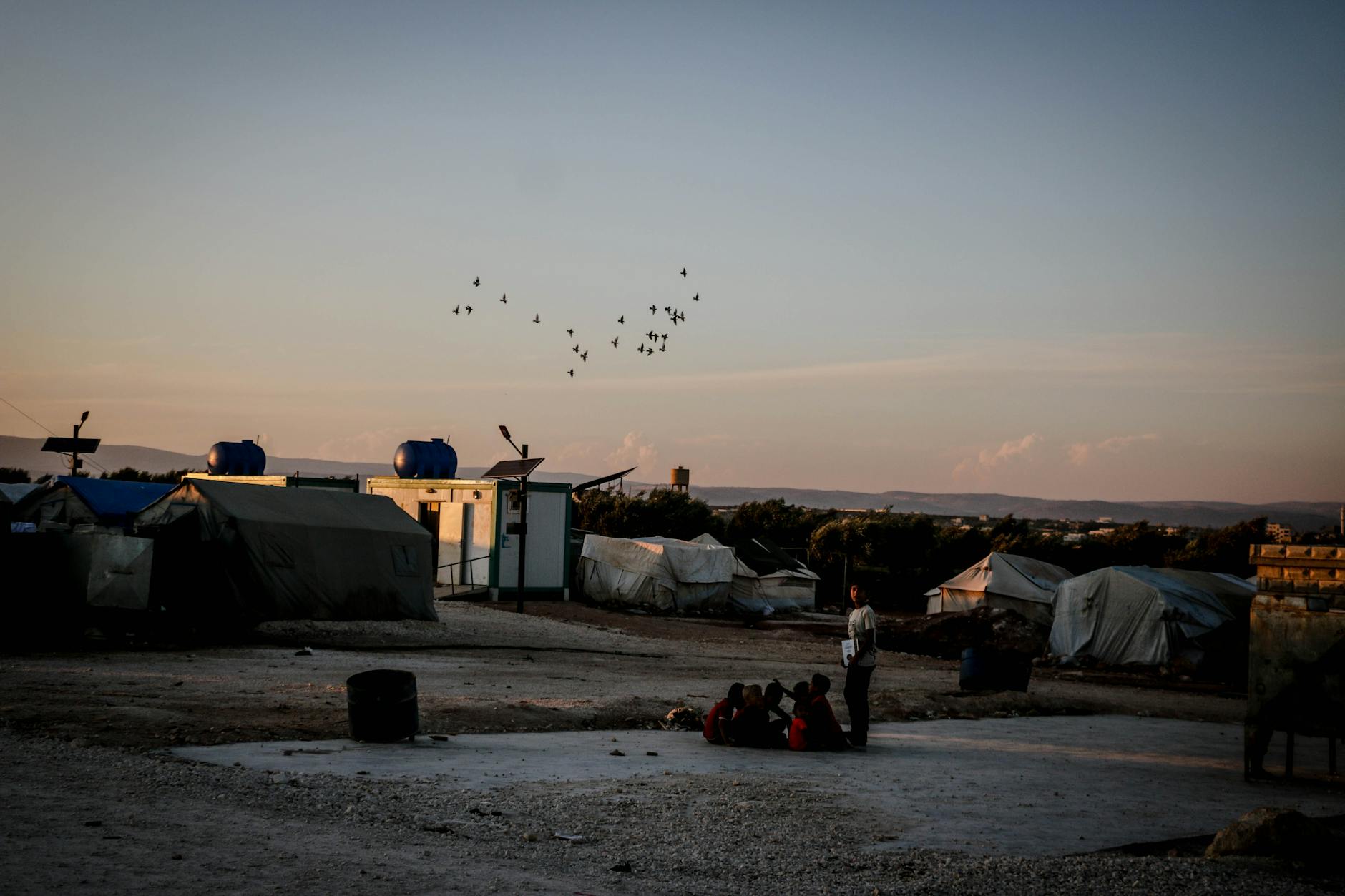
When UNHCR activates an emergency response plan, it triggers a cascade of operational preparations that most people never see. Pre-positioned supply stockpiles — tents, thermal blankets, hygiene kits, water purification tablets — get moved closer to likely border crossing points. Staff are redeployed or surge teams placed on standby. Critically, the agency begins intensive coordination with host governments on issues like border management protocols, temporary settlement locations, and registration systems for new arrivals. In past regional emergencies, such as the 2021 Taliban takeover in Afghanistan, these preparations proved essential for avoiding complete chaos at border crossings, though they were far from sufficient to prevent widespread suffering. The operational footprint spans multiple countries simultaneously. For Iran specifically, UNHCR contingency planning has historically focused on four primary corridors: westward into Turkey and Iraq, eastward into Afghanistan and Pakistan, and to a lesser extent northward into the Caucasus region.
Each corridor presents different challenges. The Turkey-Iran border is mountainous and heavily monitored, meaning displaced populations often rely on smuggling networks. The Afghanistan-Iran border sees constant movement in both directions, with Afghan refugees sometimes pushed back into a country they originally fled. Iraq’s Kurdistan region has historically been more receptive but faces its own internal displacement crises. These are not theoretical scenarios — they are patterns that repeat with each escalation cycle. However, activation does not mean deployment. There is an important distinction between having plans ready and actually executing them, and UNHCR has faced criticism for sometimes activating emergency protocols that function more as diplomatic signaling than operational preparation. The agency’s own internal reviews have acknowledged gaps between contingency planning documents and actual readiness on the ground, particularly when it comes to staffing levels and funding shortfalls that leave warehouses stocked but response teams understaffed.
How Are Iran’s Neighbors Preparing for Potential Refugee Flows?
The countries surrounding Iran have adopted vastly different postures toward potential displacement from or through Iranian territory, and none of them are enthusiastic about absorbing additional refugee populations. Turkey, which already hosts roughly 3.5 to 4 million refugees as of recent reports — the largest refugee population of any country in the world — has been tightening border controls and constructing physical barriers along its eastern frontier for years. Ankara’s political calculus is straightforward: domestic anti-refugee sentiment has become a potent political force, and any perception of open borders would be electorally toxic. Pakistan presents a different but equally complicated picture. The country has been actively pushing for the return of Afghan refugees, including those who transited through Iran, with periodic deportation campaigns that human rights organizations have condemned as coercive.
Any new emergency displacement from Iran would collide directly with Pakistan’s stated policy of reducing its refugee population, creating a tension between humanitarian obligations under international law and domestic political imperatives. Iraq’s Kurdistan Region, which has historically been the most welcoming of Iran’s neighbors toward displaced populations, faces its own fiscal crisis and strained relations with Baghdad that limit its capacity to absorb new arrivals. The critical limitation here is that international emergency response plans mean very little if host governments refuse to keep borders open. UNHCR can pre-position supplies and train staff, but it cannot compel sovereign nations to admit refugees. During past crises, including the Syrian refugee emergency, border closures by neighboring states turned what should have been managed displacement into deadly bottlenecks where people died waiting for entry. If a large-scale displacement event were to occur involving Iran, the political willingness of neighboring governments to cooperate with UNHCR — rather than the agency’s logistical readiness — would likely be the decisive factor in whether the response succeeds or fails.
What Role Does U.S. Foreign Policy Play in Iran-Related Displacement Risks?
The connection between Washington’s Iran policy and regional displacement pressures is direct, though rarely discussed in those terms. The Trump administration’s approach to Iran — characterized by maximum pressure sanctions, withdrawal from the JCPOA nuclear agreement during the first term, and continued escalatory rhetoric — has had measurable economic consequences inside Iran. The Iranian rial has experienced dramatic devaluation during periods of intensified sanctions, and ordinary iranians have seen purchasing power for basic goods erode significantly. Economic distress of this magnitude does not stay contained within borders; it pushes people to move. Beyond the direct sanctions effect, U.S. policy choices in the broader region create secondary displacement dynamics. Military operations, support for various armed factions, and diplomatic decisions about which governments to support or pressure all influence migration patterns.
Afghan refugees in Iran, for example, have found their situation increasingly precarious as Iran’s economy contracts under sanctions pressure, with some reports indicating that Iranian authorities have used Afghan laborers as leverage in negotiations with Western powers — threatening mass expulsions that would create a humanitarian crisis. This is not speculation; Iranian officials have explicitly made these threats in diplomatic settings. For American taxpayers and voters, the accountability question is significant. The United States is historically the largest single donor to UNHCR, and emergency activations like this one will eventually generate funding appeals that land on Congress’s desk. There is a direct fiscal loop: U.S. foreign policy decisions contribute to displacement pressures, which trigger humanitarian emergencies, which require U.S.-funded international responses. Whether one supports or opposes the administration’s Iran posture, understanding this feedback mechanism is essential for honest policy evaluation.

How Is UNHCR’s Emergency Response Actually Funded — and Where Does the Money Go?
Humanitarian emergency responses operate on a funding model that is chronically inadequate and worth understanding in concrete terms. UNHCR’s total budget has historically run in the range of $10 to $12 billion annually, but the agency typically receives only 50 to 60 percent of what it requests. Emergency activations for Iran’s neighbors would draw from both existing country-level budgets and supplementary appeals, meaning that resources directed toward this crisis may be redirected from other operations — a zero-sum dynamic that the humanitarian sector prefers not to advertise. The tradeoff is stark. Money spent on emergency preparedness for a potential Iran displacement scenario is money not spent on ongoing operations in places like South Sudan, the Democratic Republic of Congo, or Myanmar — all of which have active, large-scale displacement crises. UNHCR officials have to make triage decisions about which emergencies get attention, and geopolitical prominence plays a role in those decisions that pure humanitarian need does not.
Iran-related displacement gets disproportionate policy attention because it intersects with great power competition, nuclear proliferation concerns, and energy market stability. A displacement crisis of equal or greater human scale in sub-Saharan Africa would be unlikely to trigger the same level of institutional mobilization. For those watching where their tax dollars go, it is worth noting that U.S. contributions to UNHCR have fluctuated significantly based on administration priorities. The Trump administration’s first term saw proposed cuts to international humanitarian funding that, while partially restored by Congress, signaled a willingness to reduce the American financial commitment to refugee response. If emergency operations for Iran’s neighbors scale up, the question of whether Washington will fund the consequences of its own regional policies becomes unavoidable.
What Happens to the Millions of Afghan Refugees Already in Iran?
Any discussion of UNHCR emergency planning for Iran’s neighbors must reckon with the roughly two to three million Afghan refugees and migrants already living inside Iran — a population that is both vulnerable to displacement and largely invisible in Western media coverage. These individuals, many of whom have lived in Iran for decades, occupy a precarious legal status. Some hold UNHCR-issued refugee cards, others have temporary Iranian residency permits called Amayesh cards, and a significant number are undocumented. In a crisis scenario, their fate becomes enormously complicated. The warning that humanitarian planners rarely state publicly is this: a mass displacement event involving Iran would not primarily consist of Iranian nationals fleeing the country. It would more likely involve the secondary displacement of Afghans who have already been displaced once.
These individuals would be fleeing into Afghanistan — a country under Taliban governance with its own humanitarian catastrophe — or attempting to cross into Pakistan or Turkey, where they would face hostile reception. UNHCR’s emergency plans must account for this population, but the agency’s leverage to protect them is limited. Iran is not a signatory to the 1951 Refugee Convention’s protocol, and its cooperation with UNHCR on Afghan refugee issues has been inconsistent. The limitation that advocates should understand is that emergency response plans for this population are inherently reactive. There is no preemptive mechanism to prevent Iran from conducting mass deportations of Afghans if a crisis deteriorates the country’s willingness or capacity to host them. UNHCR can prepare to receive people at borders, but it cannot prevent the displacement itself. This is not a failure of planning — it is a structural constraint of the international refugee system that no amount of preparedness can overcome without political will from the states involved.
📨 Get Free Accountability Coverage Alerts
Free · No spam · Unsubscribe anytime
How Do Regional Displacement Crises Affect Ordinary People Outside the Region?
The downstream effects of a large-scale displacement event in Iran’s neighborhood would extend well beyond the immediate region. European migration dynamics would shift, as Turkey serves as the primary transit corridor for irregular migration into the European Union. Any increase in displacement pressure on Turkey’s eastern border historically translates, with a time lag, into increased movement toward Turkey’s western border with Greece and Bulgaria. The 2016 EU-Turkey deal, which has been the primary mechanism for managing this dynamic, would come under renewed strain — and its continued viability is already uncertain given political tensions between Brussels and Ankara.
For Americans, the connection is less direct but still real. Resettlement referrals from UNHCR to the United States would increase, though the actual number of refugees admitted depends entirely on the presidential determination for refugee admissions, which the Trump administration has historically set at record lows. Energy markets, insurance costs for businesses operating in the region, and the broader economic stability of key U.S. trading partners in Europe and the Gulf would all feel the effects of a major regional displacement crisis.
What Comes Next for UNHCR’s Emergency Preparedness in the Region?
Looking ahead, the trajectory of UNHCR’s emergency planning for Iran’s neighbors will be determined less by the agency’s own preparations than by the intersection of U.S.-Iran tensions, Afghan refugee dynamics, and the political calculations of host governments. The humanitarian sector is bracing for the possibility that multiple triggers — a military confrontation, a sanctions-induced economic collapse, a major earthquake along Iran’s active fault lines, or a combination of these — could produce displacement at a scale that overwhelms existing plans regardless of how thorough they are. The honest assessment, which UNHCR officials will offer in private if not in public statements, is that no emergency response plan can adequately prepare for a worst-case scenario in this region.
The populations at risk are too large, the political obstacles to cross-border protection too significant, and the funding gaps too wide. What emergency activation does accomplish is ensuring that the international community cannot claim it was caught off guard. Whether that preparation translates into effective protection for displaced people will depend on decisions made in Washington, Tehran, Ankara, Islamabad, and Kabul — not in Geneva.
Conclusion
UNHCR’s activation of emergency response plans for Iran’s neighboring countries reflects a sober institutional assessment that the region’s displacement risks are elevated and potentially escalating. The preparations span logistics, staffing, coordination with host governments, and funding appeals, but their effectiveness is constrained by the political willingness of sovereign states to cooperate and the chronic underfunding of the international humanitarian system. For anyone following U.S.
foreign policy, the connection between sanctions pressure on Iran and regional displacement dynamics deserves more honest public discussion than it typically receives. The practical takeaway for engaged citizens, whether concerned about government accountability, refugee rights, or how tax dollars are spent, is that emergency humanitarian planning does not exist in a vacuum separate from foreign policy choices. Every escalation in U.S.-Iran tensions carries a humanitarian price tag that eventually comes due, and understanding who pays that price — displaced families, overburdened host communities, and ultimately international donors including American taxpayers — is essential for holding policymakers accountable for the full consequences of their decisions.
Frequently Asked Questions
What countries border Iran and would be affected by a UNHCR emergency activation?
Iran shares borders with seven countries: Turkey, Iraq, Afghanistan, Pakistan, Turkmenistan, Azerbaijan, and Armenia. The primary countries of concern for refugee displacement planning are Turkey, Iraq, Afghanistan, and Pakistan, as these have the most significant existing refugee populations and the most likely displacement corridors based on historical patterns.
How many refugees does Iran currently host?
As of recent UNHCR reporting, Iran hosts an estimated two to three million Afghan refugees and migrants, making it one of the largest refugee-hosting countries in the world. The exact number is difficult to determine because a significant portion of this population is undocumented and not captured in official registration systems.
Does the United States fund UNHCR emergency operations?
Yes, the United States has historically been UNHCR’s largest single donor, though contribution levels vary by administration and fiscal year. U.S. funding for UNHCR comes primarily through the State Department’s Bureau of Population, Refugees, and Migration. However, proposed and enacted cuts during certain administrations have created uncertainty about the reliability of American financial support for refugee operations.
What is the difference between UNHCR emergency activation and actual deployment?
Emergency activation means contingency plans are reviewed, supply stocks are checked and repositioned, staff are placed on standby, and coordination with host governments intensifies. Actual deployment — meaning full-scale field operations with camps, registration centers, and distribution points — only occurs when displacement actually happens. Activation is a preparedness measure, not an operational response, and there can be a significant gap between the two.
How would a displacement crisis in Iran affect U.S. refugee admissions?
Any increase in displacement from or through Iran would generate additional UNHCR referrals for third-country resettlement, including to the United States. However, actual admissions depend on the annual presidential determination for refugee numbers, which the Trump administration has historically set at significantly reduced levels compared to prior administrations. Processing times, security vetting requirements, and regional allocation decisions also affect how many refugees from this crisis would ultimately reach the United States.
You Might Also Like
- Doctors Without Borders Deploys Emergency Medical Teams to Iran’s Borders
- Democrats Struggle to Present a Unified Response to Trump’s Iran Strikes
- War Crimes Allegations Are Already Emerging From the Iran Bombing Campaign