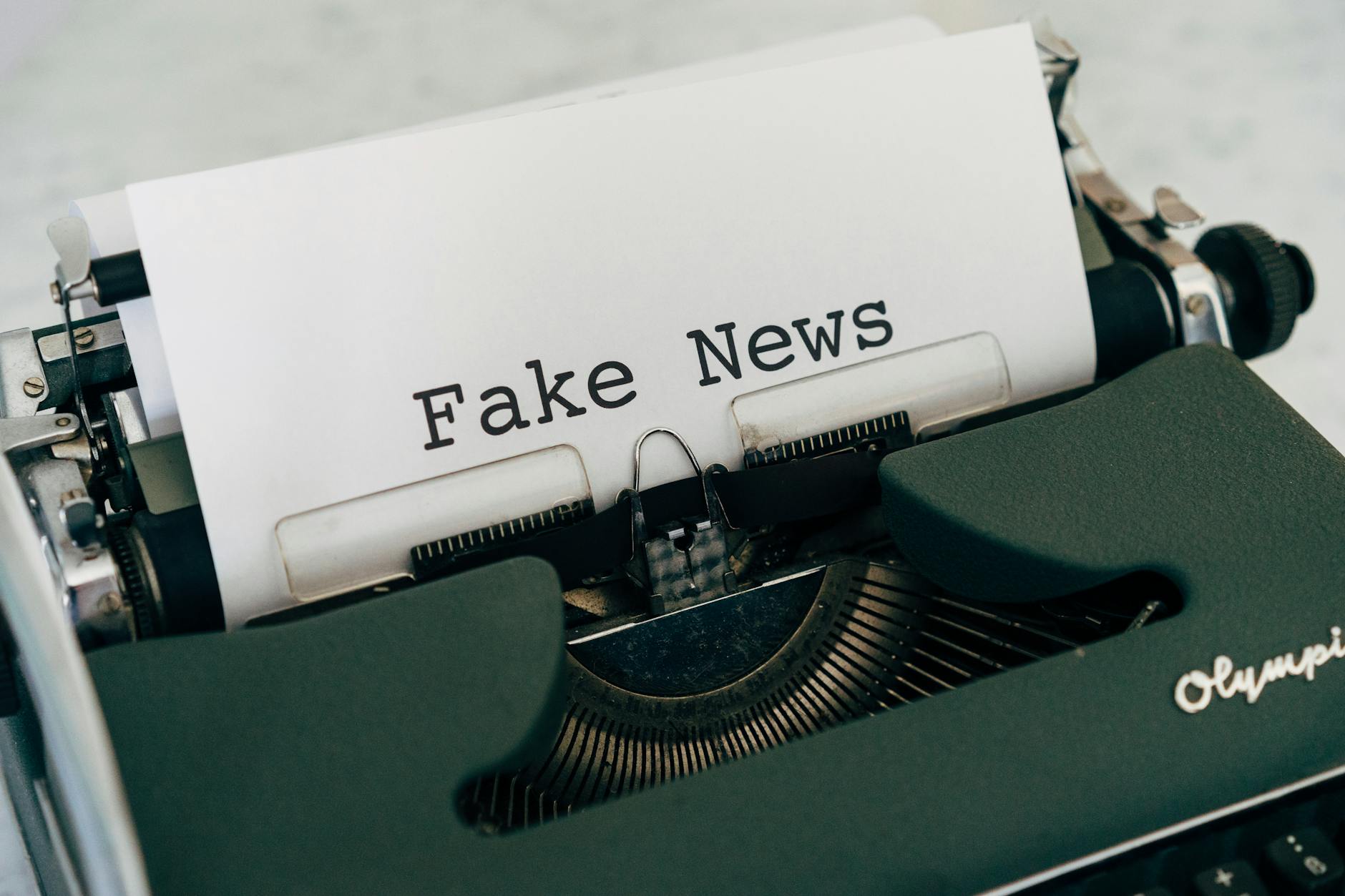
Within minutes of President Trump’s announcement of a “major combat operation” against Iran on March 1, 2026, a torrent of disinformation flooded every major social media platform, making it nearly impossible for ordinary people to distinguish real events from fabricated ones. Hundreds of posts on X alone racked up millions of views pushing misleading claims about the locations and scale of the strikes, while Facebook, Instagram, TikTok, and YouTube were simultaneously inundated with fake footage and AI-generated imagery. The speed and volume of false content overwhelmed both platform moderation systems and the public’s ability to process what was actually happening in real time.
This is not a new problem, but it is getting measurably worse. The June 2025 Iran-Israel conflict was dubbed “the first AI war” by researchers who documented 592 fact-checks across 23 countries, finding that roughly 20 percent of false content was AI-generated. Now, barely nine months later, the same playbook is running again with even fewer guardrails in place. This article examines the specific types of disinformation identified in the March 2026 strikes, the historical pattern established during the 2025 conflict, how different platforms are failing to contain the spread, Iran’s broader information warfare strategy, and what individuals can realistically do to avoid being manipulated.
Table of Contents
- What Kinds of Disinformation Are Spreading About the Iran Strikes?
- Why Platform Moderation Cannot Keep Up with AI-Generated Disinformation
- The “Liar’s Dividend” and How Disinformation Erodes Trust in Real Reporting
- How to Verify What You See During a Military Conflict
- Iran’s Coordinated Information Warfare Strategy Beyond the Battlefield
- X Has Become the Epicenter of Conflict Disinformation
- What the Pattern of Escalating Disinformation Means Going Forward
- Conclusion
- Frequently Asked Questions
What Kinds of Disinformation Are Spreading About the Iran Strikes?
Researchers and journalists monitoring the March 2026 strikes have identified three primary categories of fake content circulating at scale. The first is old video footage from months or years ago being misattributed to the current strikes — clips from the June 2025 conflict, from Syria, or from other military operations entirely, repackaged with new captions claiming to show the latest bombing runs over Tehran. The second category is AI-generated images and scenes, including fake satellite imagery that began appearing almost immediately after the strikes were announced. The third, and perhaps most brazen, is video game footage passed off as real combat footage — a tactic that has recurred in every major military conflict since the early days of the Syrian civil war. What makes this round particularly dangerous is the sophistication of the AI-generated material. NPR’s Geoff Brumfiel flagged the emergence of AI-generated fake satellite images, a category that barely existed during previous conflicts.
These images are convincing enough to fool casual viewers and even some journalists working under deadline pressure. The fake satellite imagery is especially insidious because satellite photos have traditionally been considered among the most reliable forms of visual evidence in conflict reporting. The sheer volume also matters. During the June 2025 conflict, false material generated over 100 million views across platforms, according to the Carnegie Endowment for International Peace. Early indicators suggest the March 2026 round is on pace to surpass that figure, given the larger scale of U.S. involvement and the intense domestic political interest in the operation.
Why Platform Moderation Cannot Keep Up with AI-Generated Disinformation
The fundamental problem is one of speed versus capacity. Generative misinformation now moves faster than platform moderation, according to the European Digital Media Observatory. This gap has widened as major social media companies have scaled back their human content review teams over the past two years. X, in particular, has dramatically reduced its trust and safety staff since Elon Musk’s acquisition, and the consequences are visible in real time during breaking military events. However, even platforms that have maintained larger moderation teams face structural limitations. The volume of posts generated during a major military operation can spike by orders of magnitude within minutes.
Automated detection systems are improving, but they lag behind the latest generation of AI image and video tools. One illustrative case from the June 2025 conflict: an image of an alleged downed F-35 was estimated with 98 percent certainty to be AI-generated using detection tools, but only after it had already been shared widely. Detection after the fact does little to prevent the initial damage of millions of people seeing and believing the fabricated image. There is also a structural incentive problem. Emotionally charged content — especially dramatic war footage, whether real or fake — drives engagement. Platform algorithms are designed to surface content that generates reactions, and nothing generates reactions quite like footage of explosions, destruction, and military operations. Until that algorithmic incentive is addressed, moderation will remain a game of whack-a-mole played with an increasingly inadequate mallet.
The “Liar’s Dividend” and How Disinformation Erodes Trust in Real Reporting
NPR’s Geoff Brumfiel raised a concept that deserves particular attention: the “liar’s dividend.” This is the phenomenon where the sheer prevalence of fake content gives bad actors a built-in defense mechanism. When people assume everything might be fake, those seeking to manipulate the narrative gain an advantage because legitimate evidence of real events can be dismissed as just another fabrication. It is a poisoning of the information well that benefits anyone who would prefer the truth stay hidden. This played out concretely during the June 2025 Iran-Israel conflict. EDMO’s analysis found that over 70 percent of false content was not AI-generated at all — it was real footage taken out of context.
A real video of a building collapse in one country gets captioned as showing destruction in another. A genuine clip from a training exercise gets labeled as live combat. The liar’s dividend works in both directions: real footage gets dismissed as fake, and fake footage gets accepted as real, because the audience has lost the ability to reliably tell the difference. For a government accountability perspective, this dynamic is corrosive. When the public cannot trust what it sees during a military operation authorized by its own government, democratic oversight becomes nearly impossible. Citizens cannot evaluate whether their leaders’ claims about the operation match reality if the visual record is hopelessly contaminated.

How to Verify What You See During a Military Conflict
The first and most important step is to slow down. The urge to share dramatic footage immediately is precisely what disinformation actors count on. Before sharing any clip or image related to the Iran strikes, check whether the content appears on established news outlets — Reuters, the Associated Press, NPR, BBC — which have verification processes in place. If a dramatic piece of footage is only circulating on social media and has not been picked up by any major wire service, treat it with extreme skepticism. Reverse image search remains one of the most accessible tools for ordinary users. Google Images, TinEye, and similar services can reveal whether a photo or video frame has appeared online before in a different context.
This is particularly effective against the most common category of disinformation — old footage repackaged with new captions. It is less effective against AI-generated content, which by definition will not have prior appearances online. For AI-generated images, look for telltale signs like inconsistent lighting, warped text, unusual patterns in hair or fabric, and backgrounds that do not quite resolve into coherent structures. The tradeoff here is real: thoroughness takes time, and during a fast-moving military conflict, people understandably want information quickly. But sharing unverified content does not make anyone better informed — it makes the information environment worse for everyone. A five-minute delay to check a source is a small price for not becoming an unwitting amplifier of propaganda.
Iran’s Coordinated Information Warfare Strategy Beyond the Battlefield
The disinformation surrounding the Iran strikes does not emerge from a vacuum. Iran has developed a sophisticated and coordinated information warfare apparatus that extends well beyond any single military event. According to the International Institute for Counter-Terrorism, TikTok has emerged as a central platform in Iran’s disinformation campaigns due to its global reach, popularity among younger audiences, and algorithmic preference for emotionally engaging visual content. The short-form video format is particularly effective for spreading decontextualized clips that carry emotional impact without providing factual context. This strategy was visible during the December 2025 to January 2026 protests inside Iran, where the regime used coordinated narrative campaigns labeling demonstrators as agents of the United States and Israel.
The approach combines physical repression of dissent with online influence operations designed to shape international perception. The same infrastructure and playbook are now being deployed in the context of the March 2026 strikes, but with the added advantage of a chaotic information environment where even well-intentioned observers struggle to sort fact from fiction. A critical warning for readers: the EDMO analysis of the June 2025 conflict found that 72 percent of false content served the Iranian side, while only 24 percent could have served Israel. For AI-generated content specifically, the imbalance was even starker — 90 percent served Iran. This does not mean all pro-Iranian content is false or that all pro-Israeli content is true, but it does indicate a significant asymmetry in which side is investing more heavily in fabricated material. Consumers of information should factor this pattern into their evaluation of dramatic claims and imagery.
📨 Get Free Accountability Coverage Alerts
Free · No spam · Unsubscribe anytime
X Has Become the Epicenter of Conflict Disinformation
While disinformation spreads across every major platform, X stands out as the worst offender in the current environment. Wired reported that X is “drowning in disinformation” following the U.S. and Israeli attack on Iran, with clips on the platform gaining the most views among identified false content. The platform’s verification system, which now primarily reflects paid subscription status rather than identity verification, has made it easier for disinformation accounts to gain perceived credibility.
The contrast with X’s earlier iterations is instructive. During previous military conflicts, Twitter’s trust and safety team would implement specific protocols to surface authoritative sources and limit the spread of unverified claims. Those mechanisms have been largely dismantled. The result is a platform where a video game clip labeled as live combat footage can accumulate millions of views before anyone with the ability to add context even sees it.
What the Pattern of Escalating Disinformation Means Going Forward
The trajectory from the June 2025 conflict to the March 2026 strikes suggests that each successive military event will feature more sophisticated, more voluminous, and harder-to-detect disinformation. The 592 fact-checks documented by 50 organizations across 23 countries during just 12 days of fighting in June 2025 represent an enormous expenditure of journalistic resources — and they still could not keep pace with the flood. With AI-generated content improving rapidly and platform moderation declining, the gap between disinformation production and verification capacity will continue to widen.
For readers concerned about government accountability and informed public discourse, this trend demands attention beyond any single conflict. The infrastructure of shared reality — the ability of citizens to agree on basic facts about what their government is doing — is under sustained assault from multiple directions simultaneously. Supporting independent journalism, demanding platform accountability, and developing personal media literacy habits are not optional extras. They are becoming prerequisites for functioning democratic oversight of military action.
Conclusion
The disinformation surrounding the March 2026 Iran strikes follows a well-documented pattern that has only intensified since the June 2025 conflict. Fake content falls into predictable categories — old footage repurposed with false captions, AI-generated images and satellite photos, and video game footage presented as real — but the scale and speed of its spread continue to outpace every mechanism designed to contain it. X remains the platform most saturated with false content, though no major social media service has proven capable of effectively moderating the flood during a breaking military event.
The practical reality for anyone trying to stay informed is uncomfortable but straightforward: assume that dramatic, unverified footage circulating on social media during a military operation is unreliable until confirmed by established news organizations with verification processes. The liar’s dividend means that both believing everything and believing nothing serve the interests of those who want to manipulate public perception. The narrow path between those extremes — careful, patient evaluation of sources — is the only reliable defense available to individual citizens trying to understand what their government is doing in their name.
Frequently Asked Questions
How can I tell if an image of the Iran strikes is AI-generated?
Look for inconsistencies in lighting, warped or nonsensical text, unusual patterns in fine details like hair or fabric, and backgrounds that do not resolve into coherent structures. AI-generated satellite images may show repeating patterns or impossibly uniform damage. However, detection is becoming harder as AI tools improve — during the June 2025 conflict, one fake image of a downed F-35 required specialized detection tools to identify with 98 percent certainty.
Which platform has the most disinformation about the Iran strikes?
X (formerly Twitter) has been identified as the platform most saturated with disinformation during the March 2026 strikes, with false content clips gaining the most views. However, disinformation is spreading across every major platform including Facebook, Instagram, TikTok, and YouTube.
What percentage of disinformation about Iran conflicts is AI-generated?
During the June 2025 Iran-Israel conflict, EDMO’s analysis of 592 fact-checks found that approximately 20 percent of false content was AI-generated, while over 70 percent was real footage taken out of context. The proportion of AI-generated content in the March 2026 strikes has not yet been fully quantified but early indicators suggest AI-generated satellite imagery is appearing faster than in previous conflicts.
Is the disinformation coming from one side of the conflict?
EDMO’s analysis of the June 2025 conflict found a significant asymmetry: 72 percent of false content served the Iranian side, and only 24 percent could have served Israel. For AI-generated content specifically, 90 percent served Iran. This does not mean all content favoring one side is false, but it indicates where fabrication efforts are concentrated.
Why can’t social media platforms stop the spread of fake content during military events?
Generative misinformation now moves faster than platform moderation capabilities. Major companies have scaled back human content review teams, and automated detection systems lag behind the latest AI generation tools. Additionally, platform algorithms are designed to surface emotionally engaging content, which inherently favors dramatic — and often false — war footage over measured, verified reporting.
You Might Also Like
- UN Security Council Emergency Meeting Called After Iran Strikes Begin
- TikTok Videos About the Iran War Get Millions of Views Overnight
- South Korea Activates Emergency Energy Reserves After Iran Strikes