
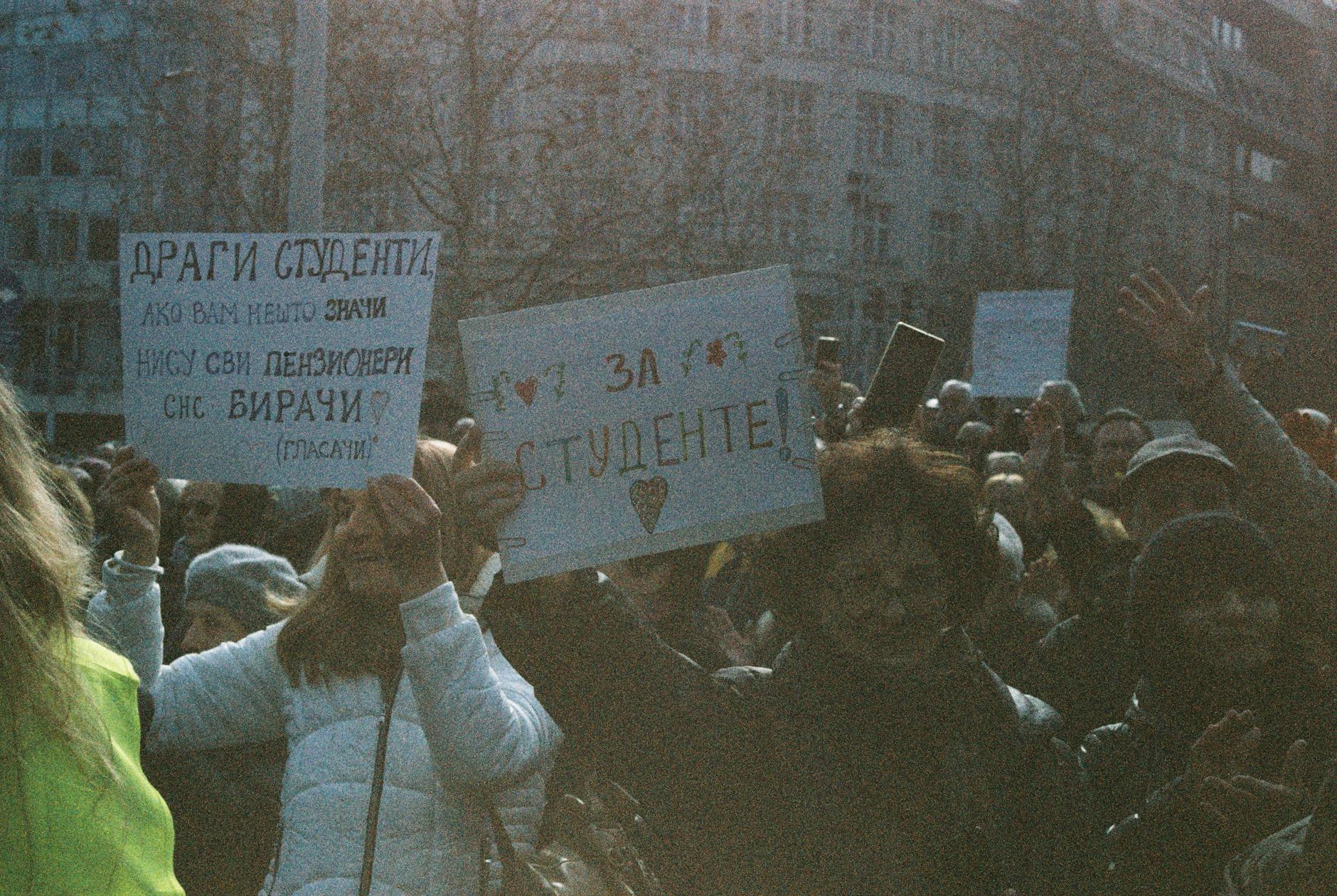
Dozens of universities across the United States have canceled classes or shifted to remote instruction as student-led protests against a potential military conflict with Iran have swept college campuses from coast to coast. As of early 2026, at least 40 major universities have experienced significant protest activity, with institutions like Columbia University, the University of Michigan, and UCLA seeing encampments, building occupations, and walkouts that have disrupted normal academic operations. The movement, which draws direct parallels to the Vietnam-era antiwar protests and the more recent Gaza solidarity encampments of 2024, has forced university administrators into difficult decisions about balancing free expression with campus safety and academic continuity.
The protests have intensified amid rising tensions between the United States and Iran, fueled by the Trump administration’s increasingly hawkish rhetoric and military posturing in the Persian Gulf region. Students are demanding that their universities divest from defense contractors, refuse to cooperate with military recruitment on campus, and publicly oppose any military action that lacks explicit congressional authorization. This article examines which universities have been most affected, the legal rights of student protesters, how administrations are responding, the political dynamics driving the movement, and what history tells us about the effectiveness of campus antiwar organizing.
Table of Contents
- Why Are Students Organizing Iran War Protests at Universities Nationwide?
- Which Universities Have Canceled Classes Due to Antiwar Protests?
- Legal Rights of Student Protesters on College Campuses
- How University Administrators Are Balancing Safety and Free Speech
- Congressional and Federal Government Response to Campus Protests
- Faculty Support and the Role of Academic Freedom
- Historical Context and What Comes Next
- Conclusion
- Frequently Asked Questions
Why Are Students Organizing Iran War Protests at Universities Nationwide?
The catalyst for the current wave of campus protests is not a single event but an accumulation of policy signals from the Trump administration that students and foreign policy analysts interpret as a march toward military confrontation with iran. The reimposition of maximum pressure sanctions, the deployment of additional carrier strike groups to the Strait of Hormuz, and reported cyber operations against iranian infrastructure have created a climate that many students compare to the lead-up to the 2003 Iraq invasion. Student organizers at the University of Wisconsin-Madison have explicitly cited the administration’s refusal to seek an Authorization for Use of Military Force from Congress as a constitutional red line that motivated their first walkout in February 2026. What distinguishes this movement from general antiwar sentiment is its institutional focus. Rather than simply marching against war in the abstract, student coalitions are targeting the specific financial and logistical ties between their universities and the defense industry. At MIT, protesters have demanded the university sever its $900 million in annual Department of Defense research contracts.
At the University of Texas at Austin, students have called for transparency around investments in Raytheon, Lockheed Martin, and Northrop Grumman held within the university’s $43 billion endowment. These demands give the protests concrete, measurable objectives that administrators cannot easily dismiss with vague statements of concern. The organizational infrastructure also reflects lessons learned from the 2024 Gaza encampment movement. Student groups have established legal support networks before actions begin, designated media liaisons to control messaging, and coordinated across campuses using encrypted communication channels. The national coalition Students Against the Iran War, which claims chapters at over 120 universities, has published detailed guides on protesters’ legal rights, de-escalation techniques, and strategies for engaging faculty allies. This level of preparation has made the movement more resilient to the administrative crackdowns that dismantled many of the 2024 encampments within days.

Which Universities Have Canceled Classes Due to Antiwar Protests?
The list of universities that have fully or partially canceled in-person instruction continues to grow, though the circumstances vary significantly from campus to campus. Columbia University was among the first to shift to remote learning after protesters occupied Hamilton Hall for the second time in two years, a building with deep symbolic significance dating back to the 1968 antiwar and civil rights occupations. The University of Michigan canceled classes for three days after an estimated 8,000 students blocked entrances to the central campus, while Portland State University moved to remote instruction for a full week following a standoff between protesters and campus police at the library. However, it is important to distinguish between universities that canceled classes as a safety precaution and those that did so as a punitive measure or negotiating tactic. At several institutions, including the University of Southern California and George Washington University, administrators suspended in-person classes and simultaneously restricted campus access, effectively using the cancellation to clear protest sites without directly ordering police action.
Students and civil liberties organizations have criticized this approach as a backdoor method of suppressing protest activity. The Foundation for Individual Rights and Expression issued a statement warning that using class cancellations as a pretext for clearing campuses raises serious First Amendment concerns at public universities. Not every campus disruption has led to cancellations. At the University of California, Berkeley, administrators negotiated with protest organizers to establish designated demonstration zones that allowed classes to continue while preserving students’ ability to protest. This approach, while imperfect and criticized by some activists as co-optation, has kept the university largely operational. The contrast between Berkeley’s negotiation-first approach and Columbia’s more confrontational stance illustrates the wide range of administrative responses and their varying consequences for academic life.
Legal Rights of Student Protesters on College Campuses
The legal landscape for student protest activity depends heavily on whether a university is public or private, a distinction that many students and commentators fail to appreciate. At public universities, the First Amendment applies directly, meaning that students have a constitutional right to protest in traditional public forums such as outdoor common areas, sidewalks, and plazas. Administrators can impose reasonable time, place, and manner restrictions, but they cannot prohibit protest activity altogether or target specific viewpoints for suppression. Federal courts have consistently held that public university campuses are limited public forums where expressive activity receives significant protection. Private universities operate under different legal constraints. Institutions like Columbia, NYU, and Stanford are not bound by the First Amendment and can, in theory, restrict protest activity more aggressively.
However, many private universities have voluntarily committed to free expression principles in their own policies, and courts have sometimes enforced these institutional promises under contract law theories. A student expelled from a private university for protest activity that the university’s own handbook protects may have a viable breach-of-contract claim, even without a constitutional argument. The practical difference is that litigation against private universities tends to be slower, more expensive, and less predictable than First Amendment claims against public institutions. Students should also be aware of the limits of legal protection. Occupying buildings, blocking entrances, and disrupting classes generally fall outside the scope of protected speech, even at public universities. Arrests for trespassing or disorderly conduct during building occupations are legally defensible actions by universities and police, regardless of the political content of the protest. The distinction between protected demonstration and unprotected disruption is often a matter of degree, and students who cross that line face real legal consequences including criminal charges, academic suspension, and disciplinary records that can affect graduate school admissions and employment. Legal observers from the National Lawyers Guild have been present at many of the larger protests, but their presence does not insulate participants from arrest.
How University Administrators Are Balancing Safety and Free Speech
University administrators are caught in a genuinely difficult position, facing pressure from students, faculty, donors, politicians, and the federal government simultaneously. The playbook that many institutions followed during the 2024 Gaza protests, calling in police to dismantle encampments, generated enormous backlash and in several cases escalated tensions rather than resolving them. The images of riot police dragging students from Columbia’s campus in 2024 became recruiting tools for the very movements administrators sought to suppress. Several university presidents who authorized aggressive police responses, including those at Columbia and the University of Southern California, ultimately resigned under pressure. The alternative approach, negotiation and accommodation, carries its own risks. When the University of Michigan agreed to hold a public forum on its defense industry investments in exchange for protesters clearing a building occupation, the university was criticized by Republican state legislators who accused administrators of capitulating to mob rule.
Michigan Governor’s office issued a statement calling the protests disruptive and urging universities to maintain order, while several major donors threatened to withhold contributions. Administrators who accommodate protest demands risk political retaliation, including potential cuts to state funding for public universities. The tradeoff is stark. Heavy-handed enforcement generates negative media coverage, alienates faculty, and often energizes the protest movement. Accommodation generates political backlash and may encourage escalation. Some universities have attempted a middle path, meeting with protest leaders privately while maintaining public neutrality, but this approach has satisfied neither side. The fundamental tension is that there is no cost-free option for administrators, and the choice between enforcement and engagement depends on institutional culture, the specific demands being made, and the political environment in each state.
Congressional and Federal Government Response to Campus Protests
The federal government’s response to the campus antiwar movement has introduced additional complications. Several Republican members of Congress have introduced legislation that would strip federal funding from universities that fail to prevent protest-related disruptions, echoing similar proposals made during the 2024 campus protests. The proposed Restoring Campus Order Act would require universities to report protest-related incidents to the Department of Education and would authorize funding cuts for institutions deemed insufficiently responsive. Critics, including the American Association of University Professors, have warned that such legislation would effectively conscript university administrators as enforcement agents for government policy and would have a chilling effect on legitimate academic discourse about foreign policy. The Department of Education under the Trump administration has also signaled increased scrutiny of universities with active protest movements. In a February 2026 letter to university presidents, the Secretary of Education warned that institutions receiving federal funding have an obligation to ensure safe and orderly campus environments and that failure to do so could trigger compliance reviews.
While the letter stopped short of threatening specific funding cuts, it was widely interpreted as an implicit threat. International students participating in protests face particular vulnerability, as their visa status depends on maintaining enrollment at institutions that remain in good standing with federal authorities. The legal viability of these federal threats is questionable. Courts have generally held that the government cannot condition funding on the suppression of constitutionally protected speech, and any attempt to defund universities over protest activity would face immediate legal challenge. However, the threat itself may be sufficient to influence administrative behavior, particularly at institutions that depend heavily on federal research grants and student financial aid. The chilling effect of threatened retaliation, even if the threats are ultimately unenforceable, is a real concern for free expression advocates.
📨 Get Free Accountability Coverage Alerts
Free · No spam · Unsubscribe anytime
Faculty Support and the Role of Academic Freedom
Faculty involvement has been one of the defining features of the current protest wave. At over 30 universities, faculty members have signed open letters supporting students’ right to protest, and at several institutions, professors have canceled their own classes in solidarity or held teach-ins on the legal and ethical dimensions of military action against Iran. At the University of Chicago, 200 faculty members signed a letter invoking the university’s own Kalven Report, which holds that the university should not take institutional positions on political questions, to argue that administrators should neither endorse nor suppress student antiwar activity.
Faculty support provides both practical and symbolic benefits to the protest movement. Professors who cancel classes or move them to protest sites reduce the academic consequences for participating students. Faculty presence at demonstrations also tends to moderate police behavior, as law enforcement agencies are generally more cautious about arresting tenured professors than undergraduate students. At the University of Virginia, a planned police action to clear an encampment was reportedly called off after more than 50 faculty members formed a human chain around the protest site.
Historical Context and What Comes Next
The current campus antiwar movement exists within a long American tradition of student opposition to military conflicts, from the Vietnam War mobilizations that reshaped national politics to the smaller but significant Iraq War protests of 2003. Historical analysis suggests that campus protests are most effective when they build sustained coalitions rather than relying on dramatic confrontations, and when their demands are specific enough to be actionable. The Vietnam-era divestment campaigns took years to achieve their goals, but they ultimately succeeded in changing institutional behavior at many universities. Whether the current movement has similar staying power depends largely on whether U.S.-Iran tensions continue to escalate and whether students maintain organizational discipline through the academic calendar.
Looking forward, the trajectory of these protests will likely be determined by events outside the students’ control, particularly whether the Trump administration takes concrete military action against Iran. A strike on Iranian nuclear facilities or a naval confrontation in the Strait of Hormuz would almost certainly intensify campus activism dramatically, potentially drawing in students who are currently sympathetic but not yet active. Conversely, a diplomatic de-escalation would likely sap the movement’s energy. University administrators would be wise to prepare for both scenarios rather than assuming the current disruptions will fade on their own, because the organizational infrastructure students have built is durable and can be reactivated quickly if circumstances change.
Conclusion
The nationwide wave of student antiwar protests has forced universities into an uncomfortable reckoning with their dual roles as institutions of learning and as major participants in the defense economy. The cancellation of classes at dozens of campuses reflects not just the scale of student activism but also the failure of many university administrations to develop proactive strategies for managing dissent. Students have legitimate constitutional rights to protest, particularly at public institutions, but those rights do not extend to building occupations, class disruptions, or activities that genuinely threaten campus safety.
The line between protected expression and actionable disruption is often blurry, and both administrators and protesters would benefit from clearer guidelines established before conflicts arise. For students considering participation in antiwar protests, the most important practical steps are understanding their legal rights, documenting any interactions with campus or municipal police, and connecting with legal support networks before attending actions where arrests are possible. For university administrators, the lesson of both the 2024 and 2026 protest cycles is that heavy-handed enforcement tends to backfire, while genuine engagement with student concerns, even when those concerns are politically inconvenient, produces better outcomes for everyone. The question of whether the United States should go to war with Iran is ultimately a political question that will be decided in Washington, but the debate playing out on college campuses is a vital part of the democratic process that universities are supposed to foster.
Frequently Asked Questions
Can a university expel a student for participating in a protest?
Public universities cannot expel students solely for participating in lawful, peaceful protest activity protected by the First Amendment. However, students who violate university conduct codes by occupying buildings, blocking access to facilities, or engaging in destructive behavior can face disciplinary action up to and including expulsion. Private universities have more latitude but are often bound by their own stated policies on free expression.
Are international students at greater risk for participating in campus protests?
Yes. International students on F-1 or J-1 visas must maintain their enrollment status and comply with the terms of their visa. If protest-related disciplinary action results in suspension or expulsion, it could jeopardize their immigration status. Additionally, some countries monitor their citizens’ political activities abroad. International students should consult both an immigration attorney and their university’s international student office before participating in protest activities.
Can the federal government cut funding to universities over student protests?
Proposed legislation would authorize funding cuts, but such measures face significant constitutional obstacles. The government generally cannot condition federal funding on the suppression of protected speech. However, the threat of funding cuts can influence university behavior even if the threats are not legally enforceable. No university has actually lost federal funding solely due to protest activity as of early 2026.
Do students have the right to set up encampments on campus?
The right to protest does not automatically include the right to establish permanent or semi-permanent encampments on university property. Courts have generally upheld universities’ authority to enforce reasonable time, place, and manner restrictions, including rules against overnight camping on campus grounds. However, the enforcement of such rules must be viewpoint-neutral and cannot selectively target antiwar encampments while permitting other overnight activities.
What should students do if they are arrested during a protest?
Students should remain calm, clearly state that they wish to exercise their right to remain silent, and ask for an attorney. They should not resist arrest physically. If possible, they should have the phone number of a legal support hotline written on their arm in permanent marker before attending any action where arrests are anticipated. Organizations like the National Lawyers Guild often provide legal observers and post-arrest support at large demonstrations.
You Might Also Like
- Stock Market Braces for Volatility as Iran War Escalates
- Japan Fears Oil Supply Disruption From Iran War Could Hit Its Economy
- Azerbaijan Monitors Its Border With Iran as War Escalates