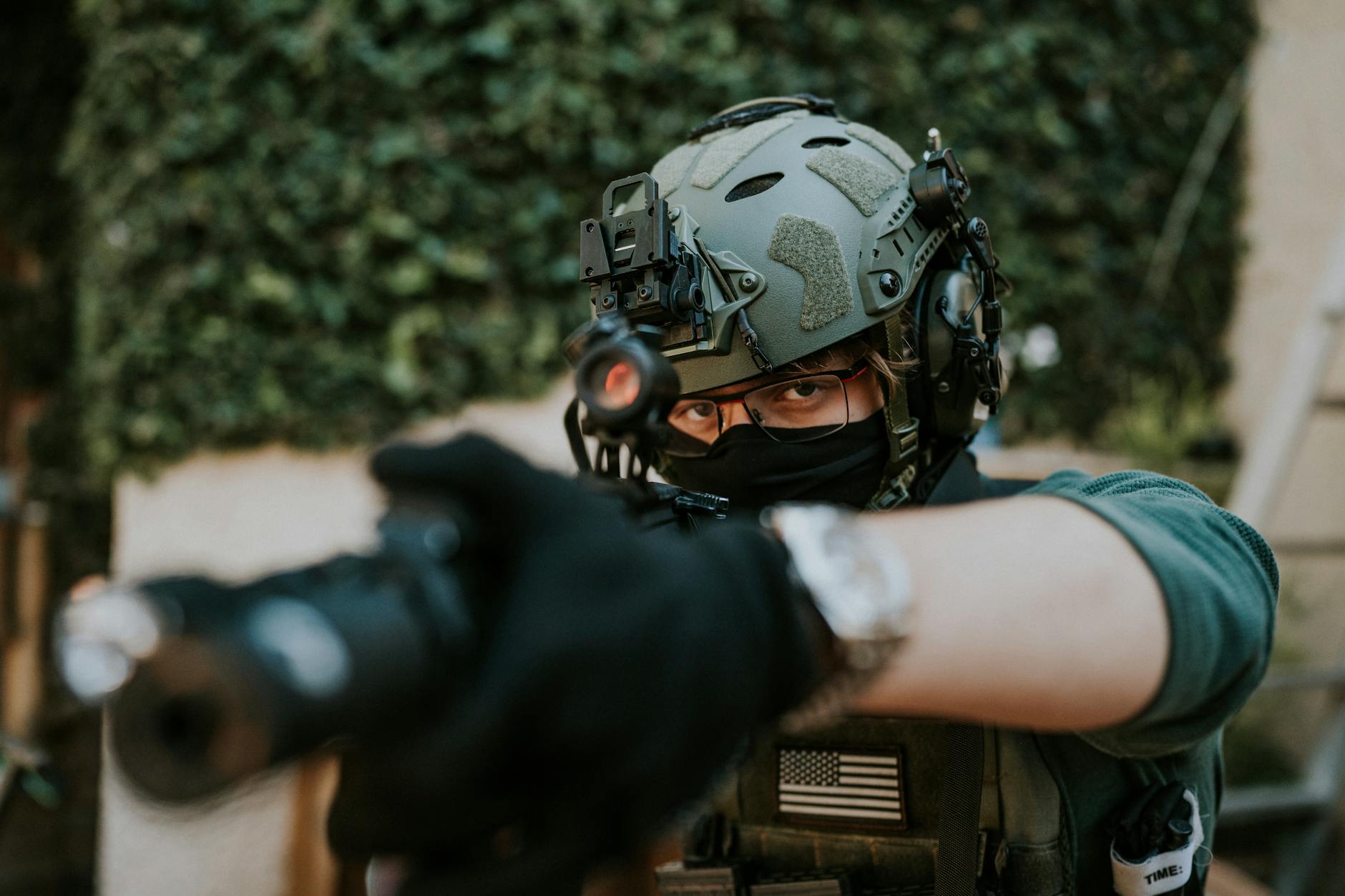
Kurdish Peshmerga forces have been placed on high alert following Iran’s retaliatory missile and drone strikes against Erbil International Airport on February 28, 2026. A senior Peshmerga commander confirmed that his forces are “prepared for any eventuality” after the attack, which saw coalition defense systems intercept more than seven volleys of Iranian missiles and explosive-laden drones over Erbil province. The situation escalated further on March 1 when a booby-trapped drone directly targeted the headquarters of the Peshmerga 11th Division in the Digla subdistrict of Erbil. The strikes on Erbil were part of Iran’s broader retaliatory offensive against U.S.
military positions across the Middle East, launched in response to joint U.S.-Israeli strikes on Iranian territory that killed Supreme Leader Ayatollah Ali Khamenei. Erbil was one of multiple targets across the Gulf region, with Iran also striking at U.S. assets in Dubai, Doha, and Manama. This article examines the Peshmerga response, the damage to Erbil’s airport infrastructure, the strain on U.S. interceptor stockpiles, and what the escalation means for Kurdish regional security going forward.
Table of Contents
- Why Were Kurdish Peshmerga Forces Placed on Alert After Iranian Missiles Hit Erbil Airport?
- What Damage Did the Iranian Strikes Cause at Erbil International Airport?
- How Iran’s IRGC Framed the Erbil Attack Within Its Broader Retaliation
- Peshmerga Military Readiness and the Strain on U.S. Interceptor Systems
- The Direct Drone Attack on Peshmerga 11th Division Headquarters
- Baghdad’s Position and the Kurdish Demand for Iraqi Government Action
- What Comes Next for Kurdish Security in an Expanding Regional Conflict
- Conclusion
- Frequently Asked Questions
Why Were Kurdish Peshmerga Forces Placed on Alert After Iranian Missiles Hit Erbil Airport?
The Kurdistan Counter-Terrorism Directorate confirmed the initial attack occurred at approximately 1:25 p.m. local time on February 28, with coalition defense systems working to intercept the incoming barrage. Two Peshmerga officers independently confirmed to Kurdistan24 that the U.S. defense system in Erbil intercepted more than seven volleys of Iranian missiles and drones throughout Saturday morning and afternoon. Despite official reports claiming no casualties or material damage, CNN geolocated photos showing thick black smoke rising from a fire at Erbil Airport, suggesting that at least some projectiles penetrated the defensive screen and struck airport infrastructure. The alert status was not a precautionary gesture.
By the following day, March 1, a booby-trapped drone targeted the headquarters of the Peshmerga 11th Division directly. This marked a significant escalation — the attack moved beyond U.S. and coalition positions to Kurdish military infrastructure itself. The Kurdish Ministry of Peshmerga Affairs responded by calling on Iraqi Prime Minister to take immediate action, warning that “the continuation of these terrorist acts will not go unanswered.” For context, this is not the first time Erbil has been targeted by Iranian-linked strikes. However, the scale of the February 28 attack — part of a coordinated multi-front offensive involving ballistic missiles and explosive-laden drones across multiple Gulf states — represents a qualitative shift. Previous incidents were typically attributed to Iran-backed militia groups and carried a degree of plausible deniability. This time, Iran’s Islamic Revolutionary Guard Corps openly claimed responsibility as part of its vowed “ferocious” retaliation for the Khamenei killing.

What Damage Did the Iranian Strikes Cause at Erbil International Airport?
Official statements from Kurdish authorities initially downplayed the physical damage, reporting no casualties or significant material losses. However, visual evidence tells a more complicated story. CNN geolocated photographs taken in the aftermath showing thick columns of black smoke rising from within the airport perimeter, indicating fires that suggest at least partial damage to airport infrastructure. The discrepancy between official statements and photographic evidence is worth noting — regional governments frequently minimize damage reports during active hostilities to avoid projecting vulnerability. Erbil International Airport serves dual purposes as both a civilian commercial hub and a base for U.S. and coalition military operations.
Any disruption to the airport affects civilian air travel, humanitarian logistics, and military readiness simultaneously. If the airport sustained meaningful damage to runways, fuel storage, or air traffic control systems, the operational consequences could extend well beyond the immediate military situation. Commercial flights to and from Erbil were suspended in the immediate aftermath, though the duration of that suspension remains unclear as the security situation continues to evolve. It is important to acknowledge what we do not yet know. Detailed damage assessments from independent sources have not been publicly released. The gap between “no material damage” claims and visible smoke plumes from geolocated imagery leaves open questions about the actual extent of the impact. In conflict zones, initial damage reports are routinely revised upward as more information becomes available.
How Iran’s IRGC Framed the Erbil Attack Within Its Broader Retaliation
Iran’s strikes on Erbil did not occur in isolation. They were part of a coordinated retaliatory offensive spanning multiple countries and targeting U.S. military assets across the Gulf region. On the same day, Iran struck at positions in Dubai, Doha, and Manama — an unprecedented geographic scope that signaled Iran’s willingness to escalate well beyond its traditional proxy warfare playbook. The IRGC framed the entire operation as a direct response to the joint U.S.-Israeli strikes that killed Supreme Leader Khamenei, vowing what France 24 reported as “ferocious” retaliation. The targeting of Erbil carries particular symbolic weight. Iraqi Kurdistan has long maintained closer ties with the United States than the central government in Baghdad, hosting a U.S.
Consulate General and serving as a hub for coalition military operations. By striking Erbil alongside Gulf Arab capitals, Iran sent a message that no U.S.-allied territory in the region would be treated as a sanctuary. For the Kurds specifically, this creates a painful strategic dilemma: their close relationship with Washington, which has been a cornerstone of Kurdish regional autonomy, now makes them a front-line target in a conflict they did not initiate. The multi-front nature of the attack also served a tactical purpose beyond symbolism. By forcing U.S. and allied defense systems to respond simultaneously across multiple theaters — from Erbil to Dubai to Doha to Manama — Iran effectively tested the limits of those systems’ capacity. Bloomberg reported that the volume of Iranian missile attacks was already straining U.S., Israeli, and Gulf interceptor stockpiles, raising serious questions about sustainability if the conflict continues at this intensity.

Peshmerga Military Readiness and the Strain on U.S. Interceptor Systems
The Peshmerga’s alert status highlights a critical vulnerability: Kurdish forces depend heavily on U.S. air defense systems to protect their territory from advanced missile threats. The February 28 intercepts over Erbil were carried out by coalition defense systems, not indigenous Kurdish capabilities. While the Peshmerga maintain a capable ground force numbering in the tens of thousands, they lack the sophisticated air defense and missile interception systems needed to counter Iranian ballistic missiles and advanced drones independently. This dependency becomes more concerning in light of Bloomberg’s reporting on the strain placed on U.S. interceptor stockpiles. Each interceptor missile costs significantly more than the offensive munitions it is designed to destroy — a well-documented cost asymmetry that favors the attacker in prolonged exchanges.
If the U.S. is forced to prioritize interceptor allocation across multiple theaters simultaneously, Erbil could find itself competing for limited defensive resources against higher-priority targets. The tradeoff is straightforward but uncomfortable: every interceptor fired over Erbil is one that cannot be used to defend assets in the Gulf or Israel. For the Peshmerga, this means their ground-level alert status is partly compensating for what air defense systems may not be able to guarantee. Ground forces can secure perimeters, respond to drone attacks like the one that hit the 11th Division headquarters, and maintain order in the event of infrastructure disruption. But they cannot shoot down ballistic missiles. The gap between what the Peshmerga can defend against and what Iran can throw at them is the core strategic problem facing Kurdish leadership right now.
The Direct Drone Attack on Peshmerga 11th Division Headquarters
The March 1 drone attack on the Peshmerga 11th Division headquarters in Digla subdistrict represents a troubling escalation beyond the initial airport strikes. While the February 28 attacks targeted U.S. and coalition positions — consistent with Iran’s stated objective of retaliating against American military assets — the drone attack on a Peshmerga facility the following day suggests either a broadening of target sets or the involvement of Iran-aligned proxy forces operating with less restraint. The Kurdish Ministry of Peshmerga Affairs did not mince words in its response, calling on the Iraqi Prime Minister to intervene and warning that continued attacks “will not go unanswered.” That language is significant.
The Peshmerga have historically exercised restraint in the face of Iranian provocations, preferring to channel their responses through diplomatic channels and their relationship with the United States. A public warning that attacks will be answered suggests that restraint may be reaching its limits. One critical limitation to acknowledge: the attribution of the Digla drone attack has not been definitively established in public reporting. While it occurred in the context of Iran’s broader retaliatory campaign, booby-trapped drones have also been employed by various militia groups operating in Iraq. Whether this specific attack was directed by Tehran or carried out by an aligned group acting on its own initiative matters for understanding the escalation trajectory — a state-directed attack on Peshmerga infrastructure carries different implications than an opportunistic militia strike.

Baghdad’s Position and the Kurdish Demand for Iraqi Government Action
The Peshmerga Ministry’s call for Iraqi Prime Minister to act against the attacks places Baghdad in an extraordinarily difficult position. Iraq’s central government has spent years attempting to balance its relationships with both Washington and Tehran, a balancing act that the current crisis has made nearly impossible to sustain. Taking decisive action to protect Kurdish territory from Iranian strikes would risk provoking Tehran’s ire toward Baghdad itself.
📨 Get Free Accountability Coverage Alerts
Free · No spam · Unsubscribe anytime
Doing nothing risks further alienating the Kurdistan Regional Government and undermining the already fragile federal relationship. For the Kurds, Baghdad’s response — or lack thereof — will likely shape the trajectory of Kurdish-Iraqi relations for years to come. If the central government fails to protect Kurdish territory or even condemn the attacks forcefully, it will reinforce long-standing Kurdish grievances about being treated as a secondary priority within the Iraqi state. The Peshmerga’s public demand for action is as much a test of Baghdad’s commitment to its own territorial integrity as it is a request for military assistance.
What Comes Next for Kurdish Security in an Expanding Regional Conflict
The situation in Erbil is evolving rapidly, and the trajectory depends on variables largely outside Kurdish control. If the U.S.-Iran confrontation continues to escalate, Erbil will remain a target as long as it hosts American military and diplomatic personnel. If a ceasefire or de-escalation takes hold, the immediate threat recedes — but the precedent of direct Iranian strikes on Kurdish soil will have lasting implications for regional security planning. The Peshmerga’s long-term challenge is clear: they need to reduce their dependency on external air defense systems while maintaining the U.S.
partnership that remains their most important strategic asset. That is not a problem with a quick solution. In the near term, the Kurdish leadership will likely push for enhanced air defense deployments in their territory, closer intelligence sharing with coalition partners, and formal security guarantees from both Baghdad and Washington. Whether any of those asks are met will depend on how the broader conflict unfolds and where Kurdish security falls on the list of competing priorities in a region that suddenly has too many fires burning at once.
Conclusion
The Iranian missile strikes on Erbil Airport and the subsequent drone attack on Peshmerga 11th Division headquarters have placed Kurdish forces on a war footing they did not seek and are not fully equipped to sustain independently. The February 28–March 1 attacks demonstrated both the effectiveness of coalition air defenses — intercepting more than seven volleys of missiles and drones — and their limitations, as photographic evidence of airport damage and a successful strike on a Peshmerga headquarters make clear. The Kurdish Ministry of Peshmerga Affairs has drawn a public line, warning that continued attacks will not go unanswered. The broader picture is one of a regional conflict that has expanded beyond anyone’s initial expectations.
With Iran striking across multiple Gulf states simultaneously and U.S. interceptor stockpiles under strain, the question for Kurdish leadership is not whether they will face further attacks, but whether the defensive infrastructure and political alliances they depend on can hold under sustained pressure. The Peshmerga have proven themselves capable ground forces over decades of conflict. What they face now — advanced ballistic missiles and coordinated drone swarms directed by a state actor — is a fundamentally different kind of threat, and meeting it will require resources and commitments that extend well beyond what any Kurdish force can provide alone.
Frequently Asked Questions
What happened at Erbil Airport on February 28, 2026?
Iran launched retaliatory missile and drone strikes against Erbil International Airport and the U.S. Consulate General as part of a broader offensive against U.S. military positions across the Middle East. The Kurdistan Counter-Terrorism Directorate confirmed the attack at approximately 1:25 p.m. local time. Coalition defense systems intercepted multiple missiles and drones, though CNN geolocated photos showed smoke rising from fires at the airport.
Why did Iran attack Erbil?
The strikes were part of Iran’s retaliation for joint U.S.-Israeli strikes on Iranian territory that killed Supreme Leader Ayatollah Ali Khamenei. Iran’s IRGC vowed “ferocious” retaliation and targeted U.S. assets across the region, including in Erbil, Dubai, Doha, and Manama.
Were there casualties at Erbil Airport?
Official Kurdish reports stated there were no casualties or material damage. However, CNN geolocated photographs showing thick black smoke at the airport suggest at least some damage to infrastructure. Independent damage assessments have not been publicly released.
What was the Peshmerga 11th Division attack?
On March 1, 2026, a booby-trapped drone targeted the headquarters of the Peshmerga 11th Division in the Digla subdistrict of Erbil. This marked a direct attack on Kurdish military infrastructure, escalating beyond the initial strikes on U.S. and coalition positions.
How effective were U.S. air defenses in Erbil?
Two Peshmerga officers confirmed that U.S. defense systems intercepted more than seven volleys of Iranian missiles and drones. However, Bloomberg reported that the overall volume of Iranian attacks was straining U.S., Israeli, and Gulf interceptor stockpiles, raising questions about long-term sustainability.
What has the Kurdish government demanded in response?
The Kurdish Ministry of Peshmerga Affairs called on Iraq’s Prime Minister to take action to halt the attacks and hold those responsible accountable, warning that “the continuation of these terrorist acts will not go unanswered.”
You Might Also Like
- Iraq’s Government Calls for Immediate Ceasefire After Strikes Hit Iraqi Territory
- UN Security Council Emergency Meeting Called After Iran Strikes Begin
- Tomahawk Cruise Missiles Opened the Iran Campaign at 1 AM Eastern Time