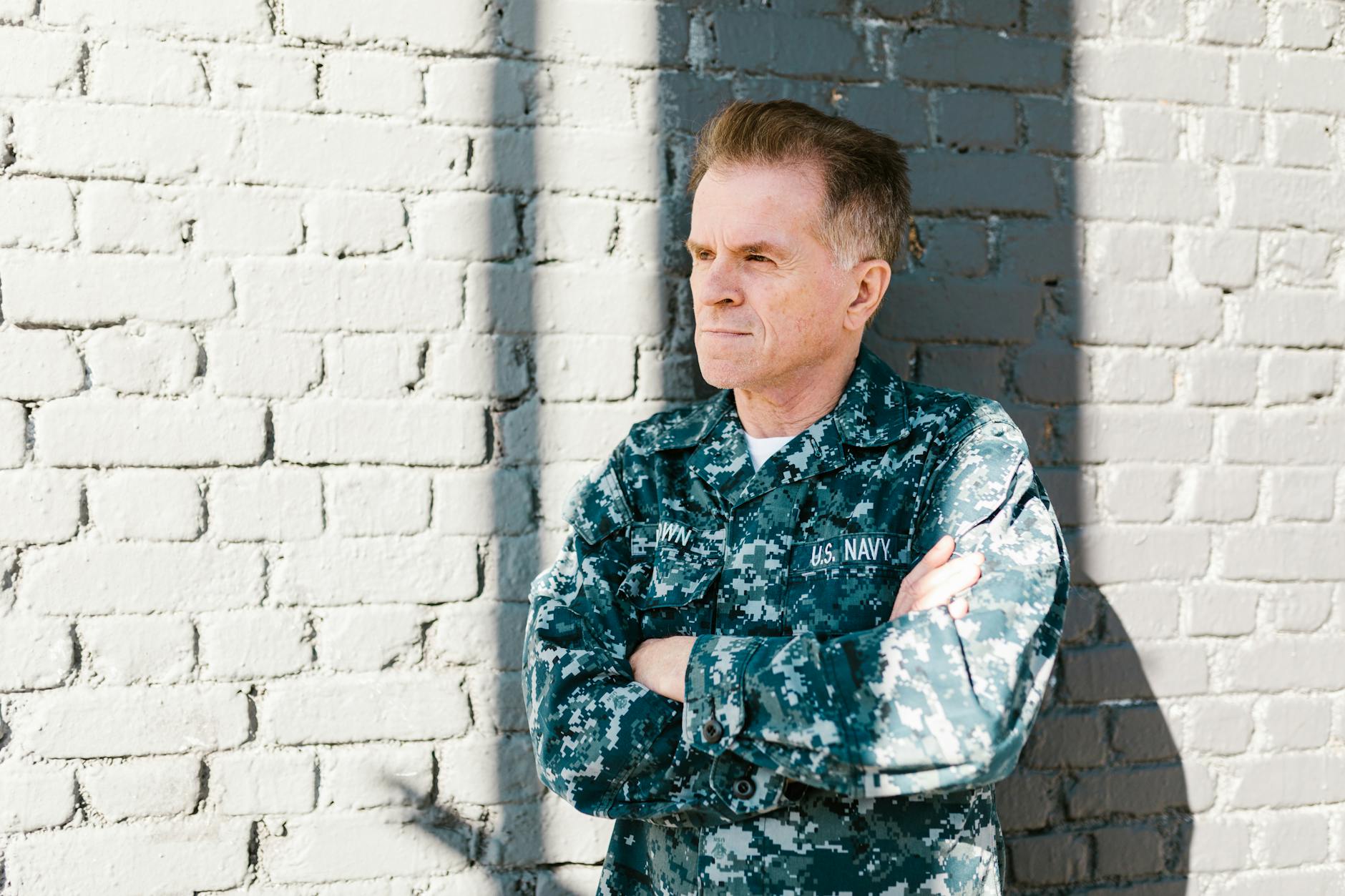
Kerry Sheron, a 69-year-old U.S. Army veteran from Escondido, California, died from injuries sustained in an unprovoked assault outside his home, passing away on Sunday just days after being struck by 32-year-old Thomas Caleb Butler on a Wednesday evening in May 2025. Sheron was widely known throughout his San Diego-area community for maintaining one of the region’s most visible patriotic displays, featuring large American flags and prominent pro-Trump banners and MAGA memorabilia that had made his home a recognizable local landmark. The circumstances surrounding his death underscore broader questions about violence, community tensions, and how motives are investigated when assaults occur in politically charged contexts.
The assault itself was straightforward in its brutality but complex in its context. Butler, a Navy veteran, struck Sheron once in the jaw with such force that additional blows followed, causing the injuries that ultimately proved fatal. What remains unclear, despite ongoing investigation, is whether political motivation played any role in the attack. Law enforcement has stated that they have not identified evidence supporting a political motive at this time, even as the case has drawn attention precisely because of the victim’s well-known political displays.
Table of Contents
- What Made This Veteran’s Home Decorations So Distinctive?
- The Assault and Investigation Into Motives
- The Suspect’s Background and Bail Status
- Understanding Community Safety When Political Expression Becomes Visible
- The Investigation’s Ongoing Status and Limitations
- The Family’s Perspective and Victim Impact
- Implications for Veteran Services and Community Resources
- Conclusion
What Made This Veteran’s Home Decorations So Distinctive?
Kerry Sheron’s home had become far more than just a private residence; it functioned as a visible statement of patriotism and political conviction in a suburban California neighborhood. The sheer scale of his displays—encompassing multiple large American flags, prominent Trump banners, and MAGA-themed decorations—meant that his property stood out among standard residential architecture. Many neighbors and community members could identify his home from blocks away, making Sheron himself something of a public figure in Escondido despite having no official platform or public role beyond his consistent, visible support for Trump.
This level of political display is relatively uncommon in suburban settings, which typically feature more muted political expression. While yard signs and flag displays are common across the country, Sheron’s decorations were described as substantial and comprehensive enough to constitute a local landmark. For supporters of Trump, his home represented a powerful expression of conviction in a state where such visible political declarations are frequently met with skepticism or hostility. The distinctiveness of these displays also meant that Sheron had become known to virtually anyone in his community who paid attention to local surroundings.
The Assault and Investigation Into Motives
On a Wednesday evening in may 2025, the peaceful existence Sheron had maintained around his decorated home came to a sudden end. Thomas Caleb Butler approached Sheron outside his residence and launched an unprovoked attack, striking him forcefully in the jaw and following with additional blows to the head. The physical injuries were severe enough to require hospitalization and prove ultimately fatal, with Sheron passing away just three days later on Sunday evening. Butler was quickly apprehended and charged with attempted murder, elder abuse, criminal threats, and battery—charges reflecting both the severity of the attack and the age differential between perpetrator and victim. However, a critical limitation in the narrative surrounding this case is the gap between context and confirmed motive.
Because Sheron was famous for his pro-Trump displays and Butler is a Navy veteran, public attention naturally gravitated toward political or ideological explanations. Yet law enforcement has explicitly stated they have not found evidence supporting a political motivation for the assault. This distinction matters significantly. The case illustrates how assumptions about motive can diverge from investigative findings, even when contextual factors seem to suggest obvious explanations. Without clear evidence of political motivation, attributing the assault to Sheron’s political displays remains speculative.
The Suspect’s Background and Bail Status
Thomas Caleb Butler, 32 years old, shares a military background with his victim, having served in the Navy. This shared military service history adds another layer of complexity to understanding why the assault occurred. Despite the severity of the charges—attempted murder, elder abuse, criminal threats, and battery—Butler remains in custody and has been held without bail, reflecting the court’s assessment of the danger he poses and the seriousness of the alleged crimes. He has pleaded not guilty to all charges, meaning the case will proceed through the legal system without a quick resolution.
The fact that both perpetrator and victim served in the U.S. military creates a striking irony. Military service is often framed as a unifying experience that transcends political divisions, yet this case suggests that shared service history provides no automatic protection against violence between veterans. Butler’s refusal to post bail and the court’s decision to hold him without bail indicate a presumption of danger—that releasing him pending trial would create an unacceptable risk. This remains one of the few concrete facts about Butler’s situation, as investigations into motive and background continue.
Understanding Community Safety When Political Expression Becomes Visible
Sheron’s case raises practical questions about safety that extend beyond this single incident. When someone makes their political views highly visible through home decorations, yard displays, or other public statements, they inevitably become known to a broader audience—some of whom may disagree intensely with those views. This creates a tradeoff between exercising free expression and maintaining a lower profile that might reduce attention from individuals with hostile intentions. There is no right answer to this tradeoff; Sheron made a choice to express his views visibly, and that choice should not have resulted in violence.
From a community safety perspective, the incident highlights the importance of adequate law enforcement response to threats and dangerous individuals, regardless of the political context. Neighbors who notice suspicious behavior or individuals displaying signs of violence risk should report concerns to local authorities. At the same time, reporting requires caution—false accusations or politically motivated complaints against people simply because they hold different views create additional problems. The goal should be protecting public safety rather than weaponizing law enforcement against political opponents.
📨 Get Free Accountability Coverage Alerts
Free · No spam · Unsubscribe anytime
The Investigation’s Ongoing Status and Limitations
One significant limitation in the current narrative is that the investigation into Butler’s motives remains ongoing. Initial reports and charges focus on the physical assault and its severity, but the deeper question—why Butler attacked Sheron specifically—has not been publicly answered. This gap between physical facts (the assault occurred) and investigative findings (motive remains unclear) is important to acknowledge. It’s possible that the motive was political, personal, related to mental health or substance use, or something entirely different that investigators have not yet disclosed or determined.
This uncertainty is frustrating for those seeking clear explanations, but it also reflects appropriate investigative caution. Jumping to conclusions about motive without evidence can mislead public understanding and unfairly characterize either the victim or the perpetrator. Law enforcement’s statement that they have not found evidence of political motivation is significant, but it is also preliminary. As investigations progress, additional information may emerge—or it may remain unclear. The public should prepare for the possibility that some questions about this case may never be fully answered.

The Family’s Perspective and Victim Impact
Sheron’s family has described him as a caring and kind person—characterizations that stand in contrast to the brutality of his death. For his loved ones, the public debate about his political displays, the assault’s motives, and its broader meaning is secondary to the loss of a family member. Families of crime victims often find themselves thrust into public attention not because they seek it, but because the circumstances of their loss generate news coverage and public interest.
In this case, Sheron’s family must navigate grief while also managing the reality that his name and image have become connected to broader political discussions. The victim’s perspective—the actual harm done to a real person and those who loved him—deserves centering in any discussion of this incident. Whatever Sheron’s political views, he did not deserve to be assaulted and killed. His family’s loss is real and permanent, regardless of how the broader public discusses the case’s political dimensions.
Implications for Veteran Services and Community Resources
Both Sheron and Butler served in the U.S. military, yet their paths diverged dramatically by May 2025. Butler’s background raises questions about what resources and support were available to him, particularly around mental health services, substance abuse treatment, or conflict resolution.
The military population as a whole has higher rates of PTSD, traumatic brain injury, and related mental health challenges that can contribute to aggressive behavior if left untreated. While it’s too early to attribute Butler’s actions to service-related trauma without evidence, his military background warrants consideration of whether existing veteran support systems failed to help prevent this violence. Looking forward, this case may prompt discussions about how communities can better support veterans in crisis while also protecting public safety. The answer is not to restrict veterans’ access to their community or limit their ability to engage in civic life, but rather to ensure robust mental health resources, crisis intervention services, and accountability mechanisms exist to prevent future incidents.
Conclusion
Kerry Sheron’s death represents a tragedy that extends beyond any single incident to raise broader questions about violence, political expression, community safety, and the limits of what we can know about human motivation. His Army service, his visible patriotic displays, and ultimately his death in an unprovoked assault have made him part of a larger national conversation—though the conversation itself may exceed what the facts of his case can support. Law enforcement’s statement that political motivation has not been identified is important, and it suggests that oversimplifying this case into a purely political narrative may misrepresent what actually occurred.
The most important facts remain straightforward: an elderly veteran was attacked and killed by a younger man, and that death is a tragedy for his family and community. How we discuss that tragedy, what conclusions we draw, and how we respond to it should be grounded in evidence rather than assumption. For those seeking to understand this case’s broader implications, the lesson may be that public narratives and investigative conclusions are not always the same—and learning to sit with incomplete information while awaiting facts is an essential civic skill.
You Might Also Like
- Army Veteran Behind Famous Trump-Themed Home Dies Days After Broad Daylight Assault
- Trump-Themed Home Becomes Crime Scene After Owner Dies From Attack Injuries
- Trump House Owner Dies After Brutal Attack Outside His Flag-Covered Home