Oil prices surged dramatically on March 1, 2026, after the United States and Israel launched massive airstrikes against Iran’s military infrastructure, killing Ayatollah Ali Khamenei and triggering immediate Iranian retaliation against U.S. military assets in the Persian Gulf. Brent crude jumped approximately 10% to around $80 per barrel in over-the-counter Sunday trading, up from Friday’s close of $72.48, while U.S. WTI crude rose more than 7%, gaining $5.08 to reach $72.10 per barrel. The strikes, which targeted Tehran and other major cities including Iran’s nuclear program, have thrown global energy markets into a level of uncertainty not seen in decades.
The fallout extends well beyond the price of a barrel of oil. Hundreds of tankers have halted near the Strait of Hormuz after Iran’s Islamic Revolutionary Guard Corps warned that passage through the critical waterway is not permitted, and the IRGC reportedly struck three oil tankers with missiles on Sunday. Dow futures sank nearly 500 points as investors braced for a prolonged conflict. Analysts at UBS warn that Brent could exceed $120 per barrel if supply disruptions materialize, while Barclays projects prices could hit $100 per barrel as the security situation deteriorates. This article breaks down how the strikes unfolded, what the oil market impact looks like in real terms, what the Strait of Hormuz crisis means for global supply chains, and what consumers and investors should prepare for in the weeks ahead.
Table of Contents
- Why Did Oil Prices Surge After the U.S. Bombed Iran’s Military Infrastructure?
- The Strait of Hormuz Crisis and What It Means for Global Oil Supply
- How Analysts Are Forecasting Oil Prices in the Wake of the Strikes
- What the Oil Price Spike Means for U.S. Consumers and Gas Prices
- The Risk of Escalation and Why Markets Remain on Edge
- OPEC+ Response and the Limits of Spare Capacity
- What Comes Next for Energy Markets and the Broader Economy
- Conclusion
- Frequently Asked Questions
Why Did Oil Prices Surge After the U.S. Bombed Iran’s Military Infrastructure?
The price spike is a direct consequence of Iran’s position in global energy markets. Iran is the world’s sixth-largest oil producer, and the strikes immediately raised questions about whether Iranian crude exports — already under sanctions but still flowing to certain buyers — would be completely cut off. Even before the bombs fell, Brent crude had risen 2.9% on Friday to $72.87 as intelligence reports and media leaks signaled the attack was imminent. The actual strikes sent prices sharply higher as traders priced in the near-certainty of supply disruption. But the crude price jump is not solely about Iranian production going offline. The real fear driving markets is the Strait of Hormuz, the narrow chokepoint through which approximately 13 million barrels per day of crude oil transited in 2025 — accounting for roughly 31% of global seaborne crude flows and one-fifth of global liquefied natural gas shipments.
When Iran retaliated by launching missiles against U.S. military assets and infrastructure in Gulf states including Bahrain and the UAE, and the IRGC began threatening commercial shipping, the crisis instantly became a global supply problem rather than a bilateral military conflict. For comparison, even the 2019 drone attack on Saudi Arabia’s Abqaiq facility, which temporarily knocked out 5% of global supply, sent prices up nearly 15% in a single day. The current situation threatens a far larger share of global flows. Patrick De Haan of GasBuddy predicted a 5% to 10% increase in oil prices in the immediate aftermath, which has already been met or exceeded. Yahoo Finance analysts warned that without de-escalation, prices could surge $10 to $20 per barrel from pre-strike levels, which would put Brent well above $80 and potentially approaching $90 even without a full Strait closure.

The Strait of Hormuz Crisis and What It Means for Global Oil Supply
The Strait of Hormuz is roughly 21 miles wide at its narrowest point, and every barrel of oil that leaves Saudi Arabia, Iraq, Kuwait, Qatar, and the UAE by sea must pass through it. The IRGC’s warning to commercial vessels that passage is not allowed, combined with missile strikes on three oil tankers, has effectively frozen shipping in the region. Tanker owners, oil majors, and trading houses suspended shipments as a precautionary measure beginning Saturday, and hundreds of tankers were reported idling near the Strait by Sunday morning. However, it is worth noting that Iran’s foreign minister later stated the country has “no intention of closing the Strait of Hormuz at present.” This is a critical distinction. A full closure would be an act of economic warfare not just against the united states but against China, India, Japan, South Korea, and virtually every major oil-importing nation.
Iran has historically used Strait closure threats as leverage rather than following through, because a full blockade would also cut off Iran’s own remaining export revenues and invite overwhelming international military response. If the foreign minister’s statement holds, the current disruption may be temporary and driven more by commercial caution than an actual naval blockade. The risk, though, is that the situation is fluid. Iran’s retaliation against Gulf state infrastructure means that even if the Strait technically remains open, insurance rates for tankers transiting the area will skyrocket, and many shipping companies will refuse to send vessels through until the military situation stabilizes. This kind of de facto disruption can have nearly the same price impact as a formal closure, even if barrels are technically still able to move.
How Analysts Are Forecasting Oil Prices in the Wake of the Strikes
The range of analyst forecasts reveals just how uncertain the situation remains. UBS has issued the most aggressive projection, warning that Brent spot prices could exceed $120 per barrel if there is a material supply disruption — meaning a prolonged Strait closure or significant damage to Gulf state export infrastructure. For context, Brent last traded above $120 in June 2022 during the initial shock of Russia’s invasion of Ukraine. Reaching that level again would represent a roughly 65% increase from Friday’s pre-strike close. Barclays has taken a somewhat more measured view, projecting Brent could hit $100 per barrel as the security situation spirals.
That level, while less dramatic than UBS’s ceiling, would still represent a roughly 37% jump from pre-strike prices and would almost certainly push U.S. gasoline prices above $4 per gallon nationally, with prices in California and other high-tax states potentially exceeding $5.50. Yahoo Finance analysts landed in the middle, warning of a $10 to $20 per barrel increase from pre-strike levels without de-escalation, which aligns closely with what has already occurred in Sunday trading. OPEC+ has responded by raising its barrel-per-day production quota in an effort to offset potential supply losses, but spare capacity among OPEC members is limited. Saudi Arabia and the UAE hold the bulk of the world’s spare production capacity, and both nations are now directly in the crosshairs of Iranian retaliation, which complicates their ability to ramp up output quickly or safely.
What the Oil Price Spike Means for U.S. Consumers and Gas Prices
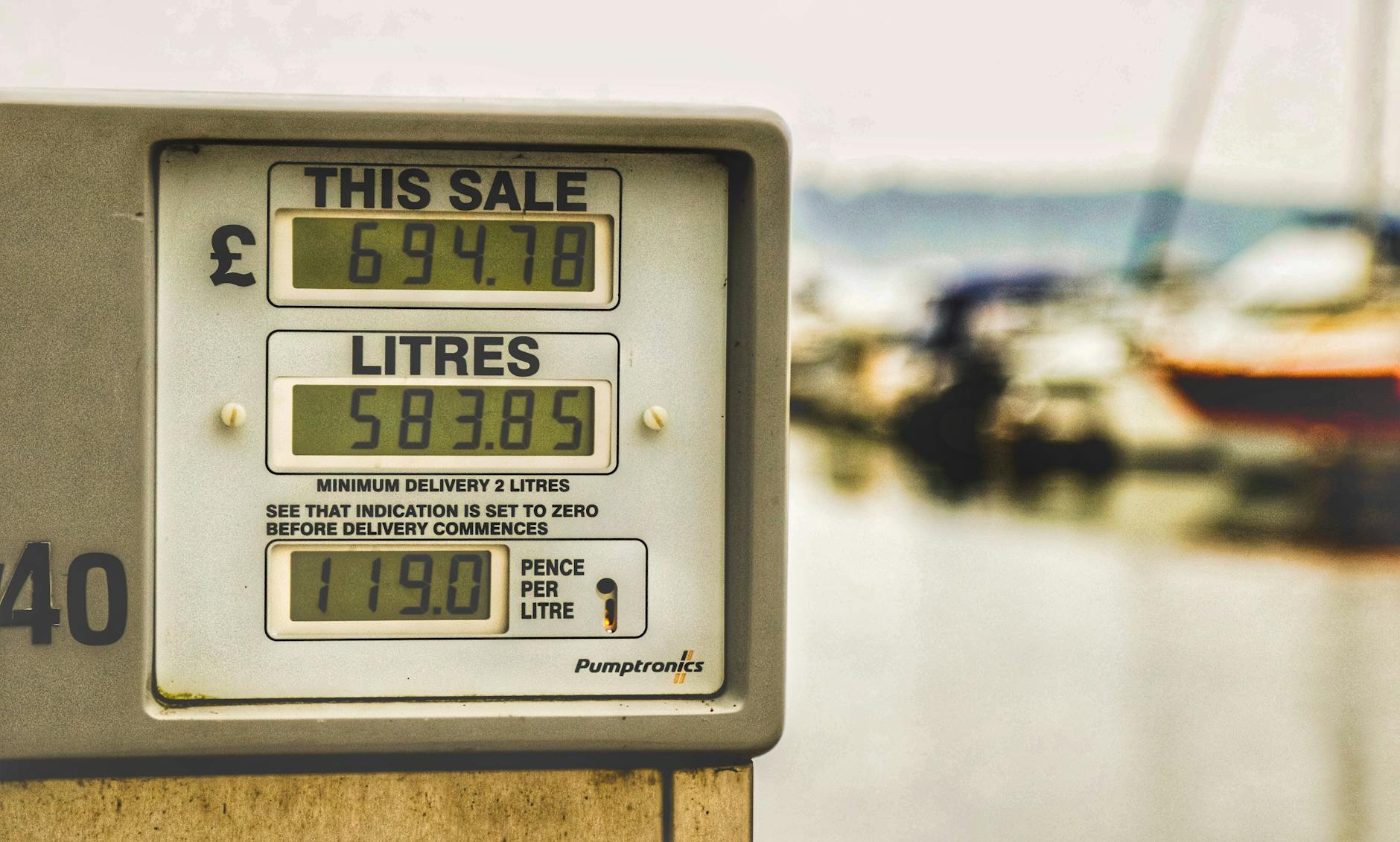
For American consumers, the most immediate impact will show up at gas stations within the next one to two weeks. Retail gasoline prices typically lag crude oil movements by seven to fourteen days as refiners and distributors pass through higher input costs. Based on the current 7% to 10% jump in crude, a conservative estimate would be a 15 to 30 cent increase per gallon nationally, though regional variation could be significant. Areas dependent on Gulf Coast refining — the Southeast and parts of the Midwest — may see larger spikes due to proximity to the disruption. The tradeoff for the Trump administration is stark. Higher oil prices function as a tax on consumers, eroding purchasing power at a time when the administration has been focused on economic growth and deregulation. On the other hand, higher prices benefit U.S.
shale producers and the domestic energy sector, which the administration has strongly supported. U.S. oil production hit record levels in recent years precisely because prices were high enough to justify drilling in marginal shale formations. If prices sustain above $80 WTI, expect a surge in U.S. drilling activity — but that production takes months to reach the market and does nothing for consumers facing higher prices at the pump this week. Diesel prices will be particularly important to watch. Diesel fuels the trucking, rail, and shipping industries, meaning sustained increases will flow through to the prices of virtually every consumer good. The last time diesel spiked sharply, in early 2022, food prices rose significantly within weeks as transportation costs were passed through supply chains.
The Risk of Escalation and Why Markets Remain on Edge
The most dangerous element of this crisis is that it is not a contained, single-strike scenario. Iran’s immediate retaliation — launching missiles against U.S. military assets in Bahrain and the UAE — means this is already a multi-party conflict with the potential to draw in additional actors. If Gulf states sustain significant infrastructure damage, their ability to export oil is directly impaired regardless of what happens in the Strait. Saudi Arabia’s Ras Tanura terminal and the UAE’s Fujairah port are both within range of Iranian ballistic missiles, and any strike on those facilities would remove millions of barrels per day from global supply virtually overnight. Markets are also pricing in the risk that this conflict extends beyond the initial exchange.
The killing of Ayatollah Khamenei — confirmed by both the Trump administration and the Iranian government — removes the supreme leader but does not eliminate Iran’s military capability or its network of regional proxies. Hezbollah, the Houthis, and various Iraqi militia groups all have the capacity to strike at energy infrastructure and shipping lanes across the Middle East. If proxy forces begin targeting Saudi or Emirati oil facilities, pipelines, or export terminals, the supply impact could dwarf what has occurred so far. Investors should be particularly cautious about assuming a quick resolution. The Dow futures decline of nearly 500 points on March 1 reflects genuine uncertainty, not a momentary panic. Defense stocks and energy equities will likely outperform in the short term, but broader equity markets face sustained headwinds if oil prices remain elevated and consumer spending contracts in response.

OPEC+ Response and the Limits of Spare Capacity
OPEC+ has moved to raise production quotas in response to the crisis, but spare capacity is the binding constraint. Global spare production capacity heading into 2026 was estimated at roughly 4 to 5 million barrels per day, with the vast majority held by Saudi Arabia and the UAE. If the Strait of Hormuz remains partially or fully blocked, that spare capacity is effectively stranded — the oil cannot reach market if the tankers cannot transit the waterway.
📨 Get Free Accountability Coverage Alerts
Free · No spam · Unsubscribe anytime
This is the fundamental vulnerability that analysts have warned about for years. Global oil markets operate with thin buffers, and the Strait of Hormuz is a single point of failure for roughly a third of all seaborne crude. Alternative pipeline routes exist — notably the East-West Pipeline across Saudi Arabia to the Red Sea port of Yanbu — but their capacity is limited and nowhere near sufficient to replace Strait traffic if a prolonged closure occurs.
What Comes Next for Energy Markets and the Broader Economy
The trajectory of oil prices over the next several weeks depends almost entirely on whether the military conflict escalates or de-escalates. If Iran’s statement about not intending to close the Strait of Hormuz holds, and if retaliatory strikes do not significantly damage Gulf state export infrastructure, prices may stabilize in the $75 to $85 Brent range — painful but manageable for the global economy.
If escalation continues, the UBS scenario of $120-plus Brent becomes realistic, and the global economy faces a supply shock comparable to the 1973 oil embargo. For consumers, investors, and policymakers, the key indicators to watch are tanker traffic through the Strait, insurance rates for Gulf shipping, and any further strikes on energy infrastructure in the region. The next 72 to 96 hours will likely determine whether this is a sharp but contained price spike or the beginning of a sustained energy crisis with deep economic consequences.
Conclusion
The U.S. and Israeli strikes on Iran have produced exactly the kind of energy market shock that analysts have long warned about. With Brent crude up 10% and WTI up more than 7% in the first trading session after the strikes, hundreds of tankers frozen near the Strait of Hormuz, and analyst projections ranging from $80 to $120 per barrel depending on escalation, this is the most significant disruption to global oil markets since Russia’s invasion of Ukraine in 2022.
The killing of Ayatollah Khamenei adds a layer of unpredictability that markets are struggling to price. The practical reality for consumers is that gas prices will rise, likely by 15 cents to 30 cents per gallon in the near term and potentially much more if the conflict deepens. For investors, energy sector exposure and defensive positioning are prudent until the situation clarifies. And for anyone watching this crisis unfold, the Strait of Hormuz remains the single most important variable — if it stays open, the global economy absorbs the shock; if it closes, we are in uncharted territory.
Frequently Asked Questions
How much have oil prices increased since the U.S. strikes on Iran?
As of March 1, 2026, Brent crude jumped approximately 10% to around $80 per barrel, while U.S. WTI crude rose more than 7% to $72.10 per barrel. These are over-the-counter Sunday trading figures and may move further when futures markets fully open.
Will gas prices go up because of the Iran strikes?
Yes. Retail gasoline prices typically lag crude oil movements by one to two weeks. Based on the current crude price spike, a 15 to 30 cent per gallon increase nationally is a reasonable near-term estimate, with higher increases possible if the conflict escalates.
Is the Strait of Hormuz closed?
Not officially. The IRGC warned ships that passage is not allowed and reportedly struck three tankers, but Iran’s foreign minister stated the country has “no intention of closing the Strait of Hormuz at present.” However, hundreds of tankers have voluntarily halted as a precautionary measure.
How much oil flows through the Strait of Hormuz?
Approximately 13 million barrels per day transited the Strait in 2025, representing about 31% of global seaborne crude oil flows and one-fifth of global LNG shipments.
How high could oil prices go?
Analyst forecasts vary widely. UBS projects Brent could exceed $120 per barrel with material supply disruption. Barclays forecasts $100 per barrel. Yahoo Finance analysts warn of a $10 to $20 per barrel increase from pre-strike levels without de-escalation.
How is OPEC+ responding to the crisis?
OPEC+ has raised its production quotas to try to offset potential supply losses, but spare capacity is limited and largely held by Saudi Arabia and the UAE — countries that are themselves targets of Iranian retaliation.
You Might Also Like
- Operation Epic Fury Is the Biggest U.S. Military Action Since the 2003 Iraq Invasion
- U.S. Uses Low-Cost Attack Drones in Combat for the First Time Ever
- U.S. Struck Hundreds of Targets Inside Iran in the Opening Hours