Operation Epic Fury, launched at approximately 1:15 a.m. ET on February 28, 2026, is the largest concentration of American military firepower deployed in the Middle East since the 2003 invasion of Iraq. The joint U.S.-Israeli operation — codenamed “Roaring Lion” by Israel — struck over 1,000 targets across Iran in what the Pentagon described as a massive, coordinated campaign against the Islamic Revolutionary Guard Corps, Iranian air defenses, missile sites, military airfields, and remnants of Iran’s nuclear program. Nearly 900 of those strikes were carried out in just the first 12 hours.
The scale of the military buildup preceding the operation had already drawn comparisons to the Iraq War. Two aircraft carrier strike groups, more than 200 combat aircraft, dozens of tanker planes, and ground-based missile defense systems were positioned across the region before the first bombs fell. Three U.S. service members were killed in action and five were seriously wounded, while Iranian losses included 40 senior military commanders and, according to reports, Supreme Leader Ali Khamenei himself. This article breaks down the full scope of Operation Epic Fury — what military assets were used, what was targeted, the stated objectives from the Trump administration, what we know about casualties on both sides, how the world responded, and what accountability questions remain unanswered.
Table of Contents
- Why Is Operation Epic Fury Being Called the Biggest U.S. Military Action Since the 2003 Iraq Invasion?
- What Were the Key Targets and How Were They Selected?
- What the Trump Administration Says It Wants to Achieve
- U.S. Casualties and the Cost of the Operation
- Iranian Losses and the Leadership Decapitation Question
- How the World Responded
- What Comes Next and Why Accountability Matters
- Conclusion
- Frequently Asked Questions
Why Is Operation Epic Fury Being Called the Biggest U.S. Military Action Since the 2003 Iraq Invasion?
The comparison to Iraq is not rhetorical flourish. The military buildup that preceded Operation Epic Fury was, by the Pentagon’s own assessment, the largest American force concentration in the Middle East since Operation Iraqi Freedom. Two full carrier strike groups — the USS Abraham Lincoln and the USS Gerald R. Ford — were deployed simultaneously. The Ford’s Carrier Air Wing 8 alone brought F/A-18E/F Super Hornets, EA-18G Growler electronic warfare aircraft, and E-2D Hawkeye early warning planes. Combined, the two strike groups fielded more than 90 carrier-based strike fighters.
But the naval assets were only part of the picture. The U.S. Air Force forward-deployed F-22 stealth fighters to Ovda Airbase in israel — a notable operational detail given how rarely F-22s are placed on foreign soil. F-35As, F-15E Strike Eagles, A-10 Warthogs, and F-16s rounded out the air component, with approximately 110 additional combat aircraft beyond the carrier wings. To keep that many planes in the air, the military positioned roughly 86 tanker aircraft, including KC-135 Stratotankers and newer KC-46A Pegasus refuelers, along with E-3 Sentry airborne early warning and control planes to coordinate the massive airspace. For context, the 2003 Iraq invasion involved around 1,700 strike sorties in its opening “shock and awe” campaign. Operation Epic Fury’s 1,000-plus targets hit in the opening phase, with nearly 900 in 12 hours, represents a comparable tempo of operations — compressed into an even shorter timeframe against a geographically dispersed target set across iranian territory rather than a single country’s relatively compact military infrastructure.

What Were the Key Targets and How Were They Selected?
According to a centcom fact sheet released on March 1, the target list was designed to systematically dismantle Iran’s ability to project military power regionally and pursue nuclear weapons capability. IRGC command and control facilities topped the list, reflecting a deliberate effort to decapitate the military leadership structure that coordinates Iran’s proxy networks across the Middle East. Iranian air defense systems were struck early to create permissive airspace for follow-on waves. Missile and drone launch sites — the same infrastructure that enabled Iranian attacks on Israel and Gulf state targets — were hit along with military airfields. The strikes also targeted remnants of Iran’s nuclear and missile programs, a category the Center for Strategic and International Studies analyzed in detail. CSIS noted that while Iran’s nuclear program had been subject to international monitoring, dispersed and hardened facilities made complete neutralization uncertain.
This is an important caveat: striking nuclear-related sites does not necessarily mean all fissile material or centrifuge technology was destroyed. Underground and deeply buried facilities present targeting challenges that even precision-guided munitions cannot always overcome. The Iranian navy was also targeted directly. Nine naval vessels were destroyed, which president trump described as “some of them relatively large and important.” This included submarines, though specific vessel classes have not been publicly confirmed. The naval dimension of the operation reflects a broader strategic goal: eliminating Iran’s ability to threaten commercial shipping through the Strait of Hormuz, a chokepoint for roughly 20 percent of the world’s oil supply.
What the Trump Administration Says It Wants to Achieve
President Trump outlined five stated objectives for Operation Epic Fury. First, preventing iran from acquiring a nuclear weapon. Second, destroying Iran’s missile arsenal and production sites. Third, degrading Iran’s proxy networks — the constellation of armed groups including Hezbollah, the Houthis, and various Iraqi militias that Iran has funded and directed for decades. Fourth, destroying Iran’s navy. And fifth, the most politically charged objective: desired regime change from within. That last point deserves scrutiny.
The U.S. government has a long and troubled history with regime change in Iran, dating back to the CIA-backed 1953 coup against Prime Minister Mohammad Mosaddegh. The stated desire for internal regime change — as opposed to direct military occupation — reflects lessons from Iraq, where the U.S. toppled Saddam Hussein’s government and then spent nearly a decade dealing with the consequences. However, the killing of 40 senior Iranian commanders, including Chief of Staff Abdolrahim Mousavi, and the reported death of Supreme Leader Khamenei, creates a power vacuum whose outcome is anything but predictable. The distinction between “regime change from within” and the chaos that follows decapitation strikes is largely academic. When you eliminate a country’s supreme leader and 40 of its top military commanders in a single night, you have fundamentally altered the political landscape whether or not ground troops cross the border. The question is not whether regime change will occur, but what fills the vacuum — and whether the result serves anyone’s interests, including America’s.

U.S. Casualties and the Cost of the Operation
Three American service members were killed in action during Operation Epic Fury, with five seriously wounded and several others sustaining minor injuries. These are the first confirmed U.S. combat deaths in a direct engagement with Iran — as opposed to proxy forces — in modern history. While the casualty numbers are low relative to the scale of the operation, each death represents a family permanently altered by the decision to launch strikes. For comparison, the opening phase of Operation Iraqi Freedom in 2003 resulted in approximately 140 U.S.
military deaths in the first month. The relatively low American casualty count in Operation Epic Fury likely reflects both the air-dominant nature of the campaign and the effectiveness of the extensive air defense suppression conducted in the opening minutes. Ground-based systems including HIMARS, Patriot missile batteries, and THAAD systems were deployed defensively, while ship-launched Standard Missiles provided naval air defense against any Iranian retaliatory strikes. The financial cost of the operation has not yet been publicly disclosed, but the deployment of this volume of precision munitions, aviation fuel, and forward-positioned assets will run into the billions of dollars. Tomahawk cruise missiles alone cost roughly $2 million each, and the operational costs of maintaining two carrier strike groups at combat tempo are measured in tens of millions per day. Congress has not yet held hearings on the operation’s authorization or funding, which raises serious questions about the War Powers Resolution and legislative oversight.
Iranian Losses and the Leadership Decapitation Question
The Iranian casualty figures reported so far are staggering at the command level. Forty senior Iranian commanders were killed, including the Chief of Staff of the Iranian Armed Forces, Abdolrahim Mousavi. Reports also indicate that Supreme Leader Ali Khamenei was killed in the strikes. If confirmed, this would represent the most significant wartime elimination of a head of state since the U.S. killing of Admiral Isoroku Yamamoto in 1943. However, a critical limitation must be noted: confirmation of Khamenei’s death has not been independently verified by Iranian state media or neutral international observers as of the available reporting. In the fog of war, claims about high-value target eliminations have historically proven premature or inaccurate.
The destruction of nine Iranian naval vessels is more concretely verifiable through satellite imagery and signals intelligence. The broader concern with leadership decapitation as a strategy is that it often creates more problems than it solves. Removing Saddam Hussein led to a sectarian civil war. Killing Muammar Gaddafi in Libya produced a failed state. Iran’s political structure includes layers of clerical, military, and parliamentary authority that do not simply collapse when one leader is removed. The IRGC, in particular, has deep institutional roots and may become more unpredictable — not less — without the centralized authority that has historically restrained its more radical elements. This is not speculation; it is the consistent pattern of 21st-century Middle Eastern conflicts.
How the World Responded
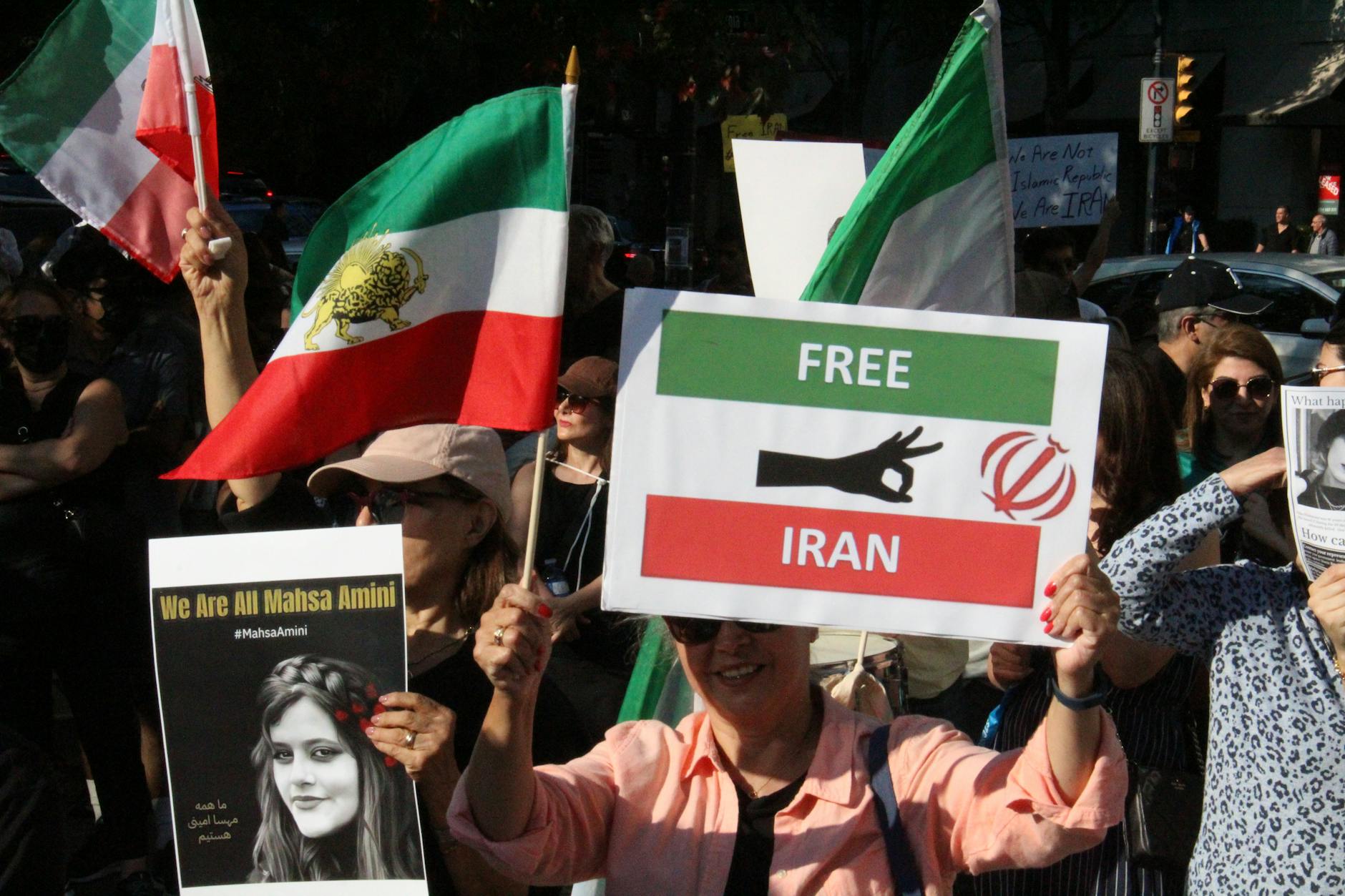
International reaction was swift and divided. NPR and Al Jazeera both reported extensive coverage of the global diplomatic response, with world leaders weighing in across a wide spectrum. One notable diplomatic development: Oman’s foreign minister indicated that Iran had agreed to no nuclear material stockpile, with “peace within reach.” If accurate, this suggests back-channel negotiations were already underway before or immediately after the strikes began.
📨 Get Free Accountability Coverage Alerts
Free · No spam · Unsubscribe anytime
The Oman channel is significant because Oman has historically served as a quiet intermediary between the U.S. and Iran, including during the negotiations that produced the 2015 Iran nuclear deal. Whether this diplomatic opening represents a genuine path to de-escalation or merely a survival tactic by a battered Iranian government remains to be seen. The gap between a wartime concession and a durable agreement is vast, and the history of Middle Eastern cease-fires offers little comfort about long-term stability.
What Comes Next and Why Accountability Matters
The immediate military phase of Operation Epic Fury may wind down, but the consequences will unfold over months and years. Iran’s proxy networks — Hezbollah, the Houthis, Iraqi Shia militias — remain operational even if their patron state is degraded. Oil markets, already volatile, face sustained disruption risk if the Strait of Hormuz becomes contested.
And the domestic political debate over whether this operation was legally authorized under existing congressional authorizations for military force, or whether it required new authorization, has barely begun. For a site focused on government accountability and consumer impact, the questions that matter most are structural. Who authorized this? Under what legal framework? What is the projected cost to taxpayers? What oversight mechanisms exist for the next phase? And critically, what happens to the American service members who were wounded, and the families of those who were killed, when the news cycle moves on? These are not abstract policy questions. They are the practical consequences of the largest American military operation in over two decades, and they deserve answers that go beyond press conferences and fact sheets.
Conclusion
Operation Epic Fury represents a historic escalation in U.S. military engagement in the Middle East. With over 1,000 targets struck, three American service members killed, 40 senior Iranian commanders eliminated, and the reported death of Iran’s supreme leader, the operation’s immediate military impact is undeniable. The deployment of two carrier strike groups, more than 200 combat aircraft, and extensive ground-based missile defense systems confirms this as the largest American military action since the 2003 Iraq invasion — not by a small margin.
What remains unresolved is whether the operation’s stated objectives — preventing Iranian nuclear capability, destroying its military infrastructure, degrading proxy networks, and encouraging internal regime change — will actually be achieved. History suggests that military operations of this scale produce unintended consequences that outlast the initial campaign by decades. The coming weeks will reveal whether the diplomatic opening through Oman leads to genuine de-escalation, or whether Operation Epic Fury marks the beginning of a broader and more costly conflict. Either way, the public deserves full transparency about the operation’s legal basis, its true costs, and its long-term strategic rationale.
Frequently Asked Questions
Was Operation Epic Fury authorized by Congress?
This has not been clearly established. The Trump administration has not publicly cited a specific congressional authorization. Questions about whether existing Authorizations for Use of Military Force apply to direct strikes on Iran — as opposed to non-state actors — remain legally contested.
How does Operation Epic Fury compare to the 2003 Iraq invasion in scale?
The Pentagon itself described the pre-operation buildup as the largest concentration of U.S. military power in the Middle East since the 2003 Iraq invasion. Over 1,000 targets were struck with more than 200 combat aircraft, two carrier strike groups, and extensive ground and naval assets. The key difference is that Epic Fury has been an air and naval campaign, not a ground invasion.
Were any Iranian nuclear facilities destroyed?
The strikes targeted remnants of Iran’s nuclear and missile programs, according to CENTCOM. However, CSIS analysis notes that complete neutralization of dispersed and potentially hardened nuclear facilities is difficult to confirm. Underground sites may have survived the strikes.
How many U.S. service members were killed or wounded?
Three U.S. service members were killed in action and five were seriously wounded, with several others sustaining minor injuries, according to USNI News and Military.com reporting.
Is Supreme Leader Khamenei confirmed dead?
Reports indicate Khamenei was killed in the strikes, but independent confirmation from Iranian state media or neutral international observers has not been established as of March 1, 2026.
What impact will this have on oil prices and the economy?
The Strait of Hormuz, through which roughly 20 percent of the world’s oil flows, could face disruption if hostilities continue. The destruction of nine Iranian naval vessels reduces Iran’s ability to threaten shipping, but retaliatory action from Iranian proxies or remaining forces remains a risk.
You Might Also Like
- Trump Launches Operation Epic Fury — U.S. and Israel Begin Massive Strikes Across Iran
- Pentagon Calls Operation Epic Fury “Most Lethal Aerial Operation in History”
- 3 U.S. Service Members Killed, 5 Seriously Wounded in Iran Operation