
The man in charge of America’s public health apparatus, HHS Secretary Robert F. Kennedy Jr., still will not give a straight answer about whether people should vaccinate their children against measles. When pressed by lawmakers during a House Appropriations Committee hearing, Kennedy offered a masterclass in deflection, saying he would “probably” vaccinate his own children today but quickly adding that “my opinions about vaccines are irrelevant” and “I don’t think people should be taking medical advice from me.” That last part, at least, is hard to argue with. The problem is that Kennedy’s opinions are not irrelevant when he runs the entire federal health infrastructure, and his decades of anti-vaccine advocacy have coincided with a measles crisis that has now killed four people, including children, and infected thousands across the country. As of early 2026, the United States had recorded approximately 3,190 cumulative measles cases spanning 2025 and into February 2026, a figure that has since climbed to over 3,600.
The 2025 calendar year alone saw 2,284 confirmed cases, a 34-year high, and 2026 has already added 1,362 more as of March 12 across 28 states. Two unvaccinated children in Lubbock, Texas, ages six and eight, are dead. An unvaccinated adult in Lea County, New Mexico is dead. A child in Los Angeles County died from subacute sclerosing panencephalitis, a rare but universally fatal delayed complication of measles, after being infected as an infant before he was old enough to receive the vaccine. The country that eliminated measles in the year 2000 is now at risk of losing that status entirely. This article examines how we got here, what Kennedy’s reconstituted vaccine advisory committee has done, the federal court intervention that followed, and what the political fallout looks like heading into the 2026 midterms.
Table of Contents
- How Did 3,190 Measles Cases and 4 Deaths Happen Under the Man in Charge of U.S. Vaccines?
- What Kennedy’s Reconstituted ACIP Did to the Childhood Vaccine Schedule
- South Carolina’s Outbreak and the MAHA Movement’s Push to Gut School Vaccine Mandates
- The Samoa Connection and Why Kennedy’s History Matters Now
- The Political Fallout and Why the White House Is Running From Vaccine Questions
- What the Federal Court Ruling Means for Vaccine Policy Going Forward
- Where This Crisis Goes From Here
- Conclusion
- Frequently Asked Questions
How Did 3,190 Measles Cases and 4 Deaths Happen Under the Man in Charge of U.S. Vaccines?
The short answer is that vaccine uptake has been declining for years, and the person now running the Department of Health and Human Services spent the prior two decades telling anyone who would listen that vaccines are dangerous. Kennedy built his public profile on anti-vaccine activism through his organization formerly known as children‘s Health Defense, and his appointment to lead HHS sent an unmistakable signal to vaccine-hesitant communities across the country. The numbers tell the story with brutal clarity. Ninety-three percent of the measles cases recorded during this crisis were in people who were unvaccinated or did not know their vaccination status. In 2026, 94 percent of cases, 1,281 out of 1,362, are outbreak-associated, meaning they are spreading in clusters of unvaccinated populations rather than appearing as isolated travel-related infections. The Texas outbreak that killed two children in Lubbock illustrates how quickly measles can devastate communities with low vaccination rates. Both children who died were unvaccinated.
Kennedy eventually visited the outbreak epicenter, but his visit raised more questions than it answered. He continued to hedge on vaccine recommendations, treating a straightforward public health intervention backed by decades of evidence as though it were a matter of personal philosophy. Meanwhile, the virus does not care about philosophy. Measles is one of the most contagious diseases known to science, and in populations where vaccination rates drop below roughly 95 percent, outbreaks become inevitable. The gap between what Kennedy says in congressional testimony and what his agency actually does is where the real damage accumulates. He tells lawmakers his personal opinions are irrelevant while simultaneously overseeing policy changes that weaken the nation’s immunization infrastructure. It is a kind of bureaucratic sleight of hand. The man will not answer direct questions about vaccines, but his fingerprints are all over the policies that have made this crisis worse.
What Kennedy’s Reconstituted ACIP Did to the Childhood Vaccine Schedule
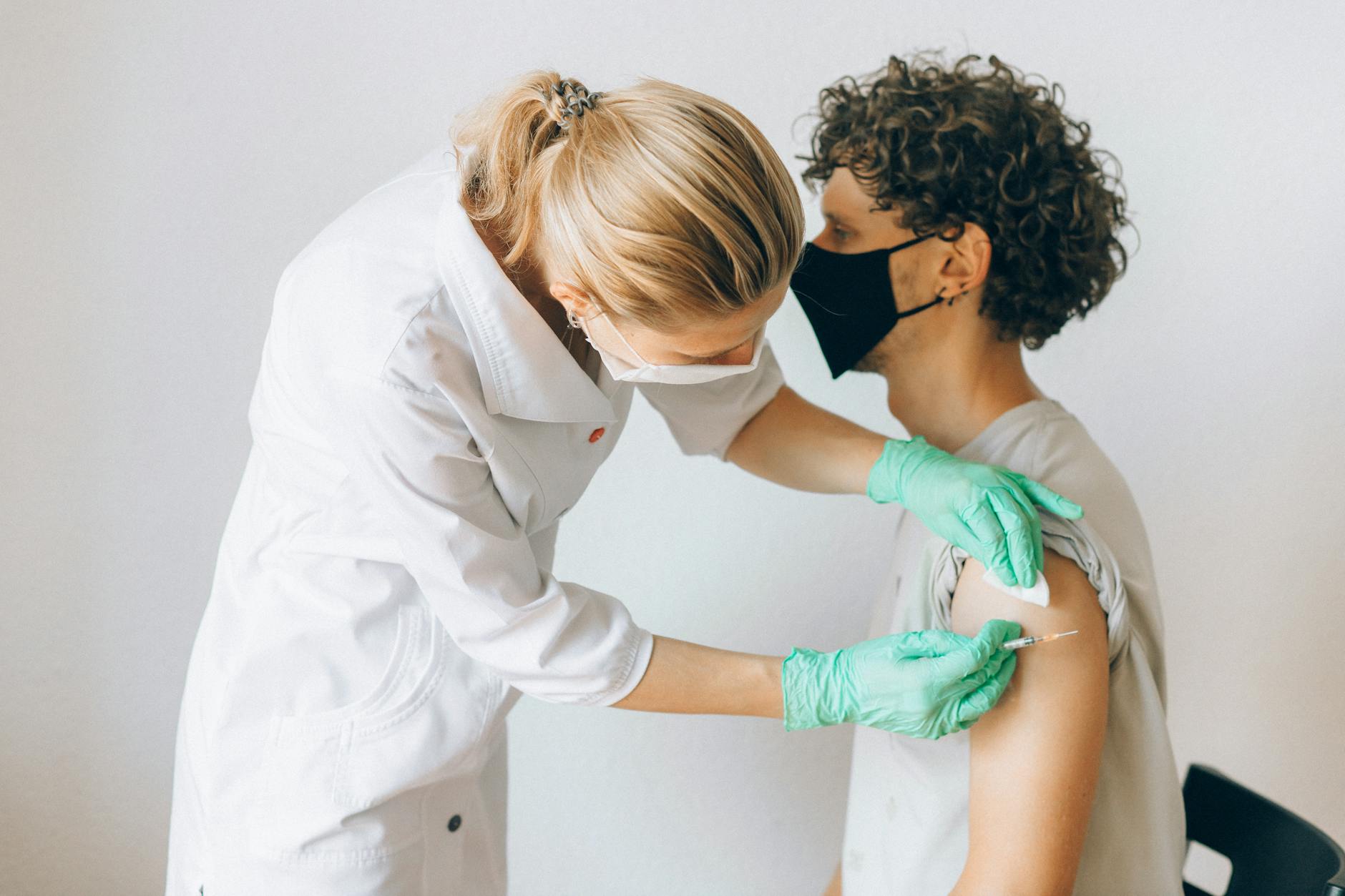
Kennedy did not just bring skepticism to his role. He brought structural changes. His reconstituted Advisory Committee for Immunization Practices, known as ACIP, revised the childhood immunization schedule and removed six diseases from the recommended list. ACIP has for decades served as the gold standard for vaccine recommendations in the United states, and its guidance is what pediatricians, schools, and state health departments rely on to keep children protected. Kennedy replaced members of the panel with appointees more sympathetic to his views, and the revised schedule that followed marked the first time in the committee’s history that recommended childhood vaccines were rolled back rather than expanded. The consequences of this kind of policy change do not show up overnight, but they compound. When the federal immunization schedule changes, it alters what insurance companies are required to cover without cost-sharing, what schools use as their baseline for enrollment requirements, and what guidance pediatricians give to parents during well-child visits.
However, if you are a parent wondering whether the old schedule or the new one applies to your child, the answer as of March 16, 2026 is that a federal judge has intervened. U.S. District Judge Brian Murphy in Massachusetts blocked Kennedy’s vaccine policy overhaul entirely, ordering the reversal of all decisions made by Kennedy-appointed ACIP panelists. The ruling essentially declared that the reconstituted committee’s work was unlawful. This judicial intervention is significant but not necessarily permanent. The ruling could be appealed, and the political dynamics around vaccine policy remain volatile. Parents should consult their pediatricians and follow the pre-Kennedy ACIP schedule, which remains the medically supported standard, but they should also understand that this policy landscape could shift again depending on how the legal challenges play out.
South Carolina’s Outbreak and the MAHA Movement’s Push to Gut School Vaccine Mandates
South Carolina has become the most alarming epicenter of the current measles crisis, with over 960 confirmed cases making it the hardest-hit state in the country. What makes South Carolina’s situation particularly instructive is the direct connection between anti-vaccine political organizing and the collapse of public health protections. Anti-vaccine advocates aligned with Kennedy’s “Make america Healthy Again” movement have been actively lobbying the state legislature to eliminate vaccine mandates for school enrollment. The lobbying is working. Legislators in the state have introduced bills that would create broad exemptions or remove requirements altogether, and the political pressure from the MAHA base has made it difficult for Republican lawmakers to defend existing public health policy. This is the real-world consequence of putting an anti-vaccine activist in charge of federal health policy. It is not just about what happens inside HHS.
Kennedy’s appointment legitimized a movement that had previously operated on the fringes, and that legitimacy has translated into state-level legislative campaigns to dismantle the vaccine requirements that kept measles at bay for over two decades. School vaccine mandates are the single most effective policy tool for maintaining the herd immunity thresholds that prevent outbreaks. When those mandates disappear, outbreaks follow, and the people who pay the highest price are children. The South Carolina situation also reveals a political feedback loop. As cases climb and children get sick, the anti-vaccine movement does not retreat. Instead, it doubles down, reframing the crisis as evidence that the medical establishment cannot be trusted. This makes the political environment even more hostile to vaccine mandates, which drives vaccination rates lower, which produces more cases. Breaking this cycle requires political courage that has been in short supply.
The Samoa Connection and Why Kennedy’s History Matters Now
Kennedy’s track record on vaccines is not theoretical. It has a body count that predates his time in government. In 2019, Kennedy traveled to Samoa to lobby against measles vaccination. The context at the time was that Samoa had temporarily suspended its MMR vaccine program after two infants died due to a tragic error in which nurses improperly mixed the vaccine with a muscle relaxant. Kennedy and his organization seized on the tragedy to promote broader vaccine skepticism. A measles outbreak followed that killed 83 children. Eighty-three.
Newly obtained emails, reported by PBS and other outlets, reportedly undermine Kennedy’s congressional testimony about that Samoa trip. Kennedy had told lawmakers a version of events that minimized his role in discouraging vaccination, but the emails suggest a more active effort to spread anti-vaccine messaging during a critical window when the country needed to rebuild vaccine confidence, not tear it down. This matters because it is the same pattern playing out now on American soil. Kennedy arrives at a moment of public health vulnerability, promotes doubt about vaccines, and then distances himself from the consequences. When Kennedy tells Congress that people should not take medical advice from him, he is trying to have it both ways. He wants the authority of the office without the accountability that comes with it. But the HHS Secretary’s words carry weight whether he disclaims them or not, and his history in Samoa demonstrates what happens when those words undermine public vaccination efforts in communities that are already vulnerable.
The Political Fallout and Why the White House Is Running From Vaccine Questions
The White House has reportedly been distancing Kennedy from vaccine topics, and the reason is nakedly political. Internal fears that Kennedy’s anti-vaccine stance will hurt Republicans in the 2026 midterm elections have prompted a quiet effort to keep him away from the cameras when measles comes up. This is a remarkable admission embedded in the strategy itself. The administration apparently understands that Kennedy’s vaccine views are politically toxic and scientifically indefensible but has not removed him from the position where those views do the most damage. The limitation of this approach should be obvious. You cannot compartmentalize the HHS Secretary away from vaccine policy.
It is like hiring an arsonist to run the fire department and then asking him not to talk about matches. Kennedy’s anti-vaccine ideology is not a side hobby. It is the defining cause of his public career, and his continued presence atop HHS sends a message to every state health department, every school board, and every hesitant parent in the country regardless of whether the White House puts him in front of a microphone. The midterm calculus is also more complicated than the White House seems to appreciate. Measles does not respect electoral timelines. If cases continue to climb through the summer and fall, if more children die, and if the country formally loses its measles elimination status, the political damage will not be contained by keeping Kennedy quiet. Voters in suburban districts, particularly parents, tend to notice when a preventable disease starts showing up in their children’s schools.
📨 Get Free Accountability Coverage Alerts
Free · No spam · Unsubscribe anytime
What the Federal Court Ruling Means for Vaccine Policy Going Forward
Judge Brian Murphy’s March 16, 2026 ruling blocking Kennedy’s vaccine policy overhaul is the most significant legal check on the administration’s public health agenda to date. The order requires reversal of all decisions made by Kennedy’s hand-picked ACIP panelists, effectively restoring the pre-Kennedy immunization recommendations. For now, this means the childhood vaccine schedule that pediatricians have relied on for years remains intact as a matter of federal policy. But court orders are not vaccines.
They protect legal frameworks, not individual children. The ruling does not undo the damage already done to public confidence, does not reverse the state-level campaigns to gut school vaccine mandates, and does not bring back the four people who have died. If the ruling holds on appeal, it may prevent further erosion of federal vaccine policy, but the outbreaks already underway will continue to burn through under-vaccinated communities regardless of what a judge in Massachusetts says. The gap between legal protection and public health reality is where children remain most vulnerable.
Where This Crisis Goes From Here
The United States is now staring at the very real possibility of losing its measles elimination status, a designation it earned in 2000 after decades of sustained public health effort. Losing that status would be a historic public health failure, the kind of thing that gets studied in textbooks as an example of how political ideology can reverse scientific progress. With over 3,600 cases across 2025 and 2026 and the number still climbing, the trajectory is not encouraging. The path back requires the opposite of everything the current HHS leadership represents.
It requires aggressive federal support for state vaccination campaigns, restoration of the full ACIP-recommended childhood schedule, and public messaging from senior officials that is unambiguous about the safety and necessity of the MMR vaccine. Whether any of that happens while Kennedy remains in charge is the question that answers itself. The man still will not say plainly that children should be vaccinated against measles. Until that changes, or until the person saying it changes, expect the case counts to keep rising and the body count to follow.
Conclusion
The measles crisis unfolding across the United States is not a natural disaster or an unavoidable consequence of a new pathogen. It is the predictable result of declining vaccination rates accelerated by an anti-vaccine movement that now controls federal health policy. Approximately 3,190 cases had been recorded by early 2026, a number that has since surged past 3,600 across 28 states. Four people are dead, including children who did not have to die. Ninety-three percent of cases occurred in people who were unvaccinated. South Carolina alone has recorded over 960 cases. A federal judge has blocked Kennedy’s vaccine policy overhaul, but the damage to public trust is not so easily reversed by court order.
Robert F. Kennedy Jr. remains the head of HHS. He still will not give a direct answer about whether children should receive the measles vaccine. The White House is trying to hide him from the topic heading into the midterms, but the virus does not care about political strategy. Parents who want to protect their children should talk to their pediatricians and follow the established immunization schedule. The MMR vaccine is safe, effective, and has prevented millions of deaths worldwide since its introduction. That is not a matter of opinion, and the fact that the nation’s top health official treats it as one is the core of this crisis.
Frequently Asked Questions
Is measles really that dangerous? I thought it was a mild childhood illness.?
Measles kills approximately 1 to 2 out of every 1,000 infected children and causes serious complications including pneumonia, brain swelling, and SSPE, a universally fatal delayed complication that can appear years after the initial infection. The child who died in Los Angeles County from SSPE was infected as an infant before being old enough to receive the vaccine. Measles is not mild.
What is the current recommended age to get the MMR vaccine?
The standard ACIP schedule recommends the first dose of MMR at 12 to 15 months of age and a second dose at 4 to 6 years. In outbreak situations, a dose can be given as early as 6 months, though that early dose does not count toward the standard two-dose series. Consult your pediatrician, especially if you live in or are traveling to an area with active cases.
Did the federal court ruling restore the original vaccine schedule?
Yes. Judge Brian Murphy’s March 16, 2026 ruling ordered reversal of all decisions made by Kennedy-appointed ACIP panelists, effectively restoring the pre-Kennedy childhood immunization recommendations. However, this ruling could be appealed, and it does not directly affect state-level efforts to weaken school vaccine mandates.
Is the United States actually going to lose its measles elimination status?
It is a real and growing possibility. The U.S. earned measles elimination status in 2000, meaning the disease was no longer continuously transmitted within the country. With over 3,600 cases across 2025 and 2026 and outbreaks spreading across 28 states, public health experts warn that the country is at serious risk of losing that designation.
What happened in Samoa and why does it matter?
In 2019, Kennedy traveled to Samoa to lobby against measles vaccination after the country paused its MMR program due to an unrelated tragedy. A measles outbreak followed that killed 83 children. Newly obtained emails reportedly contradict Kennedy’s congressional testimony about his role during that trip. The Samoa episode demonstrates the real-world consequences of anti-vaccine advocacy in vulnerable populations.
You Might Also Like
- Trump’s America: Vance Says Iran Red Line Is “Crystal Clear” Now
- SiriusXM $28 Million Settlement — No Receipts Required, Deadline March 21, 2026 Approaching
- Federal Reserve Cut Interest Rates 3 Times…Mortgage Rate Still Stuck Above 6.5%