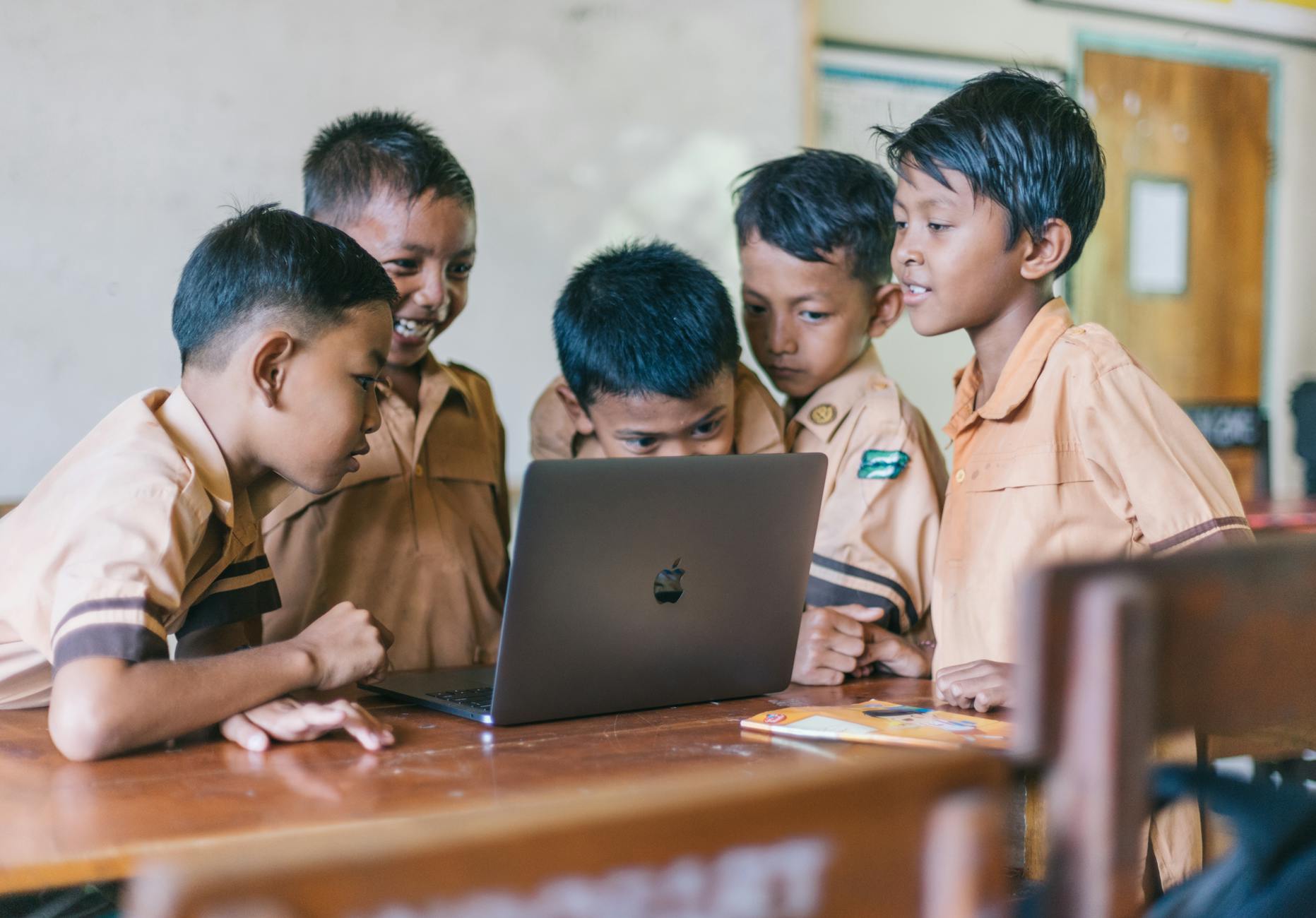
The numbers are staggering and the trajectory is unmistakable. Roblox, the gaming platform that has become a digital playground for nearly 75 percent of all American children ages 9 to 12, now counts 39.7 million daily active users under the age of 13 — and in 2024, the company reported 24,522 cases of suspected child sexual exploitation to the National Center for Missing and Exploited Children. That figure represents a roughly 36-fold increase from the 675 reports Roblox filed in 2019, a rate of growth that dwarfs the platform’s already explosive user expansion. To put the 2024 number in concrete terms, it means Roblox was flagging an average of 67 child exploitation tips every single day of the year.
This is not a story about a few bad actors slipping through the cracks of an otherwise safe platform. It is the story of a company that, according to short-seller Hindenburg Research, actively decided against implementing parental controls because doing so would hurt user growth and engagement metrics — even as predators organized openly on its platform in groups with tens of thousands of members. Los Angeles County, the Georgia Attorney General, and lawmakers from coast to coast have now taken legal action, and 132 lawsuits have been consolidated into a single massive federal proceeding in San Francisco. This article examines the full scope of the crisis: how Roblox’s child user base has grown, what the exploitation data actually shows, what Hindenburg’s investigation uncovered, the legal firestorm now engulfing the company, what parents can do right now, how Roblox’s response compares to its competitors, and what the future regulatory landscape looks like for platforms that market to children.
Table of Contents
- How Did 39.7 Million Children Under 13 End Up on Roblox — and Why Are Exploitation Reports Surging?
- What Did the Hindenburg Research Report Reveal About Roblox’s Safety Failures?
- The Legal Avalanche — 132 Lawsuits, State Attorneys General, and LA County’s Unprecedented Action
- What Can Parents Actually Do to Protect Their Children on Roblox Right Now?
- Why AI Moderation Alone Cannot Solve the Child Safety Crisis on Roblox
- How Roblox’s Child Exploitation Numbers Compare to Other Major Platforms
- Where This Is Headed — Federal Regulation, Corporate Accountability, and the Future of Kids’ Online Safety
- Conclusion
- Frequently Asked Questions
How Did 39.7 Million Children Under 13 End Up on Roblox — and Why Are Exploitation Reports Surging?
Roblox has achieved a level of market penetration among young children that no other entertainment platform can match. The company’s own data shows that daily active users under 13 grew from 32.4 million in the second quarter of 2024 to 39.7 million in Q2 2025 — a jump of more than 7 million children in a single year. As of late October 2025, Roblox reported over 151 million total daily active users and more than 380 million monthly users, with over 40 percent of that entire base being children under 13. When nearly three out of four American kids between 9 and 12 are regularly on your platform, you are not just a game company. You are one of the largest gatherers of children on the planet. The exploitation numbers tell the darker half of that story. In 2019, Roblox submitted 675 reports to NCMEC. By 2022, according to a Bloomberg investigation, the number had climbed to 2,973. In 2023, it jumped to 13,316.
And in 2024, it reached 24,522. Some defenders of Roblox argue that rising report numbers simply reflect better detection. There is a kernel of truth there — a platform that reports nothing is not necessarily a safe platform. But a 36-fold increase over five years, during a period when the under-13 user base roughly doubled, suggests the problem is growing far faster than the company’s ability or willingness to contain it. The comparison is instructive. If reports were rising proportionally with users, you would expect them to roughly double alongside the user base. Instead, they increased by a factor of 36. Either the platform has become dramatically more dangerous for children per capita, or it was dramatically underreporting for years and is only now beginning to reckon with the true scale of predatory activity on its servers. Neither explanation is reassuring.
What Did the Hindenburg Research Report Reveal About Roblox’s Safety Failures?
On October 8, 2024, Hindenburg Research — the short-selling firm known for its investigations into Nikola, Adani, and other companies — published a report that labeled Roblox an “X-Rated Pedophile Hellscape for Kids.” The language was deliberately provocative, but the underlying findings were documented with specificity. Hindenburg’s investigators identified a group called “Adult Studios” with 3,334 members that was openly trading child sexual abuse material on the platform. They tracked 38 Roblox groups in total, including one with 103,000 members, that were openly soliciting sexual favors from minors and distributing CSAM. Perhaps the most damning allegation in the report was not about what predators were doing, but about what Roblox chose not to do. Hindenburg claimed that the company made a deliberate decision not to implement parental controls because such controls would reduce user growth and engagement metrics — the numbers that wall street watches most closely. In other words, the report alleged that Roblox weighed child safety against quarterly earnings and chose earnings.
Compounding this, Hindenburg found that Roblox had actually reduced its trust-and-safety spending by 2 percent year over year, replacing human moderators with AI systems. However, it is important to note that Hindenburg Research is a short seller with a financial interest in Roblox’s stock price declining. That does not make their findings false — the NCMEC data independently corroborates the scale of the problem — but it does mean the framing should be evaluated with that incentive in mind. Roblox disputed several of Hindenburg’s characterizations and pointed to its investments in safety technology. The question for regulators and parents is not whether Hindenburg’s motives were pure, but whether the documented facts hold up. So far, the lawsuits and government investigations suggest they do.
The Legal Avalanche — 132 Lawsuits, State Attorneys General, and LA County’s Unprecedented Action
The legal pressure on Roblox is now coming from virtually every direction. As of December 2025, 132 pending lawsuits have been consolidated into a single multidistrict litigation proceeding — MDL-3166, formally titled *In Re: Roblox Corporation Child Sexual Exploitation and Assault Litigation* — centralized in the U.S. District Court for the Northern District of California in San Francisco. These are not frivolous claims filed by opportunistic attorneys. They represent families across the country alleging that their children were groomed, exploited, or exposed to sexual content on a platform that marketed itself as safe for kids. On February 19, 2026, Los Angeles County became the first California governmental entity to sue Roblox, alleging unfair and deceptive business practices that endanger and exploit children.
The county is seeking civil penalties of up to $2,500 per violation per day — a formula that, given the scale of Roblox’s operations and the number of affected children, could theoretically produce an astronomically large judgment. Two days earlier, on February 17, 2026, Georgia Attorney General Chris Carr announced a formal investigation into Roblox’s practices. These are not isolated actions. Multiple states, including Tennessee, Florida, Texas, Louisiana, Kentucky, Iowa, South Carolina, and Nebraska, have filed complaints or taken enforcement actions against the company. New York State Senator Andrew Gounardes, joined by child safety advocates, has called for urgent legislative action, citing the flood of child exploitation cases as evidence that industry self-regulation has categorically failed. The political dynamics here are notable: child safety on digital platforms is one of the rare issues that generates genuine bipartisan energy. Republican attorneys general in the South and Democratic legislators in New York are reaching the same conclusions through different frameworks but arriving at the same destination — Roblox has a problem it either cannot or will not fix on its own.

What Can Parents Actually Do to Protect Their Children on Roblox Right Now?
Parents face an uncomfortable tradeoff. Roblox is where their children’s friends are. Banning it outright can mean social isolation for a kid whose entire peer group communicates and plays through the platform. But leaving a child unsupervised on Roblox, given what the data now shows, carries real and documented risks. The practical answer lies somewhere between total prohibition and blind trust. Roblox does offer some parental controls, despite what the Hindenburg report characterized as the company’s reluctance to promote them. Parents can set up a parental PIN, restrict chat capabilities, limit the types of experiences a child can access, and review their child’s friend list and activity log.
The problem is that these controls are opt-in, often buried in settings menus, and easily circumvented by a moderately tech-savvy child. Compare this to Apple’s Screen Time or Google’s Family Link, where parental oversight is baked into the operating system and far harder to bypass. Roblox’s approach puts the burden of safety on the parent rather than building it into the product’s architecture — a design choice that, given the platform’s primary audience of children under 13, is difficult to defend. The most effective immediate step is physical proximity. Child safety experts consistently recommend that younger children only play Roblox on shared devices in common areas of the home, never behind a closed bedroom door. Parents should periodically sit with their children while they play, ask who they are talking to, and review private messages. It is also worth having a direct conversation — age-appropriate but honest — about the fact that adults sometimes pretend to be children online and that no one met through a game should ever be given personal information, photos, or access to other accounts.
Why AI Moderation Alone Cannot Solve the Child Safety Crisis on Roblox
One of the most troubling details in the Hindenburg report was the finding that Roblox cut trust-and-safety spending by 2 percent while simultaneously replacing human moderators with AI systems. This tracks a broader industry trend: platforms facing pressure to moderate content at scale turn to automated tools because they are cheaper and faster than human review. But the limitations of AI moderation in the context of child exploitation are severe, and Roblox’s experience illustrates why. Predatory grooming often does not look like obviously harmful content to an algorithm. A conversation that begins with “what games do you like?” and gradually escalates over days or weeks into requests for personal information or images is, at each individual step, linguistically ambiguous.
AI systems trained on keyword detection or pattern matching struggle with this kind of slow-burn manipulation because no single message in the sequence necessarily triggers a flag. Human moderators, by contrast, can evaluate context, tone, and behavioral patterns over time — exactly the kind of nuanced judgment that is most needed when children are involved. This is not to say AI has no role in content moderation. Automated systems are essential for catching known CSAM, screening for obvious predatory language, and processing the sheer volume of interactions that occur on a platform with 151 million daily users. But when a company reduces its human moderation capacity while its child exploitation reports are increasing by thousands per year, the message it sends to regulators, parents, and predators alike is that efficiency matters more than effectiveness. If Roblox’s AI moderation were working, the NCMEC numbers would be going down, not up.

How Roblox’s Child Exploitation Numbers Compare to Other Major Platforms
Context matters when evaluating Roblox’s 24,522 NCMEC reports in 2024. Meta’s family of platforms — Facebook, Instagram, and WhatsApp — submitted over 30 million reports to NCMEC in the same general timeframe, dwarfing Roblox’s numbers in absolute terms. But Meta’s platforms have billions of users and are not specifically designed for and marketed to children under 13. Roblox’s unique vulnerability is that it has built its entire business model around being a destination for young children.
📨 Get Free Accountability Coverage Alerts
Free · No spam · Unsubscribe anytime
When three-quarters of American kids ages 9 to 12 are on your platform, your per-child risk burden is fundamentally different from that of a general-purpose social network. The 36-fold increase from 675 reports in 2019 to 24,522 in 2024 also stands out in rate-of-change terms. While NCMEC reports have risen across the tech industry as detection tools improve and reporting obligations tighten, few platforms have seen growth this steep. The trajectory suggests either a worsening problem, years of prior underreporting, or both — and it explains why state attorneys general are treating this as an active child safety emergency rather than a compliance paperwork issue.
Where This Is Headed — Federal Regulation, Corporate Accountability, and the Future of Kids’ Online Safety
The federal regulatory landscape for children’s online safety is shifting rapidly. The Children’s Online Privacy Protection Act, or COPPA, has been the primary framework since 1998, but it was written for a world of desktop websites, not immersive 3D platforms where children interact with strangers in real time. There is bipartisan momentum in Congress for updated legislation, including proposals that would impose a duty of care on platforms that market to children, require age verification beyond self-reported birthdates, and create private rights of action allowing families to sue platforms directly. The outcome of MDL-3166 will likely set precedent for the entire industry.
If Roblox faces significant damages or is forced into a court-supervised consent decree requiring specific safety measures, every platform that hosts children will take notice. The LA County lawsuit’s penalty structure — $2,500 per violation per day — is designed not just to punish but to make the cost of inaction unambiguously greater than the cost of building proper safeguards. For Roblox, which reported revenue of approximately $2.9 billion in 2024, the financial exposure from 132 lawsuits plus state enforcement actions plus potential federal regulation could reshape the company’s priorities in ways that voluntary commitments to safety never did. Whether that happens fast enough to protect the 39.7 million children currently on the platform every day is the question that matters most.
Conclusion
The facts are not in dispute. Nearly 40 million children under 13 use Roblox daily. Child exploitation reports filed with NCMEC have grown 36-fold in five years. A major research firm found organized groups with over 100,000 members openly engaged in predatory behavior. The company allegedly chose not to implement parental controls to protect growth metrics.
And now 132 lawsuits, multiple state investigations, and an unprecedented county-level enforcement action in Los Angeles are all converging on the same conclusion: the gap between Roblox’s marketing as a safe space for children and the reality of what happens on the platform is too large and too dangerous to ignore. For parents, the immediate priority is supervision — not trust in the platform’s systems, which have demonstrably failed to keep pace with the problem. For regulators and lawmakers, the Roblox crisis is a proof point that voluntary self-regulation by tech companies does not work when growth incentives conflict with child safety. And for Roblox itself, the path forward requires spending more, not less, on trust and safety; implementing meaningful parental controls by default rather than as a buried option; and accepting that a platform built for children carries obligations that a platform built for adults does not. The 24,522 NCMEC reports from 2024 each represent a real child. The number for 2025, if the trend holds, will be worse.
Frequently Asked Questions
Is Roblox safe for my child to use?
Roblox carries documented risks of exposure to predatory behavior and inappropriate content. While the platform does offer some parental controls, the volume of child exploitation reports — 24,522 in 2024 alone — indicates that its safety systems are not keeping pace with the problem. If your child uses Roblox, active parental supervision and configured privacy settings are essential, not optional.
What is MDL-3166 and how does it affect Roblox?
MDL-3166 is a multidistrict litigation proceeding titled *In Re: Roblox Corporation Child Sexual Exploitation and Assault Litigation*, consolidating 132 lawsuits in the Northern District of California. The cases allege that Roblox failed to protect children from grooming, exploitation, and exposure to sexual content. The outcome could force systemic changes to how the platform operates.
How do I set up parental controls on Roblox?
Log into your child’s account, navigate to Settings, and look for the Parental Controls section. You can set a parental PIN, restrict chat to friends only or disable it entirely, limit experiences by age rating, and review activity logs. However, these controls are not enabled by default and can be circumvented, so they should supplement — not replace — direct supervision.
What did the Hindenburg Research report say about Roblox?
Published on October 8, 2024, the Hindenburg report accused Roblox of being an “X-Rated Pedophile Hellscape for Kids.” Investigators documented 38 groups, including one with 103,000 members, openly engaged in predatory activity. The report also alleged that Roblox deliberately chose not to implement parental controls because of concerns about user growth and that the company reduced trust-and-safety spending by 2 percent while shifting from human moderators to AI.
What states have taken legal action against Roblox?
As of early 2026, Los Angeles County (the first California governmental entity to sue), Georgia (through Attorney General Chris Carr’s investigation), and multiple other states including Tennessee, Florida, Texas, Louisiana, Kentucky, Iowa, South Carolina, and Nebraska have filed complaints or taken enforcement actions. The bipartisan nature of these actions signals broad political consensus that Roblox’s self-regulation has failed.
Can I join the lawsuit against Roblox?
If your child was harmed through exploitation or predatory contact on Roblox, you may be eligible to participate in the ongoing litigation. Consult a child safety attorney or check the MDL-3166 case docket for information on how claims are being consolidated. Do not rely on third-party claim aggregation websites that may not have your family’s best interests in mind.
You Might Also Like
- Only 44% Married, 38.5 Million Living Alone…Millennial Marriage Crisis
- White House Response to Mar-a-Lago Shooting Immediately Became Political
- U.S. Deputy Secretary Calls El Mencho’s Death “A Great Victory” for America