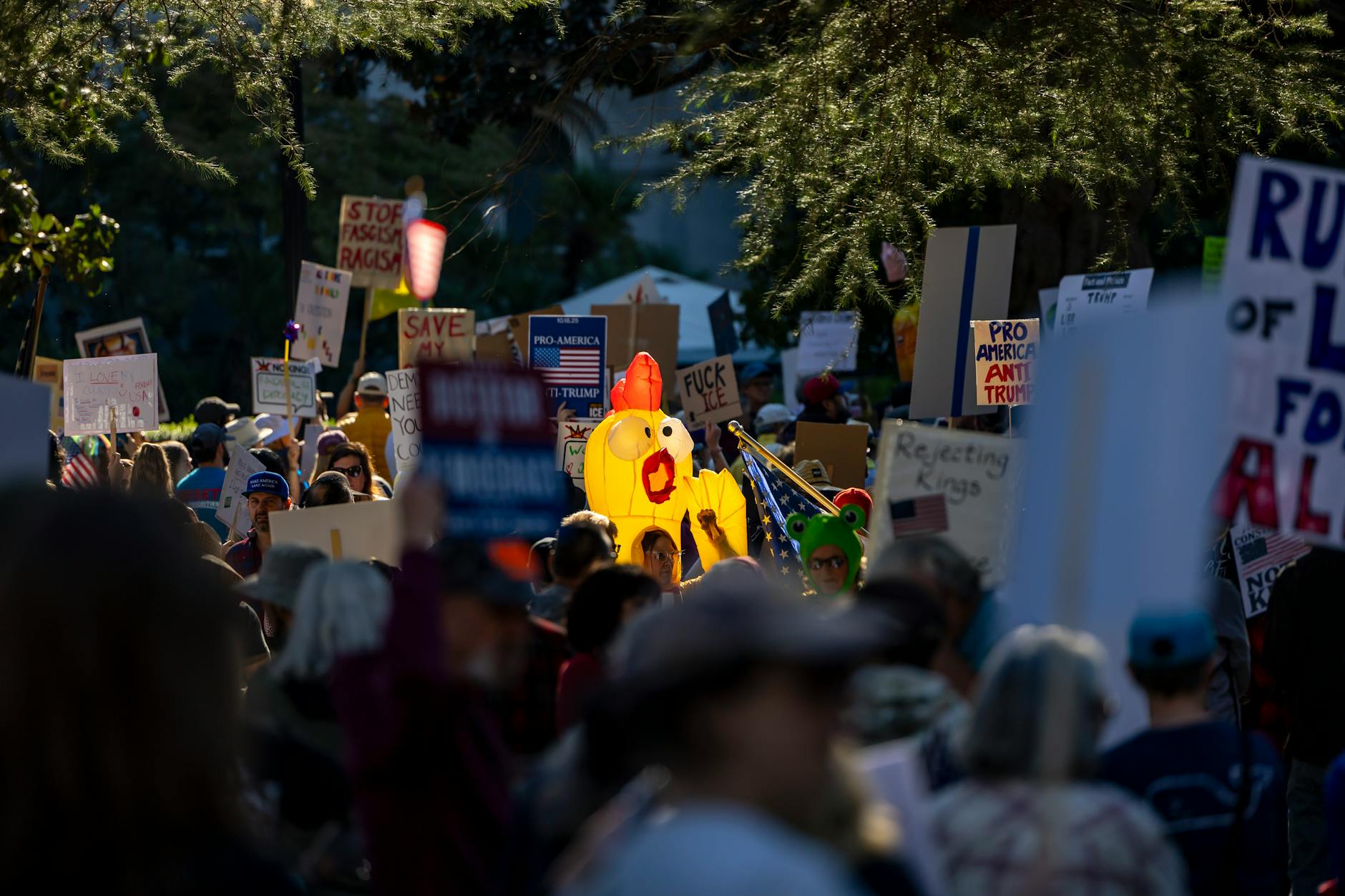
Silent anti-Trump voters—those who opposed Trump in 2024 or have shifted against him since taking office but remain quietly disengaged from public political discourse—could reshape the 2026 midterm elections and beyond. These voters exist in measurable numbers: 14% of voters who backed Trump in 2024 now disapprove of him as president, with 8% planning to vote Democratic in 2026. What makes them potentially surprising is that they often fly under the radar in political coverage and polling analysis.
Unlike vocal activists or partisan loyalists, silent voters can shift the electoral math dramatically without generating the media attention that makes political changes visible in real time. The surprise element lies in their demographic composition and the speed of their defection. Voters of color and those with low political news consumption are most likely to shift from Trump support to disapproval—populations that may not participate in traditional political polling, social media debates, or early voting patterns. When these voters show up to vote in 2026, they may represent a larger force than conventional wisdom suggested, particularly in swing districts and purple states where margins matter most.
Table of Contents
- Who Are the Silent Anti-Trump Voters and Why Do They Remain Quiet?
- The Data Behind the Shift: From 2024 Voters to 2026 Opposition
- Demographic Collapse: Hispanic and Youth Voter Trends
- The 2026 Midterm Battleground: From 2025 Opposition Voting to Congressional Control
- The Polling Blind Spot: Why Silent Voters Are Undercounted
- Real-World Examples: How Silent Defection Manifests in Communities
- Looking Ahead: The 2026 Election and Beyond
- Conclusion
Who Are the Silent Anti-Trump Voters and Why Do They Remain Quiet?
Silent anti-trump voters represent a distinct category different from both vocal Trump opponents and consistent Trump supporters. They are voters who either backed Trump in 2024 expecting specific outcomes or who have developed concerns about his administration’s policies but choose not to loudly broadcast their political views. Their silence stems from multiple factors: social pressure in Trump-supporting communities, fatigue with political conflict, or simply a preference for privacy. The absence of their voices in media coverage and political analysis creates a perception gap where their numbers remain underestimated.
Research shows these voters tend to be concentrated in certain demographics. Hispanic adults, for example, experienced a dramatic approval shift from roughly 40% in March 2025 to approximately 25% by early 2026—a 15-point decline that represents millions of voters who may not be as visible in political discourse as they are in voting booths. Similarly, Americans under 45 saw Trump’s approval drop from 39% to 28% over the same period, yet younger voters often receive less media attention than older cohorts. These voters remain “silent” not because they’ve stopped caring but because they’re less likely to engage in public political debate or be captured in certain polling methodologies.
The Data Behind the Shift: From 2024 Voters to 2026 Opposition
The numerical evidence of voter defection is substantial and undeniable. The 14% of Trump 2024 voters who now disapprove represents millions of people across the country who made a deliberate choice to support Trump and have now reconsidered that decision. This is not noise in polling data; it represents a genuine shift in voter sentiment within a roughly 18-month window. The fact that 8% of Trump 2024 voters specifically plan to cross over and vote Democratic in 2026 demonstrates that this defection is not merely disapproval but an active intention to vote against Republican candidates. What these headline numbers obscure is the variation across demographic groups.
The 15-point drop in Hispanic approval represents a seismic shift in a coalition Trump heavily emphasized during his campaign. The 11-point decline among young voters signals that the “youth for Trump” movement, which gained traction in 2024, has substantially contracted. These demographic-specific declines are important because they aren’t evenly distributed across the country—they concentrate in areas with higher Hispanic populations, college towns, and urban centers where younger voters cluster. A limitation to understand: these figures come from polls with varying methodologies, and some groups—particularly lower-income voters and those with minimal news consumption—are historically underrepresented in polling samples, meaning the true number of defecting voters could be even larger.
Demographic Collapse: Hispanic and Youth Voter Trends
The collapse of Hispanic approval for Trump represents one of the most dramatic shifts in the current political environment. Trump secured an estimated 45% of Hispanic voters in 2024, a notable improvement over previous Republican performance. Yet by early 2026, Hispanic adult approval had dropped to roughly 25%—nearly half of what it was just 11 months prior. This decline is particularly significant in states like Arizona, Nevada, and Texas, where Hispanic voter turnout directly determines election outcomes.
Many Hispanic voters who backed Trump on economic or immigration-related messaging appear to have soured on actual policy implementation, particularly regarding labor issues, business regulation, and rhetorical tone. The youth defection follows a similar if less dramatic pattern. Trump’s approval among Americans under 45 fell from 39% to 28%, a decline that encompasses both younger Gen Z voters entering the political system and younger millennials reassessing their position. This group spans generations and encompasses multiple demographic subgroups, but the common thread is that they are more plugged into digital media, workplace discussions, and social networks where Trump’s administration policies face immediate scrutiny. A key warning here: young voters are also less reliable voters in midterm elections than in presidential years, so while their sentiment has shifted dramatically, translating that sentiment into actual 2026 votes remains uncertain.
The 2026 Midterm Battleground: From 2025 Opposition Voting to Congressional Control
The 2025 state elections provided an early warning signal about the direction of anti-Trump sentiment. In California, 52% of voters specifically voted to oppose Trump—not necessarily voting for something, but voting against him. In New Jersey, 41% voted specifically to oppose Trump, and in Virginia, 38% cast opposition votes. These weren’t close races in Democratic strongholds; these were pluralities or majorities in elections conducted after Trump took office and began implementing his agenda.
The midterm generic congressional ballot shows Democrats leading by 5.3 points, a modest but meaningful advantage in a landscape where Republicans controlled the House heading into 2026. The practical implication is that 2026 House seats in swing districts may flip based on this silent voter movement. Democrats are targeting roughly 20-30 districts held by Republicans where Trump margins have narrowed or where demographic shifts (particularly among Hispanic and young voters) have occurred. The tradeoff is that while anti-Trump sentiment is real, it must overcome structural advantages Republicans still hold: gerrymandering in many states, higher voter turnout reliability in rural Republican areas, and the historically difficult task of flipping House seats. Silent voters who turn out in 2026 could be the difference between a marginal Republican hold on the House and a Democratic majority, but their silence means campaigns must work harder to identify and mobilize them.
📨 Get Free Accountability Coverage Alerts
Free · No spam · Unsubscribe anytime
The Polling Blind Spot: Why Silent Voters Are Undercounted
One of the most consistent limitations in understanding silent voters is that traditional polling systematically undercounts them. Polls that rely on landline phones, high education-level respondents, or those who regularly engage with political media will miss voters who deliberately avoid political discourse or have limited access to traditional surveying methods. The demographic groups showing the largest defection—voters of color, younger voters, and those with low political news consumption—are precisely the populations most likely to be underrepresented in standard polls. Consider the practical difference: a poll might show Trump with 42% approval nationally, but if that poll undersamples Hispanic voters by 2 percentage points or young voters by 3 percentage points, the true number could be significantly lower.
When silent voters do show up to vote, campaigns and analysts are often surprised by the margins because they were never adequately captured in the data. A critical warning: the inverse is also true. Some of these voters may shift back toward Republicans if the political environment changes between now and 2026, or they may simply not vote at all in midterms despite their current stated intentions. Polling cannot distinguish between voters who will definitely turn out in 2026 and those expressing current sentiment but unlikely to participate in a midterm election.
Real-World Examples: How Silent Defection Manifests in Communities
The shift from 2024 Trump support to 2026 opposition manifests differently depending on community context. In South Texas, a region that saw Trump gain ground in 2024 with Hispanic voters, local organizers report conversations with voters who supported Trump for promises of border security but who have grown frustrated with policies affecting migrant workers, agricultural labor, and family separation concerns. These are not voters who’ve become progressive activists; they’re voters who feel misaligned with Trump’s implementation compared to their expectations.
Similarly, in suburban areas of Arizona, Pennsylvania, and Georgia, younger professionals who supported Trump on tax policy or deregulation say they’ve become frustrated with disruption, social division, and policy chaos. The example here is concrete: a 34-year-old small business owner in Phoenix supported Trump in 2024 but is now considering voting for the Democratic House candidate because she believes Trump’s policies are creating uncertainty for her business, even if she agrees with some of his stated economic philosophy. These are the silent voters—not ideologically realigned, but pragmatically shifted.
Looking Ahead: The 2026 Election and Beyond
The trajectory from here depends on how the Trump administration’s policies play out and whether silent voters remain silent or become active participants in 2026. Current data suggests that if trends continue, Republican prospects in the 2026 midterms darken significantly. The combination of defecting Trump 2024 voters, demographic shifts, and opposition-based voting in 2025 creates a political environment where House control is genuinely competitive.
However, this projection assumes that silent voters continue on their current trajectory and actually turn out in midterm elections. One forward-looking insight is that silent voters may become less silent as 2026 approaches. Once campaigns begin active outreach, once endorsements and statements multiply, silent sentiment may crystallize into active political engagement—either turning these voters into energized opposition voters or potentially consolidating some back toward Republicans if alternative messaging gains traction. The surprise element will be the degree to which these voters, who were largely absent from political discourse in 2025, shape the electoral landscape when they finally become visible through their voting choices.
Conclusion
Silent anti-Trump voters represent a measurable and potentially consequential force in American politics heading into 2026. The data is clear: 14% of Trump’s 2024 voters now disapprove, with significant defection among Hispanic voters (dropping from 40% to 25% approval), young voters (dropping from 39% to 28%), and across demographics that weren’t as vocal in 2024. The 2025 state elections and current generic ballot data suggest this sentiment has already begun translating into electoral preferences, though its full impact remains hidden by the silence of voters who choose not to publicly broadcast their political shifts.
The key takeaway for observers, campaigns, and analysts is to recognize that electoral surprises often emerge from voters who were underestimated because they didn’t participate visibly in political discourse. Monitor 2026 race-level polling in swing districts, track demographic voting pattern shifts in regions with high Hispanic and young voter populations, and remain attentive to actual turnout numbers when they arrive on election night. Silent voters are quiet until they vote.
You Might Also Like
- Could a Surprise Republican Candidate Emerge?
- Can Hidden Trump Voters Return Again?
- Can Trust in Institutions Be Rebuilt?