
Extremes dominate headlines because social media platforms and national news outlets are algorithmically optimized to amplify sensational content, but voters themselves remain far more pragmatic. When Americans actually cast ballots or express preferences to pollsters, they prioritize kitchen-table issues—crime, immigration, and cost of living—not the most inflammatory voices that dominate their feeds. This gap between what trends on social media and what moves voters at the ballot box is one of the most consequential misreadings of American politics today, and understanding it matters if you want to know what will actually drive the 2026 midterms and beyond.
The distinction is not hypothetical. Loud voices on social media create the impression that American politics has become a binary choice between extreme positions, yet the actual electorate remains far more complex. What goes viral on one platform may alienate moderate voters who ultimately decide elections. This disconnect has allowed both parties to misread their own strength and misjudge what messaging actually persuades undecided voters.
Table of Contents
- How Social Media Creates the Illusion of Consensus Around Extreme Positions
- The Collapse of Moderate Voices in Government and the Narrowing of Centrist Opinion
- Election Confidence Has Collapsed, But the Partisan Divide Reveals What Voters Actually Worry About
- The Newspaper Collapse and How Local Media Decline Shapes Voter Knowledge and Turnout
- Digital Voter Suppression Operates as a Largely Invisible Force Shaping Electoral Outcomes
- Youth Voters Defy the Extreme-Dominance Narrative by Mobilizing on Clear Principles
- What the 2026 Midterms Will Reveal About the Real Priorities of American Voters
- Conclusion
How Social Media Creates the Illusion of Consensus Around Extreme Positions
social media platforms operate on engagement algorithms that reward outrage and conflict. A thoughtful, moderate take generates far fewer impressions than a provocative statement. This structural incentive has created a distorted view of public opinion where the most visible voices appear to represent the mainstream when they actually represent a vocal minority. Common Cause research confirms that while loud voices dominate social media ecosystems, those platforms remain fragmented—trends on one platform may not reflect broader public opinion, yet they shape how journalists, politicians, and voters themselves perceive what “everyone” thinks. Consider election coverage in 2024-2026.
National outlets fixated on extreme rhetoric from both camps, yet polling showed voters prioritizing practical governance issues. A voter genuinely concerned about inflation and housing costs might see weeks of coverage about controversial statements and assume that’s what determines elections. It isn’t. The problem is that newsrooms have contracted dramatically, making it harder for reporters to distinguish between what is genuinely important to voters and what merely generates clicks. The consequence is that political candidates often optimize for going viral rather than building durable coalition support. This creates a mismatch where the candidates who perform best on social media may underperform with actual voters, particularly older and moderate voters who don’t spend their days on Twitter or TikTok.

The Collapse of Moderate Voices in Government and the Narrowing of Centrist Opinion
The most striking evidence of polarization is not public opinion—it’s the disappearance of moderate elected officials. According to the Brookings Institution, Congress has lost roughly 85 percent of its moderate members. In 1971-72, more than 160 moderate Democrats and Republicans served on Capitol Hill. By 2026, only about two dozen remain. This collapse didn’t happen because voters demanded ideological purity; it happened because primary elections and gerrymandering punish moderation and reward base mobilization.
What’s more troubling is that this institutional polarization has correlated with actual shifts in public opinion toward the extremes, though the shift is smaller than the shift in Congress. The University of Chicago Harris School found that in the 1990s-2000s, roughly 50 percent of respondents held moderate positions on major policy questions. By the late 2000s, that figure had shrunk to under 40 percent. The limitation here is important: this suggests voters have genuinely shifted more toward ideological consistency, but nowhere near as dramatically as their elected representatives. This creates a mismatch where Congress appears to represent a more polarized electorate than actually exists, further entrenching the false narrative that extremism is mainstream.
Election Confidence Has Collapsed, But the Partisan Divide Reveals What Voters Actually Worry About
March 2026 polling data shows a troubling decline in election confidence. Only 66 percent of Americans now say they’re confident that elections will be fair and accurate in November 2026—a significant drop from 76 percent in October 2024. This isn’t because fraud actually increased; it’s because partisan messaging about election integrity has successfully degraded trust in democratic institutions. But the partisan breakdown tells a more revealing story: Republicans express 70 percent confidence in election fairness, while Democrats register only 32 percent and independents 45 percent. This disparity is not about actual conditions changing.
Rather, it reflects how effectively partisan messaging from national figures has shaped voter perception. When voters hear constant claims that elections are rigged, some begin to believe it—particularly if their preferred candidate lost. But here’s the limitation: this erosion of confidence doesn’t necessarily mean voters will stop voting or abandon elections. Instead, it may increase turnout as both sides feel compelled to defend their interests. The real danger is that declining confidence reduces the legitimacy of outcomes that don’t favor your side.

The Newspaper Collapse and How Local Media Decline Shapes Voter Knowledge and Turnout
By 2024, the United States had lost approximately one-third of its local newspapers since the 1990s. This isn’t just a media industry problem—it’s a voter knowledge problem. Research from the University of Illinois State shows that declining local media correlates with diminishing municipal voter turnout. When communities lose their newspaper, they lose the mechanism that connects local government decisions to voters who might otherwise remain unaware of what their city council or school board is doing.
This creates a vicious cycle. As voters become less informed about local issues, they’re more likely to rely on national partisan media for their political cues, which amplifies the extremes because national politics operates on a different incentive structure than municipal governance. A typical city council meeting involves practical compromises that don’t generate outrage; national politics is a zero-sum game where one side’s win is the other’s loss. When voters lack local news, they default to the national narrative, which systematically misrepresents what actually moves elections—which are often decided on local issues that never trend nationally.
📨 Get Free Accountability Coverage Alerts
Free · No spam · Unsubscribe anytime
Digital Voter Suppression Operates as a Largely Invisible Force Shaping Electoral Outcomes
While headlines focus on election integrity debates, emerging research reveals a more subtle threat: digital voter suppression. A study published in the Proceedings of the National Academy of Sciences found that individuals exposed to digital voter suppression ads—ads that discourage voting by raising doubts about voting access, suggesting one’s vote doesn’t matter, or implying voting will be difficult—were significantly less likely to vote. More troubling, this suppression was not evenly distributed. The research found that digital voter suppression disproportionately targeted non-White voters in racial minority counties of battleground states.
This is a critical limitation in public discourse: most voter suppression discussions focus on visible barriers like voter ID laws or polling place closures. Digital suppression is invisible. A voter scrolling through social media may see a deceptive ad suggesting their polling location has moved, or that their party faces an insurmountable deficit, and decide not to vote—never realizing they’ve been targeted. The scale of this effect remains unclear, but the methodology is sophisticated enough that it likely shaped 2020 and 2024 outcomes without making headlines.
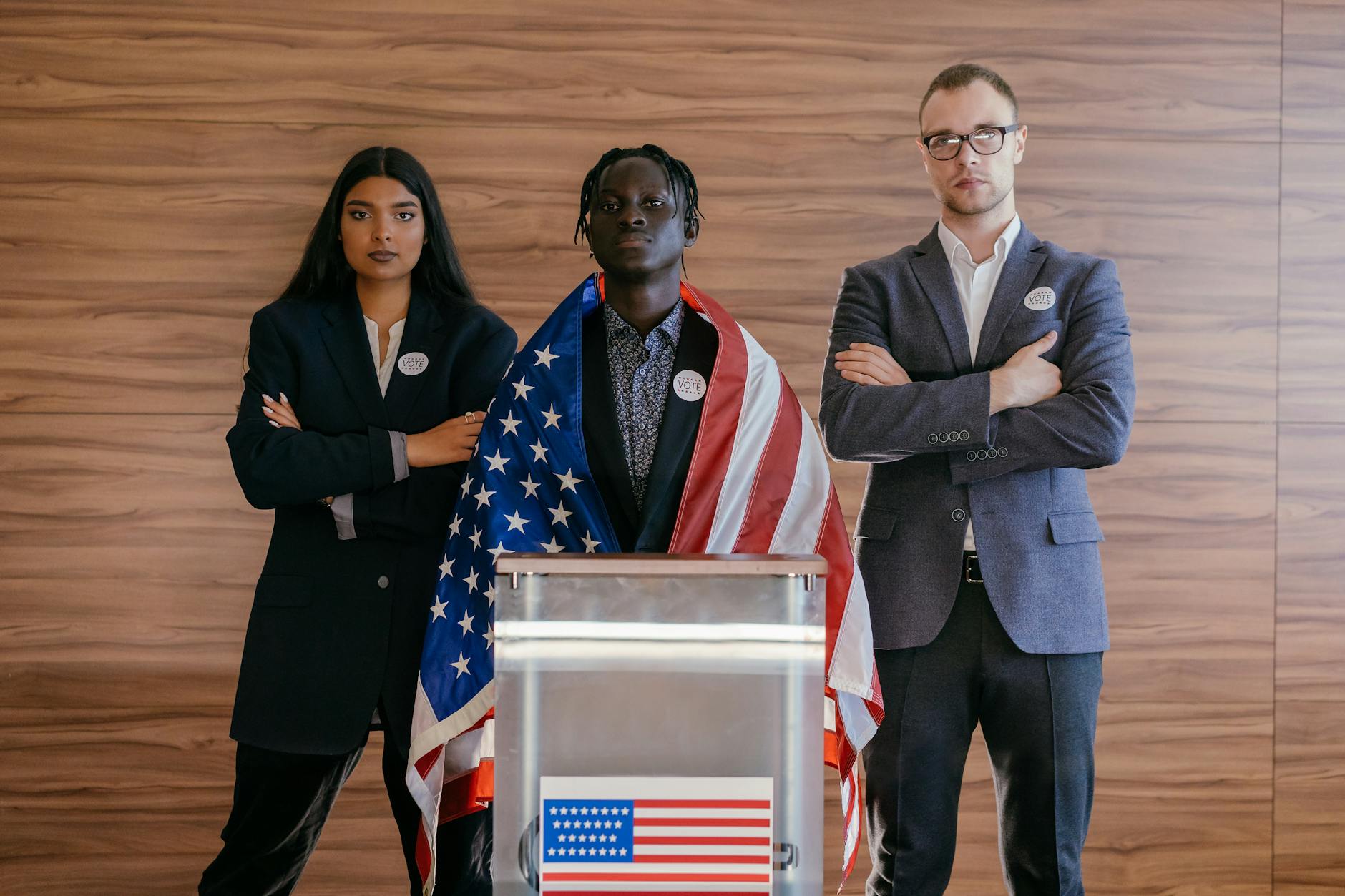
Youth Voters Defy the Extreme-Dominance Narrative by Mobilizing on Clear Principles
While national coverage dwells on culture war flashpoints, youth voters have demonstrated clearer and more pragmatic voting behavior than older demographics. According to Yale Youth Poll data, youth turnout rose 7 percentage points in Virginia and 9 points in New Jersey compared to 2021 gubernatorial elections. More significantly, younger voters overwhelmingly disapprove of Trump and plan to vote Democratic in 2026.
This represents a direct counterpoint to the extreme-dominance thesis. Younger voters aren’t animated by the most sensational controversies; they’re motivated by a clear partisan preference. They respond to mobilization efforts and concrete issue messaging. The 2024-2026 period shows youth voters participating more, not less, and doing so around substantive political choices rather than personality-driven drama.
What the 2026 Midterms Will Reveal About the Real Priorities of American Voters
The 2026 midterms will serve as a definitive test of whether extremes or pragmatism actually drive electoral outcomes. CNN’s political reporting indicates that voters focus on practical issues—crime, immigration, and cost of living—as likely midterm drivers, not the most sensational headlines that dominate national news cycles.
If this holds, it will demonstrate that the extreme-dominance of headlines hasn’t actually captured voter sentiment, it’s merely captured journalist attention and engagement metrics. Looking forward, the key question is whether political campaigns will continue to optimize for viral moments or whether they’ll recognize that elections are still won by addressing what voters actually care about. The data suggests the latter has always been true; we’ve simply lost sight of it by confusing media salience with electoral relevance.
Conclusion
Extremes dominate headlines because the media ecosystem—both social and traditional—is structured to amplify sensational content. But voters consistently prioritize practical governance over ideology. The decline of local news has made this disconnect worse by forcing voters to consume national partisan coverage instead of local information.
Yet elections continue to be decided by kitchen-table issues and voter turnout, not by who wins the most attention on social media. The 2026 midterms will confirm this pattern if current voter preferences hold. Understanding this gap—between what dominates headlines and what actually moves voters—is essential for anyone trying to predict electoral outcomes, evaluate political claims, or simply make sense of why American democracy hasn’t collapsed despite feeling polarized. The noise is real, but it’s not the whole story.
You Might Also Like
- Why Secular Young Voters Reject Old Narratives
- Why Black Male Voters Are More Competitive Than Ever
- Are College Educated Voters Changing the Democratic Party?