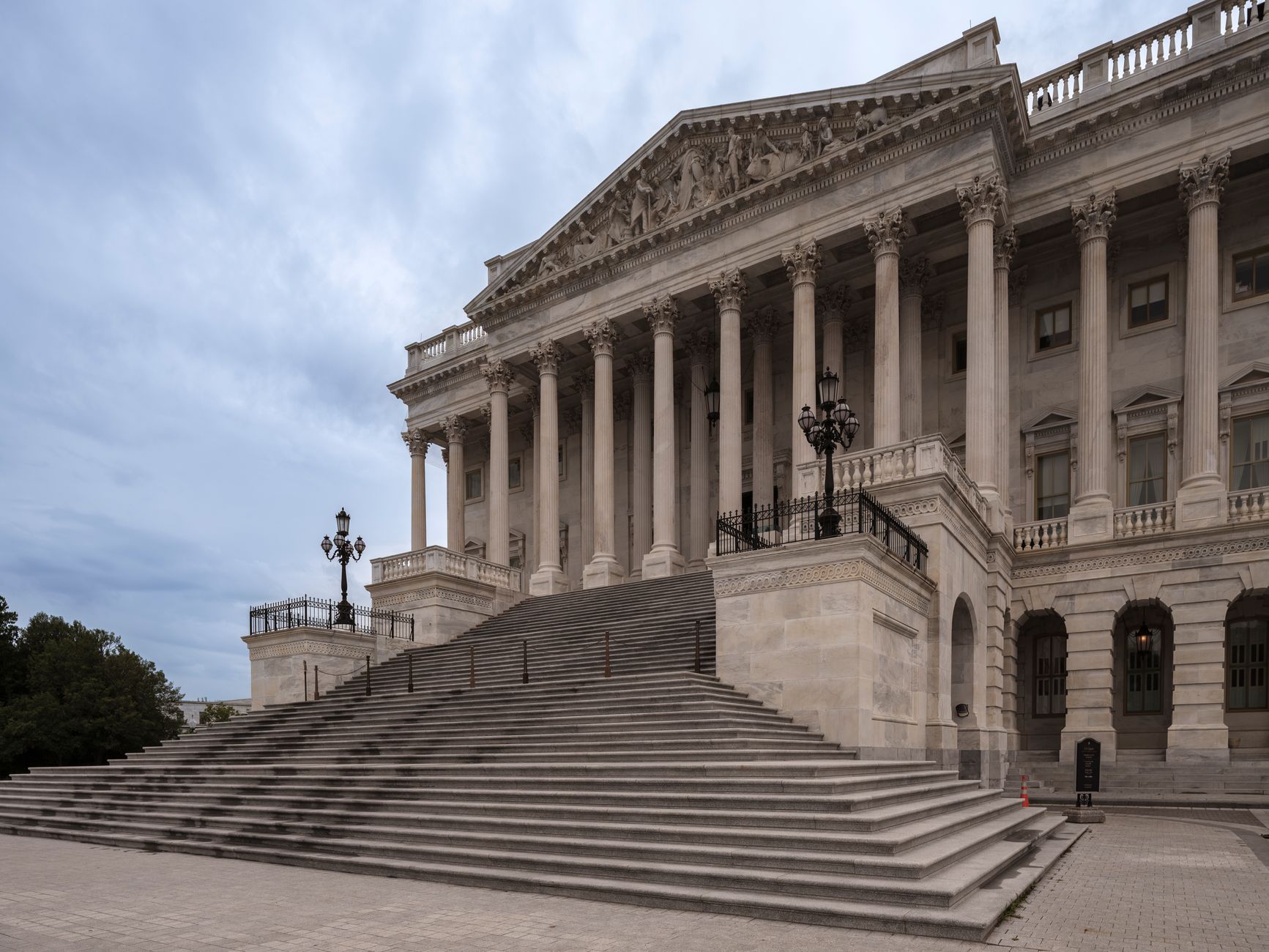
Congress can authorize, limit, defund, or order an end to President Trump's military action against Iran through legislation. Courts could review the conflict's legality, but standing rules and the political-question doctrine make judicial intervention uncertain.
The War Powers Resolution, or WPR, is the federal law governing presidential deployment of U.S. forces into hostilities without prior congressional authorization. Its deadlines matter, but enforcing them ultimately depends on Congress passing binding legislation or a court accepting a proper lawsuit.
Table of Contents
- What triggered the war-powers dispute?
- When does the 60-day clock apply?
- What can Congress do now?
- Why can't one chamber simply order withdrawal?
- What could the courts actually do?
What triggered the war-powers dispute?
President trump formally notified Congress after U.S. military action against Iran resumed following the July 7 strikes. He described the action as defensive and limited while reserving the option of further action against threats to the United States and its partners, according to Roll Call's report on the notification.
The administration relied on the president's constitutional authority as Commander in Chief and authority over foreign relations. It did not identify a statute specifically authorizing force against Iran. That distinction drives the dispute. Congress has constitutional power to declare war, but presidents claim independent authority to conduct at least some military operations. The Constitution does not provide a settled, precise boundary between those powers.
When does the 60-day clock apply?
The WPR requires the president to notify congressional leaders within 48 hours after introducing U.S. forces into actual or imminent hostilities. The report must describe the circumstances, expected scope and duration, and asserted legal authority. Once a qualifying report is submitted or required, the law generally directs the president to terminate the reported use of forces within 60 calendar days. The deadline does not apply if Congress declares war, specifically authorizes the operation, or extends the period by law.
The statute allows up to 30 additional days when necessary for safe withdrawal, as stated in 50 U.S.C. § 1544. The administration can dispute whether the clock was triggered, when it began, or whether Congress may constitutionally force termination under the WPR. Those disputes do not automatically suspend military operations. Someone must translate the law into an enforceable congressional command or a court judgment.
What can Congress do now?
Congress has several tools, but resolutions expressing a chamber's position are not equivalent to binding law. Congress usually authorizes modern military operations through statutes rather than formal declarations of war.
📨 Get Free Accountability Coverage Alerts
Free · No spam · Unsubscribe anytime
Funding restrictions can be especially concrete because military operations require appropriated money, although the wording and exceptions determine how effective a restriction will be. On July 23, the house passed an Iran war-powers resolution by 214–208, while the Senate rejected a similar measure by 47–49. The votes therefore did not create a bicameral measure with legal force, according to the Associated Press account.
- Enact an Iran-specific authorization that defines permitted targets, purposes, geography, duration, and reporting duties.
- Pass a binding withdrawal measure directing the end of unauthorized hostilities.
- Prohibit spending on specified military operations against Iran.
- Attach limits, deadlines, or reporting requirements to appropriations.
- Decline to authorize continued operations after the WPR deadline.
Why can't one chamber simply order withdrawal?
The original WPR contemplated withdrawal through a concurrent resolution, which passes both chambers without going to the president. That mechanism is constitutionally doubtful after the Supreme Court's decision in INS v. Chadha, which rejected a related form of legislative veto. Congress has created expedited procedures for a joint resolution or bill instead.
Such legislation must pass both chambers and be presented to the president. A presidential veto would then require the constitutionally necessary supermajorities in Congress to override it. This makes vote counting decisive. A majority in one chamber may create political pressure, establish a public record, or speed consideration, but it cannot by itself impose a binding withdrawal order on the executive branch.
What could the courts actually do?
A court could hear a properly filed lawsuit seeking a declaration or order concerning the WPR, constitutional war powers, or compliance with a binding statute. The harder question is whether the court would reach the merits. Plaintiffs must establish standing, meaning a concrete injury that the court can remedy. Judges may also treat a dispute between Congress and the president as a political question better resolved by the elected branches, especially when Congress retains legislative and funding tools.
Earlier congressional war-powers lawsuits involving El Salvador, Iraq, and Libya were dismissed. No court has tested the administration's particular claim that the WPR's 60-day limit is unconstitutional, according to CBS News' review of the Iran dispute. For readers tracking accountability, the most important documents are the presidential notification, the text and legal status of any House or Senate measure, recorded votes, and appropriations language. A measure becomes binding only after both chambers pass the same text and it becomes law, including through a successful veto override if necessary.
You Might Also Like
- Trump Kennedy Center Naming Dispute Returns to the Appeals Court
- Could the Trump White House Ballroom Dispute Reach the Supreme Court Next?
- Trump Smithsonian History Review Raises New Questions About Political Control of Museums