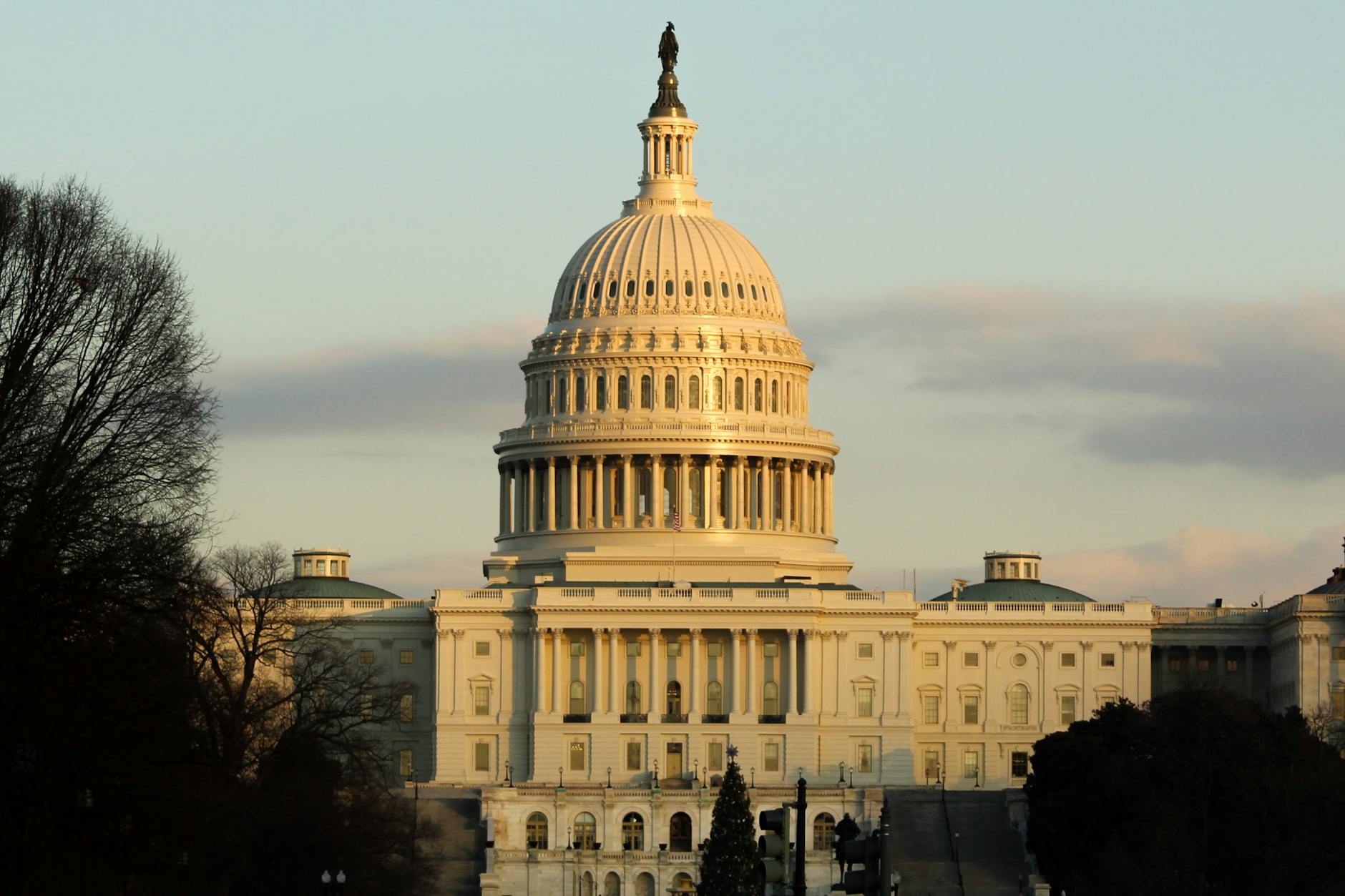
Congress has not approved President Trump's planned White House ballroom, and a federal appeals court says the project cannot proceed above ground without that approval. The administration has asked the Supreme Court to suspend the ruling before it takes effect on August 21, 2026. The dispute does not currently require a complete construction shutdown. The injunction covers the ballroom's aboveground construction, while underground bunker and other security-facility work may continue.
Official resources:
- Read the original report from Whitehouse — Use this primary source to review the complete report.
- Read the official notice from Ncpc — Use this primary source to verify the official announcement.
Table of Contents
- What is the planned East Wing project?
- Didn't a federal planning commission approve it?
- What did the appeals court block?
- What is the Supreme Court being asked to do?
- Which legal questions remain unanswered?
What is the planned East Wing project?
The white House describes the project as a 90,000-square-foot replacement for the demolished East Wing. Its project page lists a 650-seat ballroom, a September 2025 construction start, and funding from trump and other donors. Cost and capacity figures remain unsettled.
The White House lists a $250 million cost and 650 seats, while the Associated Press describes a $400 million project and reports Trump's separate claim that it could hold 999 people. Those differences matter because the dispute concerns the scale of the proposed demolition and reconstruction. Readers should treat each figure as an attributed estimate or claim, not as a final project specification.
Didn't a federal planning commission approve it?
Yes, but that approval did not settle whether Congress also had to authorize construction. The national Capital Planning Commission approved the preliminary and final site and building plans on April 2, 2026. The commission's action was a planning approval.
It did not give the project congressional authorization or resolve whether the president could build it using another source of legal authority. The central statute addresses structures on federal reservations, parks, and public grounds in Washington, D.C. The U.S. Code says such construction requires the "express authority of Congress".
What did the appeals court block?
On August 7, a divided panel of the U.S. Court of Appeals for the D.C. Circuit concluded that Trump lacked unilateral authority to construct the ballroom. The panel found that Congress had not approved the project. The Associated Press reports that the court upheld a preliminary injunction against aboveground ballroom construction.
📨 Get Free Accountability Coverage Alerts
Free · No spam · Unsubscribe anytime
A preliminary injunction preserves the disputed situation while litigation continues; it is not a final judgment resolving every legal issue. The district court allowed underground bunker and other security-facility work to continue. The practical result is therefore a divided worksite: the ballroom is blocked above ground, but permitted security-related construction may proceed below ground. The National Trust for Historic Preservation filed the lawsuit in December 2025, after the East Wing's demolition. Its case places historic-preservation and public-participation interests against the administration's asserted construction authority.
What is the Supreme Court being asked to do?
On August 14, Solicitor General D. John Sauer asked the Supreme Court to suspend the D.C. Circuit's decision before its August 21 effective date. The administration argues that the East Wing project is integrated with national-security work.
According to the Associated Press, the administration says the combined project is required for national security. That position could affect how the courts separate permissible security construction from the enjoined ballroom. A suspension would address whether the appellate ruling takes effect while the dispute continues. It would not, by itself, amount to congressional authorization or finally decide the ballroom's legality.
Which legal questions remain unanswered?
The litigation leaves several issues open: The appeals ruling does not prevent Congress from authorizing the ballroom later. The immediate question is whether the administration may proceed without that action.
Readers tracking the dispute should distinguish among three different events: a Supreme Court stay, a final court ruling, and express authorization from Congress. Only the last would directly answer the statutory approval problem identified by the D.C. Circuit.
- Does the National Trust have standing—the legal right to bring this particular challenge?
- Does any statute authorize demolition and reconstruction of this scale without separate congressional approval?
- How far may the administration continue work by characterizing it as necessary for security?
- Can courts practically separate the bunker and security facilities from the ballroom above them?
You Might Also Like
- Why Congress’s Approval Became Central to the Trump Ballroom Lawsuit
- Trump White House Ballroom Appeal: What the D.C. Circuit Ruling Means Now
- Could the Trump White House Ballroom Dispute Reach the Supreme Court Next?