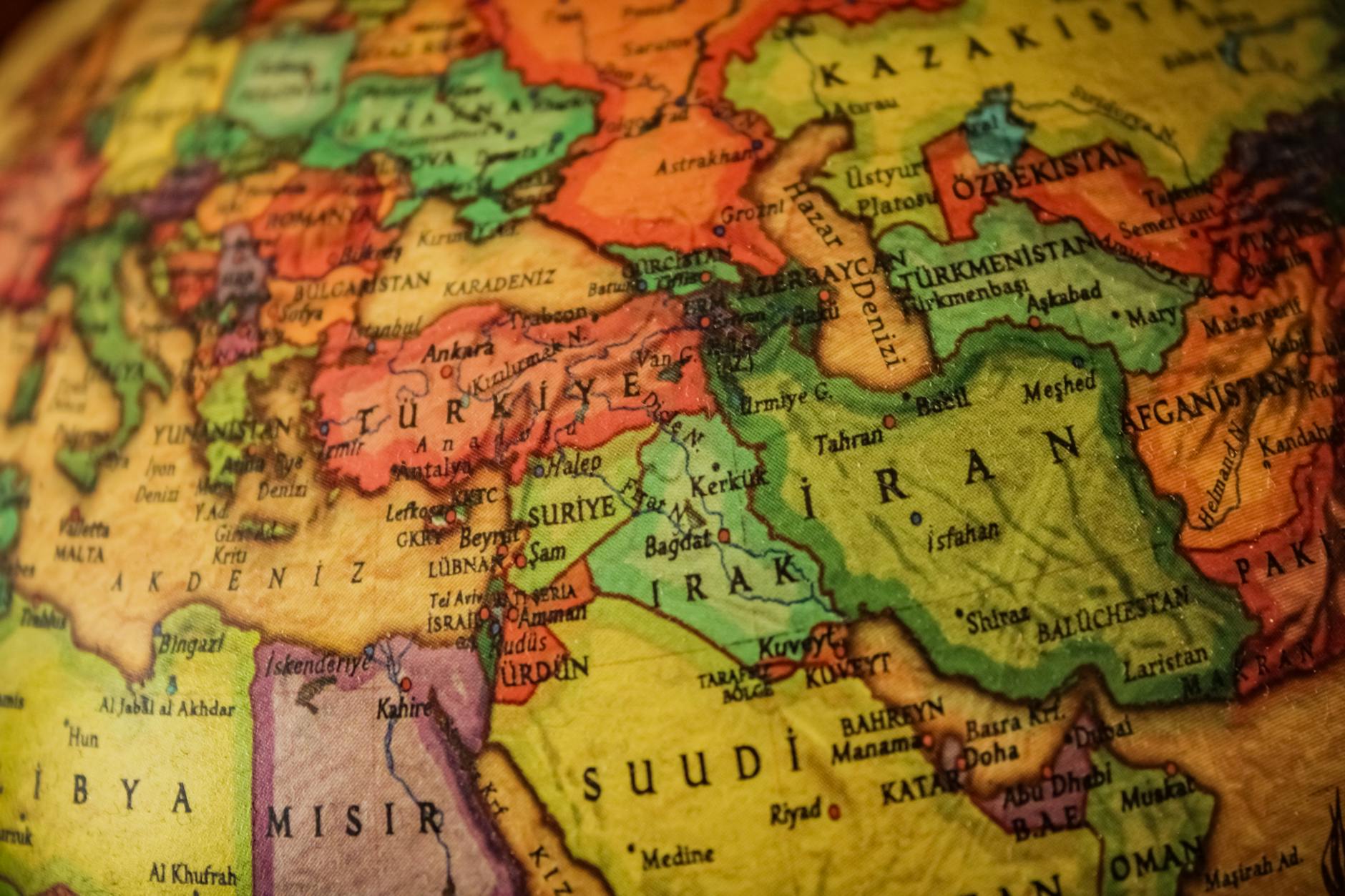
Yes, Turkey shares a roughly 534-to-560-kilometer border with Iran, and it has been a corridor for smuggling — of goods, narcotics, and people — for centuries. The border, which cuts through some of the most rugged alpine terrain in the Middle East, has remained essentially unchanged since the Treaty of Zuhab in 1639, making it one of the oldest stable frontiers on the planet. With only three official crossing points along its entire length and Kurdish communities straddling both sides, the geography alone has made this border nearly impossible to fully police. At the Gürbulak checkpoint, one of the busiest land crossings in the world, legitimate commerce flows alongside a shadow economy that has persisted through Ottoman sultans, Persian shahs, Cold War politics, and now modern geopolitical crises.
The smuggling along this border is not some quaint historical footnote. It is an active, evolving crisis that touches drug trafficking routes stretching from Afghanistan to Western Europe, migration waves driven by war and political collapse, and an underground fuel trade that at one point represented nearly a fifth of Turkey’s entire oil market. Turkey has responded with a massive border wall construction project, surveillance technology, and tens of thousands of security forces — yet the mountains keep offering paths around every barrier. This article breaks down the geography and history that make this border so porous, the scale of narcotics and human smuggling, Turkey’s security response, and what current tensions between the United States, Israel, and Iran mean for the region in 2026.
Table of Contents
- Why Has the Turkey-Iran Border Been Used for Smuggling for Centuries?
- The Balkan Route and Narcotics Trafficking Through Turkey
- Human Smuggling and the Migration Crisis at the Van-Iran Border
- Turkey’s Border Wall — How Effective Is a Physical Barrier in Mountain Terrain?
- The Forgotten Fuel Smuggling Crisis
- Kurdish Communities and the Human Cost of Border Enforcement
- What U.S.-Iran Tensions and 2026 Contingency Plans Mean for the Border
- Conclusion
- Frequently Asked Questions
Why Has the Turkey-Iran Border Been Used for Smuggling for Centuries?
The short answer is geography and politics. The Turkey-Iran border runs from the tripoint with Azerbaijan in the north to the tripoint with Iraq in the south, passing through extremely mountainous terrain that would challenge any modern surveillance apparatus, let alone the border patrols of centuries past. Kurdish communities have lived on both sides of this line for generations, and the border itself — drawn nearly 400 years ago at the end of the Ottoman-Safavid War — cuts through their historical territory in ways that never reflected how people actually lived, traded, and moved. For Kurdish kaçakçı, or smugglers, navigating mountain passes between the two countries is not criminal enterprise in the traditional sense. It is an informal survival economy that predates every government currently claiming authority over the region. The Treaty of Zuhab, signed on May 17, 1639, ended decades of war between the Ottoman and Safavid empires and drew a boundary that has barely shifted since. That stability sounds like a diplomatic achievement until you realize it also means the border was never rationalized for modern enforcement.
Three official crossing points across 534 kilometers of mountain frontier is a ratio that practically invites unofficial crossings. Compare that to the U.S.-Mexico border, which has dozens of official ports of entry across a comparable length. The lack of infrastructure on the Turkey-Iran border is not an oversight — it reflects centuries of political reality in which both sides tacitly accepted that the mountains would govern themselves. The goods moving across this border have changed with the times, but the routes have not. What was once a trade in spices, textiles, and livestock became a pipeline for fuel, cigarettes, and food staples. In more recent decades, heroin and human trafficking have become the dominant concerns. But the underlying mechanics — local knowledge of terrain, family networks spanning the border, economic desperation in remote provinces — remain identical to what they were in the 1700s.

The Balkan Route and Narcotics Trafficking Through Turkey
Turkey sits at the geographic chokepoint of the so-called Balkan Route, the single most heavily used corridor for Afghan-sourced heroin reaching Western Europe. The supply chain is blunt in its simplicity: opium is harvested in Afghanistan, processed into heroin in labs across Afghanistan and Iran, moved overland across the Iran-Turkey border, and then funneled through Turkey into southeastern Europe and beyond. The EU Drugs Agency identifies this route as the dominant pathway for opioid trafficking into the European market, and Turkey’s position makes it both a transit country and, increasingly, a consumption market. The numbers tell the story of a problem that defies easy solutions. Turkey reported a record 22.2 tonnes of heroin seized in 2021 — a figure that reflects both the scale of trafficking and the intensity of Turkish enforcement operations. However, preliminary 2022 data showed a dramatic drop to 7.9 tonnes, which could indicate either a genuine disruption in supply chains or a shift in trafficking methods that evaded detection.
By 2024, heroin seizures had climbed again by 31 percent to 4.3 tons, suggesting the trade adapts faster than enforcement can keep pace. If seizure rates represent only a fraction of total volume — as drug enforcement agencies worldwide generally assume — the actual quantity of heroin crossing this border annually is staggering. Iran bears an enormous cost on its side of the equation. According to the United Nations Office on Drugs and Crime, Iran accounts for 74 percent of the world’s opium seizures and 25 percent of global heroin and morphine seizures. More than 3,700 Iranian law enforcement officials have been killed and over 12,000 maimed in counter-narcotics operations over the past three decades. Whatever one thinks of the Iranian government, those are wartime casualty figures for a drug fight that rarely makes international headlines. The limitation here is obvious: even with Iran aggressively interdicting supply on its side and Turkey doing the same on its side, the Balkan Route continues to function because the economic incentives for traffickers dwarf the risks.
Human Smuggling and the Migration Crisis at the Van-Iran Border
The Turkey-Iran border is regarded by researchers as the most significant route used by irregular migrants — mainly from Afghanistan, Pakistan, and Iran itself — to enter Turkey and eventually attempt to reach Europe. The Journal of Borderlands Studies, in a 2025 analysis, confirmed what security forces on the ground have known for years: this border is the funnel through which Central and South Asian migration flows into the European migration system. The mountain crossings are dangerous, sometimes fatal, and migrants pay Kurdish smugglers to guide them through terrain that would be treacherous even in good weather. In 2021, the scale of this movement became impossible to ignore. Turkish security forces stopped over 120,000 irregular migrants at the Van-Iran border alone, a surge driven largely by the Taliban’s takeover of Afghanistan in August of that year.
Van province, on the Turkish side, became the frontline of a humanitarian and security crisis that strained local resources and national politics simultaneously. The migrants were not abstractions in a policy debate — they were families walking through mountain passes in winter, paying smugglers fees they could barely afford, hoping to reach Istanbul or the Greek border. The smuggling networks that facilitate this movement are deeply embedded in the local economy. Research published in Trends in Organized Crime in 2023 documented how Kurdish kaçakçı operate as part of a broader informal economy, moving petrol, cigarettes, and food alongside human cargo. For communities in the border region, smuggling is not a side hustle — it is the economy. This creates an enforcement dilemma that no wall or surveillance system can fully resolve: cracking down on smuggling networks means dismantling the economic foundation of some of the poorest communities in Turkey.
Turkey’s Border Wall — How Effective Is a Physical Barrier in Mountain Terrain?
Starting in 2017, Turkey began constructing a massive security wall along its border with Iran, a project that invites obvious comparisons to border wall debates in the United States. As of recent reports, 204 kilometers of wall have been completed in Van province, with an additional 91 kilometers under construction. The total planned wall spans approximately 380 kilometers of the border’s 534-kilometer length. The wall itself consists of concrete modules standing 3 meters high, 2 meters wide, and weighing 7 tonnes each. Turkey has also dug ditches stretching 553 kilometers along the border — exceeding the border’s own length by covering multiple approach routes. The wall is not just concrete. Turkey has layered its physical barrier with electro-optical towers equipped with radar, thermal cameras, motion sensors, drones, and specialized units called “Border Eagles” that provide round-the-clock monitoring.
This is a serious, technologically sophisticated effort, and it has undoubtedly made casual crossings more difficult. The tradeoff, however, is cost versus coverage. Even at 380 planned kilometers, the wall does not cover the full border, and the sections it does cover are in the most accessible terrain — which means smugglers are pushed toward more remote, more dangerous mountain routes rather than stopped entirely. The comparison to other border security efforts is instructive. Israel’s barrier along the West Bank and Egypt’s Sinai border reduced unauthorized crossings dramatically, but those barriers operate in relatively flat desert terrain with far shorter distances to cover. Turkey’s challenge is fundamentally different: a 534-kilometer border through mountains that rise above 3,000 meters, with harsh winters, limited road access, and a local population with centuries of experience navigating the landscape. The wall changes the calculus for smugglers and migrants — it raises costs, increases danger, and slows movement — but it does not and likely cannot stop the flow entirely.
The Forgotten Fuel Smuggling Crisis
While heroin and human smuggling grab headlines, the Turkey-Iran border has also been the site of one of the largest and longest-running fuel smuggling operations in the world. A 2005 Turkish parliament report found that approximately 3.75 billion liters of smuggled oil entered Turkey annually, representing 18 percent of the national oil market. That is not a rounding error — it is a structural feature of Turkey’s energy economy that persisted for years with varying degrees of official tolerance. The fuel smuggling trade exploits the price differential between heavily subsidized Iranian fuel and Turkish market rates. For border communities, running diesel and gasoline across mountain paths is lucrative enough to sustain entire local economies.
For Turkey’s national budget, the lost tax revenue is enormous. For Iran, the outflow represents a subsidy leak that the government periodically attempts to stem by adjusting domestic fuel prices — which, as the 2019 Iranian fuel protests demonstrated, carries its own explosive political risks. The limitation that policymakers face is stark: aggressive enforcement at the border punishes the poorest communities on both sides, while lax enforcement costs the Turkish treasury billions in lost revenue. The fuel trade also intersects with the broader smuggling ecosystem. The same networks, routes, and local knowledge used to move diesel across the border are also used to move heroin and people. Disrupting one trade without disrupting the others has proven nearly impossible because the infrastructure — both physical and social — is shared.

Kurdish Communities and the Human Cost of Border Enforcement
The people who live along the Turkey-Iran border are overwhelmingly Kurdish, and they experience the border not as a line on a map but as an obstacle imposed through their homeland. Families separated by the 1639 treaty boundary have maintained cross-border ties for nearly four centuries, and the informal economy of smuggling has been, for many, the only economic option available in remote mountain villages with little arable land and minimal government investment. Turkey’s border wall and surveillance buildup have real consequences for these communities.
📨 Get Free Accountability Coverage Alerts
Free · No spam · Unsubscribe anytime
Increased militarization restricts traditional movement patterns, disrupts cross-border family ties, and criminalizes economic activity that, however illegal on paper, has been the primary livelihood for generations. Shepherds who once moved flocks across the border seasonally now face concrete walls and motion sensors. Young men who earned money guiding travelers through mountain passes are now classified as human smugglers under Turkish and international law. The security imperative is real — no government can tolerate uncontrolled border crossings — but the human cost of enforcement falls disproportionately on communities that had no say in where the border was drawn.
What U.S.-Iran Tensions and 2026 Contingency Plans Mean for the Border
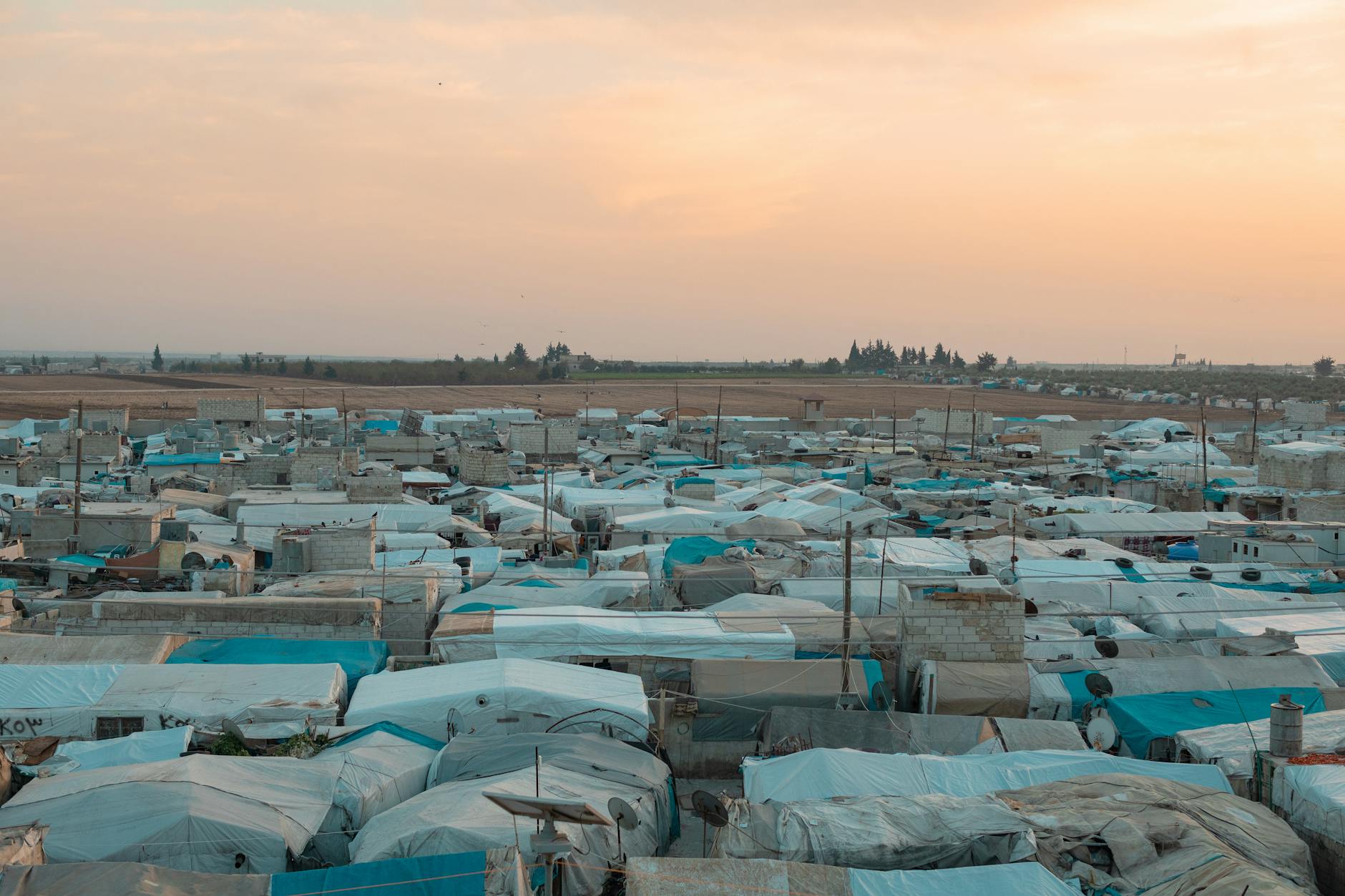
As of March 2026, the Turkey-Iran border faces a new and potentially unprecedented challenge. Turkey has drawn up contingency plans to contain a possible mass exodus from Iran amid escalating U.S.-Israel military tensions with Tehran. Turkish authorities are preparing capacity for up to 90,000 people through tent camps and temporary housing positioned to intercept refugees before they reach the Turkish frontier proper. Reports from Turkish Minute and Iran International in early March 2026 detailed a planning effort that reflects genuine concern at the highest levels of the Turkish government.
If a military conflict involving Iran materializes, the Turkey-Iran border could see migration flows that dwarf the 2021 Afghan crisis. Iran has a population of over 85 million people, and its western provinces — closest to the Turkish border — are home to millions of Kurds, Azeris, and other communities with existing cross-border ties that would facilitate rapid movement. Turkey’s 204 kilometers of completed border wall and its surveillance infrastructure would be tested against a humanitarian emergency of a completely different magnitude. The smuggling networks that have operated for centuries would not disappear in such a scenario — they would scale up. For a region that has already absorbed the fallout of wars in Syria, Iraq, and Afghanistan, the prospect of an Iranian refugee crisis represents the next chapter in a story that the Turkey-Iran border has been telling for 400 years.
Conclusion
The Turkey-Iran border is a case study in how geography, history, and economics can overwhelm even the most determined enforcement efforts. A frontier drawn in 1639 through some of the most impassable terrain in the Middle East, populated by communities with deep cross-border ties and limited alternative livelihoods, has resisted every attempt at full control — from Ottoman cavalry patrols to 7-tonne concrete wall modules and thermal-imaging drones. The smuggling of narcotics, fuel, and people is not a bug in this system. It is a feature of a border that was never designed to be sealed.
For policymakers in Ankara, Washington, and Brussels, the Turkey-Iran border demands honest accounting rather than performative toughness. Turkey’s wall and surveillance investments have made a measurable difference, but they operate against centuries of entrenched smuggling infrastructure and, potentially, a looming refugee crisis driven by great-power conflict with Iran. The Balkan Route heroin trade, the migration pipeline from South Asia, and the fuel smuggling economy all flow through the same mountains and rely on the same networks. Addressing any one of these challenges in isolation has consistently failed. The only realistic path forward involves coordinated international investment in both border security and the economic development of border communities — a combination that no government has yet been willing to fund at the necessary scale.
Frequently Asked Questions
How long is the Turkey-Iran border?
The Turkey-Iran border stretches approximately 534 to 560 kilometers (about 332 miles). It is Turkey’s second-longest border after the one it shares with Syria. The border runs from the tripoint with Azerbaijan in the north to the tripoint with Iraq in the south.
How old is the Turkey-Iran border?
The border has remained essentially unchanged since the Treaty of Zuhab (also called Qasr-e Shirin), signed on May 17, 1639, which ended the Ottoman-Safavid War. That makes it nearly 400 years old and one of the most stable international boundaries in the world.
What drugs are smuggled across the Turkey-Iran border?
The primary narcotics concern is heroin originating in Afghanistan. Turkey sits on the Balkan Route, the most heavily trafficked corridor for Afghan heroin reaching Western Europe. Turkey seized a record 22.2 tonnes of heroin in 2021, and seizures rose 31 percent to 4.3 tons in 2024 after a temporary dip.
Is Turkey building a wall on the Iran border?
Yes. Turkey began constructing a security wall in 2017. As of recent reports, 204 kilometers have been completed in Van province, with 91 additional kilometers under construction and a total plan covering approximately 380 kilometers. The wall features 3-meter-high concrete modules supplemented by ditches, radar towers, thermal cameras, and drone surveillance.
How many migrants cross the Turkey-Iran border?
In 2021 alone, Turkish security forces intercepted over 120,000 irregular migrants at the Van-Iran border, a surge driven primarily by the Taliban takeover of Afghanistan. The actual number of crossings, including those not intercepted, is believed to be significantly higher.
What is Turkey’s contingency plan for an Iran conflict?
As of March 2026, Turkey has prepared plans to handle a potential mass exodus from Iran driven by U.S.-Israel military tensions. Turkish authorities have arranged capacity for up to 90,000 people through tent camps and temporary housing positioned to intercept refugees before they reach the main Turkish frontier.
You Might Also Like
- The Weapons Depots Across Iran Would Take Years to Fully Secure Even With Ground Forces
- The Iran War Has No Formal Declaration — It’s Being Fought Under Executive Authority Alone
- Iran’s Border With Pakistan Runs Through Ungoverned Territory