
The Iran war vote is already defining political careers, and the fallout has barely begun. When the Senate voted 47-53 on March 4, 2026, to reject a bipartisan war powers resolution — followed by the House’s razor-thin 219-212 rejection the next day — every member of Congress effectively tattooed their position on the most consequential foreign policy decision since the 2002 Iraq Authorization for Use of Military Force. For lawmakers like Sen. Rand Paul, who stood as the sole Republican willing to cross party lines, or the four House Democrats who broke ranks to side with the administration, these votes will follow them through every future primary, general election, and job interview for decades to come.
The political gravity of these votes cannot be overstated. President Trump ordered strikes on Tehran on February 28, 2026, and called for the overthrow of Iran’s current regime under what the Pentagon dubbed “Operation Epic Fury.” The administration was preparing to ask Congress for up to $50 billion in supplemental funding. Yet rather than demanding a formal say in a war of this magnitude, Congress voted eight separate times on war powers resolutions since June — and failed every single time to reassert its constitutional authority. The question now is not whether these votes will matter politically, but how severely they will punish or reward the lawmakers who cast them. This article examines the career-defining implications across both parties, the generational voter divide that makes this issue uniquely dangerous, and what history tells us about politicians who bet wrong on war.
Table of Contents
- Why Could the Iran War Vote Define Political Careers for a Generation?
- The Cross-Party Defections That Will Haunt Future Campaigns
- The Youth Vote Revolt That Could Reshape Midterm Math
- How War Votes Have Historically Rewarded and Punished Politicians
- The MAGA Coalition Fracture Lines Exposed by Iran
- The Congressional War Powers Crisis Beyond Iran
- What the 2026 Midterms Will Reveal About the War’s Political Fallout
- Conclusion
Why Could the Iran War Vote Define Political Careers for a Generation?
War votes stick to politicians like nothing else on their record. Ask anyone who supported the 2002 Iraq AUMF. Hillary Clinton’s 2008 presidential campaign was hobbled by her Iraq vote. John Kerry spent the 2004 election trying to explain his. The Iran war vote carries even greater weight because it happened in a media environment where every statement, every justification, and every floor speech is permanently archived and endlessly searchable. There is no walking this back, no claiming you were misled by intelligence briefings you haven’t yet seen. Members voted to let a president wage war without formal congressional authorization, and they did so with full public knowledge of what was at stake. The bipartisan resolution led by Sen. Tim Kaine of Virginia and Sen.
Rand Paul of Kentucky was deliberately designed to force lawmakers on the record. Kaine and Paul argued that Congress must reassert its constitutional war-making authority — a principle that transcends party. Yet the Senate could muster only 47 votes in favor, and the House fell just seven votes short at 212. As Roll Call reported on March 6, House members currently running for Senate seats face a particular conundrum: their Iran vote is becoming the defining issue of their political futures. A vote that looks like party loyalty today could look like moral cowardice in three years. The comparison to Iraq is instructive but incomplete. In 2002, members at least voted on an explicit authorization. In 2026, Congress voted against even demanding that the president make his case to them. That distinction — between authorizing a war and simply refusing to assert any authority over one — may prove even harder to defend as the consequences of Operation Epic Fury unfold. As the Council on Foreign Relations noted in its analysis, Republicans largely rallied around Trump’s decision and declined to demand he make the case to Congress, a pattern that mirrors how the legislature has gradually ceded war powers from Iraq onward.

The Cross-Party Defections That Will Haunt Future Campaigns
The lawmakers who crossed party lines on the iran vote made the most politically exposed choice available to them, and their calculations reveal starkly different bets on where the electorate is heading. Sen. Rand Paul was the only Republican to vote for the war powers resolution. His libertarian-leaning brand has always included skepticism of military intervention, so his vote was ideologically consistent. But consistency does not equal safety — Paul will face Republican primary voters in Kentucky who may view his dissent as disloyalty to a wartime president. On the Democratic side, Sen. John Fetterman of Pennsylvania voted against the resolution, effectively siding with the Trump administration.
His Pennsylvania colleague, Republican Sen. Dave McCormick, cast the same vote. In the House, four Democrats broke ranks: Reps. Jared Golden of Maine, Henry Cuellar of Texas, Greg Landsman of Ohio, and Juan Vargas of California. Each represents a district or state where the political math on war is complicated — Golden and Landsman in particular sit in swing-leaning seats where appearing weak on national security can be fatal. However, if the war becomes unpopular — and polling suggests it already is among key demographics — these cross-party defectors face a different problem entirely. Fetterman, who built his brand on working-class populism and plain talk, will need to explain to Pennsylvania Democrats why he sided with a Republican president on a war that the party’s base overwhelmingly opposes. The four House Democrats will face primary challengers who can run a very simple ad: “They voted for Trump’s war.” The political risk of crossing your own party on a war vote is asymmetric — if the war goes well, your party won’t thank you; if it goes badly, your party will never forgive you.
The Youth Vote Revolt That Could Reshape Midterm Math
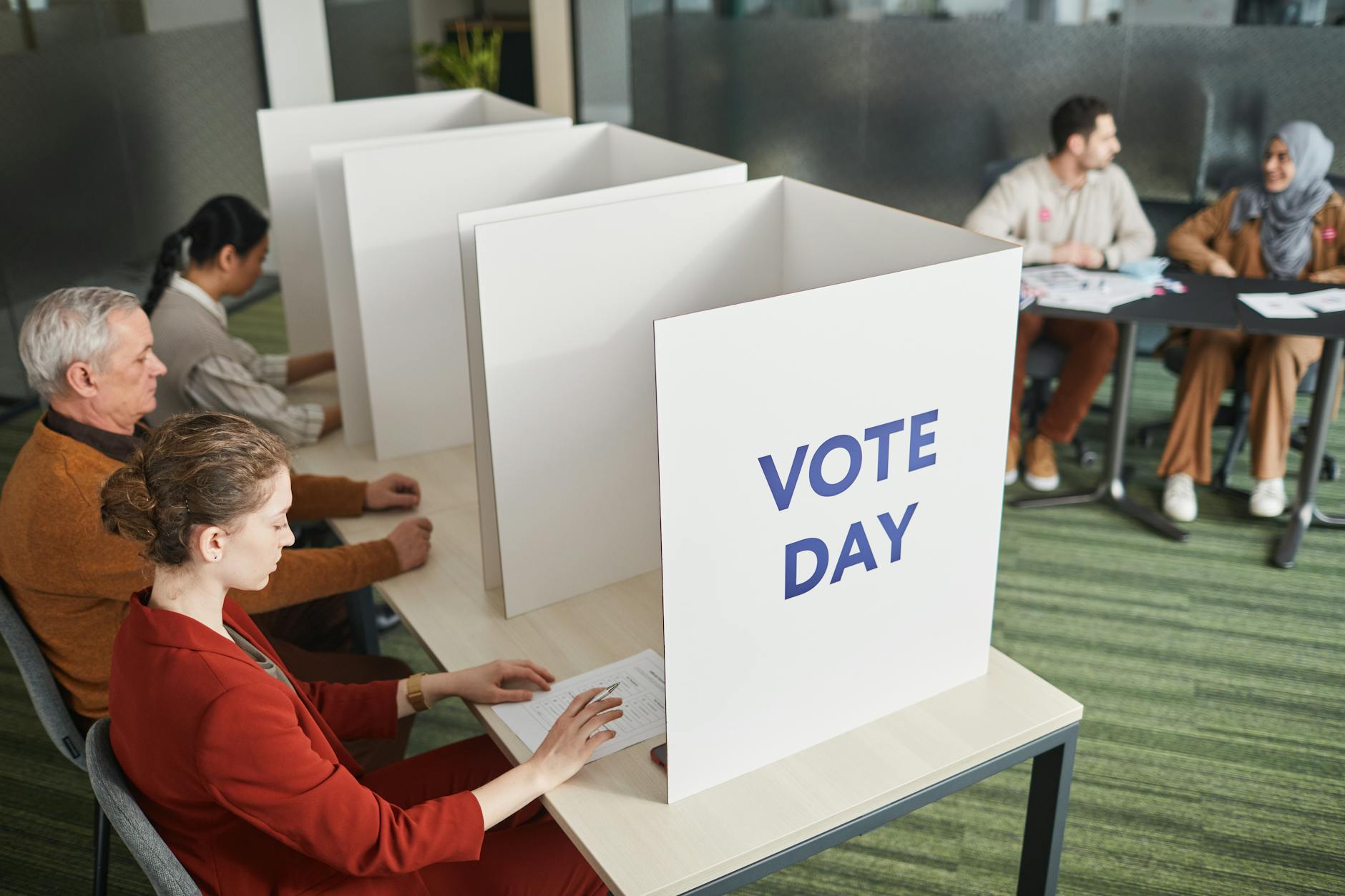
The most alarming number for any politician who voted against the war powers resolution is this: among voters aged 18 to 34, only 21% support the war, while 71% oppose it. That is not a gap. That is a chasm. And it is a chasm that runs directly through the electoral coalition that Republicans need to hold in 2026 and beyond. The Washington Post reported on March 16 that young voters who helped elect Trump are already expressing regret, with frustrations over the Iran war signaling genuine vulnerability for Republicans heading into midterm elections. This is not abstract dissatisfaction.
Young voters are the most likely to be called up if the conflict escalates, the most active on social media where antiwar sentiment spreads fastest, and the least attached to the party loyalty that keeps older voters in line. When 71% of an age cohort opposes a war, that is the kind of issue that reshapes turnout patterns for a decade. For Republicans, the danger is acute. Trump’s 2024 coalition included meaningful gains among young men in particular, many drawn by economic messaging and cultural grievances rather than hawkish foreign policy. Operation Epic Fury was not what they signed up for. CNBC reported on March 7 that rising oil prices linked to the Iran conflict are making affordability an even bigger issue heading into the midterms — precisely the kitchen-table concern that drove many young voters to Trump in the first place. A war that both offends their antiwar instincts and raises their gas prices is a political catastrophe waiting to happen.
How War Votes Have Historically Rewarded and Punished Politicians
History offers a clear, if uncomfortable, lesson: war votes are judged almost entirely by outcomes, and the outcomes take years to materialize. Senators who voted for the Iraq AUMF in 2002 looked like responsible statesmen for about eighteen months. By 2005, they looked like dupes. By 2008, the vote was political poison in Democratic primaries. Barack Obama built an entire presidential campaign on the foundation of having opposed the Iraq war — even though he was not yet in the Senate when the vote occurred. The Iran vote carries a similar time-bomb quality.
If Operation Epic Fury achieves its stated objectives quickly and at manageable cost, the 47 senators and 212 House members who voted for the war powers resolution will be dismissed as hand-wringers who tried to undermine a successful military operation. But if the war drags on, costs escalate beyond the $50 billion supplemental the administration was already preparing to request, or if the regime-change objective proves as elusive as it did in Iraq, the political equation flips entirely. Every member who voted against the resolution will own the consequences. The tradeoff is brutally simple. Voting with the president offers short-term safety within your party but long-term exposure if the war fails. Voting against the president earns short-term grief from leadership and possible primary challenges, but positions you as prescient if public opinion continues its current trajectory. Senate Minority Leader Chuck Schumer’s signaling of openness to forcing a formal AUMF vote suggests that Democratic leadership sees political advantage in keeping the war authorization question alive — forcing repeated votes that keep the issue in the news and on the record.
📨 Get Free Accountability Coverage Alerts
Free · No spam · Unsubscribe anytime
The MAGA Coalition Fracture Lines Exposed by Iran
The Iran war is not just a foreign policy debate within the Republican Party — analysts say it is hastening a fundamental crack-up within the MAGA coalition itself. The New Republic’s analysis argues that the war exposes a fault line between the nationalist-populist wing that was drawn to Trump’s “America First” rhetoric and the traditional hawks who see Iran as an existential threat requiring military force. These two factions coexisted comfortably when “America First” meant avoiding foreign entanglements. They cannot coexist when “America First” means a $50 billion war in the Middle East. This fracture is visible in the vote itself.
Rand Paul’s defection was ideologically predictable but politically significant — he represents the libertarian strand of the Republican coalition that has always been skeptical of military adventurism. The fact that no other Republican senator joined him suggests enormous pressure from party leadership, but it does not mean the underlying disagreement has been resolved. It means it has been suppressed, and suppressed disagreements within political coalitions tend to erupt at the worst possible moments — like during primary season. The warning for Republican strategists is clear: a coalition held together by personality rather than policy is uniquely vulnerable when the personality makes a policy choice that alienates a significant chunk of the base. If the 71% of young voters who oppose the war includes a meaningful share of young Republican and Republican-leaning independents — and the polling suggests it does — then the midterm math gets very difficult very fast. You cannot simultaneously be the party of “no more forever wars” and the party that launched Operation Epic Fury without losing someone along the way.
The Congressional War Powers Crisis Beyond Iran
The Iran votes have exposed something larger and more troubling than any single policy disagreement: Congress has effectively abandoned its constitutional war-making authority. This was the eighth war powers resolution Congress voted on since June 2025, and all eight have failed. The pattern, as Military.com documented on March 7, traces a direct line from the Iraq era to today — each conflict further normalizing the idea that the president wages war and Congress watches. Kaine and Paul’s bipartisan effort was specifically designed to challenge this erosion.
Their argument was not necessarily that the Iran strikes were wrong on the merits, but that Congress has a constitutional obligation to authorize military force of this scale. The fact that this principle — which is literally written into Article I of the Constitution — could not command a majority in either chamber tells you everything about the institutional incentives at play. Voting to constrain a president of your own party feels like betrayal; voting to constrain a president of the opposing party feels like obstruction. So Congress does nothing, and the war power drifts further from the legislature with each passing conflict.
What the 2026 Midterms Will Reveal About the War’s Political Fallout
The 2026 midterm elections are shaping up to be the first major electoral test of the Iran war’s political impact, and the early indicators are not encouraging for incumbents who voted against the war powers resolution. The convergence of antiwar sentiment among young voters, rising energy costs squeezing household budgets, and a fracturing Republican coalition creates an environment where challengers in both primaries and general elections will have potent ammunition. The candidates who positioned themselves against unchecked executive war-making — whether out of genuine principle or shrewd political calculation — may find themselves on the right side of a shifting electorate.
Those who voted with the party line, expecting the war to fade from public attention before November, are making a bet that history suggests they will lose. Wars do not fade from attention. They compound. And the political careers shaped by the Iran vote of March 2026 will be defined not by what lawmakers said on the floor that week, but by what happens in Tehran, in gas stations, and in voting booths for years to come.
Conclusion
The Iran war vote of March 2026 has drawn a line through American politics that will not be erased by time or spin. The Senate’s 47-53 rejection and the House’s 219-212 rejection of war powers resolutions have placed every member of Congress on the record regarding the most significant military action in a generation. Cross-party defectors like Rand Paul, John Fetterman, and the four House Democrats who broke ranks have made bets that will either be vindicated or punished by events none of them can control. The 71% opposition rate among voters aged 18 to 34, combined with rising affordability concerns driven by the conflict, suggests that the political ground is already shifting beneath the feet of those who voted to let the war proceed without formal authorization.
What happens next depends on the war itself, on oil prices, on whether the $50 billion price tag grows, and on whether the MAGA coalition can survive a policy choice that contradicts its founding “America First” premise. But the votes are cast and the record is permanent. For a generation of politicians, the Iran war vote will be the first line of their political obituary — or the foundation of their next campaign. There is no middle ground, and there is no going back.
You Might Also Like
- There Are Not Enough Votes to Override a Veto on the Iran War Powers Resolution
- The Iran War Has No Formal Declaration — It’s Being Fought Under Executive Authority Alone
- Israel’s War Cabinet Approved Expanding Targets Deep Inside Iran