
Every member of Congress did, in fact, have to publicly state whether they support or oppose the war with Iran — and the vast majority of Republicans voted to let it continue without congressional authorization. In early March 2026, Democrats forced votes in both chambers through H.Con.Res.38, a War Powers Resolution that would have directed the President to remove U.S. Armed Forces from hostilities in Iran. The Senate rejected the measure 53-47 on March 4, and the House followed suit the next day with a narrow 219-212 vote. The roll calls are now public record, and every lawmaker’s name is attached to a position. The votes were not perfectly partisan.
Sen. Rand Paul of Kentucky broke with his party to support the resolution, while Sen. John Fetterman of Pennsylvania was the lone Democrat to oppose it. In the House, two Republicans — Thomas Massie and Warren Davidson, both of Ohio and Kentucky — crossed the aisle, while four Democrats voted against constraining the president’s war powers. Those crossover votes tell their own story about the political pressures surrounding an undeclared war. This article breaks down exactly how both chambers voted, who broke ranks and why, what the resolution would have actually done, and what Democrats are demanding next as the standoff over congressional oversight intensifies.
Table of Contents
- Why Did Every Member of Congress Have to Go on the Record About the Iran War?
- How Did the Senate Vote on the Iran War Powers Resolution?
- The House Vote — A Seven-Vote Margin That Exposed Fault Lines
- What the War Powers Resolution Would and Would Not Have Done
- The Standoff Over Public Hearings and Congressional Oversight
- What the Crossover Votes Reveal About Congressional Politics
- What Comes Next in the Congressional Fight Over the Iran War
- Conclusion
- Frequently Asked Questions
Why Did Every Member of Congress Have to Go on the Record About the Iran War?
The mechanism was straightforward: the War Powers Resolution of 1973 gives Congress the ability to force a vote on withdrawing U.S. forces from unauthorized hostilities. When Democrats filed H.Con.Res.38, they triggered a procedural clock that congressional leadership could not simply ignore or table indefinitely. The resolution directed the President, pursuant to Section 5(c) of the War Powers Resolution, to remove U.S. Armed Forces from hostilities in Iran that had not been authorized by Congress. By design, every senator and representative had to cast a recorded vote — yes or no, support or oppose. Rep.
Gregory Meeks, the top Democrat on the House Foreign Affairs Committee, framed it bluntly: “Donald Trump is not a king” and “each Member here must make clear with their vote where they stand and own that decision.” Sen. Tim Kaine of Virginia and Senate Minority Leader Chuck Schumer led the push on the Senate side, arguing that the Constitution reserves the power to initiate war for Congress, not the executive branch. The strategy was deliberately designed to strip away the ability to hedge, dodge, or issue a vague statement. A vote is a vote. It is worth noting a critical limitation: the resolution was a concurrent resolution, meaning it was nonbinding. Even if both chambers had passed it, H.Con.Res.38 would not have required the president’s signature and carried no force of law. Critics argued this made the entire exercise symbolic. Supporters countered that forcing the vote was the point — creating an undeniable public record of where every lawmaker stood on an active military conflict that lacked formal congressional authorization.

How Did the Senate Vote on the Iran War Powers Resolution?
The Senate voted 53-47 to reject the war powers resolution on March 4, 2026, largely along party lines. With Republicans holding the majority, the outcome was not a surprise. But the margin and the two defectors made headlines. Sen. Rand Paul, a longtime skeptic of executive war powers regardless of which party holds the White House, was the sole Republican to vote in favor of the resolution. Paul has consistently argued that the Constitution requires congressional authorization for military action, a position he held during the Obama and first Trump administrations as well. On the other side, Sen.
John Fetterman of Pennsylvania was the only Democrat to vote against the resolution, siding with Republicans in declining to constrain the president’s authority. Fetterman’s vote drew sharp criticism from progressive and antiwar groups but tracked with his increasingly hawkish posture on foreign policy matters. The vote illustrated that while partisan lines held almost perfectly, the exceptions were not random — they reflected longstanding ideological commitments in Paul’s case and a deliberate political repositioning in Fetterman’s. However, if you are looking at the Senate vote as a definitive statement of congressional will, the picture is murkier than the numbers suggest. Several senators who voted to reject the resolution publicly expressed concerns about the lack of congressional consultation, even as they declined to support a formal check on presidential authority. Sen. Kevin Cramer of North Dakota defended his vote by arguing the Constitution “gives the commander in chief a great deal of latitude and power with regard to kinetic action” — a reading of executive war powers that many constitutional scholars would dispute, but one that carried the day.
The House Vote — A Seven-Vote Margin That Exposed Fault Lines
The House vote on March 5 was far closer: 219-212, a margin of just seven votes. that narrow gap meant that a small number of crossover votes on either side had an outsized impact on the final tally. Two Republicans voted for the resolution — Rep. Thomas Massie of Kentucky and Rep. Warren Davidson of Ohio, both members of the House Freedom Caucus with libertarian leanings on foreign policy. Massie invoked the Constitution directly: “The Constitution is clear… Our Constitution provides Congress initiatory powers of war.” Four Democrats voted against the resolution: Reps.
Jared Golden of Maine, Henry Cuellar of Texas, Greg Landsman of Ohio, and Juan Vargas of California. Golden and Cuellar represent swing districts where opposition to constraining military operations may play differently than in safe blue seats. Landsman and Vargas drew more scrutiny, with antiwar activists questioning whether their votes reflected constituent views or other political calculations. Two other Democrats who had been publicly ambiguous reversed course at the last moment. Reps. Josh Gottheimer of New Jersey and Jared Moskowitz of Florida, both seen as centrists with hawkish foreign policy instincts, ultimately voted for the war powers resolution after initially signaling they might not. Their reversal suggested that internal Democratic pressure — and the knowledge that the vote would be a permanent part of their record — carried real weight even for members inclined to support military action.

What the War Powers Resolution Would and Would Not Have Done
Understanding the practical stakes requires separating what H.Con.Res.38 could have accomplished from what it could not. As a concurrent resolution invoking Section 5(c) of the War Powers Resolution, it directed the president to withdraw forces from hostilities in Iran. The War Powers Resolution of 1973 was designed to prevent exactly this kind of scenario — a president committing U.S. forces to a sustained military conflict without explicit congressional authorization. The tradeoff, however, is significant. Because H.Con.Res.38 was a concurrent resolution rather than a joint resolution, it did not require the president’s signature.
This meant that even if it had passed both chambers, the resolution would not have carried the force of law. The executive branch could have argued it was not legally binding. Supporters of the resolution acknowledged this limitation but argued the political force of both chambers voting to oppose the war would have been enormous, creating pressure the administration could not easily ignore and potentially shifting public opinion. Compare this with the alternative approach some lawmakers have advocated: passing an Authorization for Use of Military Force with specific constraints, timelines, and reporting requirements. That path requires presidential approval or a veto-proof majority, making it far harder to achieve but legally binding if successful. The concurrent resolution was, in a sense, the tool available to the minority — less powerful but achievable with a simple majority.
The Standoff Over Public Hearings and Congressional Oversight
The votes in early March did not end the confrontation. As of March 16, 2026, Senate Democrats are escalating their demands for public accountability beyond the war powers votes themselves. They are calling for Defense Secretary Pete Hegseth and Secretary of State Marco Rubio to appear before Congress for public hearings on the Iran war’s timeline, objectives, and legal justification. This is where the fight has shifted from a single dramatic vote to a grinding institutional standoff. Republican committee chairs have so far resisted scheduling hearings specifically on the war, arguing that existing briefings and classified sessions are sufficient.
Democrats counter that classified briefings are no substitute for public testimony, because the American people — not just members of Congress — deserve to hear directly from administration officials about why the country is at war and what the endgame looks like. Sen. Chris Van Hollen of Maryland has been among the most forceful voices, accusing the administration of deception: “Trump is lying to the American people as he launches an illegal, regime-change war against Iran.” Democrats have also threatened to trigger repeated war powers votes as a pressure tactic until Republicans agree to hold public hearings. This is a limitation of the minority’s toolbox — they cannot compel hearings on their own — but it signals that the procedural warfare over Iran is far from over. Each additional vote forces another round of public positioning, media coverage, and constituent pressure on members who would prefer to avoid the spotlight.
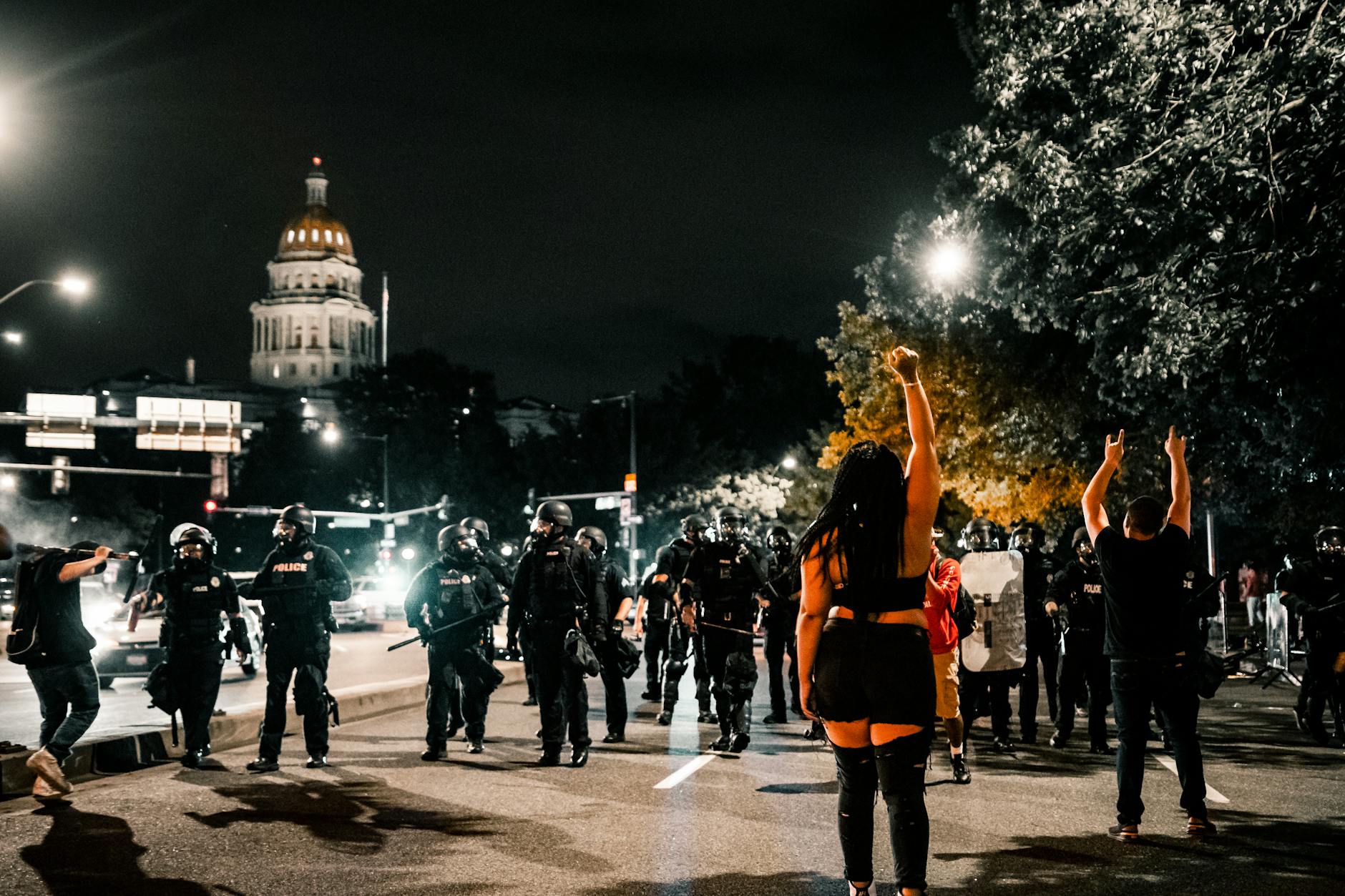
What the Crossover Votes Reveal About Congressional Politics
The handful of members who broke with their party on the war powers vote offer a window into the competing pressures lawmakers face on questions of war. Rand Paul and Thomas Massie represent a strain of conservative thought that is deeply skeptical of executive war powers on constitutional grounds, not because they sympathize with Iran or oppose a strong defense posture. Their votes were consistent with years of similar positions and would have been the same under a Democratic president. The Democratic defectors are a more complicated story.
📨 Get Free Accountability Coverage Alerts
Free · No spam · Unsubscribe anytime
Jared Golden, who represents a rural Maine district that voted for Trump, has consistently positioned himself as one of the most conservative Democrats in the House. Henry Cuellar, representing a border district in Texas, has faced political pressures from the right for years. For these members, a vote to constrain military operations against Iran may have been seen as a political liability regardless of their substantive views. That calculation — whether to vote on principle or political survival — is exactly what the war powers vote was designed to expose.
What Comes Next in the Congressional Fight Over the Iran War
The next phase of this conflict will likely play out on two fronts. First, Democrats will continue using every procedural tool available to force additional votes and public debate, keeping the war on the front page and ensuring that Republican members cannot quietly support the conflict without facing scrutiny. Second, the demand for public hearings will intensify as the military operation continues, especially if the conflict expands in scope, produces significant casualties, or fails to achieve clearly defined objectives.
The broader question hanging over Congress is whether the War Powers Resolution itself is adequate for the modern era. Multiple administrations of both parties have stretched executive war powers well beyond what the 1973 law envisioned, and Congress has repeatedly failed to assert its constitutional authority. Whether the Iran conflict becomes the case that finally forces a reckoning — or another precedent for unchecked executive action — will depend on sustained political pressure from both lawmakers and the public in the weeks and months ahead.
Conclusion
The war powers votes of March 4 and 5, 2026, accomplished exactly what their sponsors intended: they forced every member of Congress to publicly declare whether they support or oppose the war with Iran. The Senate rejected the resolution 53-47 with one Republican defection and one Democratic defection. The House rejected it 219-212, with two Republicans and four Democrats crossing party lines. Those votes are now permanent public record, available to voters, journalists, and historians. But the fight is far from settled.
Democrats are pressing for public hearings with Defense Secretary Hegseth and Secretary of State Rubio, Republican leaders are resisting, and the threat of repeated procedural votes looms. The fundamental constitutional question — whether a president can wage a sustained war without congressional authorization — remains unresolved. What has changed is that no member of Congress can claim they were not given the chance to weigh in. They were. The record shows exactly where each one stood.
Frequently Asked Questions
What was H.Con.Res.38?
H.Con.Res.38 was a concurrent resolution directing the President, under Section 5(c) of the War Powers Resolution, to remove U.S. Armed Forces from unauthorized hostilities in Iran. It was nonbinding, meaning it would not have required the president’s signature even if passed.
Which Republicans voted to constrain Trump’s war powers in Iran?
Sen. Rand Paul (R-KY) voted for the resolution in the Senate. In the House, Reps. Thomas Massie (R-KY) and Warren Davidson (R-OH) voted for it. All three have long-standing positions favoring congressional authority over military action.
Which Democrats voted against the war powers resolution?
Sen. John Fetterman (D-PA) voted against it in the Senate. In the House, Reps. Jared Golden (D-ME), Henry Cuellar (D-TX), Greg Landsman (D-OH), and Juan Vargas (D-CA) voted against the resolution.
What is the War Powers Resolution of 1973?
The War Powers Resolution is a federal law intended to check the president’s power to commit the United States to armed conflict without congressional consent. It requires the president to notify Congress within 48 hours of committing armed forces and limits unauthorized military action to 60 days, with a 30-day withdrawal period.
Are Democrats planning additional war powers votes?
Yes. As of mid-March 2026, Senate Democrats have threatened to trigger repeated war powers votes until Republican committee chairs agree to hold public hearings with administration officials on the Iran conflict’s timeline and objectives.
Did any members change their position before the vote?
Reps. Josh Gottheimer (D-NJ) and Jared Moskowitz (D-FL) had been publicly ambiguous but ultimately voted for the war powers resolution, reversing earlier signals that they might oppose it.
You Might Also Like
- Even if Congress Passes a War Powers Resolution Trump Could Veto It
- Congress Has the Constitutional Power to Declare War — But Has Not Done So Since 1942
- UAE Provided Logistical Support Despite Later Being Hit by Iranian Retaliation