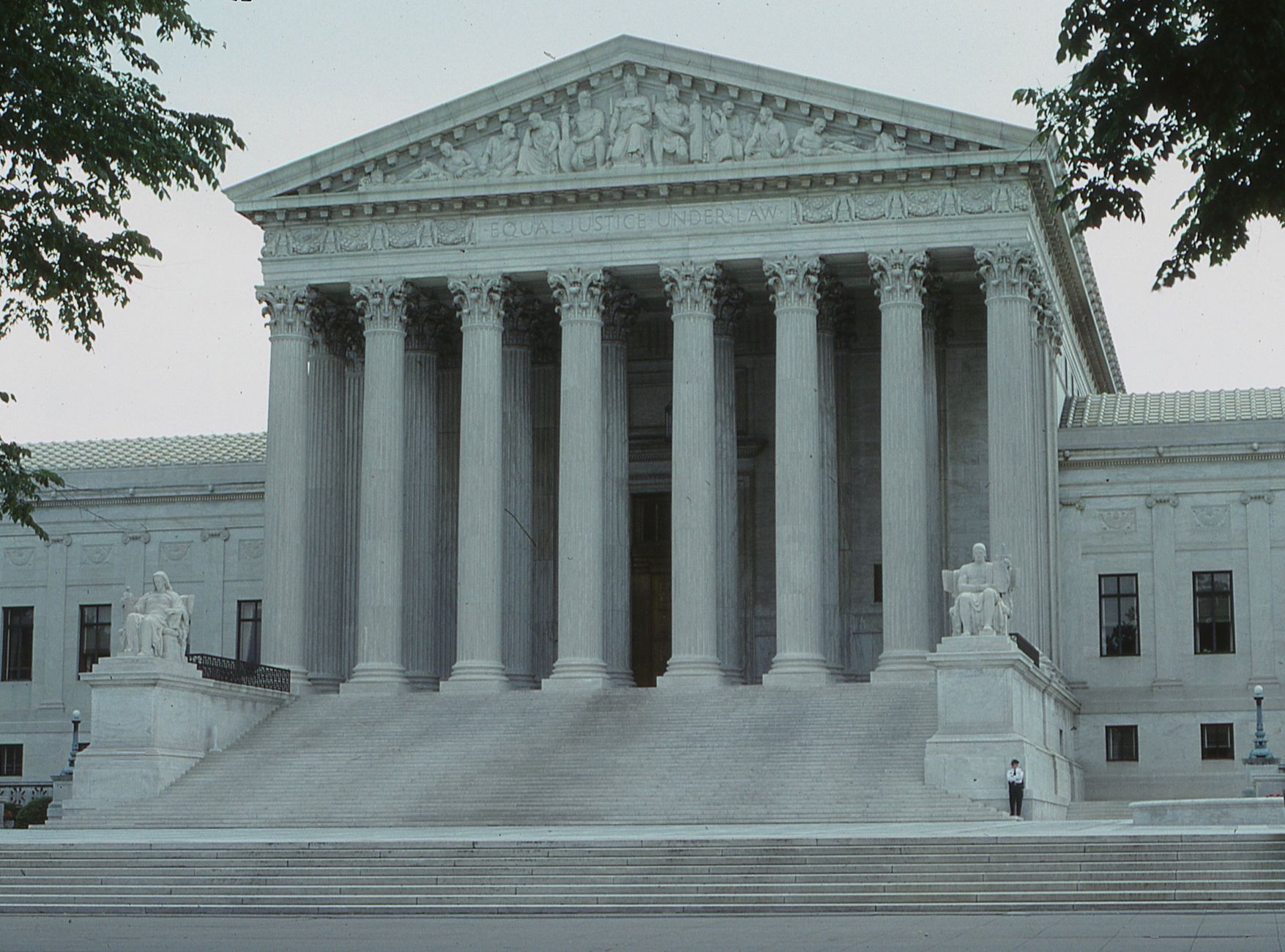
The Supreme Court’s approach to presidential authority has always shaped what a sitting president can and cannot do, and the contours of executive power remain unsettled across several major policy areas. Recent Supreme Court doctrine on executive power establishes limits that apply to any president regardless of party, meaning decisions the Court has made about the scope and constraints of presidential action carry direct implications for how any administration—including a Trump administration—can use its executive powers. The stakes are highest in areas where the Court has narrowed presidential discretion, such as environmental regulation, labor law enforcement, and the removal of executive officials. One recurring pattern in Supreme Court cases involves the distinction between presidential actions taken with Congress’s support, those taken contrary to Congress’s wishes, and those taken in the absence of clear congressional instruction.
This three-tier framework, established in *Youngstown Sheet & Tube Co. v. Sawyer* (1952), means that a president facing congressional opposition operates with the weakest legal footing. For example, when a president attempts to reallocate federal spending that Congress has specifically allocated elsewhere, courts have consistently rejected such actions, limiting executive authority even when the president claims national emergency or administrative necessity.
Table of Contents
- How Supreme Court Doctrine Constrains Executive Power
- Removal Powers and Administrative Structure
- Spending and Budget Authority
- Regulatory Authority and Delegation Limits
- Removal of Restrictions and Procedural Constraints
- Treaty Power and International Commitments
- Standing and Justiciability Constraints
- Frequently Asked Questions
How Supreme Court Doctrine Constrains Executive Power
The Supreme Court has established that presidential authority is not absolute and must operate within constitutional boundaries. In recent years, the Court has scrutinized executive actions that bypass Congress, particularly in areas where Congress has historically legislated. The major doctrinal shift has been toward requiring clear statutory authorization for major executive actions, rather than allowing presidents to claim inherent constitutional powers. A key limitation appears in the Court’s skepticism toward executive actions that reinterpret existing statutes without congressional amendment.
When an administration issues a regulation or executive order claiming to implement existing law but substantially changing its application, the Court now examines whether Congress delegated such power explicitly. This affects how a president can reshape regulatory agencies, issue guidance documents, or redirect administrative resources. The practical effect is that executive orders face higher scrutiny when they claim to accomplish what appears to be legislative work. A president cannot simply declare that existing law means something entirely new; the Court expects Congress to act if the law itself needs to change.
Removal Powers and Administrative Structure
The President’s ability to remove appointed officials remains contested constitutional terrain. The Supreme Court has recognized limits on the president’s removal power, particularly regarding officials who exercise quasi-judicial or quasi-legislative functions. Independent agencies like the Federal trade Commission and the Consumer Financial Protection Bureau were structured by Congress with removal restrictions—the president cannot fire the agency head without cause. This constraint matters significantly because it prevents a president from simply replacing leadership to achieve wholesale policy reversals.
For instance, if Congress has created an agency with a five-year term for its director and specified that removal requires “cause,” a new president cannot immediately remove that director to install a loyalist. The president must wait for the term to expire or establish grounds for removal tied to job performance rather than policy disagreement. A major limitation emerges when an agency’s statutory structure includes multiple protectors—multiple commissioners with staggered terms, partisan balance requirements, or cause-based removal language. These structures, common in financial regulators and independent agencies, mean that policy changes cannot happen overnight through personnel changes alone.
Spending and Budget Authority
Presidential discretion over how federal money is spent faces Court-imposed limits. Congress appropriates funds and assigns them to specific purposes; a president cannot simply redirect that money to different purposes without authorization. The Supreme Court has rejected attempts by presidents to refuse to spend money Congress has appropriated, and it has also rejected attempts to spend money on purposes Congress did not authorize. This principle directly affects how a president can respond to crises or implement policy priorities. If Congress appropriates $X for purpose A, the president cannot move those funds to purpose B without statutory authority.
For example, a president seeking to redirect environmental cleanup funds to border security would need either congressional approval or a statutory provision allowing such transfer. Without legal authority to shift funds, the president’s options narrow significantly. The limitation is stark in national emergency contexts. While a president can declare emergencies and tap emergency authorities Congress has created, those authorities must trace back to specific statutes. The Court has been reluctant to recognize limitless emergency powers.
Regulatory Authority and Delegation Limits
Modern administrative law rests on the assumption that Congress delegates rulemaking power to executive agencies. However, the Supreme Court has recently signaled that some delegations might be unconstitutionally broad—a “major questions doctrine” that requires clear congressional authorization for major regulatory actions. This doctrine affects how far a president can push agency interpretations of existing statutes. When an agency (and thus the president directing it) claims that an existing environmental, labor, or healthcare statute authorizes a sweeping new regulatory approach, the Court now asks whether Congress clearly authorized that interpretation.
If the regulation is “major”—affecting millions of people or trillions in economic value—the Court presumes Congress must have explicitly authorized it. A president cannot rely on ambiguous statutory language to justify major new regulations. The tradeoff is that this approach protects regulated industries and states from rapid regulatory swings but also constrains rapid policy shifts even when presidents believe they align with statutory text. A president’s ability to quickly implement an agenda through aggressive agency interpretation is limited by the requirement for clear statutory footings.
Removal of Restrictions and Procedural Constraints
Even when a president has authority to act, the Court has required agencies to follow specified procedures. Executive action that bypasses or shortcuts procedural requirements—notice-and-comment rulemaking, environmental review, or statutory consultation—has been struck down even when the underlying policy direction was permissible. The procedures themselves are not merely formalities; they are legal requirements that executive action must satisfy. A warning emerges here: an executive action that is substantively legal can still be invalidated for procedural failures.
📨 Get Free Accountability Coverage Alerts
Free · No spam · Unsubscribe anytime
If an agency issues a new rule without allowing public comment when the Administrative Procedure Act requires it, the rule is void regardless of its policy merits. This means rapid implementation of executive priorities often faces legal vulnerability if the president or agency rushes the procedural steps. Additionally, when an agency reverses a prior policy position, the Court has demanded detailed explanation of why the change was necessary. An agency cannot simply reverse course without explaining the scientific, legal, or factual reasons for the reversal.
Treaty Power and International Commitments
A president’s power to make international commitments and interpret treaties operates within constitutional limits. The Supreme Court has held that some treaty interpretations require Senate ratification, and executive agreements (agreements made by the president without Senate approval) cannot override federal statutes.
A president cannot use a treaty or executive agreement to accomplish what Congress has prohibited by law. For example, if Congress has legislated restrictions on cooperation with certain nations, a president cannot sign an executive agreement promising such cooperation without seeking congressional repeal of the statutory restriction. The treaty power, while broad, does not override the legislative power.
Standing and Justiciability Constraints
Not every dispute about presidential authority reaches courts, and the Supreme Court has established limits on who can sue and when. Parties challenging presidential actions must have actual legal injury and must raise questions that courts can resolve.
Political disputes and conflicts between branches that lack concrete legal injury may be deemed non-justiciable. However, when concrete harm exists—a rule affecting a business, a person denied a benefit, or a state facing required compliance costs—courts will hear the case. The result is that major presidential actions affecting regulated entities, states, or individuals become subject to legal challenge and potential invalidation if they exceed constitutional or statutory bounds.
Frequently Asked Questions
Can a president remove independent agency heads without cause?
No. For agencies like the FTC or CFPB, Congress has specified that the president can remove the head only “for cause,” meaning the president must establish grounds related to job performance, not policy disagreement.
What happens if a president issues an executive order contradicting a federal statute?
Courts will likely strike down the order. Presidential power is weakest when acting contrary to Congress’s wishes, and an executive order cannot override a statute.
Does emergency power give a president unlimited authority?
No. Emergency powers must trace to specific statutes Congress has passed. The Court has rejected the notion of inherent emergency authority unconstrained by law.
Can a president redirect federal spending to different purposes than Congress intended?
Not without statutory authorization. Congress controls the federal purse, and a president cannot unilaterally move appropriated funds to unapproved uses.
Does the “major questions doctrine” prevent new regulations?
No, but it requires clear congressional authorization for major rules. An ambiguous statute will not support a sweeping new regulatory interpretation.
You Might Also Like
- Trump Administration Gains Authority to Return Migrants to War Zones
- U.S.-Iran Deal Could Unlock $300 Billion in Private Investment
- Trump Strikes Back at Progressive Primary Winners With Aggressive Campaign Rhetoric