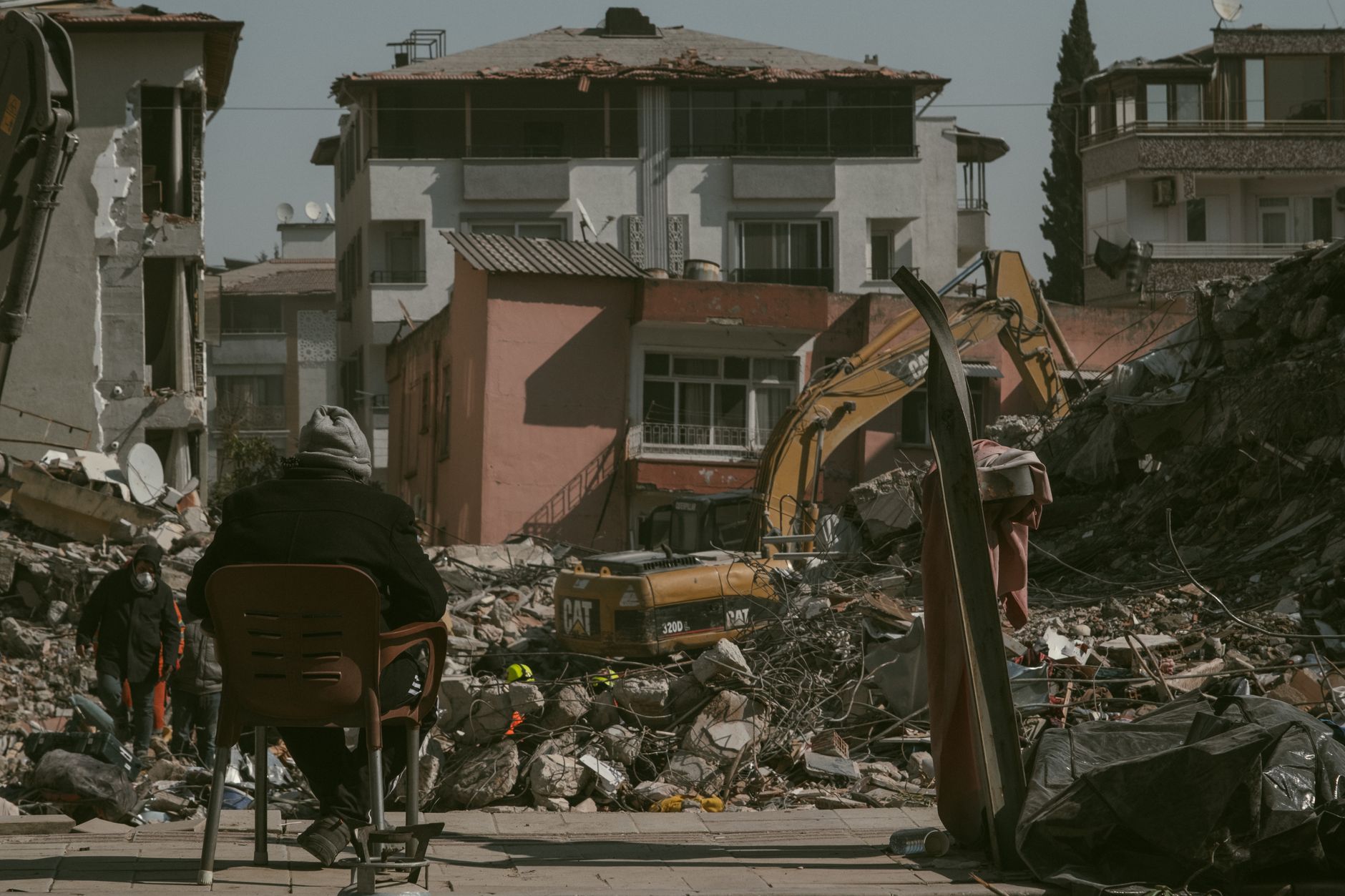
Two powerful earthquakes struck Venezuela on June 24-25, 2026, causing significant damage to the South American nation and triggering immediate international humanitarian response. A 7.2 magnitude quake struck first, followed 40 seconds later by a stronger 7.5 magnitude earthquake near Venezuela’s northern coast—the strongest to hit the country in over 125 years. The Trump administration quickly committed to expedited emergency assistance, with Secretary of State Marco Rubio announcing that the U.S. would “immediately deploy search and rescue teams, medical resources, and humanitarian assistance” to support Venezuelan disaster response efforts.
According to acting President Delcy Rodriguez, the confirmed death toll stood at 32 people with 700 injured in the immediate aftermath. However, the U.S. Geological Survey’s PAGER (Prompt Assessment of Global Earthquakes for Response) system projected a far grimmer scenario, estimating potential casualties ranging from 10,000 to 100,000 based on population density, construction standards, and predictive modeling of the affected regions. This gap between initial confirmed deaths and projected possible deaths underscores how earthquake prediction models account for variables like unconfirmed casualties in remote areas, structural collapse rates, and delayed reporting from affected communities.
Table of Contents
- How Venezuela’s Twin Earthquakes Compared to Historical Seismic Events
- The Devastating Human and Physical Toll
- International Humanitarian Response and U.S. Commitment
- Challenges in Delivering Emergency Aid to Venezuela
- Long-Term Recovery and Structural Vulnerability
- Historical Precedent: How Other Nations Recovered from Comparable Quakes
- Verification of Trump Administration Claims and Ongoing Assessment
How Venezuela’s Twin Earthquakes Compared to Historical Seismic Events
The 7.5 magnitude earthquake represented Venezuela’s most powerful recorded seismic event in more than 125 years, making it a historic disaster for the country. The unusual aspect of the June 24-25 sequence was the dual nature of the event—two major quakes separated by only 40 seconds created compounding damage as initial damage from the first quake was followed immediately by fresh rupturing from the second. This compressed timeframe gave rescue crews and residents virtually no window to assess damage or begin initial response efforts between the two main shocks.
Venezuela’s previous largest recorded earthquake occurred in 1900, making this event a once-in-a-century occurrence by frequency alone. The country’s seismic hazard profile places it in a moderately active zone along the Caribbean tectonic plate boundary, but earthquakes of this magnitude are sufficiently rare that most buildings and infrastructure in Venezuela were not designed or retrofitted to withstand such forces. This generational spacing in major quakes means much of the building stock—from residential neighborhoods to hospitals—may not have incorporated modern seismic engineering standards developed after previous damaging earthquakes in neighboring regions.
The Devastating Human and Physical Toll
The initial reported figures of 32 deaths and 700 injured represented only the first wave of casualty counts, typically reflecting figures from urban centers and areas with functional reporting infrastructure. The USGS projection of 10,000-100,000 potential deaths reflected the reality that mountainous terrain, rural communities, and areas with limited cellular or internet connectivity often take days or weeks to report casualties fully. Venezuela’s challenging economic situation also meant that many communities lacked real-time emergency reporting systems, complicating immediate damage assessments.
The wide range in the USGS projection—from 10,000 to 100,000—illustrates the significant uncertainty inherent in earthquake consequence modeling. This uncertainty stems from unknown factors: the precise intensity of ground shaking across all affected areas, the proportion of buildings constructed to insufficient seismic standards, whether people were indoors or outdoors during the quakes, and the distribution of vulnerable populations in the hardest-hit zones. A major limitation of earthquake projections is that they cannot account for secondary disasters that sometimes claim more lives than the initial quake—landslides triggered by ground shaking, dam failures, fires from ruptured gas lines, or disease outbreaks in displacement camps.
International Humanitarian Response and U.S. Commitment
The trump administration’s commitment to expedited assistance moved rapidly from announcement to deployment. Secretary Rubio’s statement that the U.S. was immediately dispatching search and rescue teams, medical resources, and humanitarian aid represented a concrete policy response rather than a statement of intent. The specific mention of “search and rescue teams” underscored the immediate priority: locating and extracting survivors from collapsed structures within the critical 72-hour window when rescue prospects decline sharply.
Multiple nations mobilized assistance in parallel with U.S. efforts, including rescue teams from the Dominican Republic, El Salvador, Mexico, and Qatar. This multinational response reflected both the severity of the disaster and the reality of modern earthquake response—no single nation possesses sufficient specialized rescue resources to handle a disaster of this magnitude alone. The Dominican Republic’s proximity made its response particularly rapid, while Mexico’s significant experience with earthquake response from its own frequent seismic activity made its rescue personnel especially valuable. Qatar’s involvement signaled that the disaster triggered responses from distant regions as well, potentially reflecting humanitarian commitments or diplomatic relationships.
Challenges in Delivering Emergency Aid to Venezuela
Delivering humanitarian assistance to Venezuela presented logistical complications beyond typical earthquake response scenarios. The country’s economic crisis has degraded infrastructure—roads, ports, and airports operate at reduced capacity with aging equipment and limited maintenance. A disaster of this magnitude striking a nation already facing resource constraints meant that rescue teams and medical supplies had to navigate not only earthquake damage but also pre-existing infrastructure limitations. Some airports may have been damaged or rendered unusable by the quakes themselves, forcing aid to enter through alternative routes or require aerial delivery.
📨 Get Free Accountability Coverage Alerts
Free · No spam · Unsubscribe anytime
Venezuela’s political situation added another complexity layer. International aid delivery typically requires coordination with host government authorities, customs clearances, and security arrangements. The expedited nature of Trump’s commitment suggested that the administration was prioritizing speed of response over normal bureaucratic procedures, but actually delivering supplies still required functioning government coordination on the Venezuelan side. A warning inherent in disaster response to politically isolated or economically fragile nations: aid delivery timelines often extend far longer than initial announcements suggest, and supplies may be diverted, delayed at customs, or inaccessible to the most vulnerable populations due to geographic access issues or local security concerns.
Long-Term Recovery and Structural Vulnerability
Venezuela’s capacity to undertake major reconstruction faced significant constraints compared to more economically developed nations. Countries with stronger GDP, tax revenue, and credit access can mobilize reconstruction funding rapidly; Venezuela’s economic contraction meant that rebuilding damaged infrastructure, hospitals, schools, and housing would likely depend heavily on international aid rather than domestic resources. This dependency can extend recovery timelines by years and create political complications around reconstruction priorities and resource allocation.
A critical warning: earthquake-prone regions that experience repeated major disasters often face what researchers call the “reconstruction trap.” After the 2010 Haiti earthquake, for example, many areas saw reconstruction timelines extend far beyond initial projections due to competing priorities, difficulty coordinating multiple aid organizations, supply chain challenges, and local capacity constraints. Venezuela could face similar dynamics. Additionally, if reconstruction focuses on restoring pre-earthquake building standards rather than upgrading to modern seismic resilience, the next major earthquake—potentially decades away—will cause similar devastation to newly reconstructed structures.
Historical Precedent: How Other Nations Recovered from Comparable Quakes
The 7.5 magnitude rating places Venezuela’s earthquake in a category with several other recent major seismic disasters. Turkey and Syria’s 2023 earthquakes (magnitude 7.8 and 7.5) killed over 50,000 people combined across both nations and took years to coordinate international aid and reconstruction.
Japan’s 2011 Tohoku earthquake (magnitude 9.0) killed 15,000 despite that country’s advanced building codes and emergency response systems, demonstrating that even highly developed nations with excellent seismic engineering suffered massive casualties. The comparison is instructive: Venezuela’s earthquake, while slightly weaker in magnitude than Turkey’s, struck a nation with far fewer resources for disaster response and reconstruction.
Verification of Trump Administration Claims and Ongoing Assessment
The Trump administration’s commitment to “expedited” assistance requires monitoring against actual deployment timelines. Previous disaster responses—both by U.S. administrations and other governments—have often seen announcements of immediate aid followed by logistical delays measured in days or weeks. The specific resources mentioned by Secretary Rubio (search and rescue teams, medical resources, humanitarian assistance) represented tangible commitments that can be tracked, unlike broader promises of “support.” Following news from rescue teams’ arrival dates, supplies delivered, and actual assistance deployed would clarify whether “expedited” materialized as announced.
The USGS projection of 10,000-100,000 deaths warrants repeated emphasis because it defines the potential scale of what remains unknown. If final casualty counts fall within the lower range, it would suggest that building damage was less severe than feared or that population distribution limited exposure. If counts approach the higher range, it would indicate catastrophic structural collapse in densely populated areas. This data point will become clearer over weeks as displaced persons camps fill, hospitals process the injured, and search operations conclude in affected zones.
You Might Also Like
- Trump Says America Will Not Pay Iran $300 Billion. Here Is What Is Proposed
- Is Trump Paying Iran $300 Billion – June 16 2026 Update
- Why the Iran Deal’s $300 Billion Fund Is Not a Direct U.S. Payment