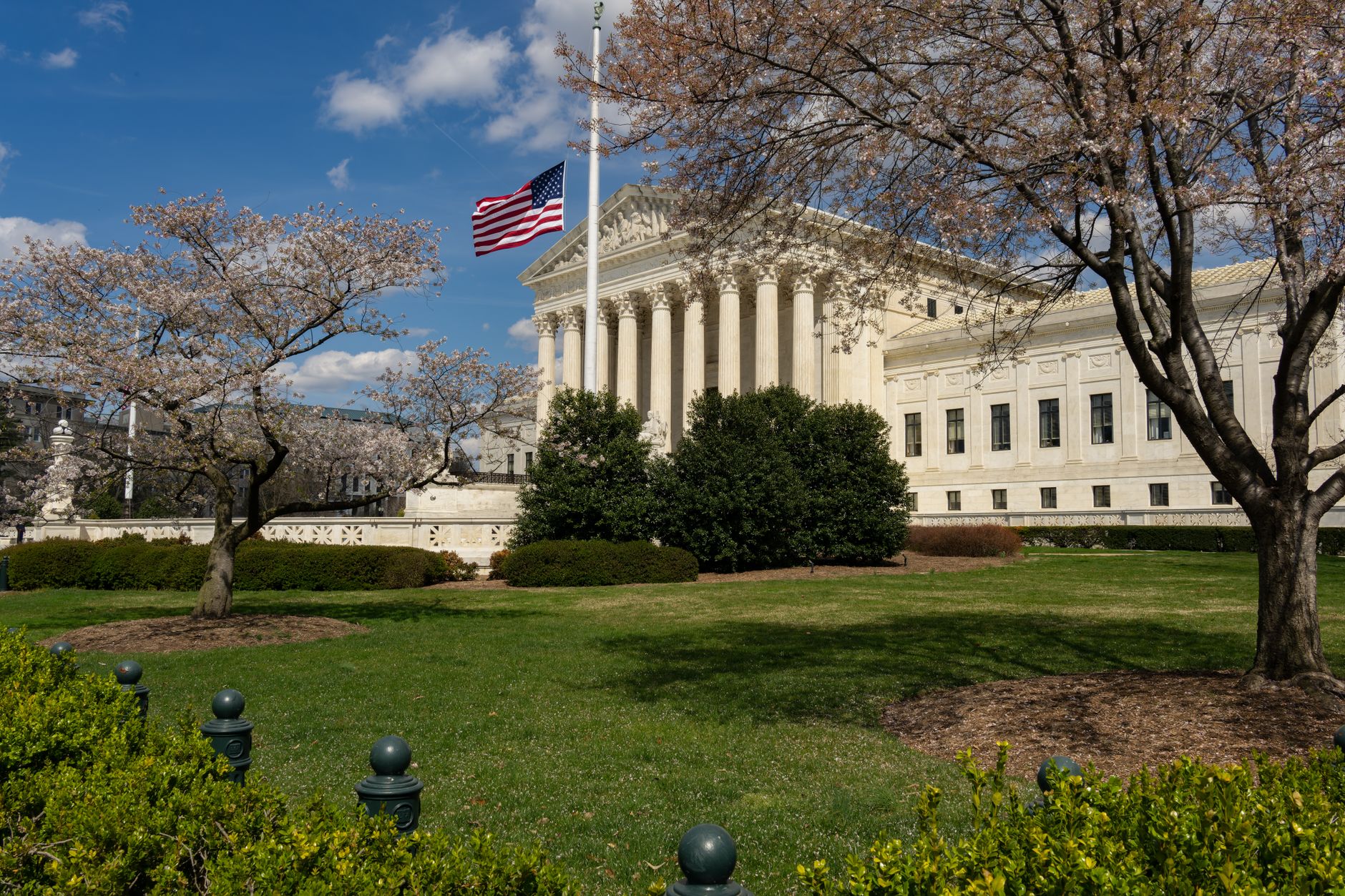
On June 29, 2026, the Supreme Court granted President Trump sweeping new authority to remove leaders of federal agencies without the traditional restrictions that have protected these officials since the Great Depression. In a 6-3 decision divided along ideological lines, the Court overturned a 91-year-old precedent that required presidents to have cause—such as inefficiency or malfeasance—to fire Senate-confirmed agency heads. This ruling means Trump can now terminate the directors of powerful agencies like the Federal Trade Commission, which regulates consumer protection and competition, based solely on his preference.
The decision fundamentally reshapes the balance of power between the presidency and the federal bureaucracy. Where presidents once had to demonstrate specific reasons for removal, they now have the discretion to clean house at independent agencies on day one or whenever political priorities shift. For consumers and business watchdogs, this translates to potential leadership upheaval at the very agencies designed to police markets and protect workers—with no legal mechanism requiring cause or congressional approval.
Table of Contents
- What Changed: The End of “For Cause” Removal Restrictions
- The Legal Reasoning: Executive Power Must Flow Unobstructed
- Which Agencies Face Uncertainty Under the New Standard
- The Broader Impact on Agency Independence and Consumer Protections
- The Federal Reserve Exception: Not All Agencies Are Equal
- The Dissent’s Warning About Unchecked Executive Power
- Immediate and Long-Term Implications for Federal Regulation
- Frequently Asked Questions
What Changed: The End of “For Cause” Removal Restrictions
The supreme Court’s ruling dismantled the legal framework established by the 1935 case Humphrey’s Executor, which had held that presidents could only remove agency heads for “inefficiency, neglect of duty, or malfeasance in office.” This “for cause” requirement existed precisely because Congress created independent agencies to insulate key decisions from raw partisan politics. Agencies like the FTC, the Consumer Financial Protection Bureau, the Environmental Protection Agency, and labor boards were designed as professional institutions, not political extensions of the executive branch. Chief Justice Roberts, writing for the majority, rejected this model entirely. His reasoning centered on a straightforward principle: agencies that exercise executive power must be under the President’s control, making their heads the President’s subordinates answerable at will.
This doctrine treats independent agencies not as congressionally mandated safeguards against unchecked executive power but as illegitimate obstacles to presidential authority. The implication is that executive power flows solely from the President, and any official wielding such power must answer to him without limitation. Prior administrations from both parties had worked within the “for cause” framework. Even when frustrated with agency leadership, presidents had to navigate these restrictions or work through impeachment or other formal processes. That constraint is now gone, replaced by a system where agency heads serve entirely at the President’s pleasure, similar to cabinet secretaries or white House staff.
The Legal Reasoning: Executive Power Must Flow Unobstructed
Roberts’s majority opinion rested on a particular theory of executive power: that the Constitution grants the president complete authority over all officials exercising executive functions, and any statutory limitation on removal violates the separation of powers. This reasoning goes beyond mere disagreement over policy and claims that constraining presidential authority over subordinates is inherently unconstitutional. Under this framework, Congress cannot even indirectly protect agency leadership by requiring cause for removal. A critical limitation of this legal theory is that it assumes all agency functions are purely “executive” in nature. Yet many independent agencies combine executive, legislative, and quasi-judicial functions.
The Federal Trade Commission, for example, both investigates violations and holds administrative hearings that resemble judicial proceedings. The National Labor Relations Board certifies elections and adjudicates disputes between employers and unions. By collapsing all agency action into “executive power,” the majority sidestepped the complexity of how modern government actually works and ignored decades of doctrine recognizing that agencies often perform functions Congress itself performs. The warning here is significant: this reasoning could eventually extend far beyond removals. If all agency functions are executive power flowing from the President, it raises questions about whether Congress can even limit presidential authority over other agency decisions, regulations, or spending priorities. The decision opens the door to broader attacks on agency independence than removal alone.
Which Agencies Face Uncertainty Under the New Standard
The ruling applies to independent agencies—those headed by a single director or a board where the President cannot remove members at will under current law. The FTC, perhaps the highest-profile target, regulates unfair competition and consumer fraud. Without statutory “for cause” protections, the current FTC commissioners could be replaced by appointees more sympathetic to industry consolidation or less vigilant about tech monopolies. The Consumer Financial Protection Bureau, which enforces rules against predatory lending, faces similar exposure.
Other agencies in jeopardy include the Equal Employment Opportunity Commission, which investigates workplace discrimination and harassment claims; the Social Security Administration, which manages benefits for millions of retirees and disabled Americans; the Securities and Exchange Commission, which oversees financial markets; and the National Labor Relations Board, which supervises union elections and unfair labor practices. In each case, removal of leadership can reshape enforcement priorities. For instance, if the FTC chair or commissioners are replaced by officials skeptical of data privacy regulations, enforcement actions against tech companies for privacy violations could evaporate without any change to the law itself. The practical consequence is that consumer protections, worker rights, and market oversight now depend entirely on the President’s personnel choices. When administrations change or political priorities shift, these agencies can experience wholesale leadership purges and dramatic reversals in enforcement policy, even if Congress has not altered the underlying statutes.
The Broader Impact on Agency Independence and Consumer Protections
Agency independence was never meant to insulate officials from accountability. Rather, it was designed to allow expert judgment to flourish without constant political interference, particularly on technical matters like safety standards, environmental thresholds, or fraud detection. Removal restrictions acknowledged that some decisions benefit from continuity and professional judgment rather than alignment with a president’s current political base. The trade-off created by the new standard is stark. Presidents gain immediate, unilateral control over agency leadership, accelerating policy changes they prefer. However, this same power allows administrations to gut enforcement at agencies they view as regulatory obstacles. A president hostile to labor rights can replace NLRB leadership with members who interpret existing labor law narrowly or discourage union organizing.
A president skeptical of environmental protection can install EPA leadership that deprioritizes enforcement or interprets Clean Air Act provisions to allow more pollution. The majority may frame this as necessary presidential authority, but the comparison to previous legal regimes shows it represents a significant expansion of executive power with limited checks. Workers, consumers, and environmental advocates lose a structural safeguard. Before, even a deeply anti-regulation president faced legal barriers to simply eliminating enforcement of existing statutes at independent agencies. Now, that barrier is gone. The only recourse is political—electing different leadership or pressuring Congress to strengthen statutory protections. Those are real constraints, but they operate far more slowly than the President’s pen.
The Federal Reserve Exception: Not All Agencies Are Equal
The Supreme Court did not grant Trump a complete, absolute power to remove all federal agency leaders. In a separate 5-4 decision, the Court rejected Trump’s attempt to remove Lisa Cook, a member of the Federal Reserve Board of Governors. Chief Justice Roberts, who wrote the majority opinion expanding removal power, sided with the dissenters on this issue, creating a narrow 5-4 majority that protected the Fed’s leadership. Roberts’s reasoning for the exception revealed the limits of his own stated principle. He cited the Federal Reserve’s origins in 1913 and argued that Congress explicitly intended to protect central banking from political interference. This distinction is critical because it shows that even the majority recognized certain agencies serve functions so fundamental to institutional independence that removal power cannot be completely unrestricted.
The central bank’s credibility in controlling inflation and managing financial stability depends partly on its insulation from short-term political pressures. However, this exception is narrowly drawn and may not survive future litigation. The 5-4 split on the Federal Reserve suggests fragility in this protection. Future courts, absent Roberts’s swing vote, might eliminate the Fed exception entirely or narrow it further. Moreover, the exception created for the Federal Reserve does not extend to other agencies despite their own claims to institutional independence and technical expertise. The SEC’s independence in securities regulation, the EPA’s role in environmental protection, or the NLRB’s function in labor law do not enjoy the same constitutional protection, leaving them vulnerable even if they serve similarly structural functions in markets and governance.
📨 Get Free Accountability Coverage Alerts
Free · No spam · Unsubscribe anytime
The Dissent’s Warning About Unchecked Executive Power
The three dissenting justices opposed the majority’s framework as a dangerous concentration of power. Their core concern was not that presidents should never remove agency leaders but that removing the “for cause” requirement eliminated the only meaningful check on presidential whim. Without it, a president can purge agency leadership simply because an official makes a decision the president dislikes, turning independent agencies into extensions of the executive office.
This warning has particular weight given the agencies at stake. The FTC investigates and sues companies for anti-competitive conduct, sometimes bringing cases against large corporations or industries where the President has political allies. Without “for cause” protection, an FTC chair who pursues such a case might find themselves removed mid-investigation, with a replacement installed who drops the matter. The same dynamic applies to labor enforcement: an NLRB chair overseeing a union election or unfair labor practice case could be replaced by a president unhappy with the trajectory, creating pressure to rule in management’s favor or abandon the proceeding.
Immediate and Long-Term Implications for Federal Regulation
The decision takes effect immediately, granting Trump authority he did not previously possess. In the weeks and months following the June 29 ruling, administration officials began identifying agency leaders for potential removal and succession planning for replacements. This occurs without Congressional approval or even notification beyond what the law already requires. Unlike a cabinet secretary, where Senate confirmation provides at least one institutional check, a replacement FTC chair or SEC commissioner can face scrutiny only through Senate confirmation of the successor, not through any review of the removal itself.
The long-term implication is a reshaping of federal regulation toward executive preference. Statutes passed by Congress—rules protecting consumers, workers, and the environment—remain technically on the books. But enforcement, priority, and interpretation flow from whoever leads the agency, and that leadership now answers to the President alone. Future presidents of both parties inherit this expanded authority, meaning the question is not whether one administration will wield this power but how extensively and to what end. The 91-year precedent that once constrained this power is gone, leaving only elections and congressional action as structural checks on how far any president pushes executive authority over the bureaucracy.
Frequently Asked Questions
Can Trump immediately remove all independent agency heads?
Yes, with one significant exception: the Federal Reserve Board of Governors remains protected. Trump can remove leaders at the FTC, EPA, NLRB, EEOC, SEC, and other independent agencies without cause, though Senate confirmation of replacements is still required.
Does this affect cabinet secretaries and White House staff?
No, it applies only to independent agencies. Cabinet secretaries already serve at the President’s pleasure and can be removed without cause.
Can Congress override this ruling?
Congress could potentially pass new legislation attempting to restrict removal power, but such statutes would likely face legal challenge and possible striking down as unconstitutional under the majority’s reasoning.
What about existing agency regulations and enforcement actions?
The statutes governing agency conduct remain law. However, new leadership can deprioritize enforcement, reverse interpretations, or decline to pursue certain cases within the bounds of statutory discretion.
How is the Federal Reserve different from other agencies?
The Court found the Federal Reserve’s roots in 1913 and Congress’s explicit intent to protect central banking from political interference sufficiently different to justify the exception, but this protection remains fragile and could change if Court composition shifts.
What happens to agency staff below the leadership level?
The ruling applies to top agency heads or board members, not career civil servants, who retain their own employment protections under federal law.
You Might Also Like
- Trump Gains Supreme Court Authority Over Federal Agency Leadership
- Supreme Court Final Decisions on Presidential Authority Could Impact Trump Significantly
- Voter Fraud Investigations Fail To Produce Evidence For Federal Cases