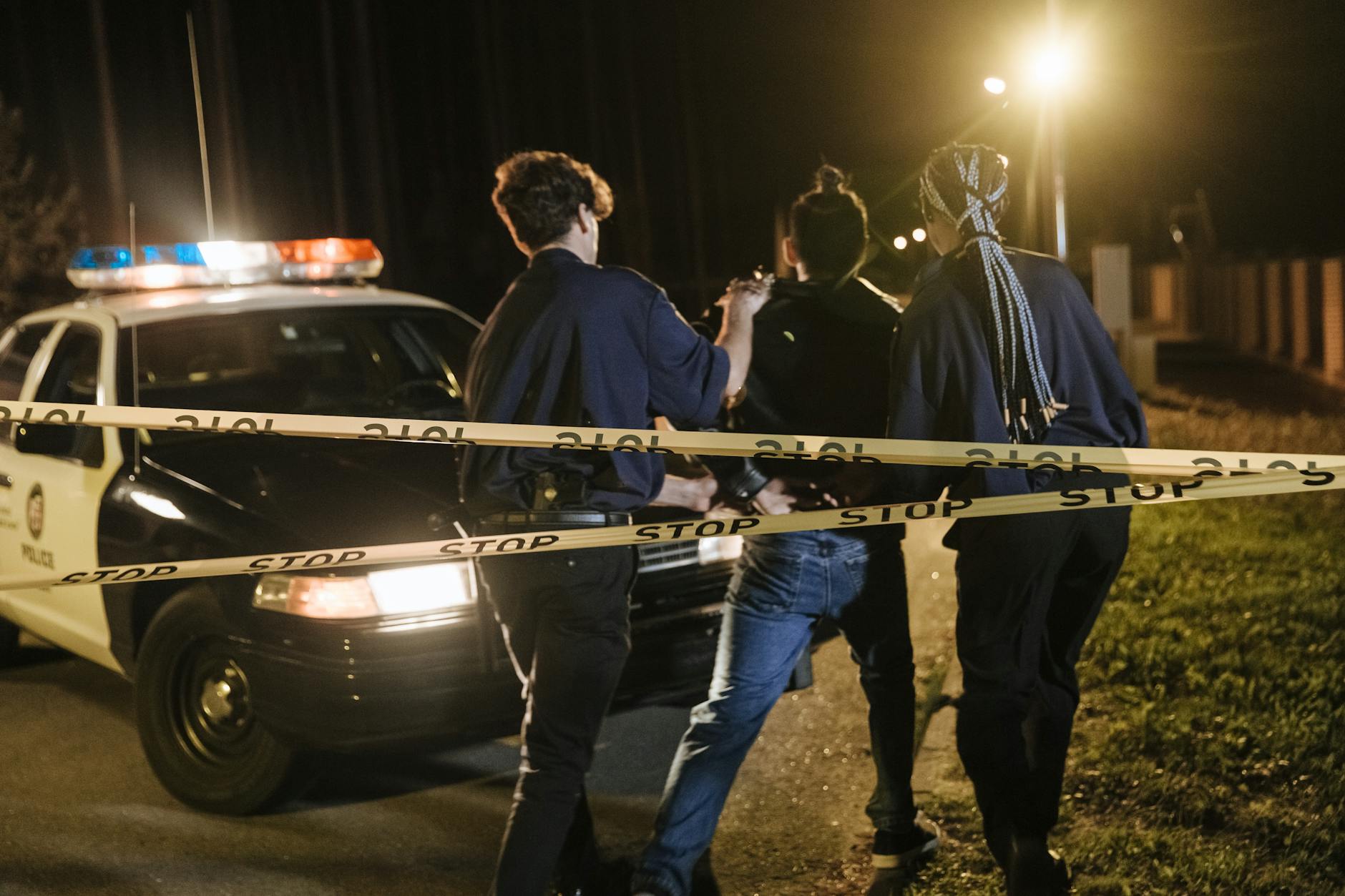
Shia LaBeouf was arrested in New Orleans shortly after midnight on Fat Tuesday, February 17, 2026, after a violent brawl outside the Royal Street Inn & R Bar in the Faubourg Marigny neighborhood. According to the NOPD police report, the 39-year-old actor struck multiple people with a closed fist, repeatedly shouted homophobic slurs, and was initially charged with two counts of simple battery. Video footage from the scene shows a shirtless LaBeouf shoving one person to the ground and punching another in the face, causing what police described as a possibly dislocated nose. The incident quickly escalated beyond the initial charges.
By February 26, a judge had revoked LaBeouf’s release on his own recognizance, set a $100,000 bond, and ordered him into substance abuse treatment. Two days later, on February 28, a new arrest warrant was issued after a third victim came forward from the same fight. LaBeouf turned himself in voluntarily on the additional misdemeanor battery charge. This article covers the full timeline of the arrests, the court hearing where a judge publicly rebuked LaBeouf for not taking his addiction seriously, the victims’ accounts, and what the legal consequences could look like going forward.
Table of Contents
- What Happened When Shia LaBeouf Was Arrested for Battery and Homophobic Slurs in New Orleans?
- How the Court Hearing Exposed Deeper Problems Behind the Arrest
- A Third Victim Comes Forward and a Second Arrest Follows
- What Are the Legal Consequences LaBeouf Actually Faces?
- LaBeouf’s History of Public Incidents and Why This One Is Different
- The Victims and the Community Impact
- What Comes Next in the LaBeouf Case
- Conclusion
- Frequently Asked Questions
What Happened When Shia LaBeouf Was Arrested for Battery and Homophobic Slurs in New Orleans?
The trouble started well before the punches flew. Reports indicate LaBeouf had been on an extended bar crawl stretching back to the Thursday before Fat Tuesday, a nearly five-day bender through one of America’s most permissive drinking cities during its biggest party of the year. The R Bar, where the altercation took place, is a well-known dive co-owned by Greg Dulli, frontman of the indie band The Afghan Whigs, and sits in the Faubourg Marigny just outside the French Quarter. It is not the kind of place where celebrity confrontations typically make national news.
According to the police report, LaBeouf “became irate and aggressive throughout the night.” One of the victims, Jeffrey Damnit — a well-known New Orleans local entertainer identified in police reports by his legal name Jeffrey Klein — told reporters that LaBeouf had pushed him from behind at the bar earlier in the evening while shouting homophobic slurs and threatening his life. “He hit me, he connected a few times with punches, he pushed me a few times,” Damnit said. The slurs were not limited to the bar fight itself; witnesses reported LaBeouf continued shouting them during his arrest by NOPD officers. A second victim suffered a possibly dislocated nose after being punched directly in the face, an injury documented in the police report and visible in video footage that circulated widely on social media. LaBeouf was taken into custody and initially charged with two counts of simple battery, a misdemeanor under Louisiana law that carries a potential sentence of up to six months in jail and a $1,000 fine per count.

How the Court Hearing Exposed Deeper Problems Behind the Arrest
Nine days after the Mardi Gras brawl, LaBeouf appeared before Judge Simone Levine in a hearing that turned into a pointed rebuke. The judge revoked his release on his own recognizance — meaning the court no longer trusted LaBeouf to simply show up for future proceedings without financial incentive — and imposed a $100,000 bond, which he posted immediately. Judge Levine also ordered weekly drug testing, including one administered on the spot in the courthouse, and mandated enrollment in substance abuse treatment. Judge Levine’s comments from the bench were unusually direct. “This defendant does not take his alcohol addiction seriously,” she said.
“This court does not believe he understands the level of seriousness when it comes to these allegations.” For anyone following LaBeouf’s history, the statement carried particular weight. This was not an isolated lapse from someone with no prior record. LaBeouf has faced multiple arrests over the past decade involving public intoxication and disorderly conduct, and has publicly discussed his struggles with alcohol. However, if LaBeouf complies fully with the court’s conditions — completing rehab, passing weekly drug tests, and avoiding further incidents — it is possible the misdemeanor charges could be resolved without jail time, potentially through a plea deal or diversion program. Louisiana courts often allow first-time or low-level offenders access to such programs, though LaBeouf’s prior record and the judge’s visible frustration could complicate that path. Notably, Judge Levine denied his request to travel to Rome in March for religious observations, including his father’s baptism, a signal that the court intends to keep a tight leash.
A Third Victim Comes Forward and a Second Arrest Follows
Just two days after the contentious court hearing, the situation worsened. On February 28, 2026, a new arrest warrant was issued related to a third victim from the same Fat Tuesday altercation. The details of this third victim’s injuries were not immediately made public, but the warrant confirmed that the scope of the brawl was broader than initially reported. LaBeouf’s attorney, Sarah Chervinsky, stated that her client voluntarily turned himself in to the Orleans Parish jail on the additional misdemeanor count of simple battery. He was released from custody the same day.
The voluntary surrender was likely a strategic move; turning yourself in before police come looking generally signals cooperation and can be cited favorably in later proceedings. Still, a third battery charge from a single incident paints a picture of someone who was indiscriminately violent that night, not someone involved in a mutual scuffle that got out of hand. The pattern matters in court. Prosecutors weighing how aggressively to pursue the case will note that three separate individuals were allegedly battered, homophobic slurs were used repeatedly, and the defendant had to be physically restrained. That is a different narrative than a bar fight where two people traded punches and both share blame.
What Are the Legal Consequences LaBeouf Actually Faces?
Under Louisiana Revised Statutes 14:35, simple battery is a misdemeanor punishable by up to six months in parish prison, a fine of up to $1,000, or both per count. With three counts now pending, LaBeouf theoretically faces up to 18 months of incarceration and $3,000 in fines. In practice, misdemeanor battery charges rarely result in maximum sentences, particularly for defendants with resources to hire experienced counsel and comply with court-ordered conditions. The more realistic outcomes range from a plea agreement involving probation, community service, and continued substance abuse treatment to a trial where the defense argues mutual combat or provocation. However, the video evidence and multiple victim statements narrow LaBeouf’s options considerably.
Compare this to a typical Mardi Gras arrest, where charges are often dropped or reduced because witnesses scatter and evidence is thin. Here, there is video, named victims willing to speak publicly, and a police report with specific details about injuries. The $100,000 bond is also noteworthy. For misdemeanor charges, bonds in Louisiana typically range from a few hundred to a few thousand dollars. A six-figure bond signals that the court views LaBeouf as either a flight risk, a danger to others, or both. The weekly drug testing and mandatory rehab enrollment add further conditions that, if violated, could result in bond revocation and immediate jailing pending trial.
LaBeouf’s History of Public Incidents and Why This One Is Different
Shia LaBeouf’s arrest record and public meltdowns have been extensively documented over the past decade. Previous incidents include a 2014 arrest at a Broadway show for disorderly conduct, a 2017 arrest in Savannah, Georgia for public drunkenness where he also used racial slurs against a police officer, and a 2020 lawsuit from ex-girlfriend FKA Twigs alleging physical, emotional, and sexual abuse. LaBeouf has acknowledged his alcoholism publicly and has discussed entering treatment programs multiple times. What makes the New Orleans incident distinct is the combination of factors: multiple victims, video evidence, homophobic slurs, and a judge who is clearly unwilling to treat this as celebrity misbehavior that warrants a slap on the wrist.
Judge Levine’s decision to deny the Rome trip — for what LaBeouf’s team framed as a religious and family obligation — suggests the court is drawing a hard line. The fact that LaBeouf had reportedly been drinking for nearly five consecutive days before the arrest undercuts any argument that this was an out-of-character moment triggered by a single night of excess. A warning for those following this case expecting a quick resolution: Louisiana’s criminal justice system, particularly in Orleans Parish, moves slowly. Pre-trial proceedings, motions, and continuances can stretch cases out for months or even years. LaBeouf’s legal team will likely use every available mechanism to delay, negotiate, or minimize the charges, while the prosecution will weigh the political and public interest value of pursuing a celebrity defendant aggressively.
The Victims and the Community Impact
Jeffrey Damnit is not a random bystander. He is a recognized figure in New Orleans’ entertainment and nightlife scene, which means the local community has a personal stake in the outcome of this case. His willingness to speak publicly and describe the attacks — including being pushed from behind and punched multiple times — adds a human dimension that makes it harder for this to be quietly resolved behind closed doors. The second victim’s possibly dislocated nose is a tangible, visible injury.
📨 Get Free Accountability Coverage Alerts
Free · No spam · Unsubscribe anytime
The third victim’s decision to come forward days later, triggering an additional warrant, suggests that the initial police response may have underestimated the number of people LaBeouf assaulted that night. For the R Bar and the Faubourg Marigny neighborhood, the incident is an unwanted spotlight during what is supposed to be a celebration. Mardi Gras brings enormous economic activity to New Orleans, and business owners generally do not benefit from their establishments being associated with celebrity violence. The broader question — whether LaBeouf’s repeated use of homophobic slurs during the altercation constitutes a hate crime enhancement — has not been formally raised by prosecutors, but it is worth noting that Louisiana’s hate crime statute does cover offenses motivated by sexual orientation bias. Whether that statute applies to slurs shouted during a physical assault that may or may not have been motivated by bias is a legal question that prosecutors will have to evaluate.
What Comes Next in the LaBeouf Case
The immediate future for LaBeouf involves compliance: weekly drug tests, substance abuse treatment, and staying out of trouble while three misdemeanor battery charges work their way through Orleans Parish Criminal District Court. His attorney Sarah Chervinsky will likely seek to consolidate the charges and negotiate a resolution that avoids trial, but the judge’s tone at the February 26 hearing suggests that any deal will come with significant conditions. Looking further ahead, this arrest adds to a pattern that has real consequences for LaBeouf’s career and public standing.
Studios and production companies have increasingly distanced themselves from actors with repeated legal and behavioral problems. Whether this latest incident represents a turning point or another chapter in a long cycle of crisis and partial recovery remains to be seen. What is clear is that the court, at least, is done extending the benefit of the doubt.
Conclusion
Shia LaBeouf’s Mardi Gras arrest in New Orleans resulted in three counts of simple battery after he allegedly punched multiple people, caused a possible nose dislocation, and shouted homophobic slurs during a brawl outside the R Bar on Fat Tuesday. The court response was swift and stern: a $100,000 bond, mandatory rehab, weekly drug tests, and a denied request to travel internationally. A third victim coming forward two days after the court hearing only deepened the legal trouble.
This case is worth watching not because celebrity arrests are inherently important, but because it tests whether the justice system treats a repeat offender with resources and fame the same way it would treat anyone else facing three battery charges and a judge who has publicly questioned their commitment to sobriety. The facts — video evidence, multiple victims, a detailed police report — leave relatively little room for ambiguity. What remains is whether the consequences will match the conduct.
Frequently Asked Questions
What are the charges against Shia LaBeouf in New Orleans?
LaBeouf faces three counts of simple battery, all misdemeanors under Louisiana law. The first two charges stemmed from his February 17, 2026 arrest on Fat Tuesday. The third was added on February 28 after an additional victim came forward.
What is the maximum penalty for simple battery in Louisiana?
Each count of simple battery carries up to six months in parish prison and a $1,000 fine. With three counts, LaBeouf faces a theoretical maximum of 18 months and $3,000 in fines, though maximum sentences are rarely imposed for misdemeanor battery.
Did the judge order Shia LaBeouf to go to rehab?
Yes. Judge Simone Levine ordered LaBeouf to enroll in substance abuse treatment and submit to weekly drug testing, including an immediate test at the courthouse. She also revoked his release on his own recognizance and set a $100,000 bond.
Who were the victims in the LaBeouf arrest?
One identified victim is Jeffrey Damnit (legal name Jeffrey Klein), a well-known New Orleans entertainer. A second victim suffered a possibly dislocated nose. A third victim came forward after the initial arrest, leading to the additional warrant on February 28.
Could this be charged as a hate crime?
Louisiana’s hate crime statute covers offenses motivated by sexual orientation bias, and LaBeouf repeatedly shouted homophobic slurs during the altercation. However, prosecutors have not formally raised hate crime enhancements, and proving that the assault was motivated by bias rather than general intoxication and aggression presents a higher legal bar.
Was Shia LaBeouf allowed to travel to Rome?
No. Judge Levine denied LaBeouf’s request to travel to Rome in March for religious observations, including his father’s baptism, as a condition of his release on bond.
You Might Also Like
- Poll: 65% Say ICE Has Gone Too Far — Two US Citizens Killed by Federal Agents Already
- New York City First Real Casino…Resorts World in Queens…$5.5 Billion Expansion Planned
- Belkin Battery Power Bank California — $5 Voucher or $2 Cash, Deadline March 30 Approaching