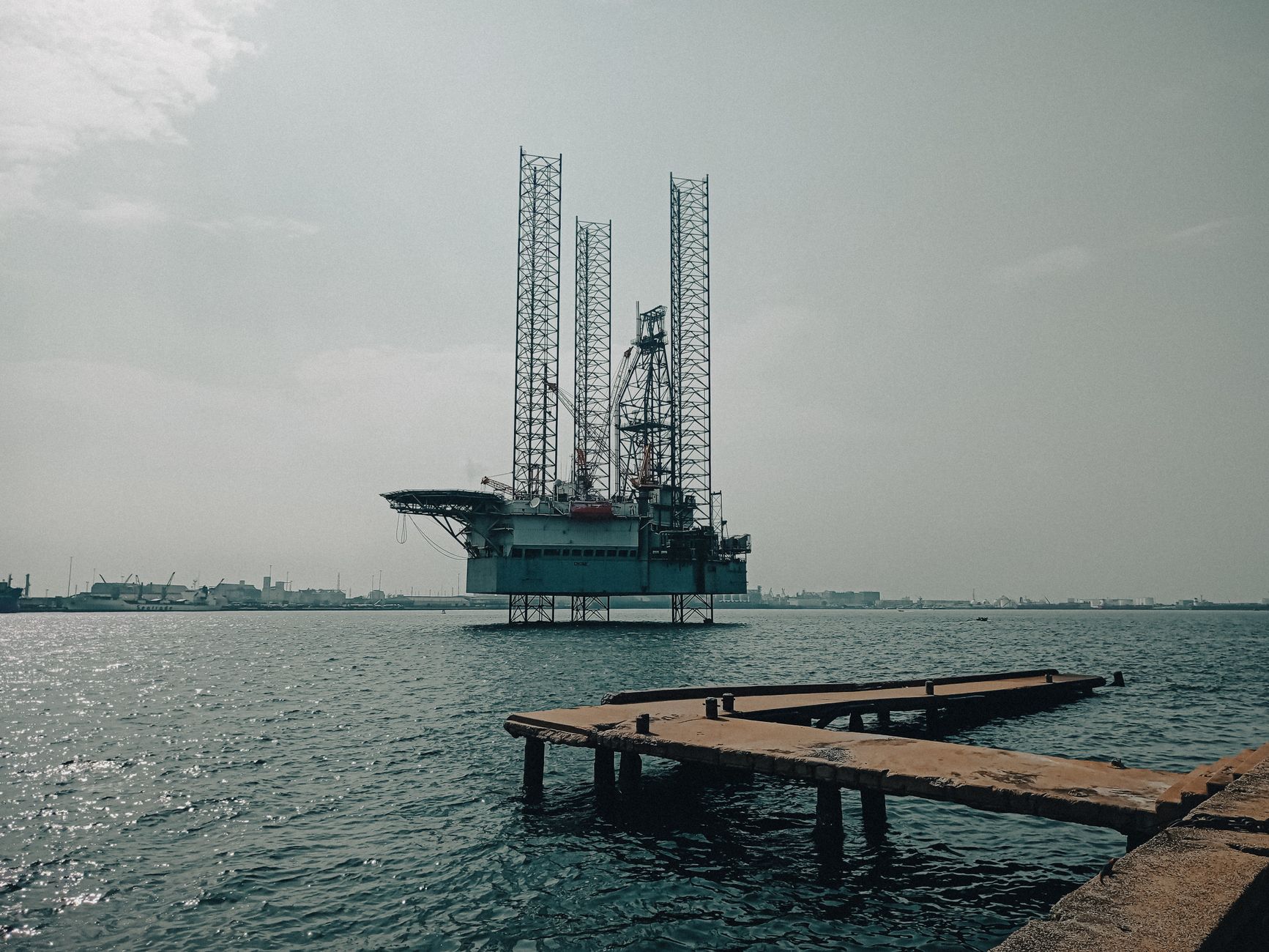
Washington and Moscow have each raised the prospect of restarting an American-Russian oil venture off Sakhalin, the island in Russia’s Far East, once the war in Ukraine is over, according to a Financial Times story published Monday, Oct. 27, which relied on people familiar with the matter. Only one US company was ever in that project. The history of the Sakhalin-1 ExxonMobil stake shows how much would have to change before any revival.
Where it stands: No Sakhalin-1 agreement had been reported by October 28. One US official, speaking to the FT, attached a condition to all of it: any deals “would be included in and subject to a comprehensive peace framework that stops the killing in this brutal war; nothing is finalised.” The Sakhalin detail comes from people familiar with the matter who spoke to the FT; other outlets had not confirmed it as of October 28.
Exxon’s most recent stated position, which the FT repeated, is that it has been talking to Russia about compensation for the seizure of its 30% stake but “had no plans to resume operations in the country.” The paper said Exxon did not immediately respond to a request for comment. Kremlin spokesperson Dmitry Peskov did not respond either, and a spokesperson for Kirill Dmitriev, Putin’s special economic envoy, declined to comment.
What exactly did the FT say about Sakhalin-1?
It reported an idea, not an agreement. According to the paper’s sources, both governments have suggested that a venture pairing US and Russian oil majors “could be resumed off the coast of Sakhalin” after the fighting ends.
The FT placed the idea inside a wider set of postwar incentives meant to bring Putin to the table, alongside Druzhba oil sales, Nord Stream gas and US airline access to Russian airspace. Our rundown of the full FT report lists each item.
The same story said US officials “have repeatedly stated the ventures would not happen until the war was over.” It also described the deals as facing long odds, citing Putin’s refusal to end the war and the reluctance of American companies to go back.
What happened to the Sakhalin-1 ExxonMobil stake in 2022?
Moscow took it. In early March 2022, shortly after the invasion, Exxon said it would discontinue operations at Sakhalin-1 and leave the venture. It then declared force majeure as sanctions disrupted crude shipments.
In October 2022 a Putin decree seized the project. Reuters reported that the decree made Sakhalinmorneftegaz-Shelf, a Rosneft subsidiary, the new operator and let the Russian government decide what foreign investors would own. Before that, the production-sharing agreement divided the field like this:
| Partner | Stake before 2022 | Position after the decree |
|---|---|---|
| ExxonMobil (operator) | 30% | Stake handed to a Rosneft unit |
| SODECO (Japan) | 30% | Allowed to keep it |
| ONGC Videsh (India) | 20% | Allowed to keep it |
| Rosneft (two affiliates) | 20% | Its unit now operates the field |
Reuters reported that Russia allowed both ONGC Videsh and SODECO to hold on to their shares, and that Exxon “is the only non-Russian investor to have quit its stake.” Putin has since given more time for a sale of Exxon’s former share: under a December 2025 decree, the cutoff moved back a year, to January 1, 2027.
How much did Exxon lose on Sakhalin-1?
That depends on whose number you use. Exxon’s own first-quarter 2022 results included “an unfavorable identified item of $3.4 billion associated with our planned exit from Russia Sakhalin-1.” Reuters, in later coverage, has described “a $4.6 billion impairment charge” on the 30% operator stake. None of the sources reviewed for this article explains the gap, so both figures appear here with their sources.
For a company of Exxon’s size, the project was small. Chief executive Darren Woods told analysts in 2022 that Sakhalin-1 was “less than 2% of our total production” in 2021, or “about 65,000 oil equivalent barrels per day, and about 1% of our corporate operating earnings.” OilPrice.com reported that leaving cut Exxon off from roughly 150 million barrels of reserves.
The field did not stay idle. OilPrice.com reported that output fell sharply after Exxon’s force majeure, then recovered to roughly 220,000 barrels a day with Russian managers in charge.
Is ExxonMobil negotiating a return to Russia?
Exxon says it is negotiating compensation, not a comeback. In a September 2025 Bloomberg interview, Woods said the company’s talks with Russia centred on recovering losses from the 2022 expropriation, through an arbitration claim it filed straight away. “The Biden administration supported, and actually encouraged, us to begin settlement discussions as part of that arbitration filing,” he said. “Later, the Trump administration supported that.”
Around the same time he told the FT: “We don’t have any plans to re-enter Russia.”
Other outlets described the talks differently, and each account deserves its attribution:
📨 Get Free Accountability Coverage Alerts
Free · No spam · Unsubscribe anytime
- The Wall Street Journal, as summarized by Business Standard in August 2025, said Exxon had held undisclosed talks with Rosneft about rejoining Sakhalin-1, and that Woods had discussed a possible return with Trump.
- Reuters reported in September 2025 that Exxon and Rosneft had reached a preliminary, non-binding understanding meant to help Exxon recover its writedown. Exxon declined to comment.
- Rosneft, according to OilPrice.com, “has denied signing a cooperation deal” while leaving the reported preliminary pact unaddressed.
The Kremlin has talked up returns in general. Peskov said in 2025 that “there is more than one corporation that is interested in reincarnating its presence on the Russian market.”
What would a revived Sakhalin joint venture need?
Sanctions relief from Washington, and Moscow’s own conditions, which are already on paper.
On Aug. 15, 2025, the day Putin met Trump in Alaska, he signed a decree that could let foreign investors, Exxon included, regain shares in the project. Reuters reported the terms: foreign shareholders “must undertake actions to support the lifting of Western sanctions if they want to regain their share.” They would also have to sign contracts for foreign-made equipment and move money into project accounts.
On the US side, the Treasury Department designated Rosneft and Lukoil on October 22, 2025. Treasury’s notice says entities owned 50 percent or more by either company are blocked even when not named. Reuters reported in August 2025 that Sakhalin-1 itself “has to date not been directly designated” under US energy sanctions, and that Trump’s team had weighed which sanctions it could lift quickly if peace talks moved.
Reuters also noted that the route back for Western money “is unclear given the U.S. and European Union would need to lift far-reaching sanctions to facilitate investment.” Our look at whether US companies will return to Russia covers what other firms lost on the way out, and our earlier report on energy deals floated in the Russia talks tracks the wider list.
Who is skeptical, and why?
At least one former senior US energy official doubts the idea would hold up. Geoffrey Pyatt, the Biden administration’s former assistant secretary of state for energy resources, told the FT: “I can’t see any of it lasting contact with the real world.” The paper said he doubted any major listed company would be eager to return in the current climate.
Exxon’s own on-record answer, in two interviews in September 2025, was that it is not planning a return. Russia’s clock keeps running regardless: under Putin’s December 2025 decree, the deadline for selling Exxon’s former Sakhalin-1 share is January 1, 2027.
Frequently Asked Questions
Is ExxonMobil going back to Russia?
Exxon says it is not. Chief executive Darren Woods said in September 2025 that Exxon was not planning to invest in Russia again, describing its talks as an effort to settle its arbitration claim over the 2022 seizure. The FT reported on Oct. 27 that officials had floated a revived Sakhalin joint venture after the war, and a US official said nothing was finalised.
How much did Exxon lose on Sakhalin-1?
Exxon booked a $3.4 billion identified item for its planned Sakhalin-1 exit in its first-quarter 2022 results. Reuters has described the hit as a $4.6 billion impairment charge. The sources reviewed here do not explain the difference, so both figures are given with attribution.
Who runs Sakhalin-1 now?
A Putin decree in October 2022 made Sakhalinmorneftegaz-Shelf, a Rosneft subsidiary, the operator. Japan’s SODECO and India’s ONGC Videsh were allowed to keep their stakes. A December 2025 decree extended the deadline for selling Exxon’s former share to January 1, 2027.
Is Sakhalin-1 under US sanctions?
Reuters reported in August 2025 that the project itself had not been directly designated under US energy sanctions. Rosneft, the parent of its current operator, was designated by the Treasury Department in October 2025.
Did Exxon sign a deal with Rosneft?
Reuters reported in September 2025 that the two companies reached a preliminary, non-binding pact intended to help Exxon claw back its writedown. Exxon declined to comment, and Rosneft denied signing a cooperation deal.
Sources
- Washington discusses Russian deals for US oil majors in Ukraine peace talks — Financial Times, October 27, 2026
- Treasury Sanctions Major Russian Oil Companies, Calls on Moscow to Immediately Agree to Ceasefire — U.S. Department of the Treasury, October 22, 2025
- ExxonMobil Declares Force Majeure on Sakhalin-1, Writes Off $3.4 Billion in Q1 — Journal of Petroleum Technology, May 2, 2022
- ExxonMobil Announces First-Quarter 2022 Results — ExxonMobil earnings release (via BOE Report), April 29, 2022
- Russia Gives ExxonMobil More Time to Exit Sakhalin-1 Oil and Gas Project — Reuters (via Offshore Engineer), December 2025
- Russia decree opens door for Exxon return to Sakhalin-1 project — Reuters (via Global Banking & Finance Review), August 15, 2025
- Exxon Says Russia Talks Focused on Expropriated Sakhalin-1 Asset — Bloomberg (via Energy Connects), September 18, 2025
- Exxon CEO Confirms No Plans to Return to Russia — The Gaze (relaying the Financial Times), September 2025
- Exxon Mobil exploring return to Russia’s Sakhalin: Here’s what we know — Business Standard (reporting The Wall Street Journal), August 27, 2025
- Exxon Seeks to Recover Billions Lost in Sakhalin Exit — OilPrice.com, September 23, 2025
- Kremlin says Exxon is not the only company interested in returning to Russia — Reuters (via Oil & Gas 360), September 2025
This article is news reporting and analysis based on the public sources listed above, as they stood on the dates shown. Where officials, lawmakers or analysts disagree, including on whether an action is lawful, their positions are attributed to them; Donald Trump Class Action is not a court and nothing here is legal advice. Facts in a developing story can change.