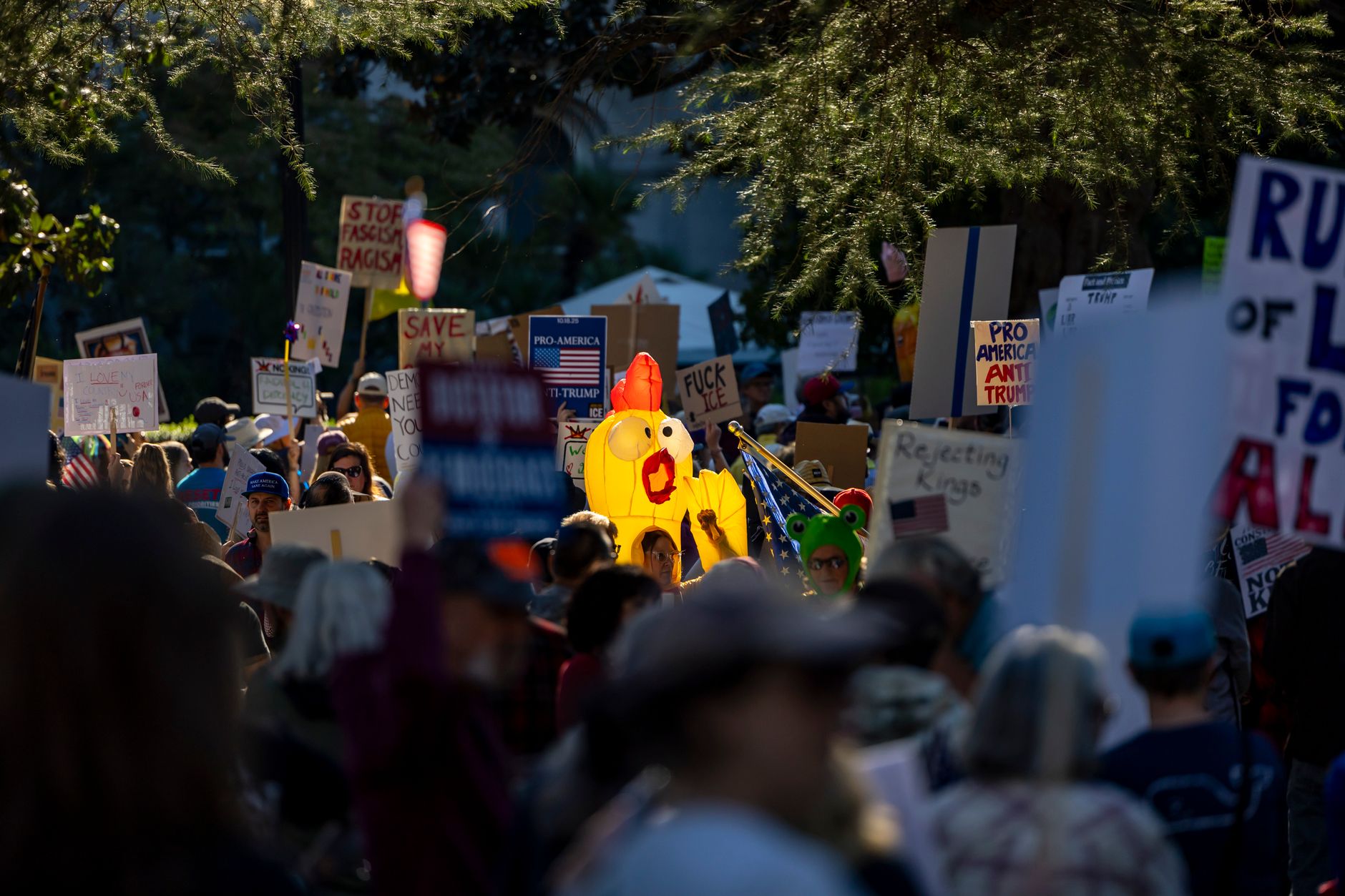
President Trump stated that America will not pay Iran $300 billion, referencing claims about alleged financial obligations that some administration officials argue the U.S. should not honor. The $300 billion figure derives from various sources—including estimates of frozen Iranian assets, proposed settlement amounts from past diplomatic negotiations, and claims about compensation owed for disputed historical incidents. Trump’s position directly rejects the premise that such payments represent legitimate U.S.
obligations and frames the refusal as a matter of principle and fiscal responsibility. The administration’s stated position centers on the argument that paying such funds would reward what officials characterize as state sponsorship of terrorism, hostage-taking, and regional destabilization. Instead of direct payments, the proposed alternative focuses on maintaining and expanding economic sanctions, restricting Iranian access to international banking systems, and supporting allied nations that oppose Iranian military expansion in the Middle East. This approach differs fundamentally from diplomatic frameworks that might involve asset releases or sanctions relief tied to nuclear or behavioral agreements.
Table of Contents
- What Is the $300 Billion Figure and Where Does It Come From?
- The Legal and Diplomatic Basis for the Proposed Alternative
- How Payment Proposals Emerged in Previous Negotiations
- What the Alternative Policy Proposes Instead of Payment
- The Risk of Sanctions Escalation and Unintended Consequences
- International Reaction and Coalition Effects
- How This Position Affects Ongoing Nuclear and Regional Issues
What Is the $300 Billion Figure and Where Does It Come From?
The $300 billion number encompasses multiple disputed claims rather than a single, clearly defined obligation. Part of the figure relates to Iranian assets frozen in U.S. banks and held in escrow since the 1979 Islamic Revolution—funds that Iran has periodically demanded be released. Another portion stems from international arbitration cases, including claims related to U.S. military equipment sold to Iran before the revolution and never delivered, as well as disputes over damages from the 1988 downing of Iran Air Flight 655 by a U.S. Navy missile. The remaining amount involves various proposals made during nuclear negotiations, including sanctions relief valuations and compensatory payments that diplomats suggested as part of comprehensive agreements.
No consensus exists among international law experts about what the U.S. actually owes. The International Court of Justice, the Iran-U.S. Claims Tribunal, and various other bodies have issued rulings on specific cases, but these claims remain contested. For comparison, international arbitration typically results in much smaller awards—the Iran-U.S. Claims Tribunal has processed thousands of cases with individual awards ranging from thousands to millions of dollars, not billions. The aggregation of all potential claims to reach $300 billion reflects addition of highly contested and theoretical amounts rather than adjudicated debts.
The Legal and Diplomatic Basis for the Proposed Alternative
The trump administration’s legal argument rests on the principle that the U.S. need not honor what officials describe as the fruits of hostile state conduct. The executive reasoning holds that frozen assets represent sovereign immunity protections—money held by a government that has engaged in activities Americans define as terrorism should not be returned without political concessions. This stance reverses the approach taken in the Joint Comprehensive Plan of Action (JCPOA) in 2016, when the Obama administration approved the release of roughly $100 billion in frozen Iranian assets as part of the nuclear agreement.
However, international law specialists note a significant limitation: the precise legal standing of frozen assets depends on treaty obligations, domestic law, and specific jurisdictional rulings. Some frozen funds derive from legitimate commercial transactions that Iran claims were wrongfully seized, while others stem from sanctions imposed after relations deteriorated. The proposed alternative of intensified sanctions creates a different kind of cost—it restricts Iran’s oil sales, banking access, and trade, effectively imposing economic pain rather than direct payment. A warning worth noting: prolonged sanctions also reduce the Iranian government’s resources for civilian programs, which can increase humanitarian pressure on ordinary citizens while potentially strengthening hardline factions that benefit from black-market trade.
How Payment Proposals Emerged in Previous Negotiations
During the nuclear negotiations leading to the JCPOA, diplomats discussed multiple frameworks for asset releases and payments. Some proposals included sanctions relief valued at tens of billions of dollars over time, phased releases of frozen assets tied to Iranian compliance with nuclear inspections, and compensation settlements for disputed historical claims. The Swedish government, which historically mediated U.S.-Iran discussions, participated in preliminary talks about potential settlement amounts that could resolve multiple claims simultaneously.
The $300 billion figure gained prominence when administration officials and some media outlets began aggregating various claims into a total. For example, if you add estimated frozen assets ($100+ billion), proposed sanctions relief values ($80+ billion), arbitration case claims ($50+ billion), and other historical claims ($70+ billion), the total approaches $300 billion. However, each component has different legal weight, different timeframes, and different dispute status. The Trump administration’s position rejects the entire aggregation framework, arguing that none of these components represent legitimate U.S. obligations that should be honored through direct or indirect payments.
What the Alternative Policy Proposes Instead of Payment
Rather than negotiating payments or asset releases, the proposed approach emphasizes “maximum pressure”—a strategy that aims to increase Iranian economic hardship until the government modifies behavior regarding nuclear weapons development, support for militant groups, and regional military actions. The policy includes secondary sanctions targeting countries or companies that trade with Iran, restrictions on Iranian access to the SWIFT international banking system, blocking of specific Iranian banks and financial entities, and asset freezes on Iranian officials and their associates.
📨 Get Free Accountability Coverage Alerts
Free · No spam · Unsubscribe anytime
The administration argues this method better serves American security interests compared to payments, which might be redirected toward military buildups or proxy forces in Yemen, Syria, Lebanon, and Iraq. The practical consequence differs for various stakeholders: for international companies, the sanctions mean exiting Iranian business or facing penalties; for Iran’s government, reduced oil export revenues (from roughly $90+ billion annually to under $20 billion during peak sanctions periods); and for ordinary Iranians, reduced foreign goods availability and currency instability. The tradeoff the administration makes is accepting economic pain for Iran’s population in hopes of changing government behavior, versus negotiating settlements that provide immediate payments but might not change strategic conduct.
The Risk of Sanctions Escalation and Unintended Consequences
One significant limitation of relying solely on sanctions is that they may prove ineffective if other countries refuse to enforce secondary sanctions or find workarounds through middleman countries. China, Russia, Turkey, and some European nations have all at various times reduced compliance with Iran sanctions, continuing to purchase Iranian oil through shadowy transactions or using shell companies. If sanctions pressure fails to produce policy change, the U.S. faces pressure to either escalate further (military action) or eventually negotiate—at which point the starting position becomes less favorable than earlier offers.
Another warning: prolonged sanctions can entrench hardline Iranian political factions that argue the West cannot be negotiated with, actually strengthening the very actors the policy aims to constrain. Historical examples include the impact of pre-WWII sanctions on Japan and Germany, which intensified nationalist sentiment rather than producing policy shifts. The Iranian government has learned to operate under sanctions through domestic production substitution, black-market imports, and cryptocurrency-based trade. The effectiveness of sanctions diminishes over time as targeted economies adapt, which means a “no payment, only pressure” strategy may require either escalation or eventual renegotiation.
International Reaction and Coalition Effects
Allied nations and international institutions have responded with mixed support to the U.S. refusal to pay or release assets. Saudi Arabia, Israel, and several Gulf states generally support a harder line against Iran and oppose payments they view as rewarding hostile behavior. However, European nations that remain parties to the JCPOA view asset freezes as unjust seizures of legitimately held funds, and some have suggested that unfrozen assets might actually be returned through international legal mechanisms if disputes were adjudicated fairly.
The practical effect has been fragmentation of the international response to Iran. The European Union maintains limited sanctions while trying to preserve the JCPOA framework, creating openings for Iranian trade with European companies at lower values than would exist with unified sanctions. Russia and China openly trade with Iran, including significant oil purchases. This fragmented response means American sanctions are less effective than they would be if China, Russia, and Europe all enforced them uniformly—an outcome the policy does not achieve.
How This Position Affects Ongoing Nuclear and Regional Issues
The refusal to pay and shift toward sanctions-only approach affects negotiations over Iran’s nuclear program, which Iran has steadily advanced since withdrawing from JCPOA compliance in 2019. Iran has enriched uranium to higher levels, reduced inspector access at some facilities, and developed improved centrifuge cascades—all advances that occurred while the U.S. maintained a no-payment, high-pressure stance.
Diplomats note that without incentives (asset releases, sanctions relief, payment settlements), Iran has less motivation to negotiate limits on nuclear activity. Regionally, the policy maintains zero compensation for historical grievances or current disputes, which means any future agreement would need to address not only nuclear limits but also past claims. The administration’s position is that such claims should not be negotiable—that Iran’s regional military conduct (support for Houthi fighters, Palestinian militant groups, Hezbollah, and militias in Iraq and Syria) disqualifies it from receiving assets or payments regardless of legal merit. This creates a situation where diplomatic off-ramps become narrower and the timeline for potential military escalation becomes shorter, since neither side has negotiating space for compromise on the fundamental question of whether payments or asset releases are acceptable.
- —
You Might Also Like
- Why the Iran Deal’s $300 Billion Fund Is Not a Direct U.S. Payment
- What the Proposed $300 Billion Iran Fund Would Actually Do
- Trump’s Iran Deal Includes a $300 Billion Fund, but Taxpayers May Not Be Paying