
Lawyers inside the Pentagon are actively stretching existing legal authorities to provide cover for the Trump administration’s military campaign against Iran, relying on broad interpretations of Article II commander-in-chief powers rather than seeking explicit congressional authorization for what has become a sustained and escalating air war. This legal architecture, built largely behind closed doors, suffered a significant credibility blow in early March 2026 when Pentagon officials admitted during a closed-door congressional briefing that there was no intelligence suggesting Iran had planned to attack American forces first — directly contradicting the White House’s stated justification of preemptive self-defense. The gap between the administration’s public legal rationale and the private admissions to Congress has triggered a constitutional confrontation not seen since the early days of the Iraq War. Former military officials have publicly called the strikes illegal.
The ACLU has accused the president of violating the Constitution. International law experts broadly consider the campaign a violation of the UN Charter. And yet, on March 5, 2026, the House of Representatives narrowly rejected a war powers resolution that would have forced the administration to seek proper authorization, leaving the Pentagon’s legal framework intact for now. This article examines exactly how Pentagon lawyers are constructing their legal arguments, why those arguments are drawing fierce criticism from constitutional scholars and former military leaders, what role Congress has played in enabling or challenging the campaign, and what the use of AI in targeting means for accountability going forward.
Table of Contents
- How Are Pentagon Lawyers Stretching Legal Authorities to Justify the Iran Campaign?
- What Did the Pentagon Admit to Congress Behind Closed Doors?
- The War Powers Resolution and Congress’s Failed Attempt to Reassert Authority
- What Legal Experts and Former Officials Are Actually Saying
- AI in Targeting and the Accountability Gap
- The Pentagon’s Information Black Box
- What Happens Next and Why the Legal Precedent Matters
- Conclusion
- Frequently Asked Questions
How Are Pentagon Lawyers Stretching Legal Authorities to Justify the Iran Campaign?
The core of the Pentagon’s legal strategy rests on Article II of the Constitution, which grants the president authority as commander-in-chief of the armed forces. Pentagon lawyers have interpreted this authority expansively, arguing that the president can order strikes against iranian military targets without new congressional authorization when acting to protect national security interests. According to legal analysis published by Just Security, Pentagon attorneys have also been working to leverage “the power of the purse” — using existing defense appropriations and legal frameworks already on the books to legitimize spending on the Iran campaign without requiring a new vote. This approach is not entirely new. The 2001 Authorization for Use of Military Force, originally passed to go after al-Qaeda in the wake of September 11, has been stretched by successive administrations to cover operations in countries and against groups that had nothing to do with the original authorization.
The 2002 AUMF targeting Iraq has similarly been repurposed well beyond its original scope. But applying either of these authorizations to Iran represents a leap that even lawyers sympathetic to broad executive power have struggled to defend. Iran was not the target of either AUMF, and experts across the political spectrum have pointed out that no amount of creative lawyering changes the text of those resolutions. What makes the current situation particularly notable is the reported role of the 2024 Supreme Court immunity ruling in emboldening the administration’s legal posture. Pentagon lawyers have reportedly incorporated the ruling’s logic into their analysis, arguing that it reinforces the president’s latitude to act on matters of national defense without fear of legal repercussions. The practical effect has been a legal environment inside the Defense Department where the threshold for launching strikes is set by internal counsel rather than by Congress or the courts.

What Did the Pentagon Admit to Congress Behind Closed Doors?
In early March 2026, Pentagon officials sat down with congressional staff for a briefing that lasted more than 90 minutes. What they said in that room directly undercut the public rationale the White House had been using to justify the strikes. According to reporting by Reuters, Newsweek, Politico, and The Japan Times, Pentagon officials acknowledged that there was no intelligence suggesting Iran had planned to attack American forces first. The administration had been telling the public and the press that the strikes were preemptive — necessary to neutralize an imminent threat. The Pentagon’s own briefers could not back that claim up. this matters enormously for the legal framework.
The doctrine of preemptive self-defense under both domestic and international law requires a credible, imminent threat. Without that, the legal justification collapses from self-defense into something closer to an unprovoked offensive military operation. If the threat was not imminent, then the president was not acting to protect American troops from immediate harm — he was initiating hostilities against a sovereign nation, which is precisely the kind of action the Constitution reserves for Congress. However, the admission has not yet triggered the kind of political consequences one might expect. The briefing was classified, and the details emerged through leaks rather than official disclosures. Members of Congress who might otherwise push back have been constrained by political dynamics within their own parties, and the administration has continued to insist publicly that the strikes were justified. The disconnect between what Pentagon officials say privately and what the White House says publicly is itself a warning sign for democratic accountability — when the government’s own defense lawyers cannot support the stated rationale in a classified setting, the legal foundation is not just stretched, it is fractured.
The War Powers Resolution and Congress’s Failed Attempt to Reassert Authority
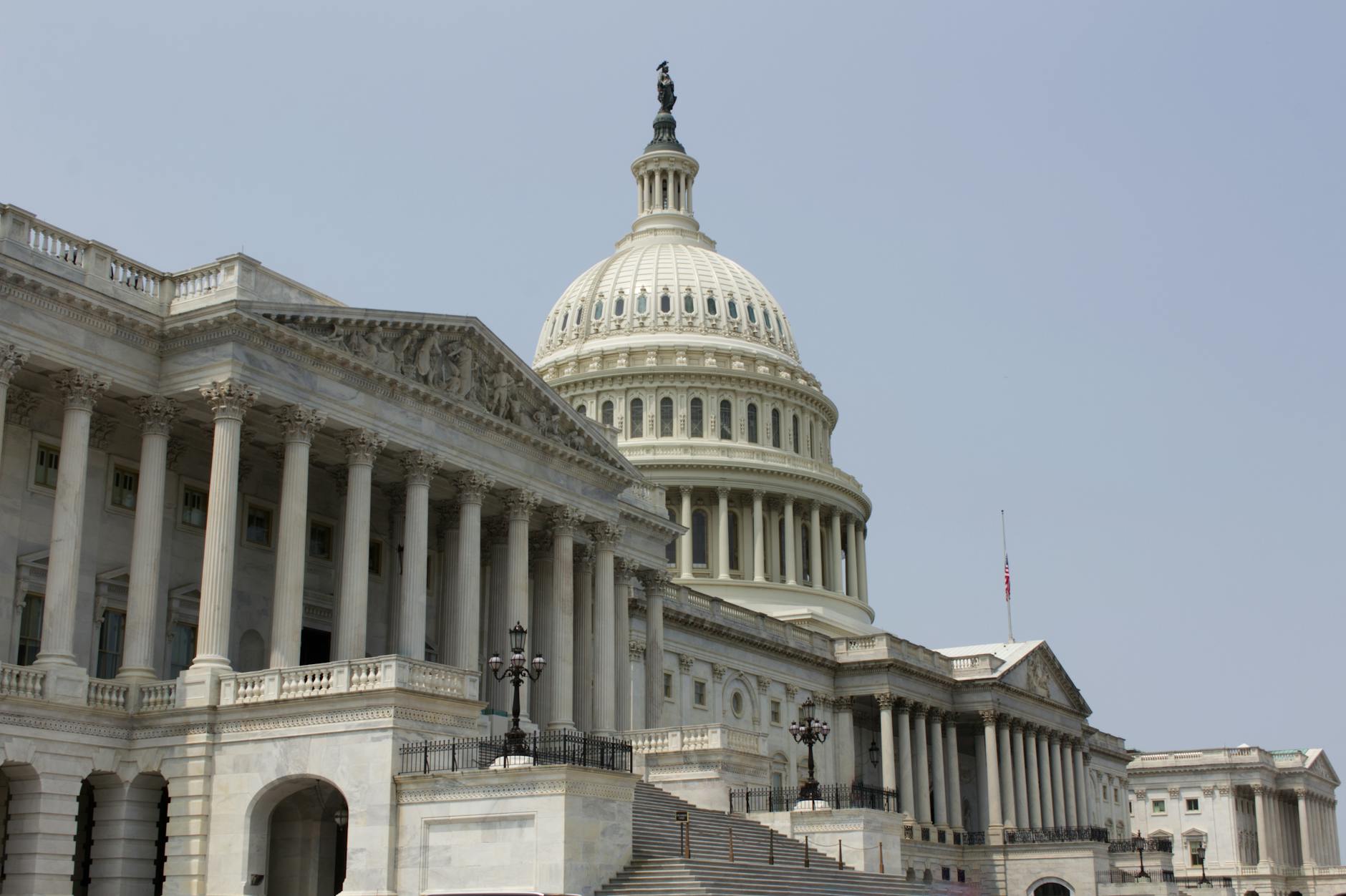
The War Powers Resolution of 1973 exists for exactly this kind of scenario. It requires the president to notify Congress within 48 hours of introducing U.S. forces into hostilities and limits military deployments to 60 days without explicit congressional authorization. The resolution was designed to prevent presidents from unilaterally committing the country to war, a power the framers of the Constitution deliberately placed with the legislative branch. On March 5, 2026, the House of Representatives voted on a war powers resolution that would have constrained the president’s authority to continue military operations against Iran without congressional approval. The measure failed narrowly, as reported by NPR, Stars and Stripes, and Military Times.
The vote fell largely along party lines, with enough members siding with the administration to keep the current legal framework — such as it is — in place. The defeat means the 60-day clock under the War Powers Resolution continues to tick, but without a formal congressional challenge, the administration can argue that Congress has implicitly acquiesced. Legal experts have also raised a procedural concern that often gets lost in the political noise. The administration reportedly briefed the Gang of Eight — the senior congressional leaders from both parties who receive classified intelligence briefings — in advance of the strikes. Pentagon lawyers have pointed to these briefings as evidence of congressional consultation. But the War Powers Resolution requires formal written notification, not informal advance briefings to a select group of legislators. Advance notice to eight people is not the same as authorization from 535 members of Congress, and the distinction matters both legally and constitutionally.
What Legal Experts and Former Officials Are Actually Saying
The legal criticism of the Iran campaign has come not just from predictable partisan voices but from former military officials, constitutional law scholars, and civil liberties organizations with long track records of nonpartisan analysis. Christopher Anders, a lawyer with the ACLU, stated bluntly: “Trump violated the Constitution by invading Iran because the Constitution is crystal clear on who has the authority to declare war. The president has tried to grab that power for himself without getting authorization from Congress.” Former U.S. military officials went further. In a report covered by The Intercept on March 1, 2026, several former officials alleged the strikes were illegal under both the War Powers Resolution and the United Nations Charter. The UN Charter prohibits the use of force against another state except in cases of self-defense against an armed attack or with Security Council authorization. Neither condition has been met here. The U.S.
has not claimed that Iran attacked American forces, and no Security Council resolution authorizes military action against Iran. International law experts have broadly agreed with this assessment, putting the U.S. in a position of conducting a military campaign that most of the world’s legal community considers unlawful. The comparison worth drawing is between the current campaign and the 2011 Libya intervention. In that case, the Obama administration argued it did not need War Powers Resolution authorization because U.S. involvement did not constitute “hostilities” — a position widely ridiculed by legal scholars at the time. The Trump administration’s Iran approach is arguably more aggressive: rather than redefining what counts as hostilities, Pentagon lawyers are redefining the scope of presidential authority itself. The tradeoff is that a broader interpretation of Article II powers, if left unchallenged, sets a precedent that future presidents of any party could use to launch military operations against virtually any target without congressional input.
AI in Targeting and the Accountability Gap
CNN reported on March 7, 2026, that the Pentagon is using artificial intelligence in its Iran strike targeting process. This adds a layer of legal and ethical complexity that Pentagon lawyers have not publicly addressed. When an AI system assists in selecting targets, the chain of accountability becomes harder to trace. Who is legally responsible when an AI-assisted strike hits the wrong target or causes disproportionate civilian casualties — the algorithm’s developers, the military operators who approved the strike, or the commanders who authorized the use of the system? The use of AI in targeting is not unique to the Iran campaign, but the combination of AI-assisted targeting with a legal framework that already lacks congressional authorization creates a compounding accountability problem.
Military law requires that every strike meet the principles of distinction and proportionality under the laws of armed conflict. If an AI system is making or heavily influencing targeting recommendations, the ability of military lawyers to certify compliance with these principles in real time becomes questionable at best. Tech firms have already begun clashing over military applications of their AI products, and the Iran campaign may accelerate that conflict. The warning here is straightforward: the legal authorities being stretched to cover the Iran campaign were designed for a world in which human decision-makers controlled every link in the kill chain. Introducing AI into that chain without updating the legal framework does not just raise ethical questions — it creates gaps in accountability that existing law is not equipped to fill.
📨 Get Free Accountability Coverage Alerts
Free · No spam · Unsubscribe anytime

The Pentagon’s Information Black Box
CNN reported on March 4, 2026, that the press has been facing what amounts to a Pentagon “black box” on information about the war. Journalists have struggled to get basic operational details, casualty figures, or clear explanations of the legal rationale behind specific strikes. This information vacuum is not incidental — it is a feature of the legal strategy.
When the public and the press cannot scrutinize the factual basis for military action, it becomes much harder to challenge the legal framework supporting it. JURIST, the legal commentary publication, argued in a March 2026 analysis that the Iran war “has no legal basis and no exit strategy.” That combination — legally dubious authority paired with operational secrecy and no articulated endgame — is precisely the pattern that led to two decades of open-ended conflict after September 11. The difference now is that the campaign is operating with even less formal legal authorization than the post-9/11 wars had at their outset.
What Happens Next and Why the Legal Precedent Matters
The escalation timeline tells its own story. Initial strikes on February 28, the admission of no imminent threat by March 2, the failed House vote on March 5, and a Pentagon announcement of expanded air operations on March 10. Each step has moved the campaign further from any plausible legal anchor while the political window for congressional pushback has narrowed.
If the 60-day War Powers clock expires without a successful congressional challenge, the administration will have established a functional precedent that a president can wage an air war against a sovereign nation on Article II authority alone, with no imminent threat, no AUMF, and no UN authorization. That precedent will outlast this administration. Whatever one thinks about the policy merits of confronting Iran militarily, the legal architecture being built inside the Pentagon right now will be available to every future president. The question is not just whether this campaign is legal — it is whether the country is comfortable with the legal framework that will remain after the campaign ends.
Conclusion
Pentagon lawyers have constructed a legal justification for the Iran campaign that relies on expansive readings of Article II authority, informal congressional consultations that do not meet War Powers Resolution requirements, and operational secrecy that limits public scrutiny. The administration’s own officials have privately admitted that the intelligence did not support the preemptive strike rationale the White House presented publicly. Congress had one clear opportunity to reassert its constitutional war powers and narrowly chose not to take it.
For citizens, journalists, and lawmakers tracking this situation, the key questions going forward are whether the 60-day War Powers clock will trigger any meaningful constraint, whether courts will intervene, and whether the use of AI in targeting will receive the legal oversight it requires. The legal authorities being stretched today will define the boundaries of presidential war powers for decades. What the Pentagon’s lawyers are doing inside their offices right now is not just a bureaucratic exercise — it is a constitutional moment with consequences that extend far beyond Iran.
Frequently Asked Questions
Does the president need congressional approval to strike Iran?
Under the Constitution, the power to declare war belongs to Congress. The War Powers Resolution allows the president to deploy forces for up to 60 days without authorization in emergencies, but requires notification within 48 hours. The administration is arguing Article II commander-in-chief powers are sufficient, but most constitutional scholars disagree when there is no imminent threat to U.S. forces.
What is the War Powers Resolution and has it been enforced?
The War Powers Resolution is a 1973 law that limits the president’s ability to commit U.S. forces to hostilities without congressional approval. It requires notification within 48 hours and a 60-day deployment limit. In practice, presidents of both parties have sidestepped it, and courts have generally avoided ruling on its enforcement, treating it as a political question between the branches.
Did the Pentagon admit there was no imminent threat from Iran?
Yes. During a 90-plus minute closed-door briefing with congressional staff in early March 2026, Pentagon officials acknowledged there was no intelligence suggesting Iran planned to attack American forces first. This was reported by Reuters, Newsweek, Politico, and The Japan Times, and it directly contradicts the White House’s public justification for the strikes.
What role is AI playing in the Iran strikes?
CNN reported on March 7, 2026, that the Pentagon is using AI in its targeting process for Iran strikes. The specific capabilities and extent of AI involvement have not been fully disclosed, but the development has raised legal and ethical concerns about accountability in the targeting chain, particularly given the absence of clear congressional authorization for the campaign itself.
Can Congress still stop the Iran campaign?
Congress retains the constitutional power of the purse and could defund military operations against Iran. Lawmakers could also pass a war powers resolution with a veto-proof majority. However, the narrow House vote on March 5, 2026, in which a constraining resolution failed, suggests the political will for such action is currently insufficient.
You Might Also Like
- The U.S. and Israel Are Running Separate But Coordinated Operations Inside Iran
- Israel’s War Cabinet Approved Expanding Targets Deep Inside Iran
- Iran Knows the U.S. and Israel Cooperated — The Legal Distinction Doesn’t Matter to Tehran