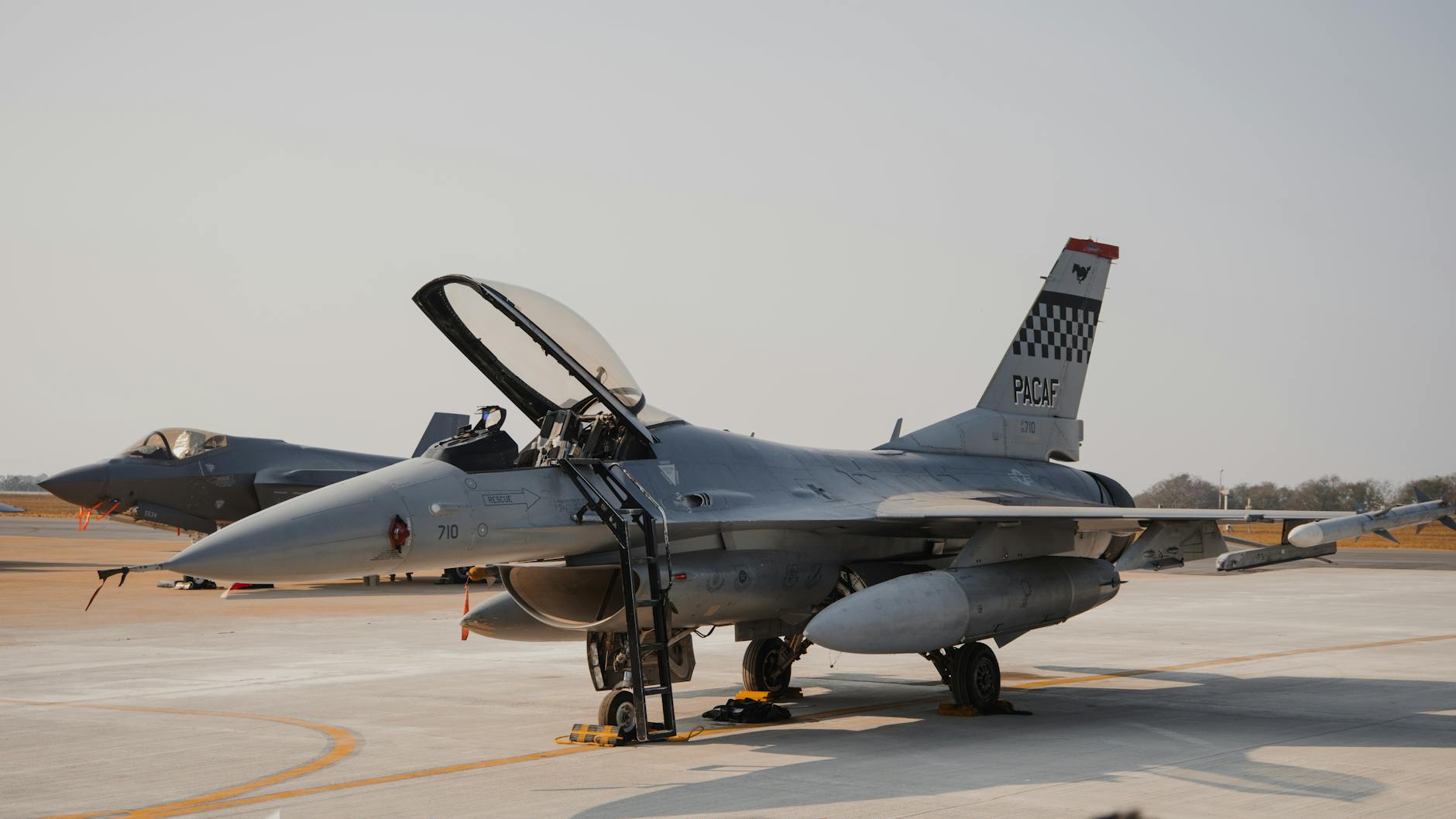
The Iranian ballistic missile strike that destroyed a synagogue in Beit Shemesh, Israel on March 1, 2026, killing nine people including three children from one family, is already being leveraged by hawks in Washington and Jerusalem to build the case for deeper military involvement in Iran — up to and including ground troops. Defense Secretary Pete Hegseth has publicly refused to rule out sending American soldiers into Iran, and Senator Lindsey Graham has reportedly been lobbying President Trump directly for an expanded assault. The tragedy of the Beit Shemesh attack is real and undeniable, but the political machinery converting grief into war authorization is moving at a pace that should concern every American taxpayer and voter.
This pattern is not new. Attacks on civilians, particularly attacks that carry heavy symbolic weight like the destruction of a house of worship, have historically served as accelerants for military campaigns that often exceed their original stated objectives. The Beit Shemesh strike and the subsequent synagogue explosion in Liege, Belgium on March 9 are being folded into a narrative that frames further escalation as both inevitable and morally necessary. This article examines the facts of these attacks, the broader military conflict between the US-Israel coalition and Iran, the political actors pushing for escalation, the voices urging restraint, and what the American public should understand about the gap between justified outrage and sound strategic policy.
Table of Contents
- How Is the Beit Shemesh Synagogue Attack Being Used to Justify Further Military Escalation Against Iran?
- The Liege Synagogue Explosion and the Spread of Conflict to European Soil
- The Scale of the US-Israel Military Campaign Already Underway
- Who Is Pushing for Escalation and Who Is Urging Restraint?
- The Humanitarian and Economic Costs Already Being Ignored
- The Role of Congress and the Question of Authorization
- What Comes Next and Why Public Scrutiny Matters
- Conclusion
- Frequently Asked Questions
How Is the Beit Shemesh Synagogue Attack Being Used to Justify Further Military Escalation Against Iran?
The Beit Shemesh strike occurred on March 1, 2026, when an Iranian ballistic missile hit a residential area near Jerusalem, destroying a synagogue and the bomb shelter beneath it. Nine people were killed and at least 49 were injured. An IDF probe released the following day found that the bomb shelter met official safety standards, but a direct ballistic missile impact simply overwhelmed the structure. The attack came during a wave of Iranian retaliatory strikes following the killing of Ayatollah Ali Khamenei on February 28 in joint US-Israeli operations. Within days, the political response in Washington had shifted from mourning to mobilization. Defense Secretary Pete Hegseth told reporters he would not rule out American ground troops in Iran.
Senator Lindsey Graham, who reportedly helped make the original case to Trump for striking Iran, began pushing for an expanded campaign. The destruction of a synagogue — a target that evokes the deepest historical traumas of Jewish communities worldwide — carries an emotional and symbolic charge that makes it uniquely effective as a justification for escalation. Compare this to strikes on military installations or infrastructure, which generate far less public pressure for retaliation. The nature of the target matters enormously in shaping political will, and every actor in this conflict understands that. The critical distinction that gets lost in this dynamic is the difference between responding to an attack and using an attack as a blank check. Iran’s strike on Beit Shemesh was itself a retaliatory action following approximately 900 US-Israeli strikes conducted over 12 hours on February 28 that targeted Iranian missiles, air defenses, nuclear infrastructure, and leadership — strikes that killed Khamenei himself. None of this excuses the killing of civilians, but it does mean that framing the synagogue strike as an unprovoked act requiring open-ended military response is a deliberate political choice, not a straightforward reading of events.

The Liege Synagogue Explosion and the Spread of Conflict to European Soil
On March 9, 2026, an explosion damaged a synagogue in Liege, Belgium around 4:00 AM. No injuries were reported — only material damage. Belgian Prime Minister Bart De Wever condemned it as a “despicable antisemitic act,” and the federal prosecutor opened an investigation treating it as a possible terrorism case. The Liege mayor referenced “foreign conflicts being imported into our city,” a pointed acknowledgment that the US-Iran war was generating violence far beyond the Middle East. The Liege incident, while far less deadly than Beit Shemesh, serves a specific function in the escalation narrative. It broadens the threat picture from a regional military conflict to a global security crisis requiring a global response.
However, it is important to note that as of this writing, no group has claimed responsibility for the Liege explosion, and the investigation is ongoing. If the attack turns out to be connected to iranian state actors or proxies, that carries very different policy implications than if it was carried out by independent extremists exploiting the chaos of war. Treating an unresolved investigation as settled fact to justify military decisions is a mistake the public has seen before, and the consequences of that mistake tend to be measured in years of occupation and trillions of dollars. The Washington Post reported that European countries went on heightened alert following the Liege blast, with security increased around Jewish community sites across the continent. This is an entirely appropriate protective response. The question is whether protective security measures get conflated with offensive military operations — whether guarding synagogues in Belgium becomes part of the argument for invading Iran.
The Scale of the US-Israel Military Campaign Already Underway
Before anyone discusses “further escalation,” it is worth understanding what has already happened. On February 28, 2026, the United States and israel launched approximately 900 strikes in 12 hours against Iran, targeting missile systems, air defense networks, nuclear infrastructure, and leadership figures. The operation killed Supreme Leader Khamenei. By March 9, Israel alone had conducted over 1,600 strikes on Iranian targets. More than 1,000 people had been killed across both sides of the conflict. Iran’s retaliation involved hundreds of drones and ballistic missiles directed at Israel and US military bases across Qatar, Bahrain, the UAE, Kuwait, Iraq, Jordan, Saudi Arabia, and Turkey.
Iran closed the Strait of Hormuz and attacked energy facilities, sending shockwaves through global oil and gas markets. Approximately 700,000 people fled Lebanon amid Hezbollah rocket fire. This is not a limited engagement. This is a full-scale regional war with global economic consequences that is already well underway. The framing of “further escalation” as a response to the synagogue attacks obscures the reality that the escalation ladder has already been climbed to a remarkable height. The synagogue strike did not occur in a vacuum — it occurred in the context of a massive military campaign that killed a head of state. Understanding this timeline is essential for evaluating any claims that additional military action is a proportionate or necessary response rather than a continuation of a cycle that neither side appears willing to break.
Who Is Pushing for Escalation and Who Is Urging Restraint?
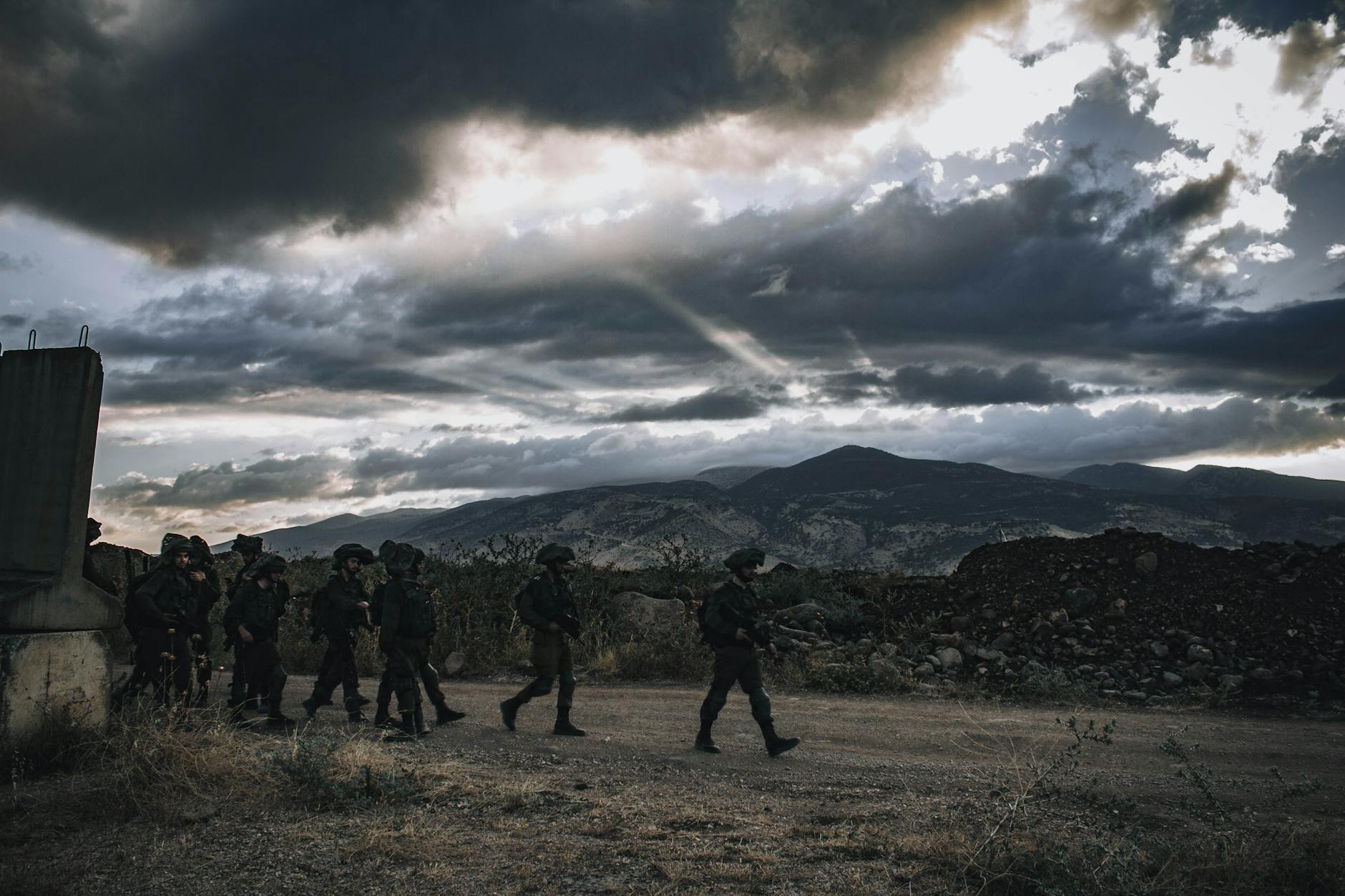
The political landscape around this conflict is not monolithic, and Americans should pay close attention to who is saying what. On the escalation side, Defense Secretary Pete Hegseth has kept the ground troops option explicitly on the table. Senator Lindsey Graham reportedly made the case directly to Trump for the initial assault on Iran. The Washington Post reported that Saudi Crown Prince Mohammed bin Salman also lobbied Trump to attack Iran, reflecting longstanding Saudi-Iranian regional rivalry. On the restraint side, Trump himself dismissed the ground troops question on March 9, saying it would be a “waste of time” to consider that option currently — though “currently” is doing significant work in that sentence.
The UK Prime Minister stated he did “not believe in regime change from the skies,” a pointed rebuke of the coalition’s approach. UN human rights experts went further, calling the US-Israeli strikes “unprovoked attacks launched amid diplomatic negotiations and without Security Council authorization,” characterizing them as violations of the UN Charter. Perhaps most notably, Jewish leaders in the United States called on Trump to “lay out the rationale and objectives” of the military campaign and to consult Congress, warning against escalation without clear strategic goals. This is a significant detail that complicates the narrative being constructed around the synagogue attacks. The very communities most directly affected by antisemitic violence are asking for deliberation and congressional oversight, not a blank check for open-ended war. When the people whose grief is being invoked are themselves asking for restraint and accountability, that should carry weight.
The Humanitarian and Economic Costs Already Being Ignored
The human toll of this conflict is staggering and growing daily. Over 1,000 people killed across both sides within the first week and a half. Forty-nine injured in Beit Shemesh alone. Three children from a single family dead. Nearly 700,000 displaced from Lebanon. These are not abstractions — they are people whose lives have been destroyed or ended by decisions made in offices thousands of miles away. The economic consequences are equally severe and will be felt by ordinary Americans regardless of their views on the conflict.
Iran’s closure of the Strait of Hormuz and attacks on energy facilities have disrupted global oil and gas supplies. Every American who drives a car, heats a home, or buys goods transported by truck is already paying for this war at the pump and the grocery store. Further escalation — particularly ground operations that could last months or years — would deepen these costs dramatically. The lesson of Iraq and Afghanistan is that the projected cost and duration of military operations are almost always underestimated, often by orders of magnitude. Anyone pushing for ground troops in Iran without acknowledging this history is either uninformed or deliberately misleading the public. The warning here is straightforward: military escalation has compounding costs. Each new phase of a conflict generates its own set of retaliations, refugee crises, economic disruptions, and political consequences. The assumption that one more push will end the conflict is the same assumption that has extended every major American military engagement of the past fifty years.
The Role of Congress and the Question of Authorization
One of the most consequential aspects of this conflict that has received insufficient attention is the question of legal authorization. UN human rights experts have explicitly stated that the US-Israeli strikes were launched “without Security Council authorization.” Domestically, the question of whether Congress has authorized military action against Iran is equally pressing.
📨 Get Free Accountability Coverage Alerts
Free · No spam · Unsubscribe anytime
The War Powers Act requires the president to consult Congress before committing US forces to hostilities, and the Authorization for Use of Military Force (AUMF) that has been stretched to cover various operations since 2001 was never intended to cover a full-scale war with Iran. Jewish leaders in the US have been among those calling on Trump to consult Congress and articulate clear objectives — a call that reflects not just strategic wisdom but constitutional obligation. If the synagogue attacks are used to justify further escalation without congressional debate and authorization, it would represent not only a strategic failure but a democratic one.
What Comes Next and Why Public Scrutiny Matters
The trajectory of this conflict will be determined in the coming weeks by decisions made under enormous political pressure. The emotional weight of the Beit Shemesh synagogue attack and the fear generated by the Liege explosion create conditions in which calls for restraint can be painted as indifference to antisemitic violence — a framing that is dishonest but politically effective. The American public’s role in this moment is to demand specificity from its leaders: what are the objectives, what is the exit strategy, what will it cost, and who has authorized it.
History suggests that wars launched on waves of justified outrage but without clear strategic planning tend to outlast the outrage and leave behind consequences that take generations to resolve. The people killed in Beit Shemesh deserve justice, and the communities threatened in Liege deserve protection. Whether a ground invasion of Iran delivers either of those things is the question that every elected official should be forced to answer on the record before a single additional American service member is put in harm’s way.
Conclusion
The attacks on synagogues in Beit Shemesh and Liege are genuine tragedies and legitimate security threats that demand serious responses. But the speed with which these events are being converted into arguments for open-ended military escalation — including the possible deployment of American ground troops to Iran — should alarm anyone who has watched this pattern play out before. The conflict is already enormous in scale, with over 1,600 Israeli strikes on Iran, more than 1,000 dead, nearly 700,000 displaced, and global energy markets in turmoil. The question is not whether the synagogue attacks were horrific. They were.
The question is whether further escalation will make anyone safer or simply deepen a cycle of retaliation that has already spiraled beyond what anyone anticipated. Americans should demand that their representatives in Congress exercise their constitutional authority over matters of war, insist on clearly defined objectives and exit strategies, and refuse to accept emotional manipulation as a substitute for strategic planning. The voices of Jewish community leaders calling for deliberation and accountability deserve to be heard above the drumbeat of those who see every tragedy as an opportunity to expand a war. Grief is not a policy. Outrage is not a strategy. And a destroyed synagogue, as devastating as it is, does not obligate a nation to write a blank check for a conflict with no visible end.
Frequently Asked Questions
Did Iran intentionally target a synagogue in the Beit Shemesh attack?
The Iranian ballistic missile struck a residential area in Beit Shemesh, destroying a synagogue and bomb shelter. Whether the synagogue was specifically targeted or hit as part of a broader barrage aimed at populated areas near Jerusalem has not been definitively established. The strike occurred during a wave of retaliatory Iranian missile salvos following the killing of Khamenei.
Has Congress authorized military action against Iran?
This remains a contested legal and political question. UN human rights experts have stated that the US strikes were launched without Security Council authorization. Domestically, Jewish leaders and other groups have called on Trump to consult Congress and lay out clear objectives, suggesting that formal congressional authorization has not been secured.
Is the US considering sending ground troops to Iran?
Defense Secretary Pete Hegseth has publicly refused to rule out ground troops. However, President Trump said on March 9 that it would be a “waste of time” to consider that option currently. The situation remains fluid and the possibility has not been formally taken off the table.
Who was behind the Liege synagogue explosion?
As of March 2026, no group has claimed responsibility. Belgian authorities are investigating it as a possible terrorism case. The federal prosecutor is leading the investigation, and it would be premature to attribute the attack to any specific actor or group.
How has the conflict affected global energy prices?
Iran closed the Strait of Hormuz and attacked energy facilities in the region, disrupting global oil and gas supplies. The full economic impact is still unfolding, but energy market disruptions from Middle Eastern conflicts have historically led to significant price increases for consumers worldwide.
What is the current scale of the military conflict?
As of early March 2026, the US and Israel launched approximately 900 strikes in 12 hours on February 28. Israel conducted over 1,600 strikes on Iran by March 9. Iran retaliated with hundreds of drones and ballistic missiles targeting Israel and US bases across multiple countries. More than 1,000 people have been killed, and roughly 700,000 have fled Lebanon.
You Might Also Like
- The Missile That Hit the Synagogue Near Jerusalem Killed 9 People and Injured 45
- Satellite Photos From January Showed New Construction at Iranian Military Sites
- Jordan Has Quietly Supported U.S. Military Operations Against Iran for Months