
Iran’s retaliation against the joint U.S.-Israeli strikes of February 28, 2026, crossed a line that fundamentally altered the calculus of Middle Eastern conflict: the deliberate targeting of civilian airports and infrastructure across multiple Gulf states. Dubai International Airport, the world’s busiest hub for international passenger traffic, sustained damage to a concourse and four staff were injured. Abu Dhabi’s Zayed International Airport was hit by a drone that killed one person and wounded seven others. Kuwait International Airport took a combined drone and missile barrage that damaged terminal facilities and forced flight suspensions. These were not military bases. They were places where families check luggage and buy overpriced coffee before boarding flights home.
The scale was staggering. Iran launched 137 missiles and 209 drones at targets across the UAE alone, according to the UAE Ministry of Defence. The offensive spanned seven countries — Jordan, Kuwait, Bahrain, Qatar, Iraq, Saudi Arabia, and the UAE — in addition to Israel. Three American troops were killed. More than 1,800 flights were cancelled by major Middle Eastern airlines, and over 19,000 flights were delayed globally, stranding thousands of travelers as regional airspace shut down almost entirely. This article examines which civilian sites were hit, how the attacks unfolded, the aviation disruption that followed, the legal and diplomatic implications, and what this escalation means for Gulf security going forward.
Table of Contents
- Which Civilian Airports Did Iran Target in Its Expanded Retaliation?
- What Civilian Infrastructure Beyond Airports Was Damaged?
- How Did the Aviation Shutdown Affect Global Travel?
- What Triggered Iran’s Retaliation and How Did It Escalate?
- What Are the Legal and Diplomatic Consequences of Targeting Civilian Infrastructure?
- How Did Gulf States Respond to the Attacks on Their Soil?
- What Does This Escalation Mean for Gulf Security and Civilian Protection?
- Conclusion
- Frequently Asked Questions
Which Civilian Airports Did Iran Target in Its Expanded Retaliation?
The three airports struck in Iran’s retaliatory offensive represent some of the most critical aviation infrastructure in the world. Dubai International Airport handles more international passengers than any other airport globally. The damage there — described officially as “minor” to a concourse — was enough to trigger a full closure. Abu Dhabi’s Zayed International Airport, a growing competitor hub, suffered a direct drone strike that proved fatal: one person, identified as an Asian national, was killed and seven were wounded. Kuwait International Airport took what was described as a drone and missile barrage, injuring several people and forcing the suspension of all flights. What made these strikes particularly alarming was the breadth of airport closures beyond just the facilities that were physically hit.
Hub airports in Dubai, Abu Dhabi, and Doha all shut down operations. The distinction matters: Qatar’s Hamad International Airport in Doha closed not because it was struck, but because the surrounding airspace became too dangerous for commercial aviation. The ripple effect turned a series of targeted attacks into a region-wide aviation shutdown that affected passengers and cargo operations far beyond the conflict zone. For comparison, the last time commercial airports in the Gulf faced this kind of disruption was during the Houthi drone attacks on Saudi Arabia in 2019, which temporarily halted flights at Abha International Airport. But those were isolated incidents involving a single country and a non-state actor. Iran’s February 2026 strikes represented a sovereign nation simultaneously targeting civilian aviation infrastructure across multiple countries — a qualitative escalation without recent precedent.
What Civilian Infrastructure Beyond Airports Was Damaged?
The targeting extended well beyond airports into hotels, ports, and residential areas. Dubai’s Burj Al Arab, one of the most recognizable buildings on earth, caught fire from falling debris after iranian missiles were intercepted overhead. The Fairmont Hotel on Palm Jumeirah was struck directly by Iranian munitions. In Bahrain, the Crowne Plaza Hotel in Manama was targeted alongside residential buildings. These are civilian landmarks in countries that were not parties to the U.S.-Israeli operation against Iran. Jebel Ali Port in Dubai, one of the largest commercial ports in the world and a critical logistics hub for regional and global trade, reported a fire at one of its berths.
UAE authorities attributed the blaze to “debris resulting from an aerial interception,” language that carefully avoided directly blaming Iran for the port damage while acknowledging the causal chain. The distinction between a missile hitting its target and interceptor debris causing fires is legally and diplomatically significant, but practically meaningless to the people whose property burned. However, it is important to note that the full scope of damage to residential areas and shopping malls mentioned in initial reports has not been comprehensively catalogued by independent assessors. Gulf states have historically been guarded about publicizing vulnerabilities, and the fog of an ongoing military exchange makes precise damage assessments difficult. What is clear is that the strikes were not limited to military or dual-use targets. Hotels, airports, ports, and residential neighborhoods are unambiguously civilian, and their targeting raises serious questions under international humanitarian law.
How Did the Aviation Shutdown Affect Global Travel?
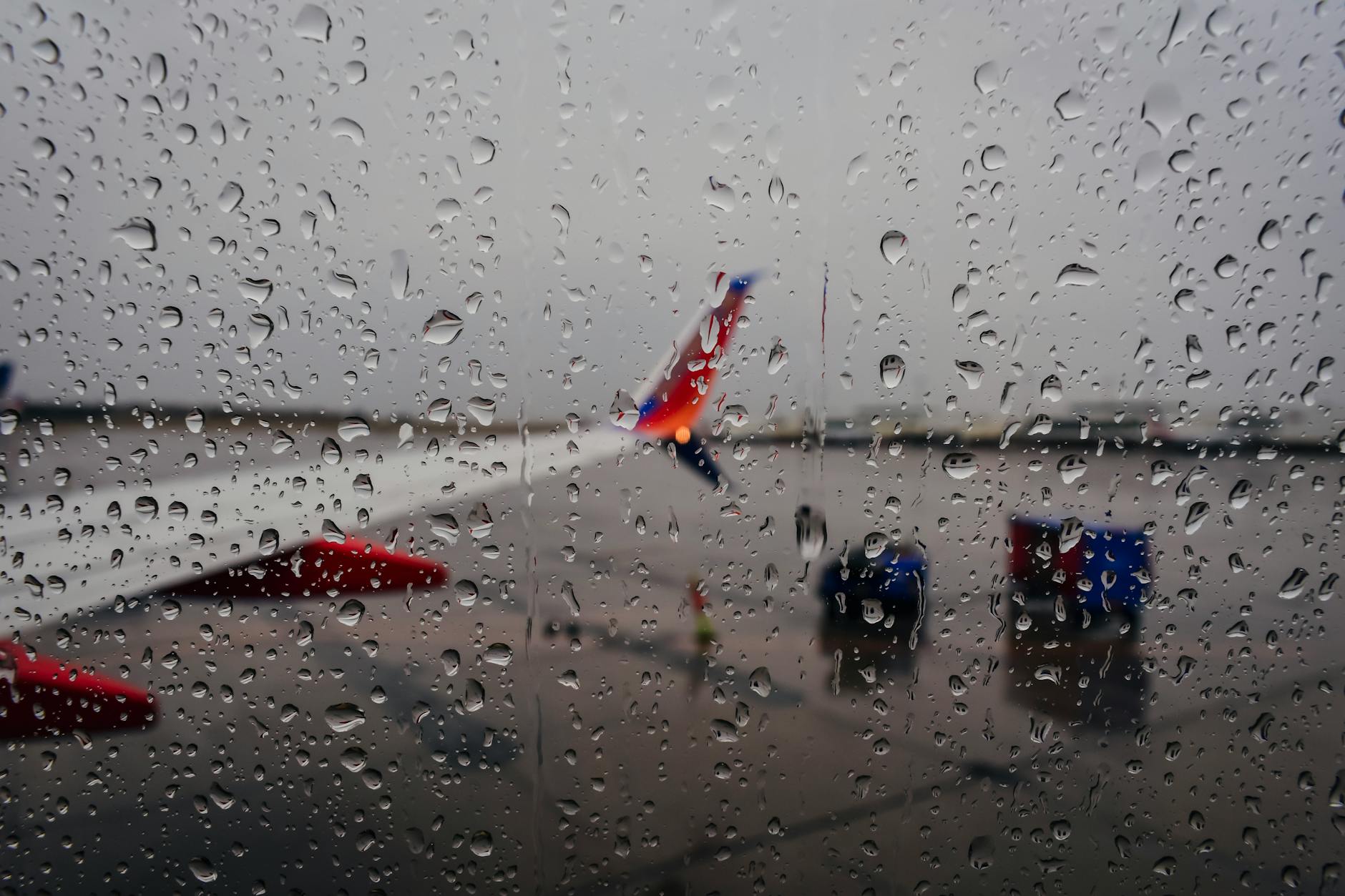
The numbers tell a grim story for anyone who was in transit through the Middle East on February 28 or March 1, 2026. More than 1,800 flights were cancelled by major Middle Eastern carriers, and over 19,000 flights were delayed globally. The cancellations hit hardest at the Gulf’s mega-carriers — Emirates, Etihad, and Qatar Airways — which serve as connecting hubs for routes between Europe, Asia, Africa, and Australasia. A passenger flying from London to Sydney or from Lagos to Manila may never set foot in the Middle East, but their itinerary likely routes through Dubai or Doha. The cascading effect is what distinguishes a Middle Eastern aviation shutdown from disruptions in other regions.
When European airspace closed after the 2010 Icelandic volcanic eruption, the disruption was severe but geographically contained. The Gulf hub model means that closures in Dubai, Abu Dhabi, and Doha simultaneously sever connecting routes across multiple continents. Thousands of travelers were stranded, many in airport terminals with limited information about when flights might resume. For the Gulf states, which have spent decades and hundreds of billions of dollars building their economies around aviation, logistics, and tourism, the reputational damage may prove as consequential as the physical damage. The entire value proposition of Dubai and Abu Dhabi as global business and travel hubs rests on the assumption of stability and security. A single night of Iranian drones overhead called that assumption into question in ways that will take years to fully assess.

What Triggered Iran’s Retaliation and How Did It Escalate?
The immediate trigger was Operation Roaring Lion (Israel’s designation) and Operation Epic Fury (the U.S. designation), a joint military strike launched on February 28, 2026. The operation killed Supreme Leader Ali Khamenei and top security officials, representing the most dramatic decapitation strike against a sovereign nation’s leadership in modern history. Iran’s response was a coordinated multi-front missile and UAV offensive that came within hours. The tradeoff at the heart of this escalation is one that military planners and policymakers will debate for years.
The U.S.-Israeli strikes eliminated Iran’s supreme leader and disrupted its command structure, achieving a tactical objective that had no parallel in the decades-long standoff with Tehran. But Iran’s retaliatory strikes against civilian infrastructure across seven countries demonstrated that even a decapitated Iranian military apparatus retained the capacity to inflict widespread damage on soft targets across the region. The question of whether the strategic gains of removing Khamenei outweigh the costs — three American troops killed, civilian casualties across multiple allied nations, and a regional aviation shutdown — does not have a simple answer. President Trump stated that more casualties were “likely,” an acknowledgment that the situation remained fluid and that the full toll of the exchange had not yet been tallied. The attacks on Gulf civilian infrastructure, in particular, created an uncomfortable dynamic: the United States had launched strikes from or near bases in countries whose civilians then bore the brunt of Iran’s response.
What Are the Legal and Diplomatic Consequences of Targeting Civilian Infrastructure?
Under international humanitarian law, the deliberate targeting of civilian objects — airports, hotels, residential buildings — is prohibited. The principle of distinction, codified in the Geneva Conventions and their Additional Protocols, requires parties to a conflict to distinguish between military objectives and civilian objects at all times. Iran’s strikes against Dubai International Airport, the Burj Al Arab, and residential areas in Bahrain present clear potential violations of these norms. However, enforcement is the perennial weakness of international humanitarian law. Iran could argue, however implausibly, that some targets had dual military-civilian use — Gulf airports do service military aircraft, and some ports handle military logistics. The “debris from aerial interception” framing used by UAE authorities for the Jebel Ali Port fire also complicates attribution: if damage results from a defending nation’s own interceptor missiles, the legal chain of responsibility becomes murkier. These are not merely academic distinctions.
They will shape diplomatic negotiations, potential International Criminal Court referrals, and the terms of any eventual ceasefire or settlement. The diplomatic fallout is equally significant. The Gulf states that were struck — UAE, Kuwait, Bahrain, Qatar — host U.S. military installations and have complex, often quiet diplomatic relationships with Iran. Being targeted by Iranian missiles because of their association with U.S. military operations puts these countries in a position they have long sought to avoid: being forced to choose sides in a direct U.S.-Iran confrontation. The attacks may accelerate defense partnerships with Washington, or they may prompt some Gulf states to reconsider the risks of hosting American bases.
How Did Gulf States Respond to the Attacks on Their Soil?
The UAE’s response was notably measured in its public communications. By attributing the Jebel Ali Port fire to “debris resulting from an aerial interception” rather than directly to an Iranian strike, UAE authorities signaled a preference for de-escalation even while absorbing significant damage. This is consistent with the UAE’s diplomatic posture over the past decade, which has emphasized economic development and regional stability over military confrontation with Iran.
📨 Get Free Accountability Coverage Alerts
Free · No spam · Unsubscribe anytime
Bahrain, where the Crowne Plaza Hotel in Manama and residential buildings were struck, faces a more complicated domestic situation. The kingdom’s Shia-majority population and its proximity to Iran make any military escalation fraught with internal security risks. Kuwait, which had maintained one of the more balanced diplomatic positions among Gulf states regarding Iran, saw that neutrality tested when its international airport was hit by drones and missiles.
What Does This Escalation Mean for Gulf Security and Civilian Protection?
The February 28–March 1 attacks exposed a vulnerability that Gulf states and their Western security partners had long understood but never fully confronted: the region’s civilian infrastructure is within range of Iranian conventional weapons, and no air defense system is impervious. The 137 missiles and 209 drones fired at the UAE alone overwhelmed defenses sufficiently to cause damage at multiple high-profile sites. This will accelerate investment in layered air defense systems, but it also raises a harder question about whether the Gulf’s economic model — built on openness, tourism, and global connectivity — is compatible with its geographic proximity to an adversary willing to target civilian sites.
Looking ahead, the precedent set by these attacks will reshape how airlines, insurers, and multinational corporations assess risk in the region. Aviation war-risk insurance premiums for Gulf carriers and airports will spike. Foreign direct investment decisions will factor in the demonstrated vulnerability of marquee assets like the Burj Al Arab and Jebel Ali Port. The long-term economic consequences may dwarf the immediate physical damage, and the Gulf states’ ability to restore confidence in their security environment will be one of the most consequential recovery challenges in the months ahead.
Conclusion
Iran’s expanded retaliation against civilian airports and infrastructure across seven countries marked a dangerous new phase in Middle Eastern conflict. The attacks on Dubai International Airport, Abu Dhabi’s Zayed International Airport, Kuwait International Airport, landmark hotels, and critical port infrastructure demonstrated both Iran’s willingness to strike civilian targets and the limits of existing air defense systems. Three American troops were killed, at least one civilian died at Abu Dhabi’s airport, and the global aviation system absorbed its worst disruption in years, with over 19,000 flights delayed and 1,800 cancelled.
The consequences will unfold across multiple dimensions — legal accountability under international humanitarian law, diplomatic realignment among Gulf states, insurance and investment recalculations, and the fundamental question of whether the U.S.-Israeli decision to eliminate Iran’s supreme leader was worth the regional devastation that followed. For the thousands of travelers stranded in darkened airport terminals, for the hotel workers injured by falling debris, and for the families in Bahraini residential buildings that took missile fire, the costs of this escalation were not abstract. They were immediate, personal, and in some cases, fatal.
Frequently Asked Questions
Were the attacks on Gulf airports deliberate or collateral damage?
The evidence strongly suggests deliberate targeting. Multiple airports across different countries were struck by drones and missiles in a coordinated offensive. While some damage, such as the Jebel Ali Port fire, was attributed to interceptor debris, the airport strikes involved direct hits on terminal infrastructure.
How many countries were affected by Iran’s retaliation?
Iran’s retaliatory strikes targeted seven countries beyond Israel: Jordan, Kuwait, Bahrain, Qatar, Iraq, Saudi Arabia, and the UAE. The UAE bore the heaviest bombardment, with 137 missiles and 209 drones fired at targets within its borders.
How many American service members were killed?
Three American troops were killed in the attacks, according to reports confirmed by President Trump, who stated that additional casualties were “likely” as the situation continued to develop.
When did Middle Eastern airspace reopen after the attacks?
As of the initial reporting period of February 28 through March 1, 2026, hub airports in Dubai, Abu Dhabi, and Doha remained closed. The full timeline for airspace reopening was not established during the acute phase of the crisis.
What happened to the Burj Al Arab in Dubai?
The Burj Al Arab caught fire from falling debris after Iranian missiles were intercepted in the airspace above Dubai. The fire was caused by remnants of the interception rather than a direct missile strike on the building itself.
Could travelers get compensation for cancelled flights?
Airline obligations for compensation during armed conflict differ significantly from standard delay policies. Most carrier contracts of carriage include force majeure clauses that limit liability during military hostilities. Travelers with comprehensive travel insurance may have better recourse, but policy terms vary widely regarding acts of war.
You Might Also Like
- Trump’s Iran Policy Went From “Maximum Pressure” to Airstrikes in 14 Months
- Trump Claims No American Boots on the Ground in Iran
- Tomahawk Cruise Missiles Opened the Iran Campaign at 1 AM Eastern Time