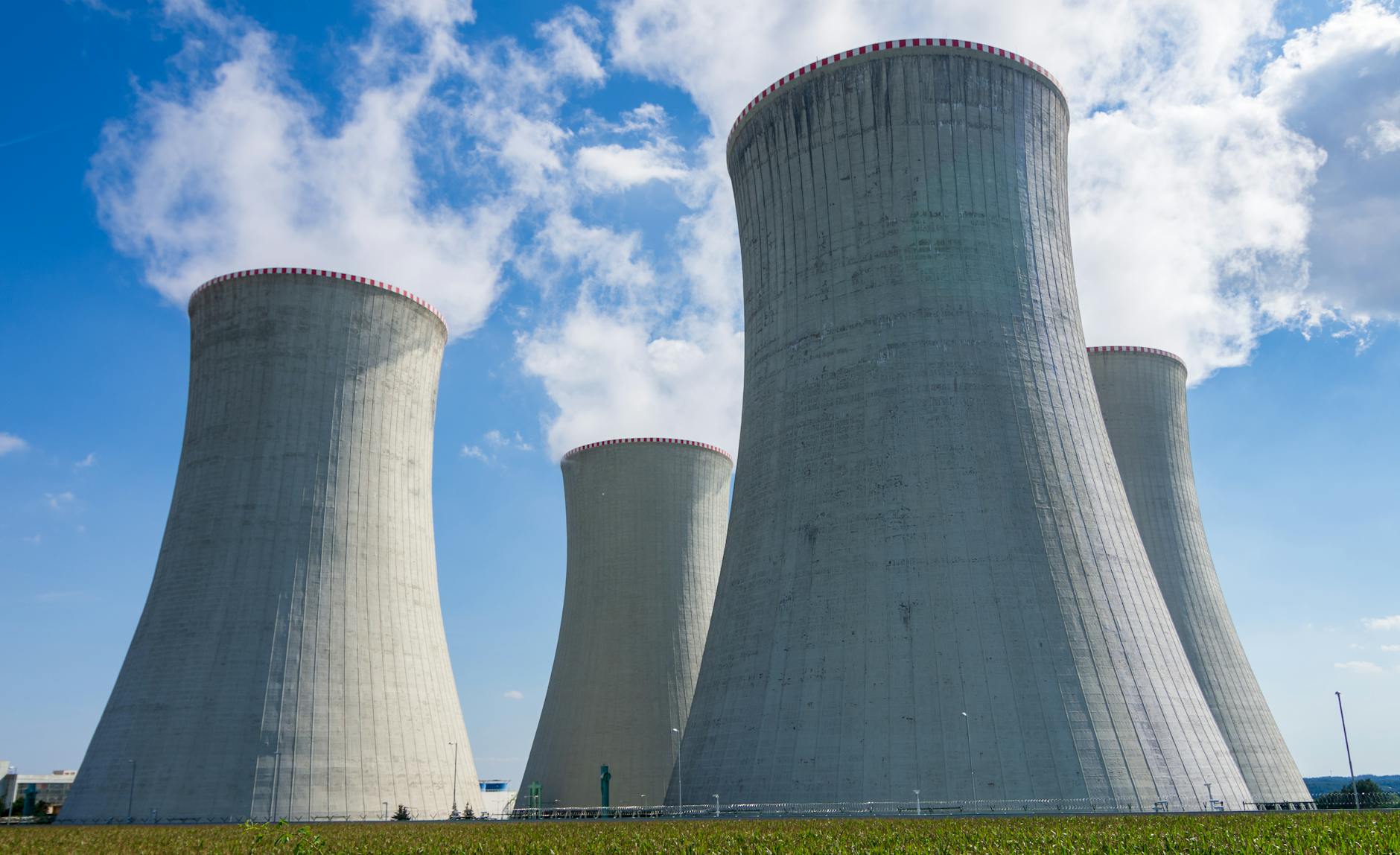
On February 28, 2026, the United States and Israel launched Operation Epic Fury, a massive joint military strike against Iran’s nuclear infrastructure and leadership. The justification offered by the Trump administration was straightforward and alarming: Iran’s nuclear breakout timeline had collapsed from months to mere days. According to the Institute for Science and International Security, Iran could have produced its first 25 kg of weapons-grade uranium at its Fordow facility in as little as two to three days — and its full stockpile of 60%-enriched uranium could have been converted into enough material for roughly nine nuclear weapons within three weeks. Whether that timeline warranted a strike of this magnitude, launched just one day after Oman announced Iran had agreed to a diplomatic breakthrough, is now the defining foreign policy question of 2026.
The strike killed Iran’s Supreme Leader Ayatollah Ali Khamenei, age 86, along with the country’s defense minister, IRGC commander, and security council secretary. Three American service members also lost their lives. Trump warned Iran not to retaliate and stated that “heavy and pinpoint bombing” would continue as long as necessary. This article examines the nuclear breakout timeline that served as the administration’s primary justification, the expert disputes over how imminent the threat actually was, the diplomatic deal that was on the table hours before the bombs fell, and why critics are drawing direct parallels to the lead-up to the 2003 Iraq War.
Table of Contents
- How Close Was Iran to a Nuclear Weapon — And Did That Justify Striking Now?
- The Diplomatic Breakthrough That Died on the Runway
- Operation Epic Fury — What Happened on February 28
- The Administration’s Shifting Story and the Credibility Problem
- Why the Iraq War Parallels Are Both Fair and Limited
- The Leadership Vacuum in Tehran
- What Comes Next — Negotiations, Retaliation, or Escalation
- Conclusion
- Frequently Asked Questions
How Close Was Iran to a Nuclear Weapon — And Did That Justify Striking Now?
The raw numbers paint a genuinely alarming picture. As of May 2025, the International Atomic Energy Agency confirmed iran possessed over 400 kg of uranium enriched to 60% purity. On December 5, 2024, Iran began feeding two IR-6 cascades at its underground Fordow facility with 20%-enriched uranium hexafluoride instead of 5%, boosting output of 60%-enriched material to over 34 kg per month. The ISIS analysis concluded that converting Iran’s full 60% stockpile to weapons-grade uranium — enough for approximately nine weapons — could take as little as three weeks. For a single device, the timeline was days, not weeks. Trump envoy Steve Witkoff put it bluntly: Iran was “probably a week away from having industrial-grade bomb-making material.” But nuclear weapons experts pushed back hard on the precision of that claim. PolitiFact reported that multiple analysts called breakout estimates “murky and highly assumption-based,” noting there was no “high confidence” in specific timelines.
Having enough fissile material is not the same as having a deliverable weapon. Weaponization — designing a warhead, miniaturizing it for a missile, and testing its reliability — is a separate and far more complex challenge. A 2025 federal government assessment found Iran was years away from producing long-range missiles capable of reaching the United States, directly contradicting the administration’s suggestion of an imminent ICBM threat. The distinction matters enormously. A breakout timeline of days for fissile material is a legitimate intelligence concern. But collapsing that into “Iran was about to have a nuclear weapon” elides critical steps in the weapons development process. The question is whether the urgency of the fissile material timeline alone warranted the scale and timing of Operation Epic Fury — particularly given what was happening diplomatically at that exact moment.

The Diplomatic Breakthrough That Died on the Runway
On February 27, 2026 — one day before the strikes — Oman’s Foreign Minister announced what he called a “breakthrough” in negotiations. Iran had reportedly agreed to never stockpile enriched uranium and to submit to full IAEA verification. If verified and implemented, this would have directly addressed the core concern the administration cited as justification for military action. The agreement would have placed Iran’s enrichment activities under comprehensive international monitoring, precisely the outcome that arms control advocates had spent years trying to achieve. The strikes launched the following day. The juxtaposition is difficult to ignore. However, there are scenarios where a diplomatic announcement and genuine security urgency can coexist.
If U.S. intelligence indicated Iran was racing to convert its stockpile before any deal took effect, or if the administration had reason to believe the agreement was a stalling tactic, the calculus shifts. The problem is that the Trump administration has not publicly presented that intelligence. Without it, the sequence of events — diplomatic breakthrough announced on a Thursday, bombs falling on Friday — looks less like a last resort and more like a predetermined outcome. It is also worth noting that Iran had been making IAEA inspections increasingly difficult. The agency reported that Iran had withdrawn the designation of several experienced inspectors, seriously undermining the IAEA’s ability to detect breakout promptly. This created a genuine verification gap: even if Iran agreed to inspections on paper, its recent track record of obstructing inspectors raised legitimate questions about whether any deal could be verified in real time. Still, bombing a country the day after it agreed to the inspections you demanded is a hard sequence to explain.
Operation Epic Fury — What Happened on February 28
The joint U.S.-Israeli operation carried two codenames: “Epic Fury” on the American side and “Roaring Lion” on the Israeli side. B-2 stealth bombers were deployed in the attack, targeting Iran’s nuclear infrastructure and military leadership. The strike decapitated Iran’s senior leadership — Supreme Leader Khamenei’s body was identified by intelligence sources shortly before midnight Iran time on February 28. The defense minister, Islamic Revolutionary Guard Corps commander, and national security council secretary were also killed. The human cost extended to American forces as well. CENTCOM confirmed on March 1 that three U.S.
service members were killed and five were seriously wounded during the operation. These are the first American combat deaths in a direct engagement with Iran, a fact that underscores the escalatory nature of the strikes. This was not a limited, surgical action against a single facility. It was a comprehensive military operation that eliminated a nation’s supreme leader and top military officials in a single night. The Washington Post reported that pressure from Saudi Arabia and Israel was instrumental in moving Trump to authorize the strikes. Both nations had long advocated for aggressive action against Iran’s nuclear program, and the convergence of an apparently collapsing breakout timeline with willing coalition partners created what administration allies described as a unique window of opportunity. Whether that window required closing on February 28 specifically — the day after the Omani diplomatic announcement — remains unexplained.

The Administration’s Shifting Story and the Credibility Problem
Contradictory messaging from the White House has complicated efforts to evaluate the administration’s justification. Trump initially said in June 2025 that three nuclear sites had been “obliterated.” The White House later revised this to “significantly degraded” — a meaningful difference when the stated goal is preventing a nuclear-armed Iran. If key facilities were degraded but not destroyed, the strike may have delayed Iran’s program without eliminating it, raising questions about whether the military action achieved what diplomacy could not. The broader credibility issue is the gap between the threat as described and the threat as assessed by the government’s own experts. Witkoff’s claim that Iran was a week from bomb-making material aligned roughly with the ISIS analysis of fissile material timelines.
But the 2025 federal government assessment that Iran was years away from a deliverable long-range missile presents a fundamentally different threat picture. Both things can be true simultaneously — Iran could be days from enough fissile material and years from a working ICBM — but the administration consistently presented only the most alarming half of that equation. This selective framing is what draws the Iraq War comparisons. Al Jazeera and other outlets have noted the structural similarities: an administration presenting intelligence selectively, dismissing diplomatic alternatives, and framing military action as the only responsible option in the face of an existential threat. The comparison is not perfect — Iran’s enrichment program is far more advanced than Iraq’s weapons program ever was — but the pattern of threat inflation is recognizable to anyone who watched the 2003 playbook unfold.
Why the Iraq War Parallels Are Both Fair and Limited
Critics have drawn direct lines between the justification for strikes on Iran and the lead-up to the 2003 invasion of Iraq. The parallels are real: intelligence presented with more certainty than it deserved, a diplomatic process abandoned at a critical moment, and an administration that appeared to have decided on military action before exhausting alternatives. PBS fact-checkers noted the contradiction between the imminent threat narrative and the government’s own assessment that Iran was years from an ICBM capability. However, the comparison has limits that are important to acknowledge. Unlike Iraq’s weapons of mass destruction, which turned out not to exist, Iran’s enrichment program is real, documented, and verified by the IAEA. Four hundred kilograms of 60%-enriched uranium is not an intelligence estimate — it is a measured quantity confirmed by international inspectors.
The breakout timelines, while debated in their precision, are grounded in observable technical capabilities, not defector testimony or satellite imagery of ambiguous structures. The threat from Iran’s nuclear program is genuine in a way that Iraq’s WMD program was not. The warning for the public is this: a real threat can still be exaggerated to justify a disproportionate response. The question is not whether Iran’s nuclear program posed dangers — it clearly did. The question is whether those dangers required this specific response, at this specific moment, bypassing a diplomatic agreement announced hours earlier. That is a policy judgment, not an intelligence question, and it deserves scrutiny untainted by the assumption that because the threat was real, the response was automatically proportionate.
The Leadership Vacuum in Tehran
The killing of Ayatollah Khamenei created the most significant leadership crisis in the Islamic Republic’s history. Iran’s President Masoud Pezeshkian announced that a new leadership council has begun work, but the simultaneous loss of the supreme leader, defense minister, IRGC commander, and security council secretary represents a decapitation of the command structure with no modern precedent in Iranian governance. The supreme leader position is not merely political — it is the constitutional and religious apex of the entire governmental system. The implications cut in multiple directions.
📨 Get Free Accountability Coverage Alerts
Free · No spam · Unsubscribe anytime
A weakened, disorganized Iranian leadership may be less capable of mounting a coherent retaliatory response, which serves short-term U.S. and Israeli security interests. But it may also be less capable of negotiating, enforcing cease-fires, or controlling hardline factions that might pursue nuclear weapons development through covert channels. History suggests that decapitation strikes can produce unpredictable successors — and in a country with Iran’s enrichment infrastructure, unpredictability is not a comforting quality.
What Comes Next — Negotiations, Retaliation, or Escalation
Trump has warned Iran not to retaliate and announced that the U.S. has agreed to continue negotiations, while simultaneously stating that heavy bombing would continue as long as necessary. These two positions — we are open to talks, and we will keep bombing — are difficult to reconcile, and they place the burden of de-escalation entirely on a country whose government was just decapitated. CBS News reported the president’s framing as one of continued military pressure paired with an open door, but an open door means little when you have just killed the person who would walk through it.
The coming weeks will reveal whether Operation Epic Fury was the decisive action the administration claims or the opening chapter of a wider conflict. Iran’s nuclear infrastructure, while degraded, has not been confirmed as destroyed. Its enrichment knowledge cannot be bombed away. And the diplomatic agreement that was reportedly within reach on February 27 is now ashes. For a public that has been through this before — the confident claims, the urgent timelines, the dismissal of alternatives — the only responsible posture is rigorous, sustained skepticism of every claim made by every party involved.
Conclusion
Iran’s nuclear breakout timeline was genuinely alarming. Over 400 kg of 60%-enriched uranium, a conversion window measured in days for a single weapon’s worth of material, and an IAEA increasingly locked out of meaningful inspections — these are not fabricated threats. The Trump administration was correct that the technical timeline had compressed dramatically. But a real threat does not automatically validate any response to it, and the decision to launch Operation Epic Fury the day after Iran reportedly agreed to the very inspections and stockpile limits the U.S. had demanded raises questions that no amount of breakout math can answer.
Three American service members are dead. Iran’s supreme leader and top military officials are dead. A diplomatic agreement is dead. What is not dead is Iran’s nuclear knowledge, its enrichment infrastructure (however degraded), or the cycle of escalation that has defined U.S.-Iran relations for decades. The public should demand the same thing it should have demanded in 2003: the full, unselected intelligence picture, not just the parts that support a decision already made. The stakes — measured in lives, in regional stability, and in the precedent set for how democracies go to war — are too high for anything less.
Frequently Asked Questions
How close was Iran to actually building a nuclear weapon?
Iran could have produced enough weapons-grade uranium for a single device in as little as two to three days, according to the Institute for Science and International Security. However, producing fissile material is only one step. Weaponization — designing, miniaturizing, and making a warhead deliverable by missile — is a separate process. A 2025 U.S. government assessment found Iran was years away from a long-range missile capable of reaching the United States.
What was Operation Epic Fury?
Operation Epic Fury was the U.S. codename for the joint American-Israeli military strikes on Iran launched on February 28, 2026. Israel’s codename was “Roaring Lion.” The operation used B-2 stealth bombers and resulted in the deaths of Supreme Leader Ayatollah Ali Khamenei, Iran’s defense minister, IRGC commander, and security council secretary. Three U.S. service members were also killed.
Did Iran agree to a nuclear deal before the strikes?
On February 27, 2026, one day before the strikes, Oman’s Foreign Minister announced that Iran had agreed to never stockpile enriched uranium and to submit to full IAEA verification. The strikes proceeded the following day regardless, and the administration has not publicly explained why this agreement was insufficient.
Was Iran actually a week away from a nuclear bomb, as Trump’s envoy claimed?
Envoy Steve Witkoff said Iran was “probably a week away from having industrial-grade bomb-making material.” Experts told PolitiFact this was “murky and highly assumption-based” with no “high confidence” in specific timelines. The material timeline may have been roughly accurate, but equating fissile material with a finished weapon overstates the immediacy of the threat.
Were any Americans killed in the strikes?
Yes. CENTCOM confirmed on March 1, 2026, that three U.S. service members were killed and five were seriously wounded during Operation Epic Fury.
What is happening in Iran now after the strikes?
Iran’s President Masoud Pezeshkian announced that a new leadership council has begun work following Khamenei’s death. Trump warned Iran not to retaliate and said the U.S. would continue negotiations, while also stating that bombing would continue “as long as necessary.”
You Might Also Like
- Iran Tried to Rebuild Its Nuclear Program After Last Year’s Strikes — So Trump Hit Them Again
- U.S. Struck Hundreds of Targets Inside Iran in the Opening Hours
- U.S. Ambassador Waltz at the UN: “President Trump Has Met the Moment”